History & EgyptologyThe Anzacs in Egypt: Mena Camp, the Sinai and El Alamein
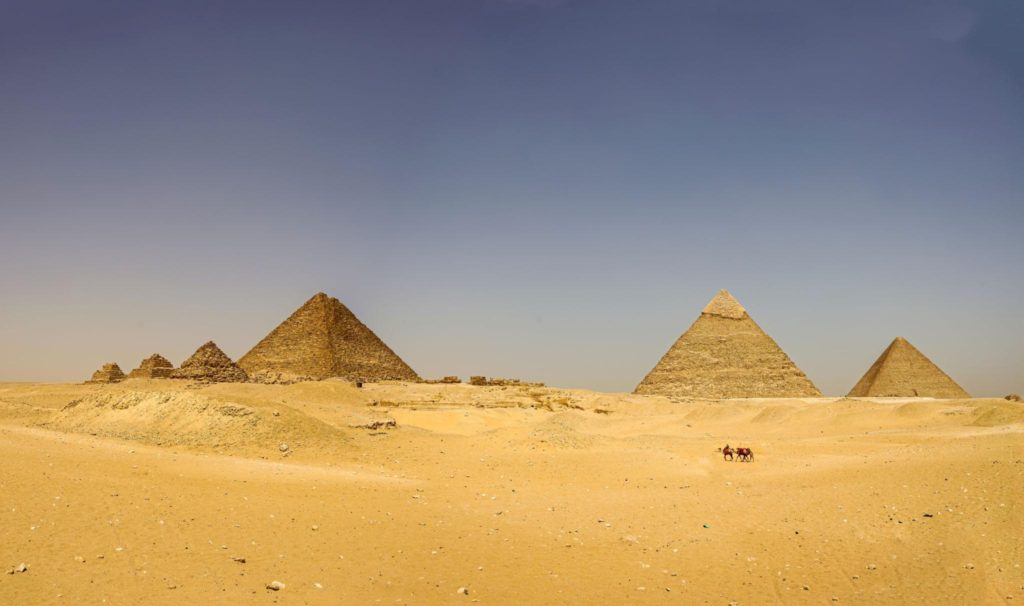
Egypt was where the Anzacs first came together: the first Australian and New Zealand contingents trained at Mena Camp beneath the Giza pyramids and at…
Egypt travel guide
The pharaohs, gods, monuments and ideas of ancient Egypt, explained for travellers.
History & EgyptologyEgypt was where the Anzacs first came together: the first Australian and New Zealand contingents trained at Mena Camp beneath the Giza pyramids and at…
Australia has a small but respected place in Egyptology. Macquarie University's Australian Centre for Egyptology, founded by Professor Naguib Kanawati…
The largest ancient Egyptian collection in Australia is the University of Sydney's, founded by Sir Charles Nicholson and now shown at the Chau Chak…
History & EgyptologyThe ancient Egyptians worshipped hundreds of gods over some 3,000 years, from the sun god Ra and the state god Amun to Osiris, ruler of the dead, and…
History & EgyptologyRa was the ancient Egyptian sun god, believed to have created the world and to sail across the sky by day and through the underworld by night. Usually…
Osiris was the Egyptian god of the dead, rebirth and the fertile Nile: a murdered king who rose again to rule the underworld and judge every soul. He…
History & EgyptologyIsis was the Egyptian goddess of magic, motherhood and protection, wife of Osiris and mother of Horus, who restored her murdered husband and hid her…
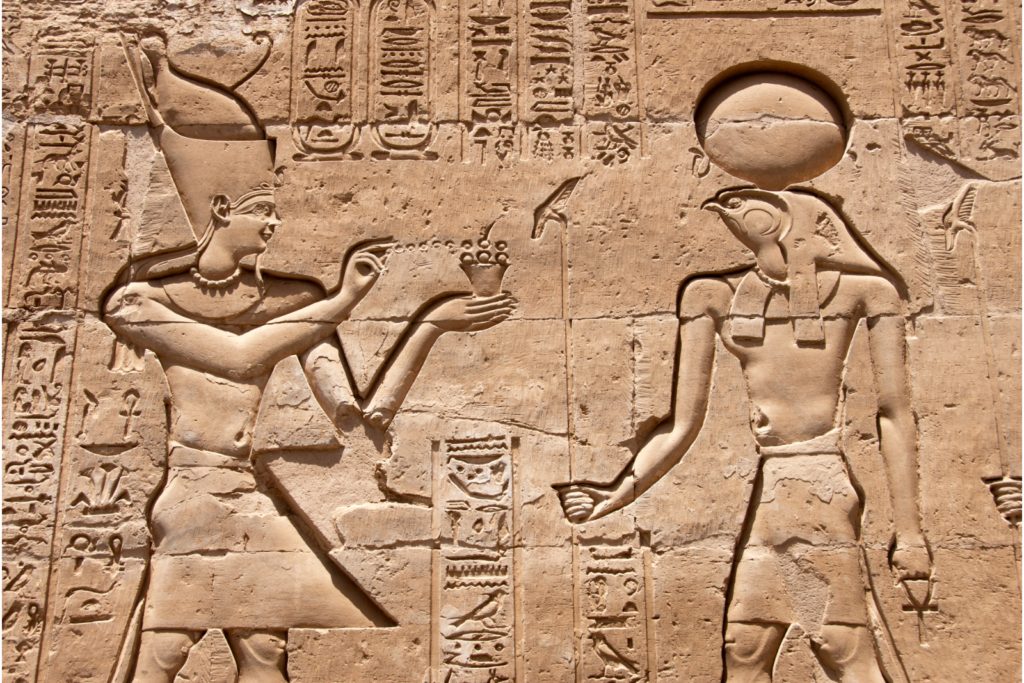
History & EgyptologyHorus was the falcon-headed Egyptian god of the sky and kingship, and every living pharaoh was considered his earthly form. As the son of Isis and…
Anubis was the jackal-headed Egyptian god of embalming and cemeteries, who protected the dead, prepared their bodies and led them to judgement; he was…
Hathor was the Egyptian goddess of love, music, dance, joy and motherhood, shown as a cow, a woman with cow horns and a sun disc, or a face with cow’s…
History & EgyptologyAmun was the god of Thebes, modern Luxor, whose name means “the hidden one”. Merged with the sun god as Amun-Ra, he became king of the gods and the…
Thoth was the Egyptian god of writing, knowledge, the moon and the reckoning of time, shown as an ibis-headed man or a baboon. Scribe of the gods, he…
History & EgyptologySobek was the ancient Egyptian crocodile god, a power of the Nile, fertility and royal strength, shown as a crocodile or a man with a crocodile's…
Bastet was an ancient Egyptian goddess of protection, motherhood and joy, first shown as a lioness and, from about 1000 BC, mostly as a cat or a…
Seth (also spelled Set) was the Egyptian god of the desert, storms, foreign lands and violent strength, best known for murdering his brother Osiris…
Ptah was the chief god of Memphis, Egypt's ancient capital, worshipped as the creator who brought the world into being by thought and speech and as…
Ma'at was both a goddess and the central idea of Egyptian civilisation: truth, justice and the right order of the universe, the opposite of chaos…
Khnum was the ram-headed Egyptian god who shaped each human being and their ka on a potter's wheel and who was believed to release the Nile flood from…
The Aten was the disc of the sun, a minor aspect of the sun god until the pharaoh Akhenaten (about 1353–1336 BC) made it the sole focus of state…
Bes and Taweret were the protective gods of everyday Egyptian life: Bes a grimacing, lion-maned dwarf who scared away evil with music and knives,…
History & EgyptologyEgyptian hieroglyphs were a script of roughly 700 to 1,000 picture-signs in classical use that recorded the Egyptian language for about 3,600 years,…
Mummification was the ancient Egyptian method of preserving a body so the spirit could recognise and return to it in the afterlife. For the elite, the…
History & EgyptologyThe pyramids were built by organised crews of Egyptian workers, fed and housed by the state, using copper tools, stone pounders, wooden sledges and…
Pharaonic Egypt lasted about 3,000 years, from the unification of the country around 3000 BC to the death of Cleopatra VII in 30 BC. Egyptologists…
The Rosetta Stone is a broken granodiorite slab inscribed in 196 BC with a priestly decree honouring the young King Ptolemy V, written three times: in…
The Book of the Dead is the modern name for a collection of nearly 200 ancient Egyptian spells, written on papyrus and placed in burials from around…
History & EgyptologyAncient Egyptians believed death was a dangerous passage rather than an end. A person's spiritual elements, above all the ka and the ba, had to be…
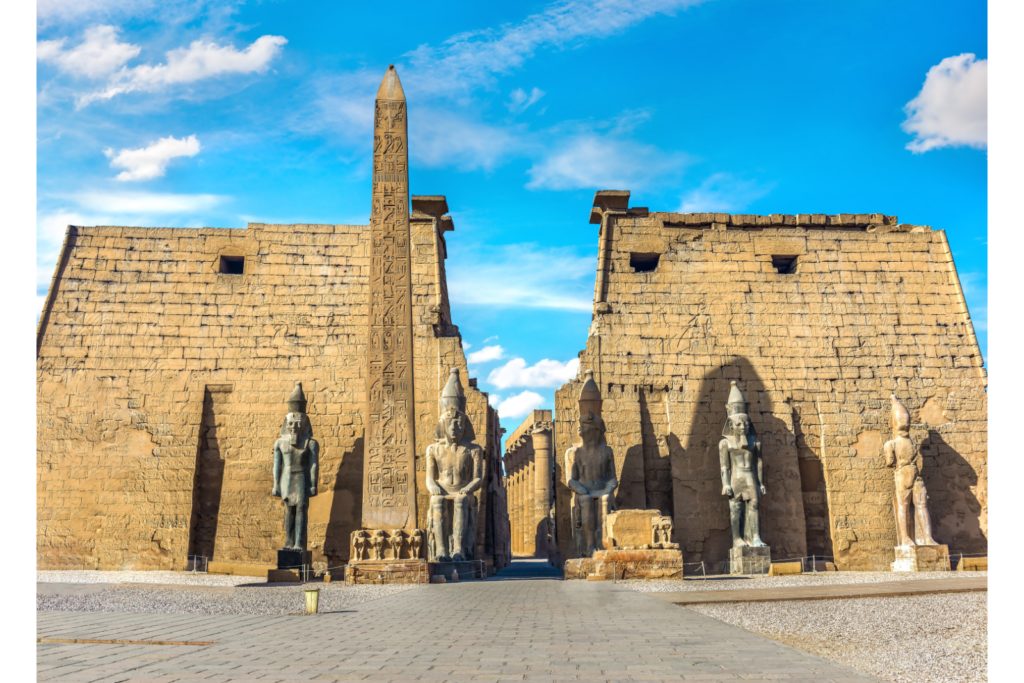
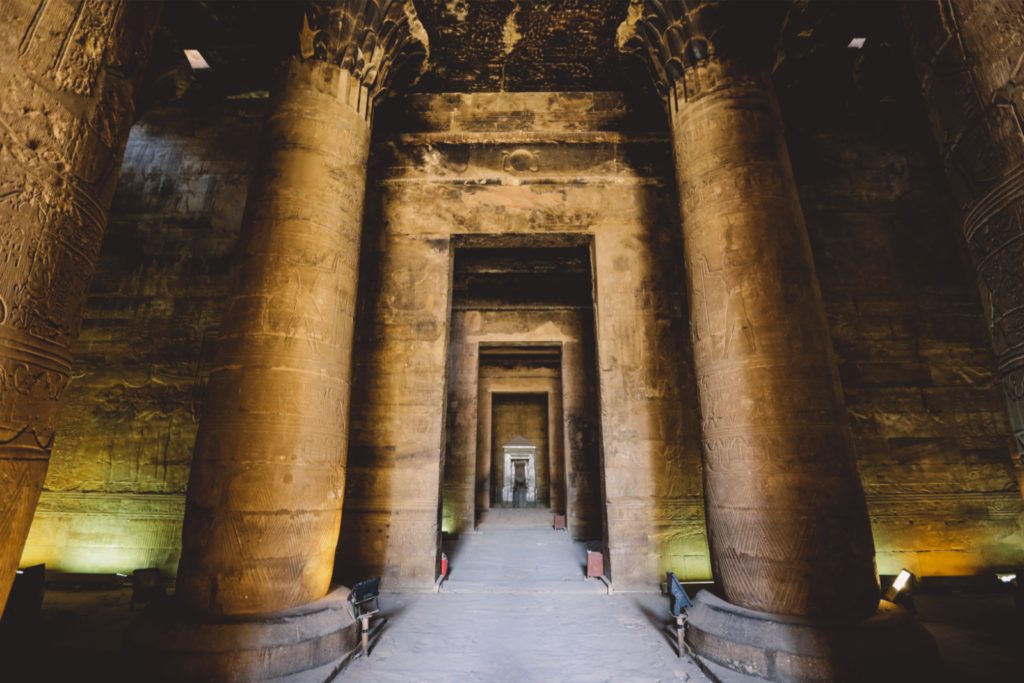
History & EgyptologyAn Egyptian temple was a god's house, not a place for public worship: a sequence of gateways, courts and halls leading to a dark sanctuary where…
History & EgyptologyAn obelisk is a tall, four-sided stone shaft, cut from a single block and tapering to a pyramid-shaped tip, raised in pairs at temple gateways as a…
History & EgyptologyThe best-known ancient Egyptian symbols are the ankh (life), the scarab (rebirth and the rising sun), the Eye of Horus (protection and healing), the…
A cartouche is the oval loop, tied with a bar at one end, that encloses a pharaoh’s name in hieroglyphs. It represents a rope encircling everything…
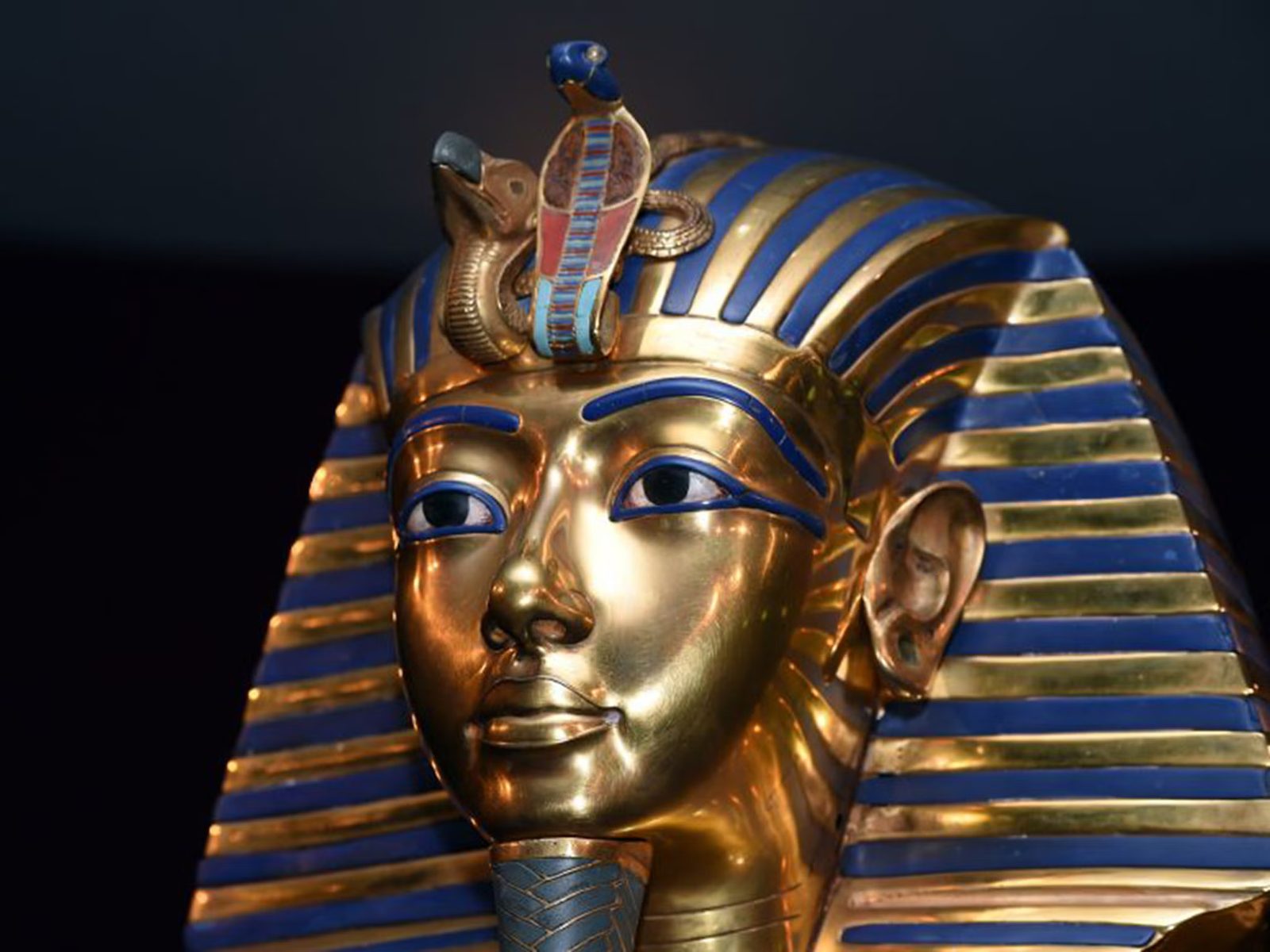
History & EgyptologyTutankhamun’s tomb was discovered by the British archaeologist Howard Carter, funded by Lord Carnarvon, when his workmen uncovered its first step in…
History & EgyptologyThe curse of Tutankhamun is a legend, not a fact. It grew out of Lord Carnarvon’s death from an infection in April 1923, months after the tomb was…
History & EgyptologyThe Old Kingdom was Egypt’s first great age of centralised power, from about 2686 to 2181 BC, covering the Third to Sixth Dynasties. Ruled from…
The Middle Kingdom was the period from about 2055 to 1650 BC when Egypt was reunited after a century of division, first by Mentuhotep II of Thebes and…
History & EgyptologyThe New Kingdom, about 1550 to 1069 BC, was ancient Egypt’s age of empire, spanning the Eighteenth, Nineteenth and Twentieth Dynasties. Its pharaohs,…
The Amarna period is the late 18th Dynasty era, roughly 1353–1323 BC, when Akhenaten made the sun disc, the Aten, the focus of state religion and…
History & EgyptologyNubia is the Nile valley south of Aswan, stretching into Sudan, and Kush was the name of the powerful kingdoms that rose there. Kushite kingdoms at…
History & EgyptologyEgypt was a Roman province for almost 700 years, from Octavian's capture of Alexandria in 30 BC to the Arab conquest of AD 641, with the later…
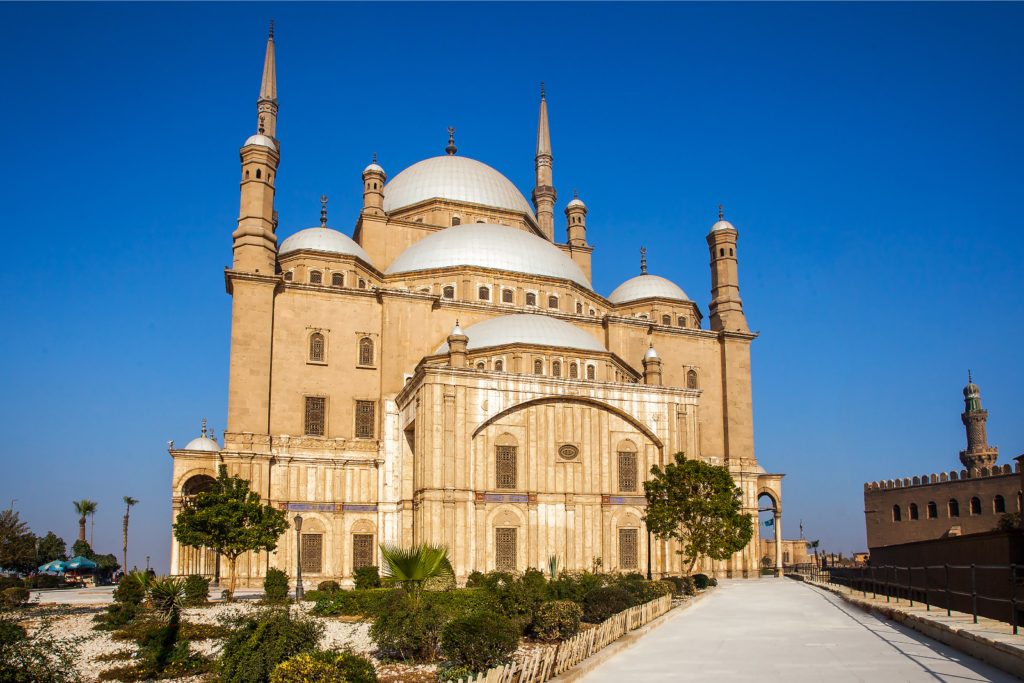
History & EgyptologyIslamic Cairo is the historic walled city founded by the Fatimid caliphs in 969 beside the older Arab capital of Fustat, then enriched for 900 years…
Napoleon Bonaparte invaded Egypt in July 1798 to strike at Britain's route to India, beat the Mamluk cavalry at the Battle of the Pyramids, and then…
The Suez Canal is a sea-level waterway of about 193 km across the Isthmus of Suez, linking the Mediterranean at Port Said with the Red Sea at Suez. It…
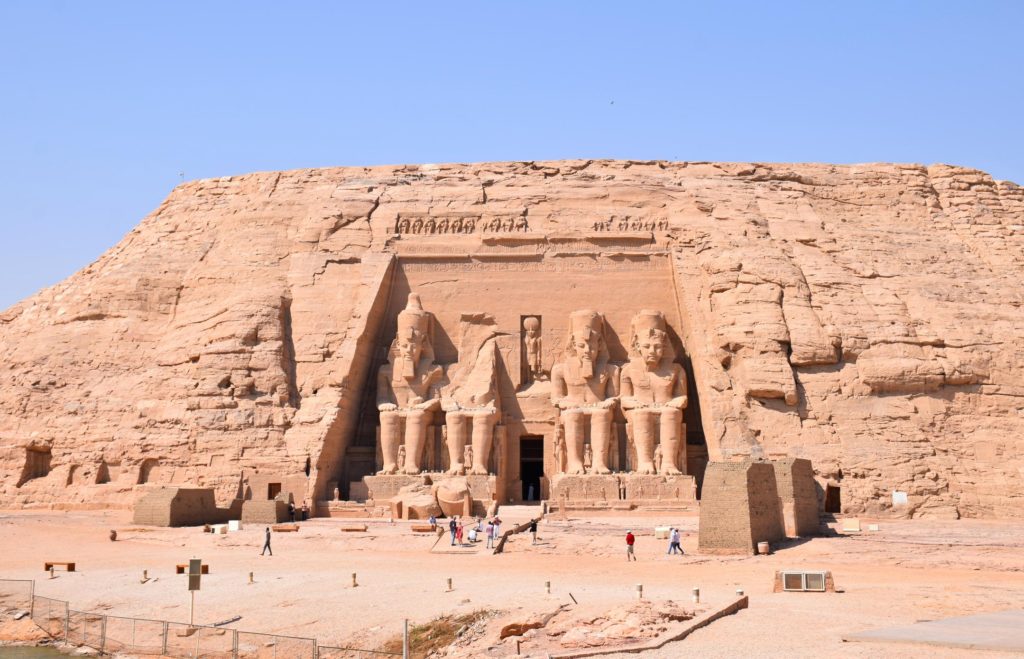
History & EgyptologyWhen the Aswan High Dam threatened to drown Abu Simbel, an international campaign led by UNESCO cut both of Ramesses II's rock temples into more than…
History & EgyptologyThe Nile is one of the two longest rivers on Earth, about 6,650 km, formed by the White Nile from the Lake Victoria basin and the Blue Nile from…
Most ancient Egyptians were farmers who lived in mud-brick houses in Nile villages, wore simple linen, ate bread, onions and fish, drank beer, and…
History & EgyptologyWomen in ancient Egypt had more legal independence than in most ancient societies: they could own and inherit property, sign contracts, go to court,…
Ancient Egyptians lived on bread and beer, both made from emmer wheat and barley, with onions, leeks, garlic, lentils, beans, fish and fruit such as…
Ancient Egypt had trained, state-employed doctors called swnw who examined patients, recorded symptoms and prescribed drugs made from plants,…
Ancient Egyptians built boats from papyrus reeds for the marshes and from planks of acacia and imported cedar for the river and sea, sewn and pegged…
The ancient Egyptian year followed the Nile: three seasons of four months each, named for the flood (akhet), the growing time (peret) and the harvest…
Egyptian mathematics was practical arithmetic and geometry for scribes: a decimal number system, multiplication by doubling, fractions written as sums…
The Valley of the Golden Mummies is a vast Graeco-Roman cemetery near Bawiti in Bahariya Oasis, found in 1996 and excavated by Zahi Hawass from 1999.…
History & EgyptologyThe Battle of Kadesh was fought in 1274 BC on the Orontes River in modern Syria between Ramesses II of Egypt and the Hittite king Muwatalli II.…
History & EgyptologyEgypt has well over 100 pyramids; a commonly quoted count is about 118, depending on what is included. The royal pyramids were built over roughly…
History & EgyptologyAncient Egyptians mummified animals for four reasons: as beloved pets, as food for the afterlife, as sacred animals that embodied a god, such as the…
History & EgyptologyTutankhamun was an 18th Dynasty pharaoh who came to the throne as a child of about eight or nine and ruled for roughly nine or ten years, around…
History & EgyptologyRamesses II, often called Ramesses the Great, ruled Egypt for about 66 years, around 1279–1213 BC, the second-longest reign in Egyptian history. He…
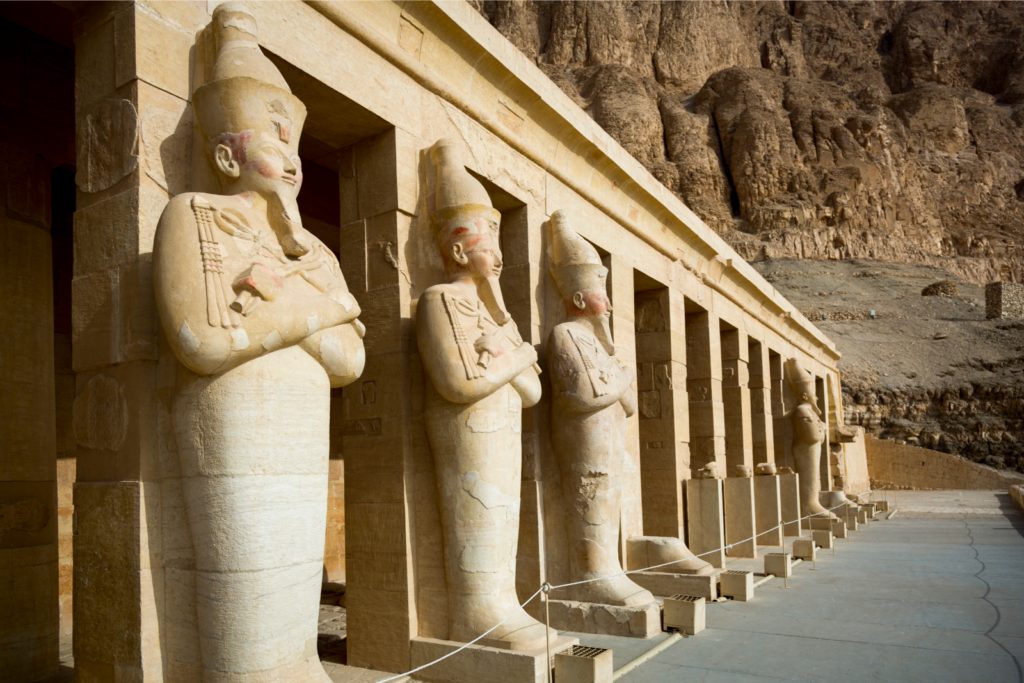
History & EgyptologyHatshepsut was an 18th Dynasty queen who first ruled as regent for her young stepson Thutmose III and then, around 1473 BC, was crowned pharaoh in her…
Akhenaten, born Amenhotep IV, ruled Egypt for about 17 years, around 1353–1336 BC. He raised the sun disc, the Aten, above all other gods, closed down…
Nefertiti was the Great Royal Wife of the pharaoh Akhenaten, around 1353–1336 BC, the mother of six daughters and one of the most powerful queens…
Cleopatra VII ruled Egypt from 51 to 30 BC, the last active ruler of the Ptolemaic dynasty founded by a general of Alexander the Great. A shrewd,…
History & EgyptologyKhufu, known to the Greeks as Cheops, was the second king of Egypt’s 4th Dynasty, ruling for about 23 to 27 years around 2589–2566 BC. He built the…
Seti I was the second king of the 19th Dynasty, ruling for about 11 years around 1290–1279 BC. The son of a general who became Ramesses I, he won back…
Thutmose III ruled Egypt for almost 54 years, around 1479–1425 BC, the first two decades alongside his stepmother Hatshepsut. Once sole king he led…
Djoser was a Third Dynasty king who ruled Egypt for about two decades around 2670–2650 BC, and Imhotep was his chief official and, by later tradition,…
Sneferu was the founder of Egypt’s Fourth Dynasty, ruling around 2613–2589 BC, and the father of Khufu. He built or completed three large pyramids –…
Amenhotep III ruled Egypt for about 38 years, around 1390–1352 BC, when the Eighteenth Dynasty was at the peak of its wealth and international power.…
Ramesses III ruled Egypt around 1184–1153 BC, the second king of the Twentieth Dynasty and the last great warrior pharaoh of the New Kingdom. He…
Nefertari was the first and best-loved Great Royal Wife of Ramesses II, prominent from the start of his reign around 1279 BC until her death some 25…
Queen Tiye was the Great Royal Wife of Amenhotep III, married around 1388 BC, and the mother of Akhenaten and grandmother of Tutankhamun. Born to a…
Alexander the Great spent about six months in Egypt, from late 332 BC to spring 331 BC. The Persian governor surrendered without a fight, Alexander…
History & EgyptologyPtolemaic Egypt was the period from 305 to 30 BC when Egypt was ruled by a Macedonian Greek dynasty founded by Ptolemy I, one of Alexander the Great’s…
Start planning
Tell us when you’d like to travel and what excites you. A specialist will design a private itinerary with honest advice and a clear quote – no obligation.