In short
Luxor is ancient Thebes, Egypt's religious capital for much of the New Kingdom, and holds a greater concentration of temples and royal tombs than anywhere else on earth. Spend at least two full days here to see Karnak, Luxor Temple, the Valley of the Kings and Hatshepsut's temple properly.
Luxor is about 650 km south of Cairo and divides neatly in two. On the East Bank, the city of the living, stand Karnak and Luxor Temple, joined by the 2.7 km Avenue of Sphinxes that reopened in 2021. Across the Nile on the West Bank, the city of the dead, are the Valley of the Kings, the Valley of the Queens, Hatshepsut's terraced temple at Deir el-Bahari, Medinet Habu, the Ramesseum and the Colossi of Memnon.
Most visitors see Luxor as the start or end of a Nile cruise, but the cruise schedule alone rarely does it justice. Adding a night or two on land lets you visit the West Bank at opening time, see the premium tombs such as Seti I and Nefertari, and take a day trip north to the remarkably preserved temples of Dendera and Abydos.
The town itself is compact and easy-going, with a Corniche along the river, the excellent Luxor Museum and the historic Winter Palace hotel, where Howard Carter announced the discovery of Tutankhamun's tomb in 1922. It is also the base for Egypt's best-known hot-air balloon flights, which lift off at dawn over the West Bank.
Top things to see in Luxor
Karnak Temple Complex
Built and extended over roughly 2,000 years, Karnak covers more than 200 acres and is one of the largest religious complexes ever built. The Great Hypostyle Hall has 134 columns, the tallest about 21 metres high. Go at opening time or late afternoon when the light is warm and the groups thin out.
Valley of the Kings
More than 60 tombs have been found here, cut deep into the Theban hills for New Kingdom pharaohs. The standard ticket covers three tombs, chosen from those open on the day; separate tickets are needed for Tutankhamun (KV62), Seti I (KV17) and Ramesses VI (KV9). Ramesses VI and Seti I have the most spectacular painted ceilings.
Temple of Hatshepsut, Deir el-Bahari
The mortuary temple of Egypt's most successful female pharaoh rises in three colonnaded terraces against the cliffs. Look for the reliefs of the expedition to the land of Punt on the middle terrace. It is fully exposed to the sun, so visit early.
Luxor Temple
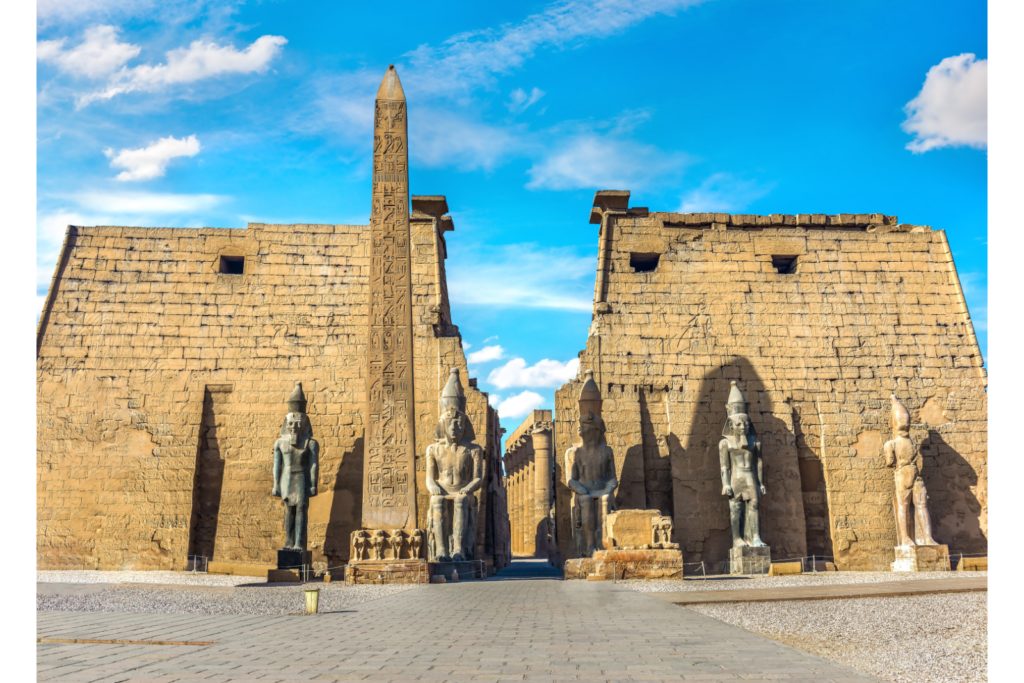
In the heart of town, Luxor Temple was built mainly by Amenhotep III and Ramesses II and later used by Romans, Christians and Muslims; the Abu Haggag Mosque still sits on its walls. It is floodlit after dark, the best time to visit. The Avenue of Sphinxes leads from here to Karnak.
Valley of the Queens and the Tomb of Nefertari
The tomb of Nefertari (QV66), great wife of Ramesses II, has some of the most beautiful paintings in Egypt, with colours that look freshly applied. It needs a separate, premium ticket and visits are time-limited, but for many travellers it is the highlight of Egypt.
Medinet Habu
The mortuary temple of Ramesses III is often skipped by groups, which is exactly why you should go. Its deeply cut battle reliefs, including the Sea Peoples campaign, and the original paint on the ceilings of the second court are outstanding.
Colossi of Memnon and the Ramesseum
The two 18-metre seated statues of Amenhotep III are a quick roadside stop on the way to the West Bank. The Ramesseum, Ramesses II's mortuary temple, has the fallen colossus that inspired Shelley's poem Ozymandias.
Deir el-Medina
The village of the craftsmen who built the royal tombs, with small, intimate and brilliantly coloured tombs of their own. It is one of the best places to understand daily life in ancient Egypt.
Dendera and Abydos day trip
North of Luxor, the Temple of Hathor at Dendera (about 60 km) has an intact roof and vivid blue ceilings, while Seti I's temple at Abydos (about 170 km) has the finest raised relief in Egypt and the King List. Together they make a long but rewarding full-day trip.
Luxor Museum
A small, beautifully lit museum on the Corniche, with a cache of statues found under Luxor Temple in 1989. It is open in the evening, which makes it a good use of time after a hot day on the West Bank.
Unforgettable experiences
- A sunrise hot-air balloon flight over the West Bank temples and sugarcane fields
- Exploring the West Bank by bicycle or donkey through farming villages
- Sunset felucca sail on the Nile from the East Bank Corniche
- Evening visit to floodlit Luxor Temple, followed by dinner on the river
- Tea on the terrace of the 1886 Winter Palace hotel
When to visit Luxor
October to April is the best time to visit Luxor, with clear skies and daytime highs of about 22–30°C. December and January are cool at dawn, which matters for balloon flights, and are also the busiest months. From May to September temperatures regularly exceed 40°C, so West Bank sightseeing must finish by late morning; the upside is fewer people and lower hotel rates. Balloon flights can be cancelled at any time of year if winds are too strong.
How long to spend in Luxor
Two full days covers the essentials: one day for the West Bank (Valley of the Kings, Hatshepsut, Colossi of Memnon, plus Medinet Habu or the Valley of the Queens) and one for Karnak, Luxor Temple and the Luxor Museum. Add a third day for Dendera and Abydos, or for a slower pace and a balloon flight. If you are on a Nile cruise, add at least one night on land to avoid seeing everything in the heat of the day.
Getting there
Luxor International Airport (LXR) is about 20 minutes from the centre, with flights from Cairo taking just over an hour. The overnight sleeper train from Cairo takes about 10 hours. Luxor is the northern end of most Nile cruises to and from Aswan (usually 3–4 nights), and dahabiyas typically start upriver at Esna, an hour's drive south. The road from Luxor to Hurghada on the Red Sea takes about four hours.
Specialist tips
- Visit the West Bank at opening time (usually 6am in summer, 6–7am in winter) for the coolest temperatures and quietest tombs
- Photography is generally allowed in the tombs without flash; rules and fees can change, so confirm at the ticket office
- Buy the Seti I or Nefertari ticket if you can; they are worth the premium
- Only book balloon flights through established operators with a good safety record
- Bargain politely but firmly for calèche (horse carriage) rides, and agree the price before you get in
- Wear sturdy shoes and a wide-brimmed hat; the West Bank is dusty and shadeless
Luxor: frequently asked questions
How many days do you need in Luxor?
Two full days is the minimum to see the West Bank and East Bank properly; three days lets you add Dendera and Abydos or a balloon flight. If you are cruising, add a night on land before or after the cruise.
Which tombs should I see in the Valley of the Kings?
The standard ticket covers three tombs; good choices are usually Ramesses IV, Ramesses III and Merenptah, depending on which are open. Add Ramesses VI for its astronomical ceilings and Seti I if your budget allows. Tutankhamun's tomb is small but historically fascinating.
Is a hot-air balloon ride in Luxor worth it?
Yes, for most travellers. Flights lift off around sunrise and drift over the Theban hills, Hatshepsut's temple and the Nile for about 45 minutes. It is a feature of our Egypt honeymoon and can be added to any tour.
Is it better to see Luxor by Nile cruise or by staying in a hotel?
A combination works best. Cruises are efficient and relaxing, but stays in Luxor are short. Adding hotel nights gives you early-morning access to the West Bank. Compare options in our Nile cruises guide.
When is the best time to visit Luxor?
October to April, when days are warm rather than scorching. See our best time to visit Egypt guide for a month-by-month breakdown.