Quick answer
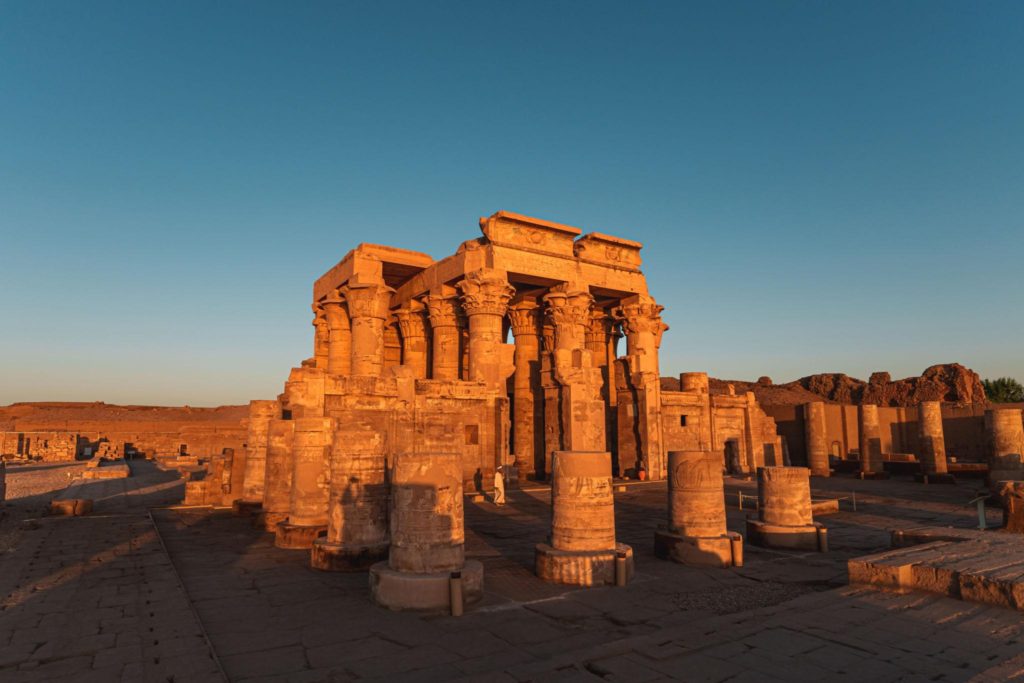
Sobek was the ancient Egyptian crocodile god, a power of the Nile, fertility and royal strength, shown as a crocodile or a man with a crocodile's head. His main cult centres were the Fayoum, where a living sacred crocodile was kept, and Kom Ombo near Aswan, whose double temple he shares with Horus the Elder and is the best place to see him today.
Who was Sobek?
Sobek was the god of the Nile crocodile, worshipped as a force of the river's water, fertility and raw power rather than simply as a dangerous animal. Crocodiles killed people and livestock along the Nile every year, and the Egyptian approach to such a threat was to honour it: a god who embodied the crocodile could also be asked to protect against it.
He appears as early as the Pyramid Texts of the late Old Kingdom (about 2350 BC), where he is called the son of the goddess Neith. Over time he was linked to the flood and the green growth it brought, so that some hymns describe the fields sprouting where he walks. From the Middle Kingdom he was also merged with the sun god as Sobek-Ra, which explains the sun disc he often wears. Like most Egyptian gods he never had one fixed family: at Kom Ombo he heads a triad with Hathor and their son Khonsu, while elsewhere he is paired with other goddesses. For how gods were combined and regrouped, see our overview of ancient Egyptian gods.
How was Sobek depicted?
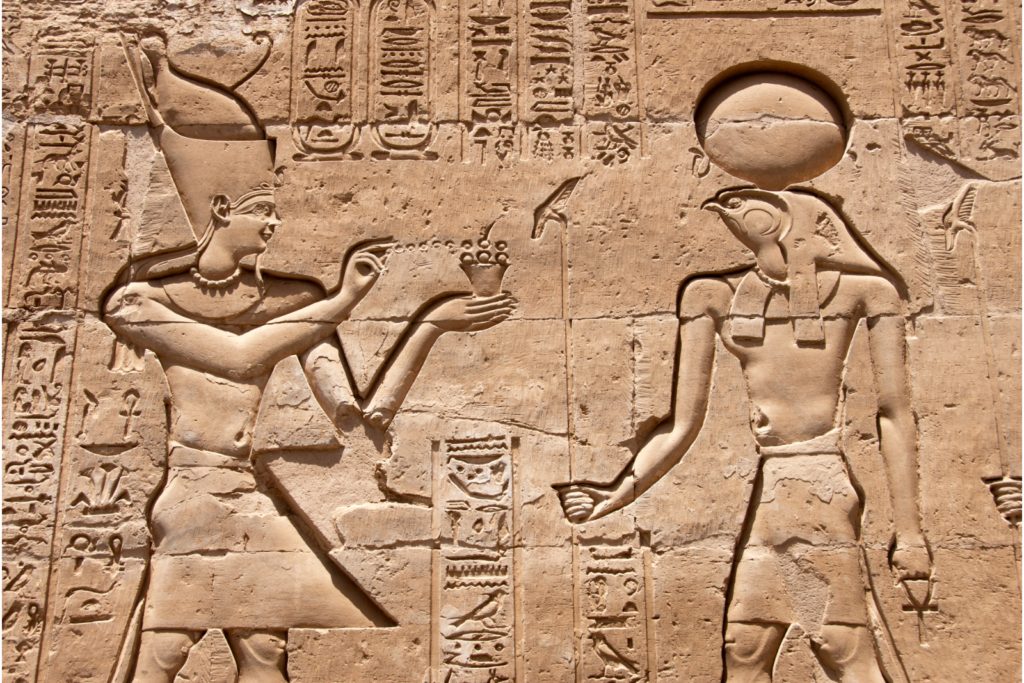
Sobek is shown either as a full crocodile, often lying on a shrine or plinth, or as a man with a crocodile's head, usually crowned with a sun disc, tall plumes and ram's horns. The human-bodied form carries the was sceptre and ankh like other major gods. In reliefs he receives offerings from the king like any other temple lord, which can look surprising until you see the same scene repeated for falcon, ibis and jackal gods.
Three-dimensional images range from tiny bronze crocodiles with a human head (common votive offerings in the Late Period) to royal statuary. The finest single piece in Egypt is a calcite group in the Luxor Museum of a seated Sobek with the young king Amenhotep III, found in 1967 at Dahamsha, near ancient Sumenu south of Luxor, and later reinscribed for Ramesses II.
What myths are told about Sobek?
Sobek has no single great myth of his own, but he plays memorable supporting roles, and the stories differ between sources. The most vivid comes from the Osiris cycle. In one episode Isis cuts off the hands of her son Horus and throws them into the water; a spell in the Book of the Dead (chapter 113) says the sun god told Sobek to retrieve them, and that in doing so he invented the fish trap. It is a reminder that the crocodile could be a helper of Horus.
Other traditions put him on the wrong side. Because crocodiles lurked in the water where Osiris was said to have drowned, some later texts and temples, especially at Edfu, treat crocodiles as followers of Seth, the murderer of Osiris. Both views coexisted: a god could be revered in one town and treated with suspicion in the next, and at Kom Ombo Sobek is fully respectable, sharing a temple with Horus himself. As Sobek-Ra he was also praised as a creator who rose from the primeval waters, a role his priests in the Fayoum pushed hard in the Graeco-Roman period.
Why did pharaohs honour a crocodile?
Sobek's royal heyday was the Middle Kingdom, when the 12th Dynasty kings developed the Fayoum, his home territory, and later rulers took his name. Amenemhat III (about 1850 BC) built at Shedet, the Fayoum capital the Greeks called Crocodilopolis, and founded the small temple at Medinet Madi for Sobek and the harvest goddess Renenutet. The last ruler of the dynasty was a woman, Sobekneferu ("Sobek is beautiful"), one of the few securely attested female pharaohs, and several kings of the 13th Dynasty were called Sobekhotep ("Sobek is content").
For the king, the crocodile was a fitting image of strength: royal hymns compare the pharaoh to a crocodile seizing his enemies. Sobek's popularity faded somewhat in the New Kingdom, when Amun dominated, but revived strongly under the Ptolemies, when the Fayoum was resettled and Kom Ombo was rebuilt. For the wider story see the Middle Kingdom.
Did the Egyptians really keep sacred crocodiles?
Yes: this is one of the best-documented animal cults of ancient Egypt, recorded by Greek visitors and confirmed by thousands of crocodile mummies. Herodotus, writing in the 5th century BC, reported that at Thebes and around Lake Moeris (today's Lake Qarun) tame crocodiles wore earrings of glass and gold and bracelets on their forefeet. Around 25 BC the geographer Strabo visited Crocodilopolis and watched priests prise open the jaws of the sacred crocodile, known in Greek as Petsuchos, to feed it a cake, roast meat and a drink of honeyed wine.
Archaeology backs this up, with a twist. Alongside the single living god-animal, temples raised or collected huge numbers of crocodiles, from hatchlings to adults, to be mummified and sold as offerings. At Tebtunis in the Fayoum in 1899–1900, the papyrologists Grenfell and Hunt found that many crocodile mummies had been wrapped in discarded papyrus, preserving a large archive of Ptolemaic documents. What remains uncertain is the exact relationship between the one sacred crocodile and the mass-produced mummies; our guide to sacred animals and animal mummies covers the debate.
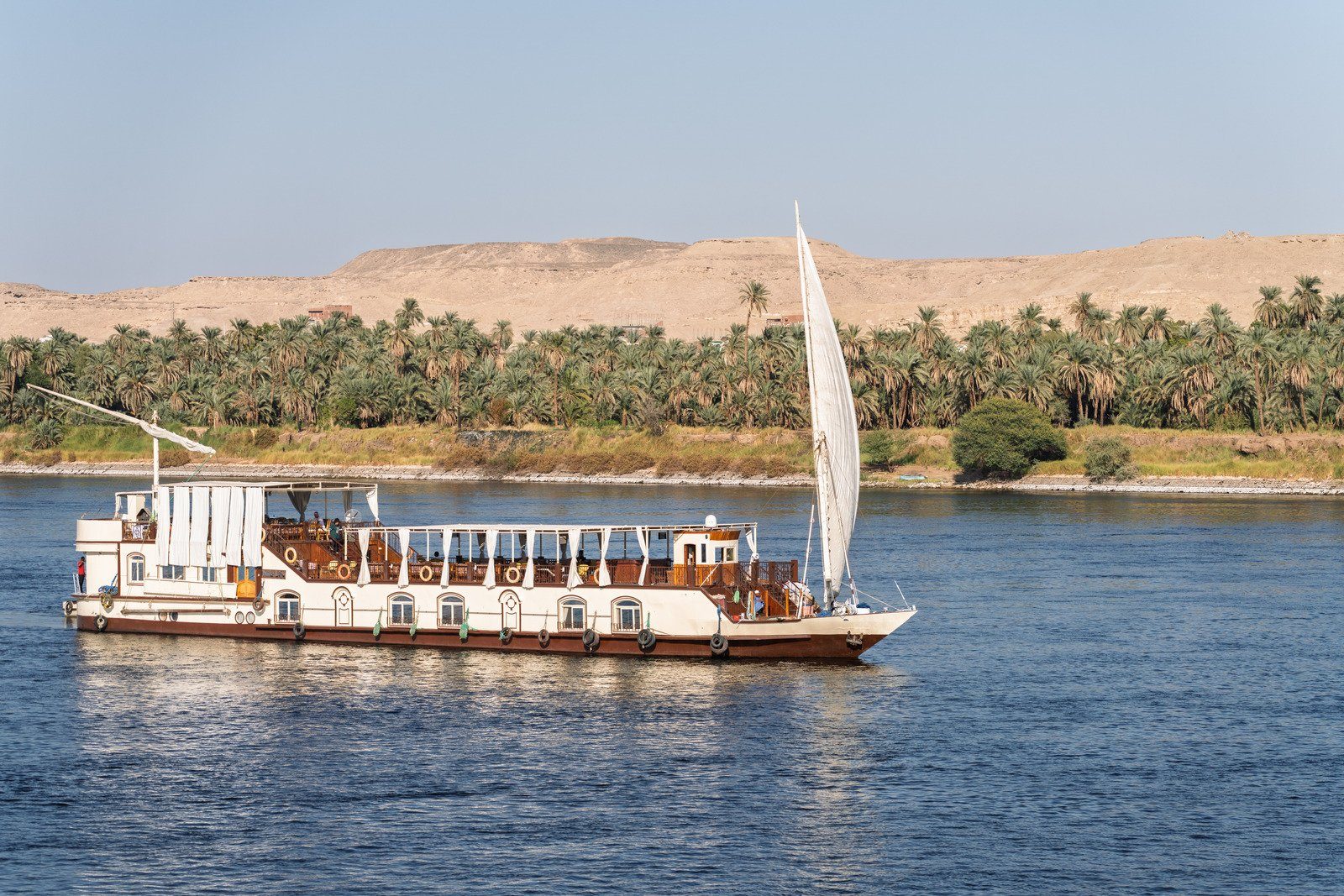
A modern footnote: wild crocodiles no longer live in the Egyptian Nile between Aswan and the Mediterranean. They survive south of the High Dam in Lake Nasser, so you will not see one from a Luxor–Aswan cruise boat.
Where to see Sobek in Egypt today
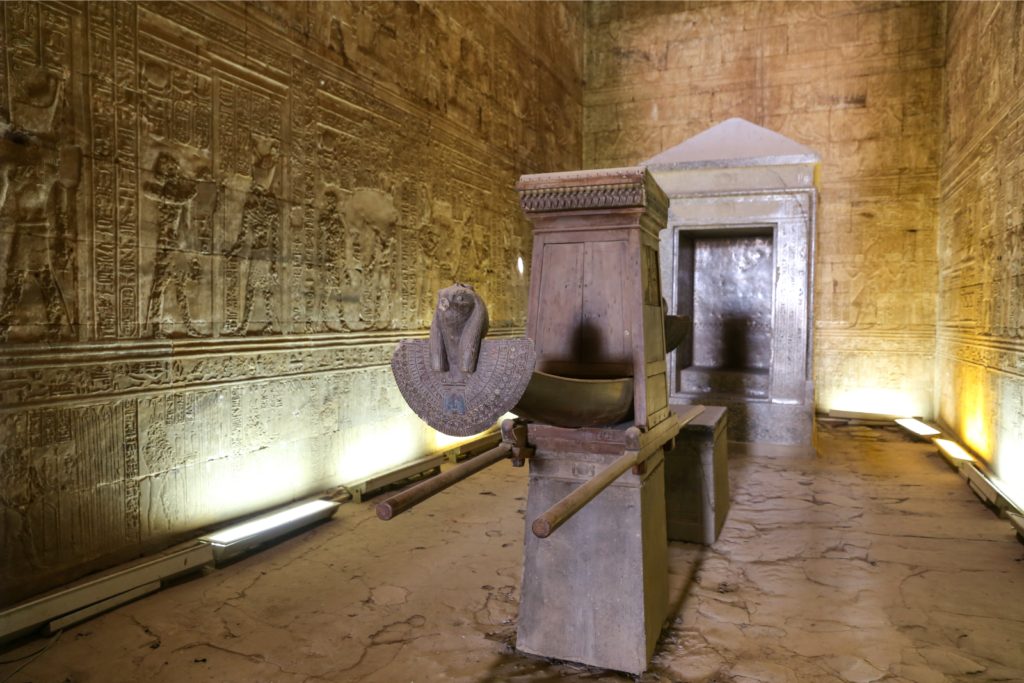
The essential stop is Kom Ombo Temple, about 45 km north of Aswan, where almost every Nile cruise calls. The temple is split down the middle: the southern (right-hand) half belongs to Sobek, the northern to Horus the Elder, with two entrances and two sanctuaries. Look for Sobek's crocodile head and sun-disc crown on the walls of the hypostyle halls.
- Crocodile Museum, Kom Ombo: beside the temple, opened in 2012, it displays a selection of the mummified crocodiles found in a nearby cemetery, from hatchlings to adults, plus crocodile eggs and coffins. Allow 20 minutes.
- Luxor Museum: the calcite statue of Sobek with Amenhotep III described above.
- Gebel el-Silsila: the quarry site between Edfu and Kom Ombo had shrines to Sobek; dahabiyas stop here, larger ships rarely do.
- The Fayoum: the temple at Qasr Qarun on the shore of Lake Qarun is generally identified as a Ptolemaic temple of Sobek. Little survives of Shedet itself, buried under modern Medinet el-Fayoum.
Our Classic Egypt and Nile Cruise includes Kom Ombo; most cruise schedules visit around sunset, when the temple is floodlit.
Frequently asked questions
What was Sobek the god of?
Sobek was the crocodile god of the Nile, linked with the river's water, fertility, protection and the physical strength of the king. As Sobek-Ra he was also worshipped as a form of the sun god and a creator.
Is Sobek good or evil?
Mostly good. He was a major temple god at Kom Ombo and in the Fayoum, and a helper of Horus in some myths. Some later traditions, especially at Edfu, associated crocodiles with Seth, so his reputation varied from place to place.
Where is the Temple of Sobek?
The best-preserved is Kom Ombo Temple, which Sobek shares with Horus the Elder, about 45 km north of Aswan. His other great cult centre, Crocodilopolis in the Fayoum, is now largely buried under the modern city.
Are there crocodile mummies in Egypt?
Yes. The Crocodile Museum at Kom Ombo displays a selection of them, and others are in the Egyptian Museum in Cairo and museums abroad. Thousands were buried as offerings in cemeteries in the Fayoum and Upper Egypt.
Can you see crocodiles on a Nile cruise?
Not between Luxor and Aswan. Wild Nile crocodiles survive in Egypt only south of the Aswan High Dam, in Lake Nasser, and are occasionally spotted on Lake Nasser cruises.