In short
Abu Simbel is a pair of rock-cut temples built by Ramesses II about 280 km south of Aswan, near the Sudanese border. Fronted by four 20-metre seated colossi and famously moved block by block in the 1960s, it is one of the most spectacular sights in Egypt and well worth the journey.
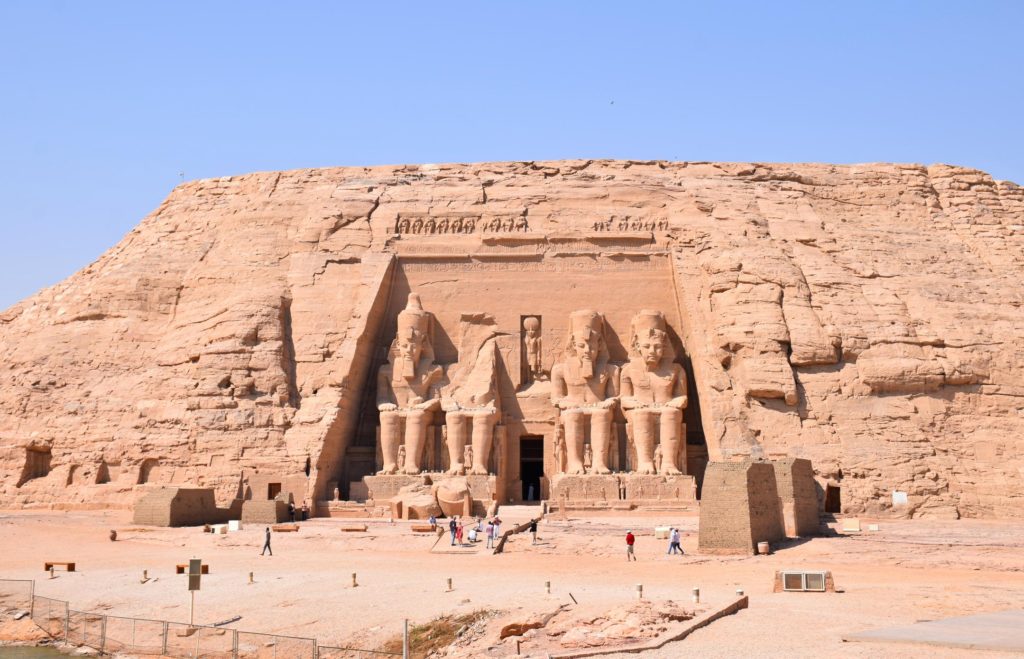
Carved into a sandstone cliff around 1264 BC, the Great Temple of Abu Simbel was built to impress anyone travelling north from Nubia. Its facade has four seated statues of Ramesses II, each about 20 metres high, and inside, eight Osiride statues line the hall leading to a sanctuary where the king sits among the gods. The Small Temple next door is dedicated to Hathor and to Ramesses' great wife Nefertari.
When the Aswan High Dam was built, Lake Nasser threatened to drown both temples. Between 1964 and 1968 an international UNESCO campaign cut them into more than 1,000 blocks and reassembled them about 65 metres higher and 200 metres back from the river, inside an artificial hill. Ask your guide to take you behind the facade; the concrete dome is an engineering marvel in itself.
Twice a year, around 22 February and 22 October, the rising sun shines along the full length of the Great Temple and lights three of the four statues in the sanctuary, leaving Ptah, a god linked to the underworld, in shadow. These sun festival days draw large crowds and need careful planning.
Top things to see in Abu Simbel
The Great Temple of Ramesses II
Behind the four colossi, the temple runs about 60 metres into the rock. The walls of the hypostyle hall show the Battle of Kadesh against the Hittites in vivid detail, and side chambers held temple stores. In the sanctuary sit Ptah, Amun-Ra, the deified Ramesses and Ra-Horakhty.
The Small Temple of Hathor and Nefertari
Its facade has six standing statues, four of Ramesses and two of Nefertari, all the same height, which is unusual and a sign of her status. The interior reliefs, with Nefertari offering to Hathor and Isis, are delicate and beautifully preserved.
The relocation dome
Both temples sit inside artificial hills built over concrete domes. When access is permitted, a look inside shows how the 1960s engineers reassembled the temples, and a small visitor centre explains the rescue.
The sun festival
Around 22 February and 22 October, sunlight reaches the sanctuary for about 20 minutes after sunrise. The dates are commonly linked to Ramesses' birthday and coronation, though historians debate this; the alignment shifted by about a day when the temple was moved.
Sound and light show
In the evening the temple facades become the screen for a projected show telling the story of Ramesses and Nefertari. It is only possible if you stay overnight or arrive by Lake Nasser cruise.
Lake Nasser temples
Lake Nasser cruises also visit other rescued Nubian monuments, including Kalabsha, Amada (with original colour), Wadi el-Seboua and the fortress of Qasr Ibrim, sights that few road-trippers see.
Unforgettable experiences
- Arriving at opening time, when the facade turns gold in the early light
- Staying overnight to see the temples almost empty at dawn
- A 3–4 night Lake Nasser cruise ending with a sunrise view of the colossi
- Watching the sun festival illumination (with patience and an early start)
When to visit Abu Simbel
October to March is best, when it is warm rather than brutally hot. Abu Simbel is one of the hottest places in Egypt, regularly 40°C or more in summer, so arrive at opening time whatever the season. For the sun festival, around 22 February and 22 October, expect very large crowds, an even earlier start and queues before dawn; it is spectacular but a normal day is more relaxing.
How long to spend in Abu Simbel
The site itself takes 2–3 hours. A day trip from Aswan by road takes about 9–10 hours in total, or around 5 hours if you fly. One night in the village lets you see the sound and light show and the temples at their quietest the following morning, while a Lake Nasser cruise adds 3–4 nights.
Getting there
Most visitors drive from Aswan, leaving around 4–5am for an arrival near opening time; the road is about 280 km through the Nubian Desert. Flights from Aswan take about 45 minutes and are faster and far less tiring, but schedules are limited and change seasonally, so book early. Lake Nasser cruises sail between Aswan and Abu Simbel over 3–4 nights.
Specialist tips
- Bring breakfast, water and a jumper for the dark, chilly early-morning drive
- Fly one or both ways if your budget allows; it saves around five hours on the road
- Plan Abu Simbel on a land day in Aswan rather than squeezing it into a cruise schedule
- Book sun festival dates many months ahead; hotels, flights and guides fill quickly
- Photography rules inside the temples can change; check at the ticket office
Abu Simbel: frequently asked questions
Is Abu Simbel worth the trip from Aswan?
Yes. It is one of the most impressive monuments in Egypt and the long drive is the only real downside. Flying cuts the journey to about 45 minutes each way.
When is the Abu Simbel sun festival?
Around 22 February and 22 October each year, when the rising sun lights the statues in the sanctuary. Confirm exact timings closer to the date, and book early.
How early do you leave Aswan for Abu Simbel?
Road trips usually leave around 4–5am to arrive near opening time and avoid the midday heat, returning to Aswan by early afternoon.
Which tours include Abu Simbel?
Our Classic Egypt and Nile Cruise, Luxury Egypt and Ultimate Egypt tours include it, and it can be added to any itinerary that reaches Aswan.