Quick answer
Pharaonic Egypt lasted about 3,000 years, from the unification of the country around 3000 BC to the death of Cleopatra VII in 30 BC. Egyptologists divide it into the Old, Middle and New Kingdoms, times of strong central rule, separated by 'intermediate periods' of division, followed by the Late Period and Greek Ptolemaic rule: about 30 dynasties in all.
How is ancient Egyptian history divided?
Into dynasties grouped into periods: three “kingdoms” of united, prosperous rule, with “intermediate periods” of division between them. The dynasties come from Manetho, an Egyptian priest who wrote a history of Egypt in Greek in the 3rd century BC. His original is lost, but later quotations preserved his list of 30 royal houses, and Egyptologists still use his numbering.
The Egyptians themselves kept king lists. The most famous one you can see is in the Temple of Seti I at Abydos, where Seti and his son Ramesses honour 76 royal predecessors, conveniently leaving out rulers they disapproved of, such as Hatshepsut and Akhenaten.
The ancient Egypt timeline at a glance
Use these conventional dates as a guide: they are approximate, and books can differ by a few decades, or more for the earliest periods.
| Period | Approx. dates | Dynasties | Key rulers and landmarks |
|---|---|---|---|
| Predynastic | c. 5300–3000 BC | – | Farming villages along the Nile; Naqada culture; first hieroglyphs around 3200 BC |
| Early Dynastic | c. 3000–2686 BC | 1–2 | Narmer unites Upper and Lower Egypt; Memphis founded; royal tombs at Abydos |
| Old Kingdom | c. 2686–2181 BC | 3–6 | Djoser’s Step Pyramid; Sneferu; Khufu, Khafre and Menkaure at Giza; first Pyramid Texts |
| First Intermediate Period | c. 2181–2055 BC | 7–11 (part) | Rival courts at Herakleopolis and Thebes; local governors grow powerful |
| Middle Kingdom | c. 2055–1650 BC | 11 (part)–13 | Mentuhotep II reunites Egypt; Senusret I and III; Amenemhat III; classic literature |
| Second Intermediate Period | c. 1650–1550 BC | 14–17 | The Hyksos rule the north from Avaris; Theban kings fight back |
| New Kingdom | c. 1550–1069 BC | 18–20 | Ahmose; Hatshepsut; Thutmose III; Amenhotep III; Akhenaten and Tutankhamun; Seti I; Ramesses II; Valley of the Kings |
| Third Intermediate Period | c. 1069–664 BC | 21–25 | Kings at Tanis, Libyan dynasties, then Kushite pharaohs from Nubia |
| Late Period | 664–332 BC | 26–31 | Saite revival; Persian conquests in 525 and 343 BC; Nectanebo II, last native pharaoh |
| Ptolemaic Period | 332–30 BC | Macedonian and Ptolemaic | Alexander the Great; Alexandria; Edfu, Dendera and Philae; Cleopatra VII |
| Roman and Byzantine Egypt | 30 BC–AD 641 | – | Emperors shown as pharaohs on temple walls; spread of Christianity; Arab conquest 639–641 |
Why are the dates only approximate?
Because the Egyptians dated events by the years of each king’s reign, not by a continuous calendar, so modern dates have to be reconstructed. A document might say “year 5 of King Thutmose III”, and historians must work out how long every reign lasted and whether some overlapped.
Three kinds of evidence pin the chronology down: king lists and dated documents; occasional astronomical records, such as the heliacal rising of the star Sirius mentioned in a few texts; and links with neighbouring civilisations, such as the Amarna letters exchanged with Babylon and the Hittites. Radiocarbon dating of plant material from tombs, published in 2010, broadly confirmed the conventional framework. The first date known to the year is 664 BC, the start of the 26th Dynasty; New Kingdom dates are usually reliable within a few decades, while Old Kingdom dates may be out by a century or so. That is why you will see Ramesses II given as 1279–1213 BC in most books, but slightly different dates in some.
How old is ancient Egypt, really?
Old enough that Egypt was already ancient to the ancients: Cleopatra lived closer in time to the Moon landing than to the building of the Great Pyramid. The Great Pyramid was about 2,500 years old when Cleopatra died, more than the 2,000 or so years that separate her from us.
Egyptians themselves felt this depth. New Kingdom visitors left graffiti in the 2,000-year-old Step Pyramid complex at Saqqara admiring the work of the ancestors, and the Greek historian Herodotus, writing in the 5th century BC, was told stories about Khufu that were already 2,000 years old. On a single Nile cruise you can stand in temples built 1,500 years apart.
The New Kingdom, the age of Tutankhamun and Ramesses, gets most attention because Luxor preserves it so well. For the radical reign of Akhenaten, read our guide to the Amarna period; for the Kushite kings who ruled Egypt in the 25th Dynasty, see Nubia and the Kingdom of Kush.
What happened after Cleopatra?
Egypt became a Roman province in 30 BC, and its later history added Christian, Islamic and modern layers on top of the pharaonic one. The main milestones:
- 30 BC–AD 641: Roman, then Byzantine rule; Egypt becomes largely Christian and the Coptic Church takes shape.
- 639–641: Arab armies conquer Egypt; Fustat, the first Arab capital, grows beside what is now Old Cairo.
- 969: the Fatimids found Cairo, followed by Ayyubid, Mamluk and, from 1517, Ottoman rule.
- 1798–1801: Napoleon’s expedition, which also sparked modern Egyptology.
- 1882–1952: British occupation and influence; formal independence in 1922 and a republic in 1953.
Where to see each period in Egypt today
Egypt’s sites line up roughly by period as you travel south: the oldest around Cairo, the New Kingdom at Luxor and the Ptolemaic temples between Luxor and Aswan.
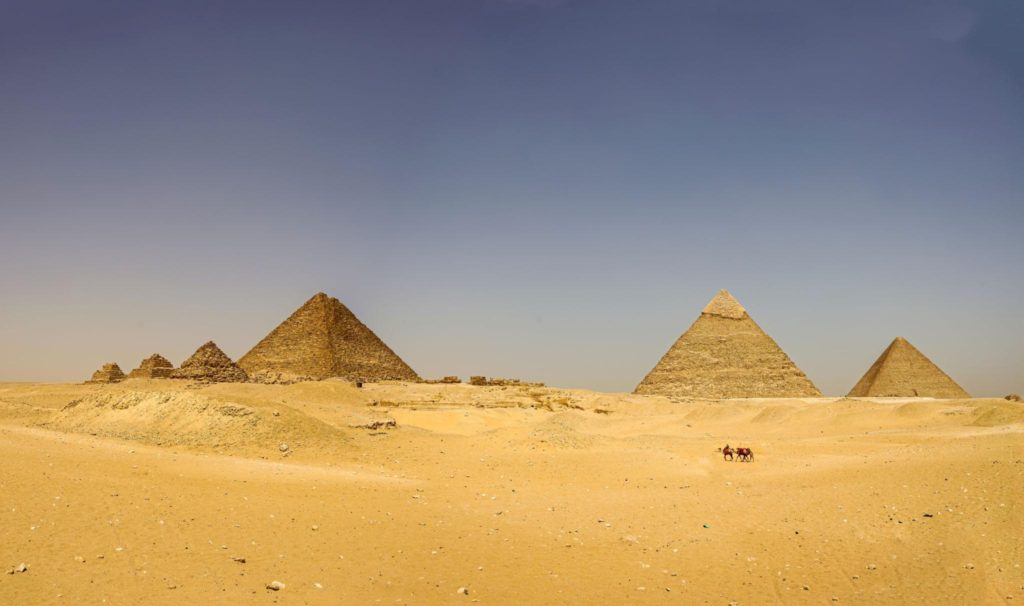
- Early Dynastic and Old Kingdom: Saqqara, Giza, Dahshur and Memphis, all within a day of Cairo.
- Middle Kingdom: the White Chapel of Senusret I in the Karnak Open-Air Museum, and the rock tombs of Beni Hasan in Middle Egypt.
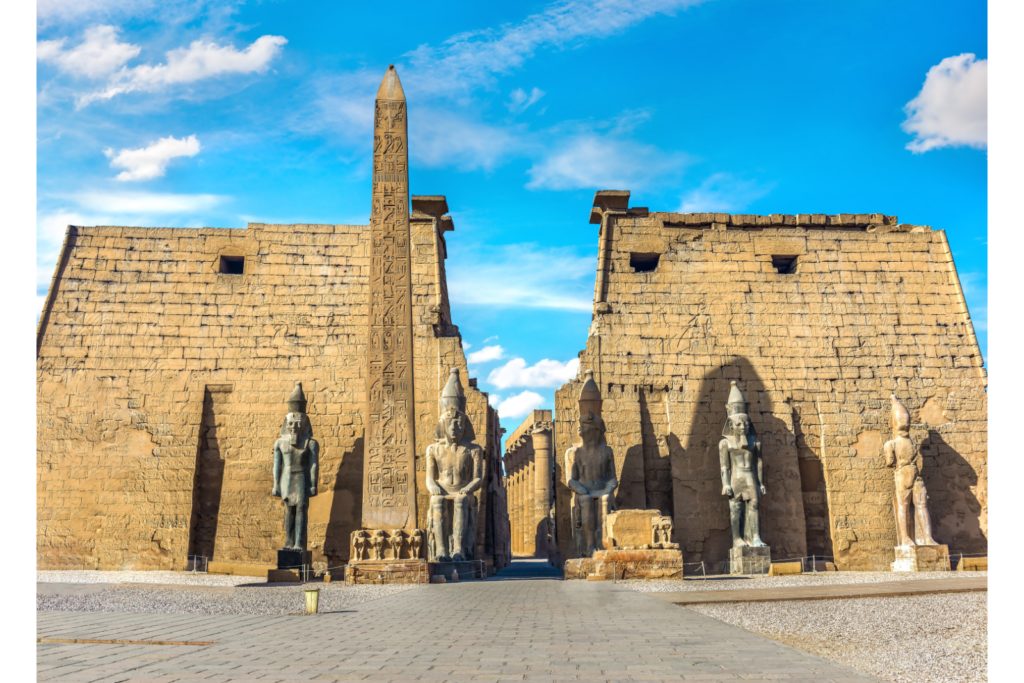
- New Kingdom: Karnak, Luxor Temple, the Valley of the Kings, Abu Simbel and Abydos.
- Late and Ptolemaic: Edfu, Dendera, Kom Ombo and Philae, plus Alexandria’s museums.
For the whole sweep under one roof, the main gallery of the National Museum of Egyptian Civilization is laid out chronologically, and the Grand Egyptian Museum’s galleries also trace the periods. Visiting a museum early in your trip makes everything afterwards easier to place.
Frequently asked questions
How long did ancient Egypt last?
Pharaonic Egypt lasted about 3,000 years, from unification around 3000 BC to the death of Cleopatra VII in 30 BC. Its culture had roots in the Predynastic period that began more than 2,000 years earlier.
What are the three kingdoms of ancient Egypt?
The Old Kingdom (about 2686–2181 BC), the age of the great pyramids; the Middle Kingdom (about 2055–1650 BC), a classical age of literature and art; and the New Kingdom (about 1550–1069 BC), Egypt's imperial age of Hatshepsut, Tutankhamun and Ramesses II.
Who was the first pharaoh?
Tradition names Menes, and most Egyptologists identify him with, or closely link him to, Narmer, who ruled around 3000 BC and appears on the Narmer Palette wearing the crowns of both Upper and Lower Egypt.
Who was the last pharaoh?
The last native Egyptian pharaoh was Nectanebo II, defeated by the Persians in 343 BC. The last ruler of independent Egypt was the Ptolemaic queen Cleopatra VII, whose death in 30 BC ended the pharaonic era.
Why do dates for ancient Egypt differ between books?
Because they are reconstructed from reign lengths, a few astronomical observations and links with other civilisations. Different scholars weigh the evidence slightly differently, so dates before 664 BC can vary by years or decades.