Quick answer
The Middle Kingdom was the period from about 2055 to 1650 BC when Egypt was reunited after a century of division, first by Mentuhotep II of Thebes and then by the powerful Twelfth Dynasty. Later Egyptians saw it as their classical age: it produced their finest literature, the standard form of the language, fortresses in Nubia and the irrigation of the Fayoum.
What was the Middle Kingdom?
The Middle Kingdom is the second great era of a unified Egypt, sandwiched between two periods of division, and it rebuilt the state on new lines: less god-like kings, more professional officials and a stronger grip on Nubia. It began when the Theban king Mentuhotep II defeated the rival dynasty at Herakleopolis around 2055 BC, ending the First Intermediate Period that followed the collapse of the Old Kingdom.
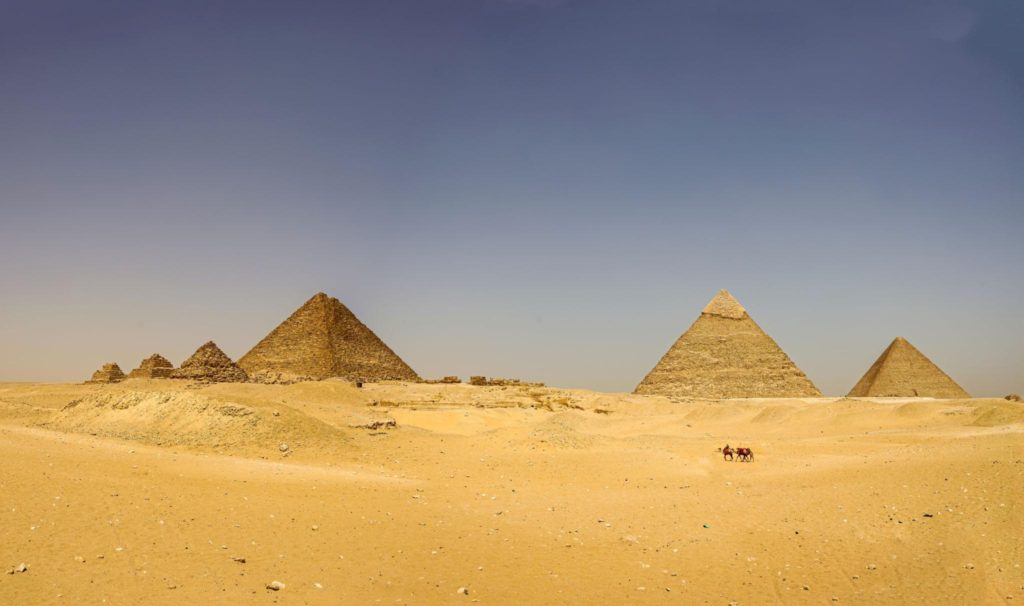
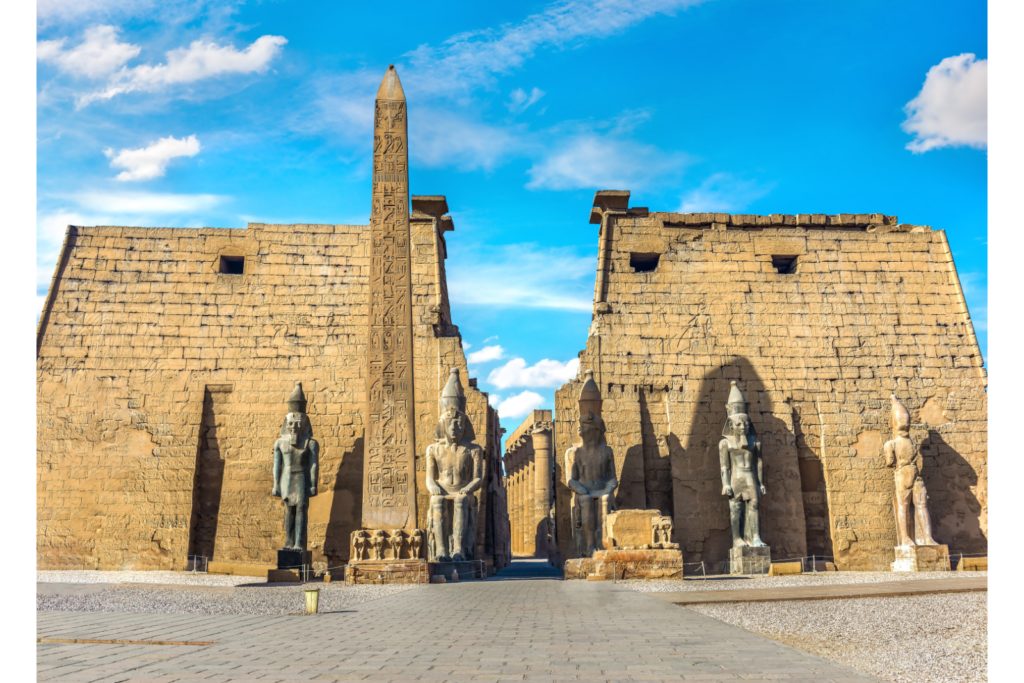
Its monuments are less famous than the pyramids or the Luxor temples, partly because later kings dismantled and reused them, and partly because its pyramids were built of mud brick and have slumped into mounds. But its influence was enormous: New Kingdom scribes copied Middle Kingdom texts as models, and students of hieroglyphs today still begin with its language.
How did Mentuhotep II reunite Egypt?
Mentuhotep II, ruling from Thebes (modern Luxor), fought his way north against the kings of Herakleopolis and by about his 39th year on the throne controlled the whole country. He reigned for around 51 years, roughly 2055–2004 BC, and later Egyptians honoured him alongside Menes and Ahmose as one of the founders of the state.
His memorial temple, terraced against the cliffs at Deir el-Bahri on Luxor’s West Bank, was the model for the much more famous temple Hatshepsut built beside it 500 years later. Near it archaeologists found a mass grave of around 60 soldiers, killed in battle, probably during the wars of reunification.
A painted seated statue of the king, with black skin symbolising Osiris and rebirth, was found by Howard Carter in 1900 when his horse stumbled into a hidden shaft in front of the temple; the find is still known as Bab el-Hosan, “gate of the horse”.
Who were the Twelfth Dynasty kings?
The Twelfth Dynasty, around 1985–1773 BC, was one of the most stable and capable lines of kings Egypt ever had, alternating the names Amenemhat and Senusret.
- Amenemhat I had been a vizier. He moved the capital to a new city, Itjtawy (“seizer of the Two Lands”), near el-Lisht south of Memphis, and was apparently murdered in a palace plot, an event recalled in two of the era’s most famous texts.
- Senusret I built widely: his White Chapel, rebuilt from blocks reused inside a later pylon, now stands in the Karnak Open-Air Museum, and his obelisk still stands where it was raised at Heliopolis in north-east Cairo.
- Senusret III campaigned in Nubia, cut back the power of the provincial governors and left haunting statues with heavy-lidded eyes and lined faces, a startling change from the idealised royal portrait.
- Amenemhat III ruled for about 45 years, a peak of prosperity, building the Black Pyramid at Dahshur and a second pyramid at Hawara whose vast mortuary temple Greek visitors later called the Labyrinth.
- Sobekneferu, at the end of the dynasty, is the first woman whose rule as king is firmly documented, centuries before Hatshepsut.
Why is the Middle Kingdom called Egypt’s classical age?
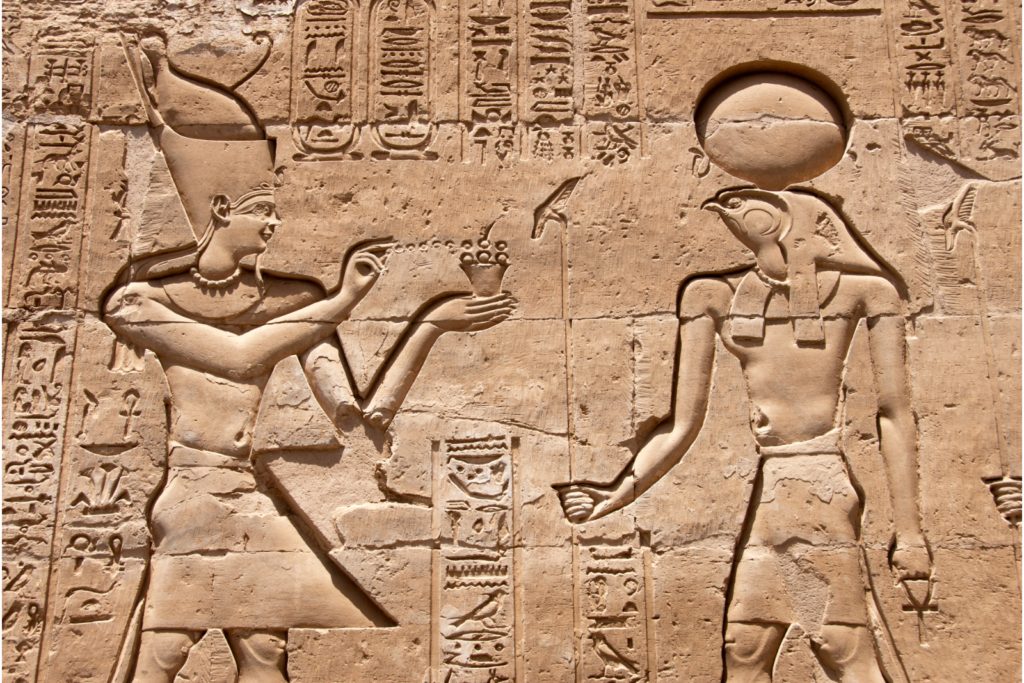
Because its writers produced the works later Egyptians treated as literature’s gold standard, in a form of the language that remained the formal written standard for the rest of ancient history. Middle Egyptian is the stage of the language taught first to students of hieroglyphs today.
- The Tale of Sinuhe: a courtier flees Egypt after Amenemhat I’s death, makes his fortune in the Levant and longs to be buried at home. It was a set text for scribes for centuries.
- The Shipwrecked Sailor: a castaway meets a giant, kindly serpent on a magical island.
- The Eloquent Peasant and the Satire of the Trades, a scribe’s comic case that every other job is worse than his.
- Mathematics: the Rhind Mathematical Papyrus, now in the British Museum, is a copy made around 1550 BC of an original from the reign of Amenemhat III.
In religion, spells once reserved for kings were painted inside the wooden coffins of officials, the so-called Coffin Texts, an important step towards the Book of the Dead.
How did the Middle Kingdom change Nubia and the Fayoum?
The Twelfth Dynasty pushed Egypt’s frontier south to the Second Cataract, guarding it with a chain of massive mud-brick forts, and turned the Fayoum depression into rich farmland. Forts such as Buhen, Semna and Kumma controlled river traffic and the trade in gold, ivory and ebony. Senusret III set up a boundary stela at Semna forbidding Nubians to pass north except to trade. Most of these forts now lie under Lake Nasser; our guide to Nubia and Kush follows the story.
In the Fayoum Oasis, kings from Senusret II onwards controlled the flow of the Bahr Yussef channel into the lake basin, reclaiming land. Senusret II built his pyramid at el-Lahun at the oasis entrance, and Amenemhat III his at Hawara nearby. Expeditions also sailed from a Red Sea harbour at Wadi Gawasis to the land of Punt for incense.
How did the Middle Kingdom end?
The Thirteenth Dynasty kept the state running for over a century with many short-reigning kings, but central control slowly weakened and a population from the Levant took over the eastern Delta. By around 1650 BC these rulers, the Hyksos (“rulers of foreign lands”), governed the north from their capital at Avaris, while a Theban dynasty held the south and the Kingdom of Kerma controlled Nubia. This Second Intermediate Period ended when Theban kings drove out the Hyksos and founded the New Kingdom.
Where to see the Middle Kingdom in Egypt today
Middle Kingdom sites are scattered, which makes them a rewarding focus for repeat visitors.
- Beni Hasan: rock-cut tombs of provincial governors near Minya, painted with wrestlers, hunters and a caravan of traders from the Levant.
- Qubbet el-Hawa, Aswan: the tombs of the Twelfth Dynasty governors Sarenput I and II, with views over the Nile.
- Karnak Open-Air Museum: Senusret I’s White Chapel, one of the finest small buildings in Egypt.
- Deir el-Bahri: the ruins of Mentuhotep II’s temple, beside the Temple of Hatshepsut.
- Dahshur and the Fayoum: the Black Pyramid of Amenemhat III, and the pyramids of Hawara and el-Lahun.
- Cairo’s museums: statues of Mentuhotep II and Senusret III, wooden models of boats and workshops, and the jewellery of Twelfth Dynasty princesses from Dahshur.
Our Egypt for history lovers journey includes Beni Hasan; check Smartraveller before planning travel in Middle Egypt.
Frequently asked questions
When was the Middle Kingdom of Egypt?
About 2055 to 1650 BC, from Mentuhotep II’s reunification through the Twelfth and Thirteenth Dynasties.
What is the Middle Kingdom best known for?
Classic literature such as the Tale of Sinuhe, the Middle Egyptian language, Nubian fortresses, the Fayoum irrigation scheme and strikingly realistic royal portraits.
Did Middle Kingdom pharaohs build pyramids?
Yes, but mostly with mud-brick cores behind a limestone casing. Once the casing was stripped they slumped, which is why the Black Pyramid at Dahshur and the pyramids at Hawara and el-Lahun look like dark mounds.
What was the capital of the Middle Kingdom?
Thebes at first, then Itjtawy, a new royal city founded by Amenemhat I near el-Lisht, south of Memphis. Its exact site has never been securely located.
Can you see Middle Kingdom sites on a Nile cruise?
A few: the White Chapel at Karnak, Mentuhotep II’s temple ruins at Deir el-Bahri and the tombs at Qubbet el-Hawa in Aswan. Beni Hasan needs a separate trip into Middle Egypt.