Quick answer
The New Kingdom, about 1550 to 1069 BC, was ancient Egypt’s age of empire, spanning the Eighteenth, Nineteenth and Twentieth Dynasties. Its pharaohs, from Ahmose and Hatshepsut to Akhenaten, Tutankhamun and Ramesses II, ruled from Syria to Sudan and built most of what visitors see in Luxor today: Karnak, Luxor Temple, the Valley of the Kings, as well as Abu Simbel.
What was the New Kingdom?
The New Kingdom was the 500 years when Egypt was at its richest and most powerful, a militarised state that controlled an empire and spent the profits on temples to Amun and tombs in the hills of Thebes. It followed the Second Intermediate Period, when the Hyksos ruled the north, and it ended with Egypt split between kings in the Delta and high priests in Thebes.
For travellers it is the most visible period of all. Unless you are standing at the pyramids or in a Ptolemaic temple, almost every famous monument you visit was built, enlarged or usurped by a New Kingdom king, and most of the royal mummies at the National Museum of Egyptian Civilization belong to it.
How did the New Kingdom begin?
It began in war: three kings of Thebes fought the Hyksos for a generation, and Ahmose I finally captured their capital, Avaris, around 1550 BC. The first of them, Seqenenre Tao, died violently; his mummy, now at the NMEC, has head wounds consistent with Hyksos battle-axes. His son Kamose continued the fight, and Ahmose finished it, chasing the Hyksos into Canaan.
A soldier who fought in these campaigns, Ahmose son of Ebana, had his career carved on the walls of his tomb at El Kab, south of Luxor, one of the few eyewitness accounts of the wars. The experience left Egypt with a professional army, horse-drawn chariots and composite bows learned from its enemies, and a determination to keep threats far from its borders.
Who were the great New Kingdom pharaohs?
The New Kingdom produced more famous rulers than any other era, and each of the best known has a guide of their own.
| Ruler | Dynasty | Approx. reign | Remembered for |
|---|---|---|---|
| Ahmose I | 18th | c. 1550–1525 BC | Expelling the Hyksos |
| Hatshepsut | 18th | c. 1473–1458 BC | Female pharaoh; Deir el-Bahri temple; expedition to Punt |
| Thutmose III | 18th | c. 1479–1425 BC | Seventeen campaigns; the empire at its height |
| Amenhotep III | 18th | c. 1390–1352 BC | Peak of wealth; Luxor Temple, Colossi of Memnon |
| Akhenaten | 18th | c. 1353–1336 BC | Worship of the Aten; the city of Amarna |
| Tutankhamun | 18th | c. 1332–1323 BC | Restoring the old gods; his intact tomb |
| Seti I | 19th | c. 1294–1279 BC | Abydos temple; the finest royal tomb |
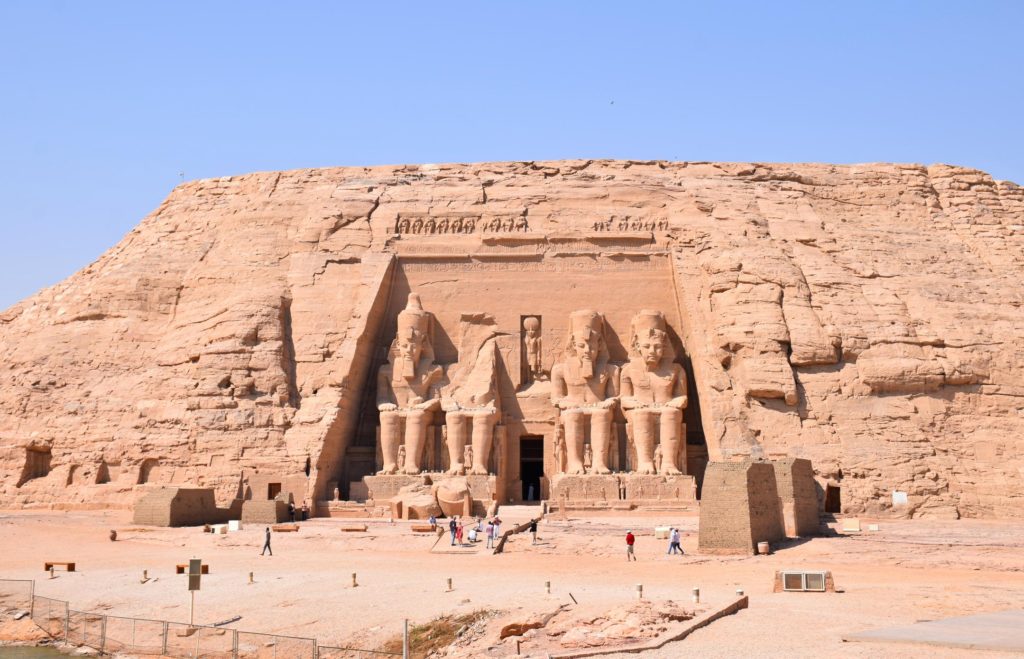
| Ramesses II | 19th | c. 1279–1213 BC | Abu Simbel, Kadesh, the Ramesseum; 66-year reign |
| Ramesses III | 20th | c. 1184–1153 BC | Defeating the Sea Peoples; Medinet Habu |
Hatshepsut and Thutmose III overlap because she ruled first as regent for her young stepson, then as king alongside him.
How big was the New Kingdom empire?
At its height Egypt’s power reached from the Euphrates River in Syria to the Fourth Cataract of the Nile in Sudan, more than 2,000 km from end to end. Thutmose I marched to the Euphrates and set up a boundary stela on its bank. His grandson Thutmose III fought some 17 campaigns in the Levant, starting with the siege of Megiddo around 1457 BC, recorded in the Annals carved at Karnak.
In the south, Nubia was conquered and turned into a colony governed by a viceroy, the “King’s Son of Kush”, and its gold mines made Egypt the richest state of its day. Egypt’s main rivals were Mitanni and later the Hittites of Anatolia. After the indecisive Battle of Kadesh in about 1274 BC, Ramesses II and the Hittite king Hattusili III signed a peace treaty around 1259 BC, one of the earliest whose text survives in both parties’ versions.
The empire ran on diplomacy as much as war. The Amarna letters show pharaohs trading gold for princesses with the kings of Babylon and Mitanni; our Amarna period guide covers that episode.
What did New Kingdom pharaohs build?
Most of the monuments that make Luxor the world’s greatest open-air museum: temples on the east bank for the living gods, and hidden tombs and memorial temples on the west bank for the dead kings.
- Karnak: enlarged by almost every king, culminating in the Great Hypostyle Hall of Seti I and Ramesses II, with 134 columns.
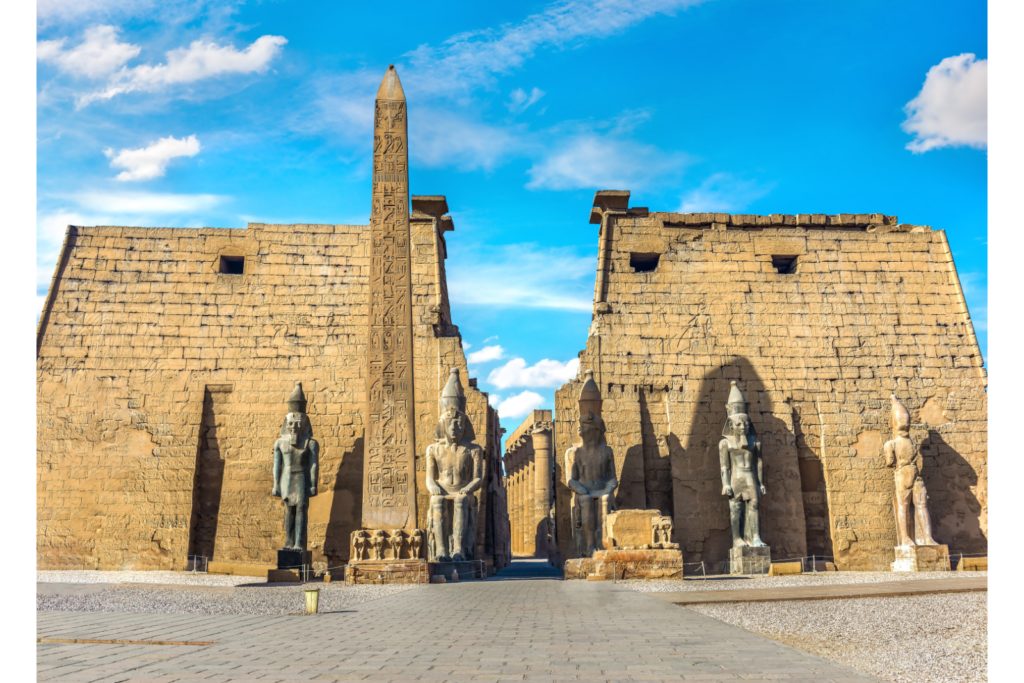
- Luxor Temple: built mainly by Amenhotep III and Ramesses II for the annual Opet festival.
- Valley of the Kings: rock-cut royal tombs replaced pyramids, which had proved impossible to protect; more than 60 tombs and pits have been numbered.
- Memorial temples: Hatshepsut’s at Deir el-Bahri, the Ramesseum and Medinet Habu, where the cult of each dead king was kept up.
- Nubia: Abu Simbel and a string of rock temples now around Lake Nasser, statements of power on the southern frontier.
What was life like beyond the palace?
Unusually rich records survive from the craftsmen who built the royal tombs, and they show a literate, opinionated community. The village of Deir el-Medina housed the tomb-builders and their families for about 400 years. Thousands of ostraca, inscribed flakes of limestone and pottery, record their work rotas, sick days, loans, court cases and love poems.
In year 29 of Ramesses III, when rations were late, the workmen downed tools and staged sit-ins at the temples: the earliest recorded strike in history. Later Twentieth Dynasty papyri record official investigations into the robbing of royal tombs, with confessions from the thieves, a sign that the state could no longer protect its own dead.
How did the New Kingdom end?
It wound down over a century, as the loss of the empire, economic strain and the growing power of Amun’s priests hollowed out royal authority. Ramesses III held off the Sea Peoples and the Libyans, but survived only to be the target of a harem conspiracy. His successors, eight more kings named Ramesses, lost the Levant and then Nubia.
By the reign of Ramesses XI, the High Priest of Amun effectively ruled the south from Thebes, while a governor named Smendes ran the north. When Ramesses XI died around 1069 BC, Smendes became king at Tanis in the Delta, beginning the Third Intermediate Period. The priests then gathered the royal mummies into hidden caches to save them from robbers; found in 1881 and 1898, they are why we can look at the faces of Seti I and Ramesses II today.
Where to see the New Kingdom in Egypt today
Luxor is the heart of it, but the story runs from Cairo to the Sudanese border.
- Luxor: Karnak, Luxor Temple, the Valley of the Kings and Queens, Hatshepsut’s temple, Medinet Habu and the Luxor Museum. Allow at least three days.
- Abydos: Seti I’s temple, with its king list and some of the finest reliefs anywhere.
- Abu Simbel: Ramesses II’s great temple and the temple of Nefertari.
- Cairo: Tutankhamun’s treasures at the Grand Egyptian Museum and the royal mummies at the NMEC, moved there in the Pharaohs’ Golden Parade of April 2021.
Our Classic Egypt and Nile Cruise covers nearly all of these, and our Hatshepsut program focuses on the Eighteenth Dynasty.
Frequently asked questions
When was the New Kingdom of Egypt?
About 1550 to 1069 BC, from Ahmose I’s defeat of the Hyksos to the death of Ramesses XI, covering the 18th, 19th and 20th Dynasties.
Who was the greatest New Kingdom pharaoh?
Ramesses II is the most famous builder and Thutmose III the most successful general, while Amenhotep III presided over the richest reign. Tutankhamun is the best known today, but only because of his tomb.
Why did New Kingdom kings stop building pyramids?
Every pyramid had been robbed. New Kingdom kings hid their tombs in the cliffs of the Valley of the Kings instead, and built separate memorial temples on the edge of the cultivation.
Which New Kingdom sites are on a Nile cruise?
Karnak, Luxor Temple and the West Bank in Luxor are standard, and Abu Simbel is an easy add-on from Aswan. Abydos is a day trip from Luxor. Edfu, Kom Ombo and Philae are Ptolemaic, built a thousand years later.
Can you see New Kingdom pharaohs’ mummies?
Yes. Ramesses II, Seti I, Hatshepsut, Thutmose III and others are in the Royal Mummies Hall at the NMEC in Cairo; Tutankhamun remains in his tomb in Luxor.