Quick answer
Alexander the Great spent about six months in Egypt, from late 332 BC to spring 331 BC. The Persian governor surrendered without a fight, Alexander was accepted as pharaoh at Memphis, founded Alexandria on the Mediterranean coast and crossed the desert to consult the oracle of Amun at Siwa, which hailed him as the god’s son. After his death his body was brought back to Egypt, but his tomb has never been found.
How did Alexander take Egypt?
Without a battle: when Alexander arrived in late 332 BC, the Persian satrap Mazaces handed over the country and its treasury at once. Egypt had been under Persian rule for a second time since 343 BC, and the Persians were unpopular, remembered for insulting Egyptian gods. Alexander, then 24, had already beaten the Persian king Darius III at Issus in 333 BC and taken the coast of the Levant after long sieges of Tyre and Gaza, so the small Persian garrison had no hope of resisting.
He entered at the frontier fortress of Pelusium on the eastern edge of the Delta and marched up the Nile to Memphis, the ancient capital near modern Cairo. There he sacrificed to the gods, including the sacred Apis bull, and held Greek athletic and music contests: a deliberate show of respect for Egyptian religion that contrasted with Persian behaviour.
Six months that changed Egypt: a timeline
Alexander’s stay was short, and most dates are approximate because the main ancient accounts were written centuries later.
- Late 332 BC: arrives at Pelusium after the siege of Gaza; Memphis surrenders.
- Winter 332–331 BC: sails down the western, Canopic branch of the Nile to the coast.
- Early 331 BC: marks out a new city between Lake Mareotis and the sea: Alexandria.
- Early 331 BC: follows the coast west to Paraetonium (modern Marsa Matruh), then crosses the desert to Siwa.
- Spring 331 BC: returns to Memphis, sets up a civil and military administration, and leaves for Mesopotamia.
- October 331 BC: defeats Darius at Gaugamela, in today’s northern Iraq.
Was Alexander crowned pharaoh?
He was accepted as pharaoh and given a full set of royal names, but whether a formal coronation took place at Memphis is debated. The only ancient source to describe one is the Alexander Romance, a largely legendary text, and the sober histories by Arrian and others do not mention it. Egyptian priests, however, certainly treated him as king: in temple inscriptions his name is written in cartouches with traditional titles, including “beloved of Amun, chosen of Ra”.
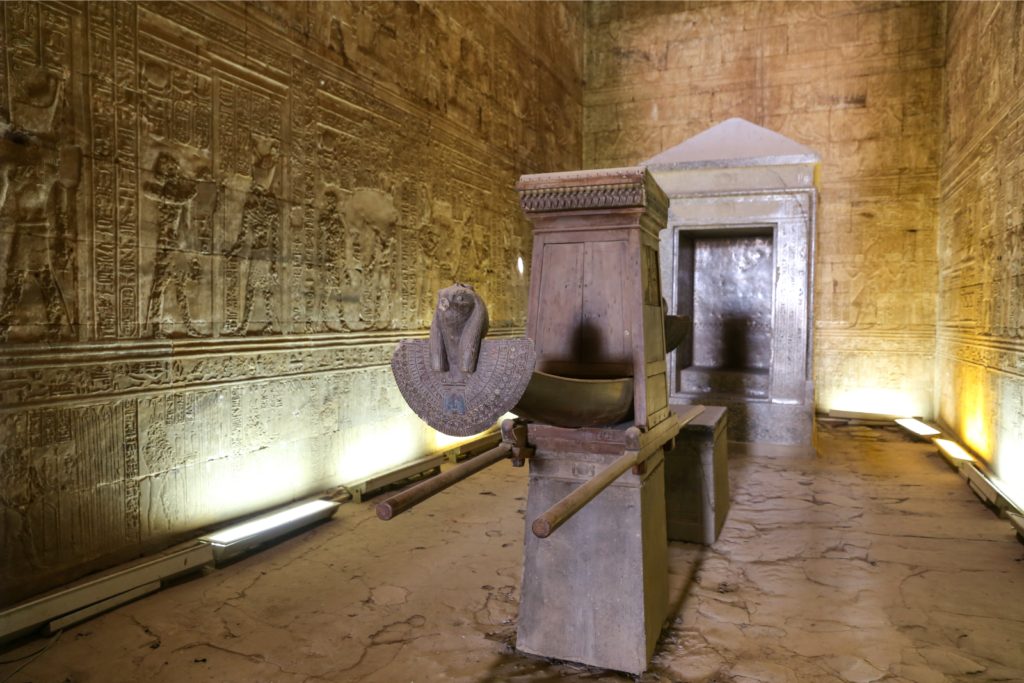
The clearest example is in Luxor Temple, where the barque sanctuary at the heart of the temple was rebuilt in his name. On its walls Alexander, in full pharaonic dress, makes offerings to Amun, although he never set foot in Thebes himself.
Why did Alexander go to the oracle at Siwa?
The oracle of Amun at Siwa was famous across the Greek world, and Alexander wanted its answer to a personal question, almost certainly about his own divine origins. Greeks equated Amun with Zeus, and legend said the heroes Perseus and Heracles, both claimed as Alexander’s ancestors, had consulted it. The journey of roughly 300 km across open desert from the coast was dangerous: the ancient historians say his party ran short of water until a storm brought rain, and that, when they lost the track, they were guided by crows (or, according to Ptolemy, by two talking snakes).
At the temple, the chief priest greeted him as the son of Amun. Alexander consulted the god alone and never revealed what he was told, but from then on he encouraged the idea that he was the son of Zeus-Ammon, and coins minted after his death show him with the ram’s horns of Amun. The ruined temple still stands on the rock of Aghurmi; see our guide to the Temple of the Oracle for visiting it.
How did he found Alexandria?
Alexander chose a strip of land between Lake Mareotis and the sea, sheltered by the island of Pharos, and his architect Deinocrates of Rhodes laid it out on a grid of broad streets. The site gave a deep-water harbour away from the silt of the Nile mouths, with the lake linking it to the river and the interior. According to a well-known story, there was no chalk to mark the plan, so the builders used barley meal; when birds flocked to eat it, the seers declared that the city would feed many peoples.
Alexander never saw a single building completed. The city was built by his successors, the Ptolemies, who made Alexandria the largest and most learned city of the Mediterranean, with the Pharos lighthouse and the great Library. That story continues in our guide to Ptolemaic Egypt.
Where is Alexander’s tomb?
Nobody knows: Alexander was buried in Alexandria, but his tomb vanished from the record by the late Roman period and has never been found. He died in Babylon in June 323 BC, aged 32. His general Ptolemy, who had taken Egypt as his province, intercepted the funeral cortège in Syria and brought the body to Memphis. It was later moved to Alexandria, where a mausoleum known as the Soma stood in the royal quarter. Julius Caesar and Augustus both visited; Augustus is said to have accidentally broken off part of the nose when touching the body. The last recorded visit is by the emperor Caracalla in AD 215.
Earthquakes, wars and centuries of rebuilding have buried ancient Alexandria under the modern city, and the search goes on. Claims to have found the tomb elsewhere, including one at Siwa in the 1990s, have been rejected by most archaeologists.
Where to see Alexander the Great in Egypt today
Follow his route in reverse: the Temple of the Oracle at Siwa, the city he founded at Alexandria, and his name carved in pharaonic style at Luxor Temple.
- Temple of the Oracle, Siwa: the hilltop temple where Alexander heard the god’s answer. Siwa is about 560 km west of Alexandria, a long day’s drive.
- Alexandria: the street grid of the modern centre still follows the ancient plan in places; the Alexandria National Museum displays sculpture from the Greek city.
- Luxor Temple: the barque sanctuary rebuilt in his name, deep inside the temple.
- Karnak: a granite barque shrine in the name of his half-brother and successor, Philip Arrhidaeus.
Travel to Siwa and the Western Desert involves checkpoints and permits; check current advice on smartraveller.gov.au before you go.
Frequently asked questions
How long was Alexander the Great in Egypt?
About six months, from late 332 BC to spring 331 BC. He never returned alive.
Is Alexander the Great buried in Egypt?
Yes, he was buried in Alexandria after his body was brought from Babylon, but the tomb was lost in late antiquity and its location is unknown.
Did Alexander build the Lighthouse of Alexandria?
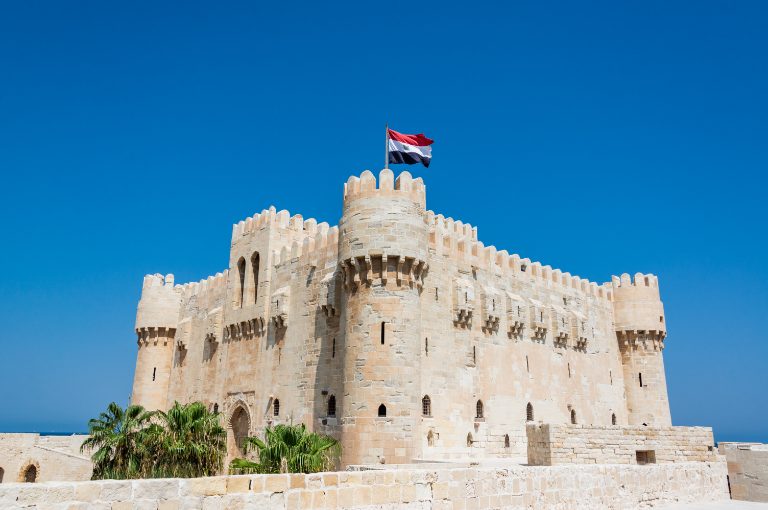
No. He founded the city, but the Pharos lighthouse was completed around 280 BC under Ptolemy II, more than 40 years after his death. The medieval Citadel of Qaitbay stands on its site.
Can you visit the oracle Alexander consulted?
Yes. The ruins of the Temple of the Oracle stand at Aghurmi, a few kilometres from the centre of Siwa town, and are usually included in a Siwa sightseeing day. Our Ultimate Egypt journey includes Siwa.
Why did the Egyptians accept Alexander?
He freed them from unpopular Persian rule, respected their gods and priests, and was presented as a legitimate pharaoh chosen by Amun.