Quick answer
Egypt was a Roman province for almost 700 years, from Octavian's capture of Alexandria in 30 BC to the Arab conquest of AD 641, with the later centuries ruled from Constantinople. Rome treated Egypt as its granary and quarry, yet kept the temples running: emperors such as Augustus, Trajan and Hadrian appear on temple walls at Dendera, Esna and Philae dressed as pharaohs.
When was Egypt part of the Roman Empire?
From August 30 BC, when Octavian (soon to be Augustus) took Alexandria after the deaths of Antony and Cleopatra, until the Arab armies captured Alexandria in AD 641. That is longer than the whole New Kingdom, yet most visitors barely notice it, because Roman Egypt hides inside buildings that look entirely pharaonic.
Historians usually divide it into three phases:
- Early Roman (30 BC – AD 284): Egypt run from Alexandria for the emperor, its temples still decorated in hieroglyphs.
- Late Roman (284 – 395): Diocletian's reforms split Egypt into smaller provinces, and Christianity spread from the cities into the countryside.
- Byzantine (395 – 641): after the empire divided, Egypt was governed from Constantinople, broken only by a Persian occupation from 619 to 629.
The story before 30 BC belongs to the Macedonian kings in our guide to Ptolemaic Egypt.
How did Rome govern Egypt?
As the emperor's personal possession: Augustus put it under a prefect from the equestrian class and barred senators from even entering Egypt without his permission. A rich, easily defended country with its own grain supply was too dangerous to hand to a rival aristocrat, and the rule held for centuries.
Legions were stationed at Nikopolis, just east of Alexandria, and at garrisons up the Nile to the southern frontier at Aswan and Philae. Day-to-day government still ran in Greek, as under the Ptolemies, through the councils of the district capitals. A poll tax fell on Egyptian men, with lower rates for the Greek-speaking urban elite, which made status something people recorded carefully. In AD 212 the emperor Caracalla gave Roman citizenship to almost every free inhabitant of the empire, Egyptians included.
We know Roman Egypt unusually well because its dry climate preserved papyrus. The rubbish mounds of Oxyrhynchus in Middle Egypt, dug by the Oxford scholars Bernard Grenfell and Arthur Hunt from 1896, yielded hundreds of thousands of fragments: tax receipts, leases, school exercises, party invitations and letters from soldiers asking their families to send cloaks.
Why did Egypt matter so much to Rome?
Grain first: every summer a fleet carried Egyptian wheat from Alexandria to Italy, and ancient writers and modern historians agree it fed a large share of the city of Rome. A delayed grain fleet could mean bread riots, which is why emperors watched Egypt so closely. After Constantine founded Constantinople in 330, the grain was redirected to the new capital.
Stone came next. In the Eastern Desert, Roman engineers ran imperial quarries at Mons Claudianus, for grey granite used in Rome's grandest buildings, and Mons Porphyrites, the only known source of the purple porphyry reserved for emperors. Columns were dragged to the Nile on giant wagons along desert roads lined with wells and forts.
The third prize was trade. Ships left the Red Sea ports of Myos Hormos, near today's El Quseir, and Berenike for India each summer, riding the monsoon winds, and the geographer Strabo wrote of up to 120 ships a year sailing from Myos Hormos alone. Pepper, spices, pearls and textiles came back across the desert to the Nile at Coptos, near modern Qift, then downriver to Alexandria and the Mediterranean.
Did Roman emperors really appear as pharaohs?
Yes: Roman emperors are carved on temple walls in pharaonic crowns, making offerings to Egyptian gods, with their names written in hieroglyphic cartouches. To the priests, whoever ruled Egypt had to play the king's role in the temple ritual, so the work begun by the Ptolemies simply continued under new names.
- Augustus paid for the Temple of Mandulis at Kalabsha and appears at Dendera and Philae.
- Tiberius, Claudius and Nero are among the emperors named in the decoration of Dendera's Temple of Hathor.
- Trajan is shown offering to Isis and Osiris inside the elegant open kiosk at Philae that bears his name.
- Decius, around AD 250, is one of the last emperors whose cartouche appears in a temple, in the Roman hypostyle hall at Esna.
Few emperors visited. Hadrian did, in AD 130: his companion Antinous drowned in the Nile, and Hadrian founded a city, Antinoopolis, near the spot and had him worshipped as a god. The imperial party also visited the Colossi of Memnon at Thebes, where Roman tourists came to hear one statue “sing” at dawn after an earthquake had cracked it; the poet Julia Balbilla, travelling with Hadrian's wife Sabina, left verses carved on its leg.
How did Egyptian, Greek and Roman culture mix?
Families in Roman Egypt were mummified in the old way but buried with lifelike Greek-style portraits, and their tombs show Egyptian gods in Roman dress. The famous Fayum mummy portraits, painted in hot wax or tempera on wooden panels between the 1st and 3rd centuries AD, were bound over the faces of mummies in cemeteries such as Hawara. They are some of the most striking faces to survive from the ancient world.
In Alexandria's catacombs, Anubis guards a tomb wearing a Roman legionary's armour. The Greco-Egyptian god Serapis and the goddess Isis were exported across the empire, with temples to Isis in Rome and Pompeii. Alexandria itself remained a centre of learning: the astronomer and geographer Claudius Ptolemy worked there in the 2nd century AD, as did the engineer Hero, who described a simple steam-driven device.
How did Christianity change Roman Egypt?
Christianity grew from the 2nd century onwards, survived Diocletian's persecution and, by the late 4th century, had replaced the old cults as the religion of most Egyptians. The Coptic Church still dates its calendar, the Era of the Martyrs, from AD 284, the year Diocletian became emperor.
Egypt also invented Christian monasticism. Saint Antony withdrew to the Eastern Desert in the late 3rd century, and Pachomius organised the first communal monasteries in Upper Egypt in the 4th. Under Theodosius I, pagan worship was banned; the Serapeum of Alexandria was destroyed in 391. Yet the old religion lingered on the southern frontier: the last known hieroglyphic inscription was carved at Philae on 24 August 394, and Philae's Isis temple is traditionally said to have been closed only under Justinian in the 530s. Disputes over the nature of Christ after the Council of Chalcedon in 451 separated the Egyptian church from Constantinople, a split that still defines the Coptic Orthodox Church. The Coptic Museum in Old Cairo and the desert monasteries of Wadi El Natrun and the Red Sea Mountains keep that world alive.
How did Roman rule in Egypt end?
Exhausted by wars with Persia, Byzantine Egypt fell to the Arab general Amr ibn al-As between 639 and 641. The Persians had occupied the country from 619 until the emperor Heraclius won it back in 629, but there was little time to recover. Amr crossed from Sinai in late 639, besieged the Roman fortress of Babylon at the head of the Delta, which fell in 641, and Alexandria surrendered by treaty later that year. The army camp beside Babylon grew into Fustat, the first Arab capital of Egypt, and our guide to the history of Islamic Cairo picks up the story there.
Where to see Roman Egypt today
Look for Roman Egypt in two places: inside the late temples of the Nile Valley, and in Alexandria and Old Cairo, where Roman buildings survive above ground.
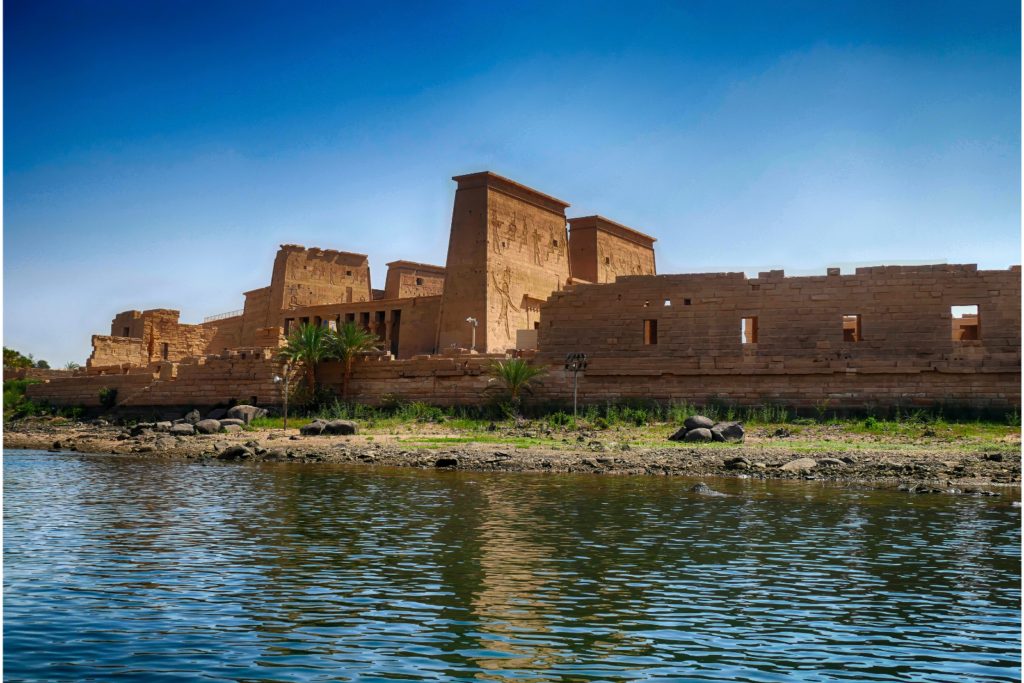
- Philae: Trajan's Kiosk and Roman-era reliefs on the Temple of Isis; see our Philae Temple guide.
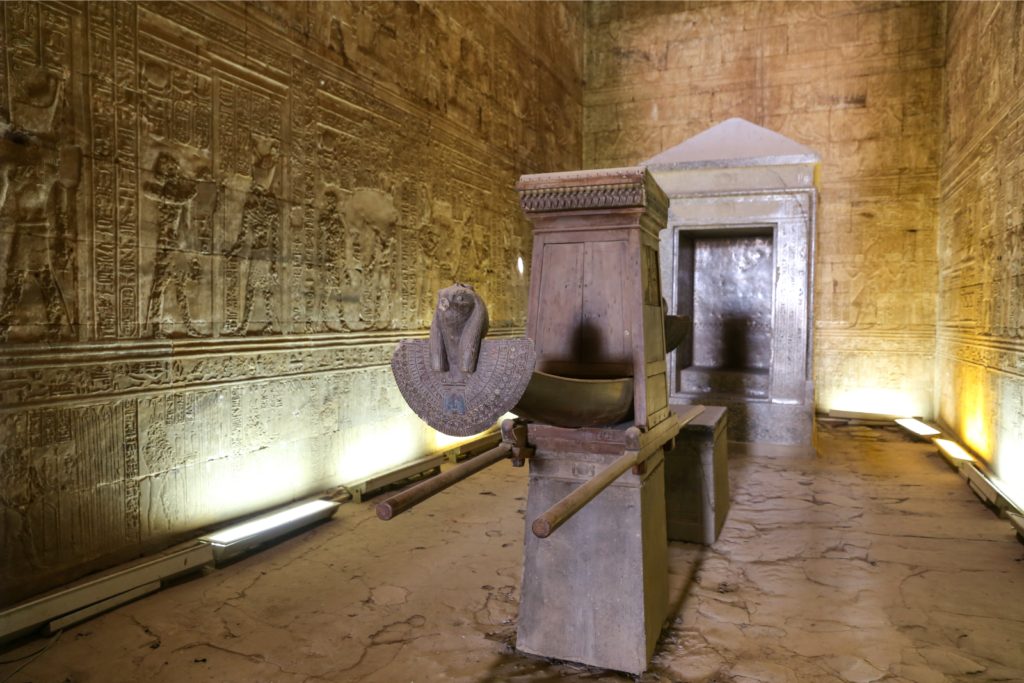
- Esna: a complete Roman hypostyle hall of 24 columns, its colours revealed by recent cleaning; see the Esna Temple guide.
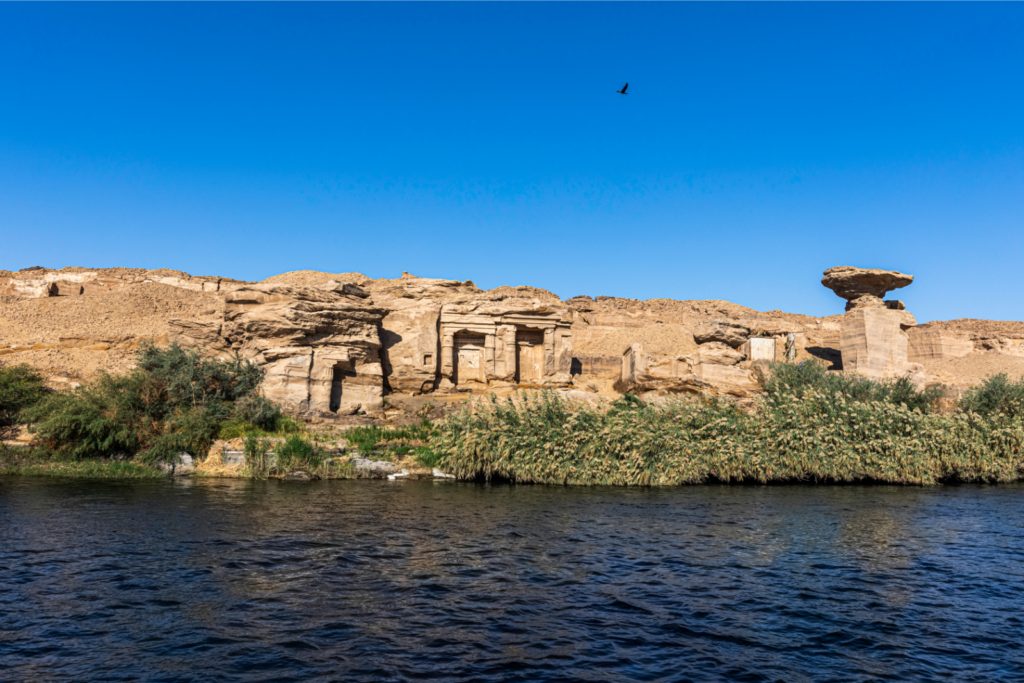
- Kalabsha: Augustus's temple to the Nubian god Mandulis, beside the Aswan High Dam.
- Luxor Temple: a Roman fort enclosed the temple, and a chamber before the sanctuary was turned into a shrine of the imperial cult, where traces of painted Roman officials survive.
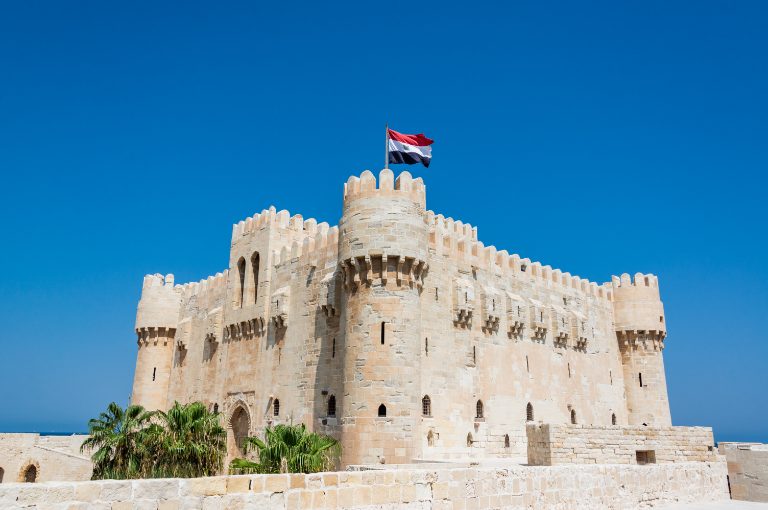
- Alexandria: Pompey's Pillar, raised for Diocletian around AD 297; the Roman theatre at Kom el-Dikka; and the Catacombs of Kom el-Shoqafa.
- Coptic Cairo: the towers and walls of the Roman Babylon Fortress, with the Hanging Church built over its gatehouse; see our Coptic Cairo guide.
Fayum portraits are held in museum collections in Cairo, but displays move between museums, so ask your guide which are on show at the time of your visit. Tickets for all these sites are sold at the gate; check current prices on egymonuments.gov.eg.
Frequently asked questions
When did Rome conquer Egypt?
In 30 BC, when Octavian captured Alexandria after the defeat of Antony and Cleopatra at Actium the year before. Egypt then became a Roman province.
How long did the Romans rule Egypt?
About 670 years, from 30 BC until the Arab conquest of 641. From AD 395 the province was governed from Constantinople, so its last centuries are often called Byzantine Egypt.
Did the Romans build temples in Egypt?
Yes. They finished and decorated many Ptolemaic temples and built new ones, such as Kalabsha under Augustus and the hypostyle hall at Esna, always in traditional Egyptian style with the emperor shown as pharaoh.
What are the Fayum mummy portraits?
Realistic painted portraits on wooden panels, made between the 1st and 3rd centuries AD and placed over the faces of mummies, mainly in cemeteries around the Fayoum. They blend Egyptian burial customs with Greco-Roman painting.
Is Cleopatra part of Roman Egypt?
No. Cleopatra VII was the last ruler of Ptolemaic Egypt; Roman rule began with her death in 30 BC. See our Cleopatra guide for her story.