Quick answer
Isis was the Egyptian goddess of magic, motherhood and protection, wife of Osiris and mother of Horus, who restored her murdered husband and hid her son until he could claim the throne. Her great temple stands on Philae near Aswan, the last place where the old gods were officially worshipped, and her cult spread across the Roman Empire.
Who was Isis?
Isis was the most resourceful of the Egyptian gods: a loyal wife, a protective mother and a magician so skilled that she could outwit the sun god himself. Her Egyptian name, Aset, is written with the hieroglyph of a throne, and many scholars think she began as the personification of the royal seat – the king sat, symbolically, in her lap. She already appears in the Pyramid Texts of the 24th century BC, mourning and protecting Osiris.
Her title Weret-hekau, “great of magic”, explains her popularity. Egyptians invoked her against snakebite, scorpion stings and childhood illness, and she was a guardian of the dead alongside her sister Nephthys. Over time she absorbed the roles of other goddesses, above all Hathor, until by the Roman period she was worshipped as a universal goddess.
How Isis was shown and her symbols
Early on, Isis is a woman wearing a throne-shaped headdress; from the New Kingdom she often wears cow horns around a sun disc, borrowed from Hathor. That makes the two goddesses hard to tell apart in later reliefs, so check the hieroglyphs: Isis’s name begins with the throne sign.
She frequently spreads protective wings, a gesture you will see on coffins, shrines and sarcophagi. On Tutankhamun’s quartzite sarcophagus, still in his tomb, Isis, Nephthys, Neith and Serket stretch their arms and wings around the corners. Her amulet is the tyet, or “Isis knot”, a looped shape similar to the ankh and often made of red jasper. Late Period bronzes of Isis seated and nursing the infant Horus survive in their thousands.
Isis in myth: widow, magician and mother
Isis drives the central myth of Egyptian religion: she finds and revives her murdered husband, conceives his heir and protects the child until he is grown. After Seth killed Osiris, she and Nephthys searched for his body, mourning as two kites. Hovering over the restored corpse in the form of a bird, Isis conceived Horus, then hid him in the papyrus marshes of Khemmis in the Delta.
Many smaller stories show her cunning. On the Metternich Stela (4th century BC, now in New York), she travels with seven scorpions; a rich woman shuts her door on them, a scorpion stings the woman’s son, and Isis, taking pity, heals the boy by naming each scorpion. In the Contendings of Horus and Seth she disguises herself as a widow and tricks Seth into condemning his own claim to the throne. She also obtained Ra’s secret name by poisoning him with a snake of her own making.
Philae, the island of Isis
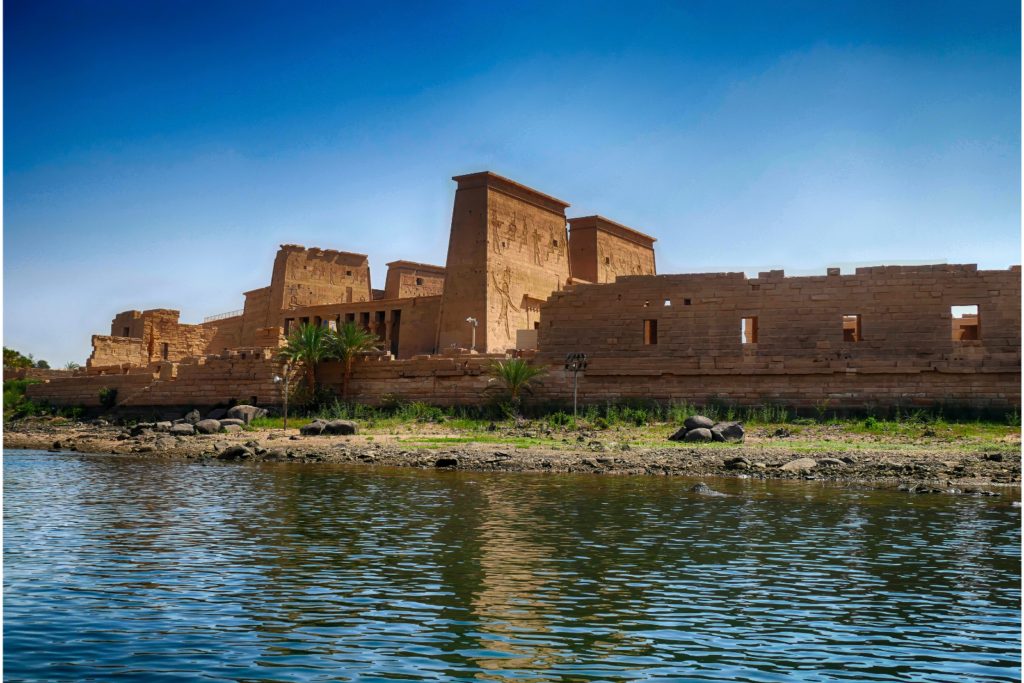
Philae, at the First Cataract near Aswan, was the principal sanctuary of Isis in her last great age and the final stronghold of the old religion. The oldest standing structure is a kiosk of Nectanebo I (4th century BC); the main temple was built and decorated by the Ptolemies, and Roman emperors added the elegant Kiosk of Trajan and Hadrian’s Gate.
Philae drew pilgrims from Nubia to the south as well as from Egypt, and it outlasted almost every other temple. The historian Priscus records a treaty of about AD 453 that still allowed the Blemmyes, a desert people from the south, to take the statue of Isis away each year to consult it as an oracle. The last known hieroglyphic inscription was carved here in AD 394 and the last demotic graffito in AD 452. The Byzantine historian Procopius says Justinian closed the temple around AD 535; some historians now think the cult had largely faded before then. The hypostyle hall became a church, and you can still see crosses carved into the walls.
After the first Aswan dam was built in 1902, the temples spent much of each year partly underwater. Between 1972 and 1980 they were dismantled and rebuilt on nearby Agilkia island as part of the UNESCO Nubian campaign described in Saving Abu Simbel.
Isis beyond Egypt
Isis became one of the most widely worshipped deities of the Roman world, with temples from North Africa to Britain. Greek-speaking Ptolemaic Egypt carried her cult around the Mediterranean, and her temple at Pompeii, rebuilt shortly before the eruption of AD 79, is one of the best-preserved buildings there. In Apuleius’s 2nd-century novel The Golden Ass, the hero is restored from donkey to human by Isis and initiated into her mysteries.
Images of Isis nursing Horus are often compared with early Christian images of Mary and the infant Jesus. Many art historians accept a visual influence; others caution that mother-and-child imagery is too widespread to prove direct borrowing. It is a debated point rather than settled fact.
Where to see Isis in Egypt today
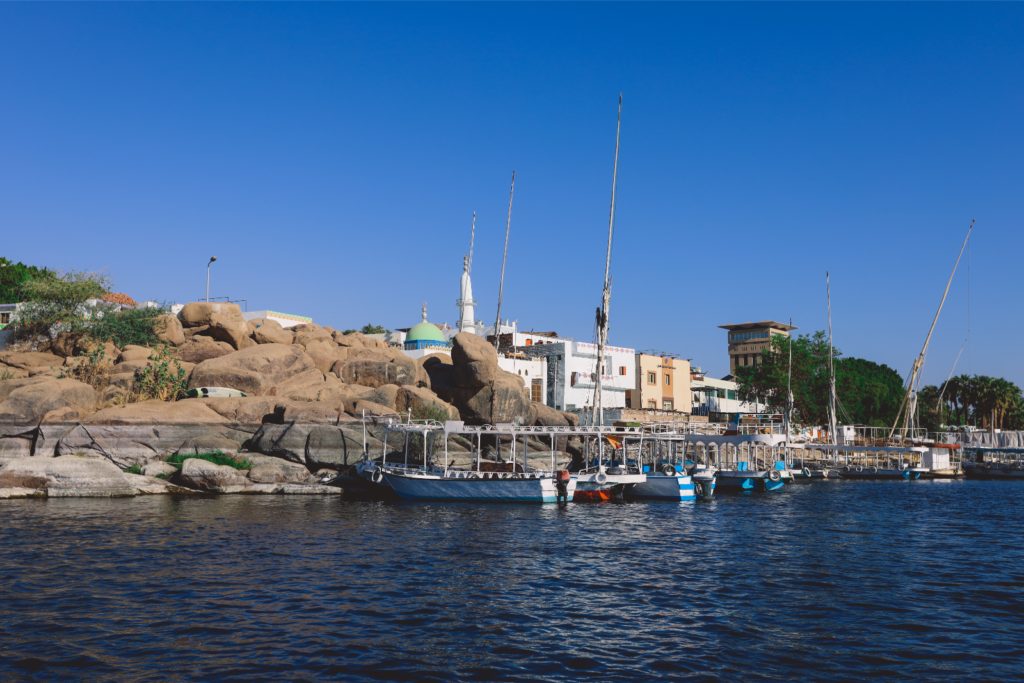
Visit Philae Temple, reached by a short motorboat ride from a landing south of Aswan; allow about two hours including the boat. Inside, look for the birth house with scenes of Isis nursing Horus, the reliefs of Isis on the second pylon and the Christian crosses in the hypostyle hall. Philae also hosts an evening sound and light show; check the schedule for your language.
- Dendera: a small temple of Isis stands behind the great temple of Hathor, celebrating Dendera as her birthplace.
- Grand Egyptian Museum: Tutankhamun’s gilded canopic shrine is guarded by Isis, Nephthys, Neith and Serket, arms outstretched.
- Behbeit el-Hagar: the tumbled granite blocks of a Late Period Isis temple in the Delta, a rewarding detour for enthusiasts heading north of Cairo.
Frequently asked questions
What was Isis the goddess of?
Magic and healing, motherhood, protection of the king and the dead, and, in later periods, almost everything: Roman-era hymns praise her as the goddess of all things.
Are Isis and Hathor the same goddess?
No, but they became closely linked. From the New Kingdom, Isis often wears Hathor’s cow horns and sun disc. Read the hieroglyphic label: Isis’s name is written with a throne sign, Hathor’s with a falcon inside a house.
Why is Philae temple on a different island?
Philae was submerged for much of each year after the first Aswan dam of 1902 and would have been lost after the High Dam. Between 1972 and 1980 it was moved block by block to Agilkia, a higher island nearby.
What is the Isis knot?
The tyet, a looped knot of cloth resembling an ankh with drooping arms. It was linked with Isis and with blood and protection, and was often made of red stone and placed on mummies.
Is Philae included on a Nile cruise?
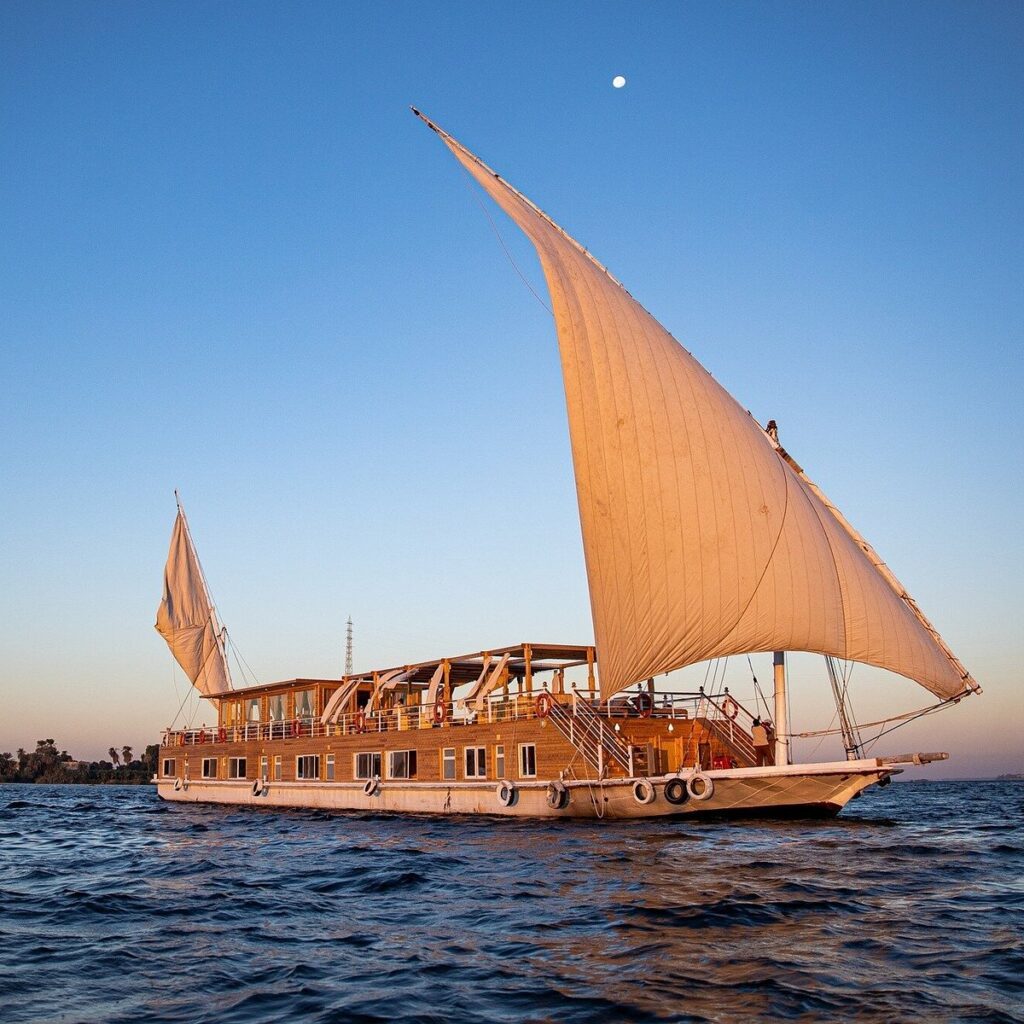
Usually, yes. Most Luxor–Aswan cruises visit Philae while moored in Aswan, often alongside the High Dam and the Unfinished Obelisk.