Quick answer
Egypt has well over 100 pyramids; a commonly quoted count is about 118, depending on what is included. The royal pyramids were built over roughly 1,100 years, from Djoser’s Step Pyramid around 2670 BC to Ahmose’s at Abydos around 1540 BC, almost all on the desert edge west of the Nile between Giza and the Fayoum. Visitors can usually go inside the Great Pyramid, the Red Pyramid at Dahshur and Meidum, among others.
How many pyramids are there in Egypt?
There is no single agreed number, but Egyptologists count well over 100 pyramids in Egypt, with a widely quoted figure of around 118. The total depends on what you include: royal pyramids, the small satellite and queens’ pyramids beside them, unfinished pyramids that never rose above the foundations, and a series of small provincial step pyramids with no burial inside. New ones still turn up; several queens’ pyramids at Saqqara were found only in this century.
The great age of pyramid building was the Old Kingdom, from about 2670 to 2180 BC, followed by a Middle Kingdom revival in mud brick. After Ahmose, New Kingdom kings were buried in hidden rock-cut tombs in the Valley of the Kings instead. The idea lived on in small brick pyramids over private tombs, such as those of the workmen at Deir el-Medina, and Nubian kings later built more than 200 steep pyramids in what is now Sudan; see Nubia and Kush.
The royal pyramids of Egypt at a glance
This table lists the main royal pyramids in roughly chronological order, with whether you can normally visit them. Interior access changes often, as pyramids close for conservation in rotation, so treat the last column as a guide at the time of writing and check egymonuments.gov.eg or with your guide.
| Pyramid | Site | King | Dynasty (approx. date) | Condition today | Visit / go inside? |
|---|---|---|---|---|---|
| Step Pyramid | Saqqara | Djoser | 3rd (c. 2670 BC) | Six steps, restored 2006–2020 | Yes outside; parts of the interior opened since 2020, check arrangements |
| Buried Pyramid | Saqqara | Sekhemkhet | 3rd | Unfinished, low walls | Not open |
| Layer Pyramid | Zawyet el-Aryan | Probably Khaba | 3rd | Ruined | No; inside a military area |
| Meidum Pyramid | Meidum | Huni and/or Sneferu | 3rd–4th (c. 2600 BC) | Outer casing collapsed, tower-like core | Yes; interior usually open |
| Bent Pyramid | Dahshur | Sneferu | 4th | Much of its casing survives | Yes outside; interior opened in 2019, not always accessible |
| Red Pyramid | Dahshur | Sneferu | 4th | Intact, casing removed | Yes; interior usually open |
| Great Pyramid | Giza | Khufu | 4th (c. 2560 BC) | Intact, casing removed | Yes, extra ticket, numbers limited |
| Pyramid of Djedefre | Abu Rawash | Djedefre | 4th | Heavily quarried stump | Rarely visited; ask in advance |
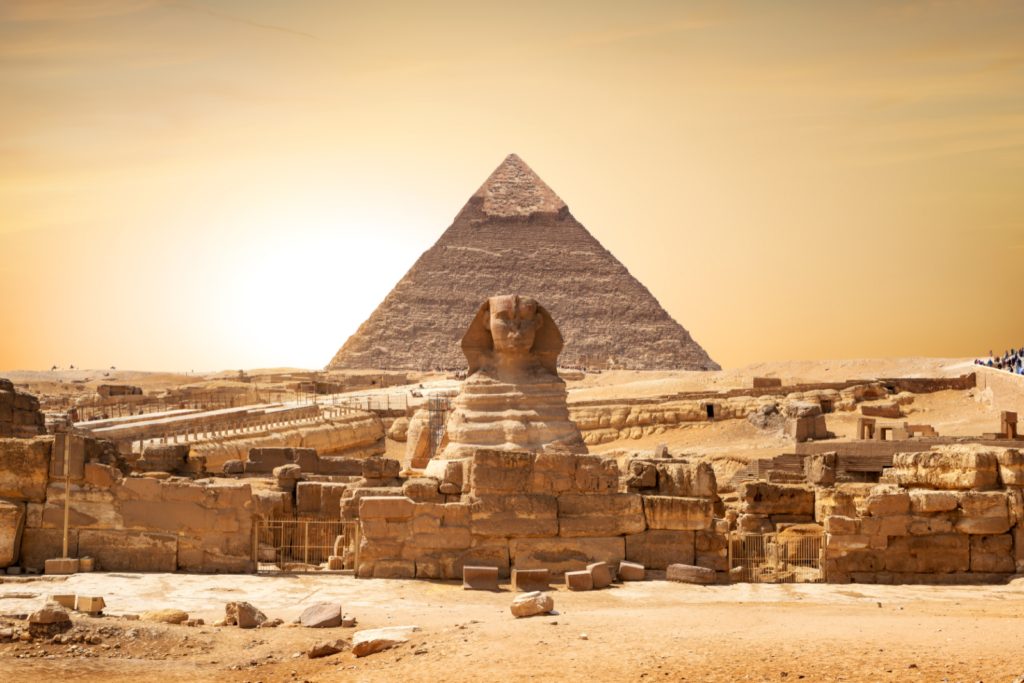
| Pyramid of Khafre | Giza | Khafre | 4th | Casing survives at the top | Usually, separate ticket; rotates |
| Pyramid of Menkaure | Giza | Menkaure | 4th | Smallest at Giza, granite lower courses | At times; rotates |
| Pyramid of Userkaf | Saqqara | Userkaf | 5th (c. 2490 BC) | Rubble mound | Outside only |
| Abusir pyramids | Abusir | Sahure, Neferirkare, Nyuserre, Neferefre | 5th | Slumped mounds with temple remains | Outside; interiors not as a rule |
| Pyramid of Djedkare Isesi | South Saqqara | Djedkare | 5th | Ruined | Not usually open |
| Pyramid of Unas | Saqqara | Unas | 5th (c. 2350 BC) | Rubble outside; first Pyramid Texts inside | Opened at times; check |
| Pyramid of Teti | Saqqara | Teti | 6th | Rubble outside; Pyramid Texts inside | Often open; check |
| Pyramids of Pepi I, Merenre and Pepi II | South Saqqara | Pepi I, Merenre, Pepi II | 6th (to c. 2180 BC) | Ruined; inscribed chambers | Not normally open |
| Pyramids of Amenemhat I and Senusret I | Lisht | Amenemhat I, Senusret I | 12th (c. 1950 BC) | Ruined mounds | Rarely visited |
| White Pyramid, Senusret III’s pyramid, Black Pyramid | Dahshur | Amenemhat II, Senusret III, Amenemhat III | 12th | Mud-brick ruins | Black Pyramid seen from the Red Pyramid area; not open |
| Pyramid of Senusret II | El-Lahun, Fayoum | Senusret II | 12th | Mud-brick on a rock core | Outside, on a Fayoum day trip |
| Hawara Pyramid | Hawara, Fayoum | Amenemhat III | 12th (c. 1850 BC) | Eroded mud brick; chamber flooded | Outside only |
| Pyramid of Ahmose | Abydos | Ahmose I | 18th (c. 1540 BC) | Low rubble mound | Not on standard itineraries |
Which pyramids can you go inside?
At the time of writing, the interiors you are most likely to enter are the Great Pyramid, at least one other Giza pyramid, the Red Pyramid, the Bent Pyramid at times, Meidum and one or two of the Saqqara pyramids.
- Great Pyramid of Khufu: the Grand Gallery and King’s Chamber; separate ticket, steep and hot.
- Khafre and Menkaure: a long descending passage to a plain burial chamber; one is usually open.
- Red Pyramid, Dahshur: a 60-metre descending passage to three corbelled chambers; usually included in the site ticket.
- Meidum: a steep passage to a corbelled chamber, often with nobody else inside.
- Saqqara: the Pyramid Texts of Unas or Teti when open, and parts of the Step Pyramid’s interior.
All involve bending double in low passages, steep ramps with handrails and stuffy air. Skip them if you are claustrophobic or have knee, back or heart problems; the outsides and the decorated mastabas are just as rewarding.
How did pyramid design change over time?
The design moved from stepped stone platforms to true smooth-sided pyramids within about 70 years, then shrank and switched to mud brick. Djoser’s step pyramid of about 2670 BC led to Sneferu’s experiments at Meidum and Dahshur, and then to Giza. Our guide to how the pyramids were built tells that story in detail.
After Giza, the pyramids of the 5th and 6th Dynasties were smaller and cheaply built, with rubble cores that have slumped into mounds, but the effort went into elaborate temples and, from Unas onwards, into the Pyramid Texts carved inside. Middle Kingdom kings of the 12th Dynasty built in mud brick faced with limestone and devised baffling corridors and plug blocks against robbers. When the casing was stripped for building stone, the mud brick eroded into the dark lumps you see at Dahshur and Hawara.
Where to see Egypt’s pyramids: planning your visits
Almost every important pyramid lies within about 100 km of central Cairo, so two days cover the best of them.
- Day one: Giza and the Great Sphinx, followed by the Grand Egyptian Museum next door. See our Pyramids of Giza guide.
- Day two: Saqqara, Memphis and Dahshur, about 30 to 60 minutes south of Giza, often with Abusir added for enthusiasts.
- Extra day: Meidum, about 100 km south of Cairo, combined with Hawara and Lahun on the way into the Fayoum.
Our Giza vs Saqqara vs Dahshur comparison helps if you only have time for one. Ticket prices and which interiors are open change often; check egymonuments.gov.eg before you go.
Frequently asked questions
What is the oldest pyramid in Egypt?
The Step Pyramid of Djoser at Saqqara, built around 2670 BC by his official Imhotep. It is also the oldest large cut-stone building in the world.
Can you go inside the pyramids of Giza?
Yes. The Great Pyramid is normally open on a separate ticket, and usually one of the other two pyramids is open as well, with access rotated for conservation. Check which are open before you go.
Are there pyramids in Luxor?
Not royal ones. New Kingdom kings were buried in rock-cut tombs in the Valley of the Kings, though small mud-brick pyramids topped some private tombs, as at Deir el-Medina.
What was the last pyramid built in Egypt?
The last royal pyramid in Egypt was that of Ahmose I at Abydos, around 1540 BC. Much later, the kings of Kush built pyramids in Sudan, from about 750 BC into the 4th century AD.
Does Sudan have more pyramids than Egypt?
Yes, by number: Sudan has more than 200, at sites such as El-Kurru, Nuri and Meroe, though they are much smaller. Check Smartraveller before considering travel to Sudan.