In short
Alexandria is Egypt's second city, founded by Alexander the Great in 331 BC and capital of the Ptolemies and Cleopatra. It offers Graeco-Roman sites, a sweeping Mediterranean Corniche and easy access to the El Alamein war cemeteries, which have deep significance for Australians.
Alexandria stretches for about 20 km along the Mediterranean, around 220 km northwest of Cairo. For almost a thousand years it was the greatest city of the ancient Mediterranean, home of the Lighthouse of Pharos and the Great Library. Little of that ancient city is visible above ground today, but what survives, from the catacombs of Kom el-Shoqafa to the Roman theatre at Kom el-Dikka, has a character quite different from the pharaonic sites of the Nile Valley.
Modern Alexandria has a faded cosmopolitan charm shaped by its Greek, Italian and Levantine communities of the 19th and 20th centuries: Art Deco apartment blocks, old patisseries and cafes, and the poetry of Constantine Cavafy. It is also the best place in Egypt for seafood, chosen fresh by weight and cooked to order.
For Australians, Alexandria is the natural base for El Alamein, about 110 km west, where the 9th Australian Division fought in 1942. The Commonwealth War Cemetery there is moving and beautifully kept.
Top things to see in Alexandria
Catacombs of Kom el-Shoqafa
Dating from the 1st and 2nd centuries AD, this multi-level tomb complex blends Egyptian, Greek and Roman art in a way found nowhere else, with Anubis dressed as a Roman legionary. A spiral staircase leads down past a banqueting hall for funeral feasts.
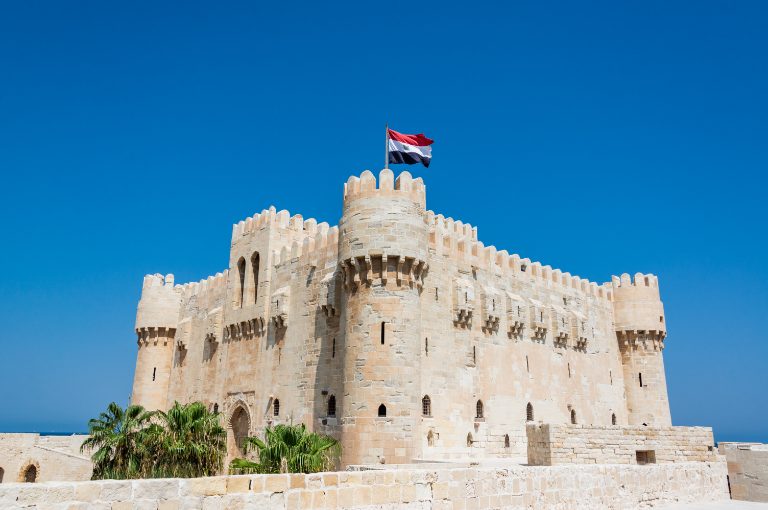
Citadel of Qaitbay
Built in the 1470s by the Mamluk sultan Qaitbay on the site of the ancient Pharos lighthouse, using some of its fallen stone. It stands at the tip of the Eastern Harbour and is best seen late in the afternoon, with fishing boats around it.
Bibliotheca Alexandrina
Opened in 2002 as a modern revival of the ancient library, its tilted disc-shaped building faces the sea. Inside are a vast reading room, an antiquities museum, a manuscripts museum and rotating exhibitions.
Pompey's Pillar and the Serapeum
A single 27-metre granite column, actually erected for the emperor Diocletian around AD 297, stands on the site of the Serapeum, the temple that held part of the ancient library's collection.
Kom el-Dikka Roman Theatre
The only Roman theatre in Egypt, with marble seating and an excavated area of baths and lecture halls nearby. It is small and right in the city centre.
Alexandria National Museum
Housed in an Italianate palace, this compact museum covers the city's history from pharaonic times to the modern era, including finds from the underwater excavations in the Eastern Harbour.
Montaza Palace gardens
The former royal summer palace, in large seaside gardens at the eastern end of the Corniche. The palace is not usually open, but the grounds are a pleasant escape from city traffic.
El Alamein War Cemetery
About 110 km west, the Commonwealth War Graves Commission cemetery holds more than 7,000 burials from the North African campaign, including many Australians. Nearby are the El Alamein War Museum and the German and Italian memorials.
Unforgettable experiences
- A seafood lunch where you choose the fish at the counter and pay by weight
- Coffee and pastries at one of the historic cafes of downtown Alexandria
- Watching sunset over the Eastern Harbour from Qaitbay Citadel
- Paying respects at El Alamein War Cemetery, especially meaningful around Anzac Day or Remembrance Day
- Walking the Corniche past Art Deco buildings in the early evening
When to visit Alexandria
April to June and September to November are best, with mild temperatures of about 22–30°C and a breeze off the sea. Summer is warm and humid and the city fills with Egyptian holiday-makers escaping Cairo's heat. Winter (December to February) is cooler and the most likely time for rain and stormy seas, though still pleasant for sightseeing.
How long to spend in Alexandria
A long day trip from Cairo covers the main sights, but the six hours of driving make it tiring. One or two nights is much better and allows a separate half-day trip to El Alamein. Alexandria also works as the first stop on a longer journey west to Siwa Oasis.
Getting there
Alexandria is about three hours from Cairo by the Desert Road, or 2.5–3 hours by express train from Ramses Station. Borg El Arab Airport, about 45 km from the centre, has some international and domestic flights, but most Australians arrive via Cairo. Siwa Oasis is about eight hours by road via Marsa Matruh.
Specialist tips
- Stay overnight rather than day-tripping to avoid six hours on the road in one day
- Combine El Alamein with your arrival or departure if you are heading to Siwa
- Expect a more Mediterranean, relaxed atmosphere, but dress modestly away from the beach
- Check opening days, as some museums close on certain weekdays
- Keep valuables secure on crowded trams and along the Corniche
Alexandria: frequently asked questions
Is Alexandria worth visiting?
Yes, if you have more than ten days in Egypt or a special interest in Graeco-Roman history or the Second World War. It feels very different from Cairo and the Nile Valley.
Can you do Alexandria as a day trip from Cairo?
Yes, but it is a long day with about six hours of travel. We recommend at least one night.
How far is El Alamein from Alexandria?
About 110 km, roughly 1.5 hours by road. Allow half a day for the war cemetery, museum and memorials.
Which tour includes Alexandria?
Our Ultimate Egypt 21-day tour includes Alexandria, and we can add it to any tailor-made itinerary through our trip planner.