Quick answer
Nubia is the Nile valley south of Aswan, stretching into Sudan, and Kush was the name of the powerful kingdoms that rose there. Kushite kingdoms at Kerma, Napata and Meroë traded with, fought and were conquered by Egypt, and around 728 BC the Kushite king Piye conquered Egypt in turn, founding the 25th Dynasty of “Black Pharaohs”. Its pyramids at Meroë outnumber Egypt’s.
What and where was Nubia?
Nubia is the stretch of the Nile valley between the First Cataract at Aswan and the area of modern Khartoum, broken by a series of rocky rapids, the cataracts, that made it a natural frontier. The Egyptians called the region Ta-Seti, “land of the bow”, after its famous archers. They distinguished Wawat, Lower Nubia between the First and Second Cataracts, from Kush further south.
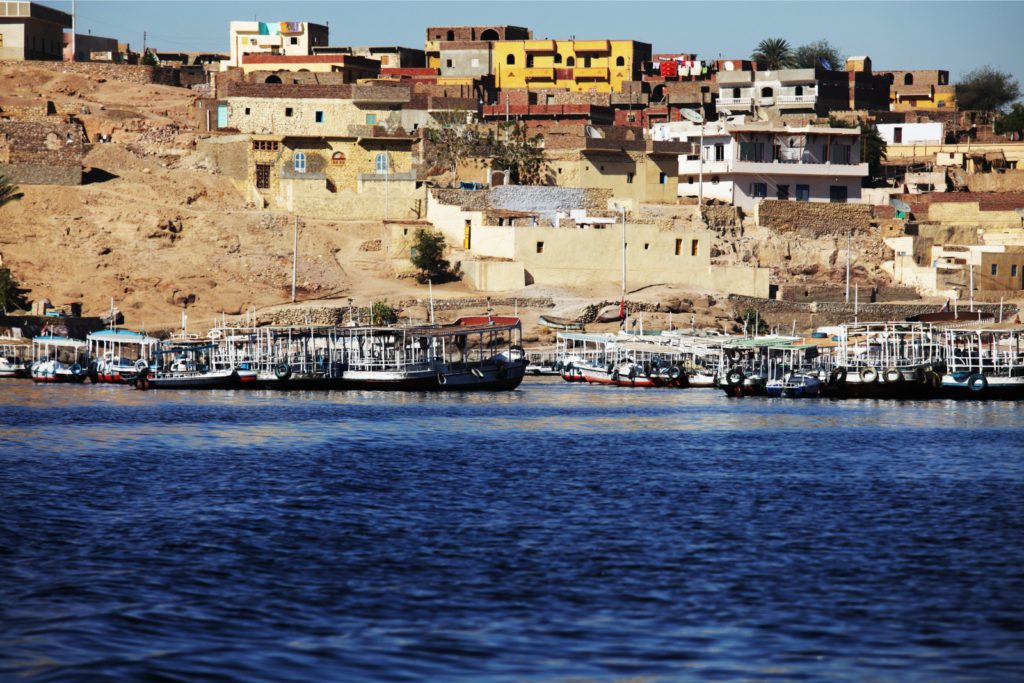
Today Lower Nubia lies mostly under Lake Nasser, and the rest of the region is in northern Sudan. Nubia mattered to Egypt for its gold, which may be behind its later name, and as the route for ebony, ivory, incense, animal skins and exotic animals coming north from the African interior.
Nubians were never simply Egypt’s subjects. They had their own languages, kingdoms and gods, and at times they were the stronger power. Modern Nubian communities around Aswan, whose way of life is described in our Nubian culture guide, are their descendants.
What was the Kingdom of Kerma?
Kerma, centred near the Third Cataract in Sudan, was the first great Kushite kingdom and from about 2500 to 1500 BC one of the largest states in Africa. Its capital is dominated by the Western Deffufa, a mud-brick temple still standing about 18 m high. Its kings were buried under huge circular mounds, the largest about 90 m across, with large numbers of retainers apparently sacrificed to accompany them.
Egypt watched Kerma warily. The Middle Kingdom pharaohs built massive mud-brick fortresses at the Second Cataract, such as Buhen and Semna, to control trade and keep Kerma’s armies out (see our Middle Kingdom guide). During the Second Intermediate Period Kerma raided as far north as El Kab and allied itself with the Hyksos: a letter from the Hyksos king Apepi to the ruler of Kush, proposing they carve up Egypt between them, was intercepted by the Theban king Kamose, who boasted of it on a stela at Karnak.
How did Egypt rule Nubia?
Early in the New Kingdom Egypt destroyed Kerma and ruled Nubia as a colony for about 450 years, as far south as the Fourth Cataract. A viceroy, the “King’s Son of Kush”, governed it, and Nubian gold, mined in the Eastern Desert around Wadi Allaqi, paid for much of the empire.
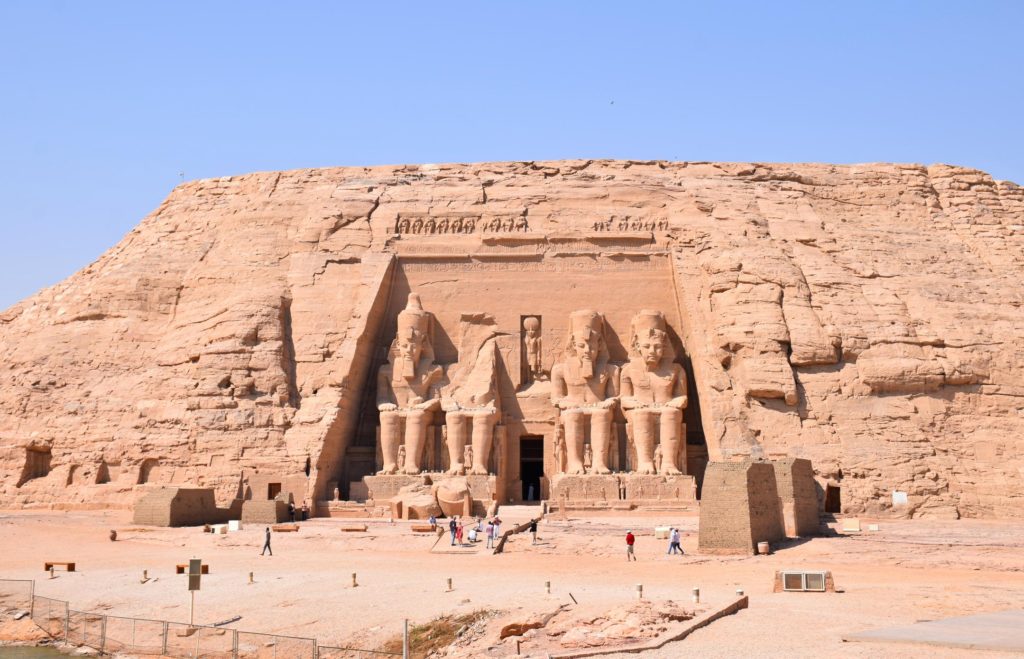
Egypt planted temples across the region. The holy mountain of Gebel Barkal at Napata was declared a home of Amun, and Ramesses II alone built half a dozen rock temples, including Abu Simbel. Nubian elites were educated at the Egyptian court, and Nubian soldiers and police served in Egypt. The tomb of Huy, Tutankhamun’s viceroy, in Luxor’s Tombs of the Nobles shows Nubian princes arriving with gold, a giraffe and a princess in an ox-drawn chariot; it is not always open, so ask your guide.
Relations went back much further. According to the Palermo Stone, an early royal annal, Sneferu raided Nubia around 2600 BC and brought back 7,000 captives and 200,000 cattle, and Old Kingdom governors of Aswan led trading caravans south, as recorded in their tombs at Qubbet el-Hawa.
Who were the Black Pharaohs?
The “Black Pharaohs” were the Kushite kings of the 25th Dynasty, who conquered Egypt from their capital at Napata and ruled it for over half a century, from about 747 to 656 BC. After the New Kingdom withdrew, a new Kushite kingdom grew up around Gebel Barkal, devoted to Amun and steeped in Egyptian traditions. Around 728 BC its king Piye marched north, took Memphis and accepted the surrender of the Delta princes. His Victory Stela, one of the longest royal inscriptions from Egypt, records how he was disgusted that defeated rulers had neglected their horses.
- Shabaka settled in Memphis and ruled Egypt directly.
- Taharqa, the most famous, reigned 690–664 BC and built at Karnak, where one column of his great kiosk still stands in the first court. He appears in the Bible as Tirhakah.
- Tantamani, the last, was driven out after the Assyrians, who had already taken Memphis in 671 BC, sacked Thebes in 663 BC.
The Kushite kings revived Old Kingdom styles in art and were buried under steep pyramids at el-Kurru and Nuri, near Napata, the first royal pyramids in the Nile valley for some 800 years.
What happened to Kush after it lost Egypt?
Kush survived for another thousand years, its centre shifting south to Meroë, where its rulers built more pyramids than Egypt ever did. After an Egyptian army under Psamtik II sacked Napata in 593 BC, royal power gradually moved to Meroë, between the Fifth and Sixth Cataracts. From around 300 BC kings and queens were buried in its royal cemeteries, which hold around 200 small, steep pyramids.
Meroë developed its own script, Meroitic, which can be read aloud but whose language is still only partly understood. Its ruling queens, called kandake, gave us the word Candace. One of them, Amanirenas, fought the Romans after they annexed Egypt; a Kushite raid on Aswan around 25 BC carried off statues of Augustus, and a bronze head of the emperor was later found buried under a temple doorway at Meroë. A treaty in 21/20 BC settled the frontier on terms favourable to Kush.
Meroë declined in the 4th century AD, under pressure from the kingdom of Aksum in Ethiopia. Christian Nubian kingdoms followed and lasted into the late Middle Ages; the fortress-town of Qasr Ibrim preserves their churches above Lake Nasser.
What happened to Nubia in the 20th century?
Dams at Aswan flooded Lower Nubia in stages, ending with the Aswan High Dam, whose reservoir drowned the Nubian homeland on both sides of the border in the 1960s. The first Aswan Dam of 1902 was raised in 1912 and 1933, each time submerging more villages. The High Dam, built between 1960 and 1970, created Lake Nasser and forced around 50,000 Egyptian Nubians to resettle near Kom Ombo, with a similar number moved from around Wadi Halfa in Sudan.
An international campaign led by UNESCO surveyed the threatened sites and moved more than 20 temples, including Abu Simbel, Philae and Kalabsha, to higher ground; our guide to saving Abu Simbel tells that story. Many forts and cemeteries, including Buhen and most of Kerma-era Lower Nubia, were excavated and then lost under the water.
Where to see Nubia and Kush in Egypt today
Aswan is the gateway, and a Lake Nasser cruise is the best way to see the rescued monuments of Nubia.
- Nubian Museum, Aswan: Nubian history from prehistory through Kerma, the Kushite pharaohs, Meroë and the Christian kingdoms to the flooding. Start here.
- Abu Simbel: Ramesses II’s statement of Egyptian power on Nubian soil.
- Lake Nasser temples: Kalabsha, dedicated to the Nubian god Mandulis, with Beit el-Wali beside it, where Ramesses II receives Nubian tribute; plus Wadi el-Sebua, Amada and Qasr Ibrim.
- Karnak: Taharqa’s standing column in the first court.
- Cairo: Piye’s Victory Stela and the wooden model troops of Nubian archers from a Middle Kingdom tomb at Asyut, at the time of writing in the Egyptian Museum in Tahrir.
The great Kushite sites, Gebel Barkal and the pyramids of Meroë, are in Sudan. At the time of writing Sudan is affected by armed conflict and Australia advises against all travel there; check Smartraveller. Our Lake Nasser cruise and Abu Simbel journey covers Egyptian Nubia in depth.
Frequently asked questions
Is Nubia the same as Kush?
Not quite. Nubia is the geographical region along the Nile south of Aswan; Kush was the name the Egyptians used for the southern part of it, and for the kingdoms that ruled there, at Kerma, Napata and Meroë.
Were there black pharaohs in Egypt?
Yes. The kings of the 25th Dynasty, about 747–656 BC, came from Kush in what is now Sudan. Piye, Shabaka and Taharqa ruled Egypt as fully fledged pharaohs, worshipping Amun and building at Karnak.
Does Sudan have more pyramids than Egypt?
Yes. The Kushite royal cemeteries at el-Kurru, Nuri and Meroë hold around 200 or more pyramids, compared with roughly 120 identified in Egypt. Sudan’s are much smaller and steeper.
Where can I learn about Nubian history in Egypt?
The Nubian Museum in Aswan is the best place, followed by the rescued temples around Lake Nasser and a respectful visit to a modern Nubian village; see our guide to visiting a Nubian village.
Can you visit Meroë and Gebel Barkal?
Not safely at the time of writing. Sudan has been in armed conflict since April 2023, and the Australian Government advises against all travel there. Check Smartraveller for current advice.