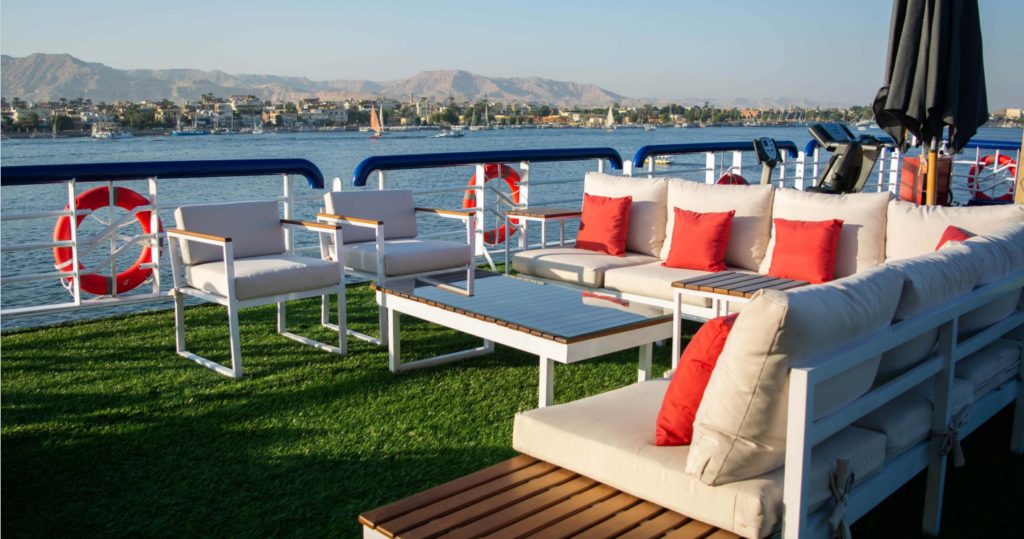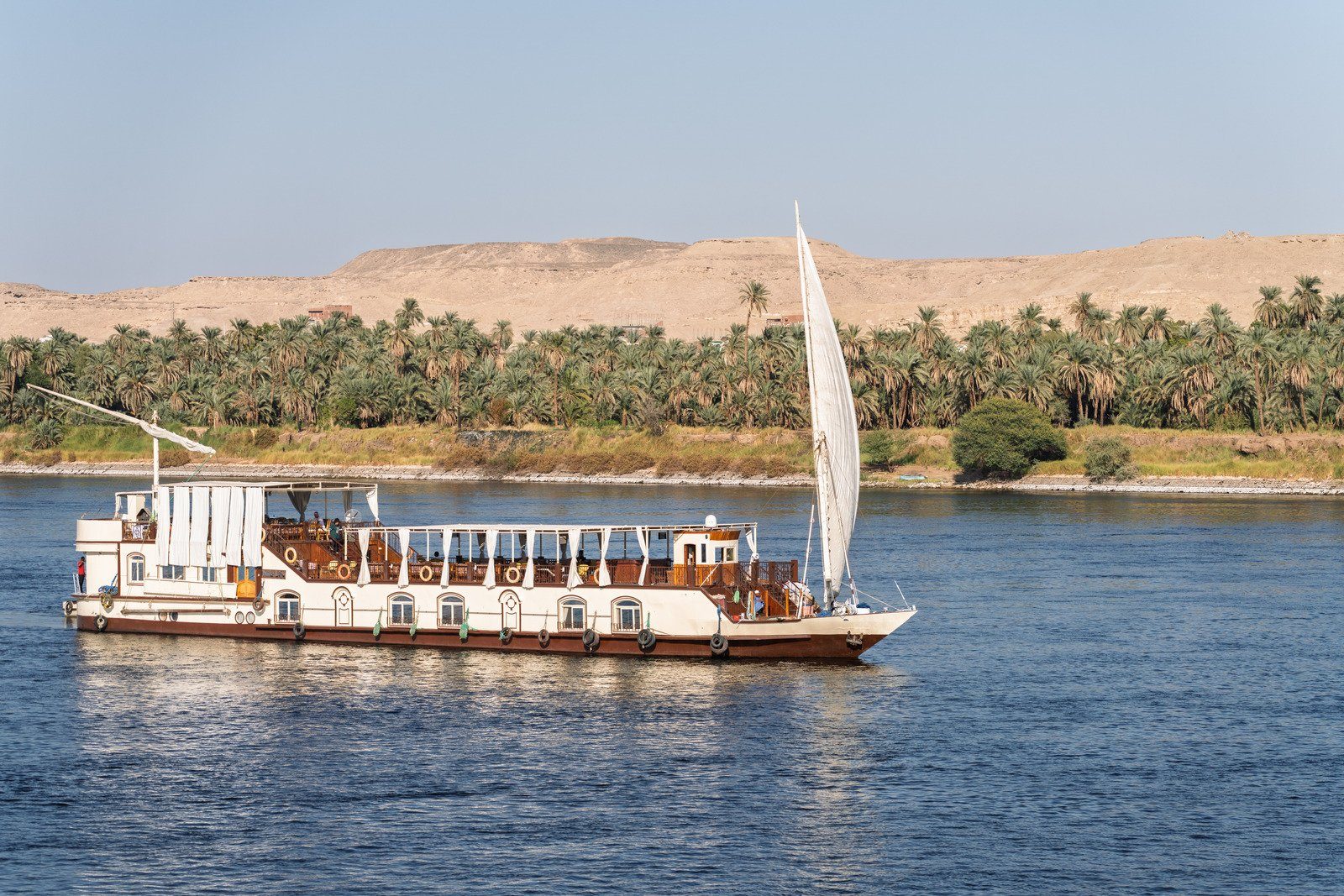
A dahabiya is the way Victorian travellers saw the Nile: a wooden sailing boat with two large lateen sails, usually 6 to 10 cabins and an open upper deck furnished like a living room. It sails when the wind allows and is towed when it doesn't. It moors at sandbanks and small villages that 200-passenger cruise ships can't stop at.
Over five nights between Esna and Aswan you visit the headline temples of Edfu and Kom Ombo, plus places that rarely appear on standard itineraries: the rock-cut tombs at El Kab, the ancient sandstone quarries of Gebel el-Silsila and an island stop for a swim or a walk through the fields. Meals are fresh and cooked on board, and dinner is sometimes served on the riverbank under lanterns.
We add two nights in Cairo for the pyramids and the Grand Egyptian Museum, and a night in Luxor for Karnak and the Valley of the Kings, so you get the full classic picture before the river slows everything down.
Journey highlights
- Five nights on a traditional dahabiya with only a handful of cabins
- Moorings at islands and riverbanks too small for cruise ships
- Esna's Temple of Khnum, with its newly restored painted ceiling
- The rarely visited rock tombs of El Kab and the quarries of Gebel el-Silsila
- Edfu and Kom Ombo temples at quieter times of day
- Giza pyramids and the Grand Egyptian Museum with a private Egyptologist
- Karnak, Luxor Temple and the Valley of the Kings
- Philae Temple and the Aswan High Dam
Day-by-day itinerary
- Day1
Arrive in Cairo
You are met inside the terminal, helped through visa and immigration, and driven to your Giza hotel. Rest after the long flight from Australia.
- Day2
Giza Pyramids and the Grand Egyptian Museum
See the Great Pyramid, the Sphinx and the panoramic viewpoint at opening time with your Egyptologist. In the afternoon, visit the Grand Egyptian Museum for the complete Tutankhamun collection and the Solar Boat of Khufu.
- Day3
Fly to Luxor, Karnak and Luxor Temple
Take a morning flight to Luxor (about 1 hour). Spend the afternoon at Karnak and visit Luxor Temple at dusk. Overnight at a Luxor hotel.
- Day4
Valley of the Kings, then board in Esna
Visit three tombs in the Valley of the Kings and Hatshepsut's temple early in the morning. Then drive about an hour south to Esna and board your dahabiya. Before sailing, visit the Temple of Khnum, whose ceiling has recently been cleaned to reveal its original blues and ochres.
- Day5
Sailing to El Kab
Sail south under canvas when the wind allows. Moor at El Kab to explore the rock-cut tombs of New Kingdom officials, including Ahmose son of Ebana, whose biography describes the expulsion of the Hyksos. You will probably have the site almost to yourselves.
- Day6
Edfu
Visit the Temple of Horus at Edfu, timed to avoid the large ships' groups where possible. Afternoon sailing, followed by a mooring at a quiet island for a walk through sugarcane fields and a village.
- Day7
Gebel el-Silsila
Explore the sandstone quarries of Gebel el-Silsila, where the stone for Karnak and Luxor temples was cut. You can still see chisel marks, rock-cut shrines and the speos of Horemheb. Dinner may be served on the riverbank under lanterns.
- Day8
Kom Ombo and Daraw
Visit the double temple of Kom Ombo and its Crocodile Museum. Continue towards Daraw, home to one of Egypt's largest camel markets (open on set market days). Final night on board.
- Day9
Aswan: Philae and the High Dam
Disembark in Aswan after breakfast. Visit Philae Temple by motorboat, the Unfinished Obelisk and the High Dam, then check in to your hotel and finish with sunset drinks overlooking the First Cataract.
- Day10
Fly to Cairo and depart
Fly from Aswan to Cairo to connect with your flight home. If you leave later in the day, an early-morning trip to Abu Simbel can be added.
Where you’ll stay
| Location | Accommodation |
|---|---|
| Cairo (Giza), 2 nights | Steigenberger Pyramids Cairo or similar |
| Luxor, 1 night | Sofitel Winter Palace Luxor or similar |
| Dahabiya, 5 nights | Nour El Nil fleet dahabiya or similar |
| Aswan, 1 night | Sofitel Legend Old Cataract or similar |
What’s included
- 4 nights in hotels with daily breakfast
- 5-night dahabiya cruise Esna to Aswan with full board, soft drinks, tea and coffee
- Domestic flights Cairo–Luxor and Aswan–Cairo
- Private Egyptologist guide on land and an Egyptologist on board the dahabiya
- Private air-conditioned vehicle and driver for all transfers and touring
- Standard entry fees to all sites in the itinerary
- Airport meet-and-assist service and 24/7 local support
Not included
- International flights from Australia (we can quote and book these)
- Egypt visa fee
- Travel insurance (compulsory)
- Alcoholic drinks on the dahabiya and meals on land not listed
- Optional extras such as Abu Simbel or Tutankhamun's tomb
- Tips for guides, drivers and the dahabiya crew
Destinations on this journey
Cairo & Giza · Luxor · Aswan
Dahabiya Nile Sailing: 10 Days with 5 Nights from Esna to Aswan: FAQs
What is a dahabiya?
A dahabiya is a traditional flat-bottomed Nile sailing boat with two large sails and typically 6 to 10 cabins. It moves under sail when there is wind and is towed by a tug when there isn't, so it can moor at small islands and villages. Our Nile cruise vs dahabiya guide compares the two in detail.
Why does the dahabiya start in Esna and not Luxor?
Most dahabiyas sail between Esna and Aswan because north of Esna the river is busier and the lock creates long queues. You still see Luxor properly on Days 3 and 4 before driving about an hour to Esna.
Do the cabins have private bathrooms and air conditioning?
On the dahabiyas we use, yes. Every cabin has an en-suite bathroom, and most boats have air conditioning. Cabins are smaller than on a large cruise ship, but the shared deck makes up for it.
Can we charter the whole boat?
Yes. Chartering a whole dahabiya is popular with families and groups of friends, and it lets you adjust the route and timings. Tell us your group size on our plan my trip form.
Is there Wi-Fi on board?
Wi-Fi on dahabiyas is limited or patchy at best, which many guests enjoy. Buy a local SIM or eSIM in Cairo if you need data. Mobile coverage along the river is generally reasonable.