Quick answer
The main tourist areas of Egypt, including Cairo, Giza, Luxor, Aswan and the Red Sea resorts, are visited safely by large numbers of travellers every year, and serious incidents involving tourists are rare. The most common problems are scams, persistent touts, chaotic traffic and stomach upsets. Check Smartraveller for the current advice level and areas to avoid before you book and again before you fly.
Is Egypt safe to visit right now?
For most travellers, yes: the established tourist route of Cairo, Giza, Luxor, Aswan, Abu Simbel and the Red Sea resorts is visited safely by millions of people a year, and the day-to-day risks are mostly scams, traffic and stomach bugs rather than violence. Security is visible at airports, hotels, cruise moorings and every major monument, and the tourist police are present at the main sites.
That said, Egypt is a large country in a complex region, and the security situation can change. The Australian Government's travel advice is the authoritative source, and it may set different advice levels for different parts of Egypt. Before booking, and again in the days before you fly, read the Egypt page on Smartraveller and subscribe to updates. Your travel insurance may also depend on the advice level for the areas you visit.
Which areas of Egypt should travellers avoid?
Check Smartraveller's map for the current list of areas to avoid; historically these have included North Sinai and remote areas near the borders with Libya and Sudan, which are far from the usual tourist trail. The Western Desert beyond the main oases also has restrictions, which is why trips to Siwa and the White Desert should be run by experienced operators with the required permits.
Our itineraries are built around the main tourist areas and are reviewed against current government advice. If advice changes for a region on your route, we adjust the itinerary. This is one of the practical reasons to book with a specialist rather than piecing together independent bookings.
What are the most common scams in Egypt?
The most common scams target first-time visitors at the pyramids, in taxis and in markets, and almost all are about money rather than danger. Know these and you will avoid most of them:
- Camel and horse rides at Giza: a low price is agreed, then the handler demands far more to let you down. Agree the total price, the route and the duration first, or arrange rides through your guide.
- “The temple is closed”: a friendly stranger tells you the site is shut and offers to take you somewhere else, usually a shop. It isn't closed.
- Free gifts: a scarf or bracelet is pressed into your hand, then payment is demanded. Politely refuse to take it.
- Unofficial guides: people offering to show you a hidden corner of a temple or tomb, then asking for a tip. Inside sites, stay with your own guide.
- Taxis: unmetered taxis that inflate the fare. In Cairo, ride-hailing apps such as Uber and Careem give fixed prices.
- Commission shops: papyrus, perfume and alabaster “factories” where prices are high. Shop only if you want to, and never feel obliged to buy.
How dangerous is the traffic in Egypt?
Road traffic is statistically one of the bigger risks for visitors to Egypt. Cairo's traffic is dense and lanes are suggestions; outside cities, long-distance roads can be poorly lit and driven fast.
- Don't self-drive. Use a professional driver in a well-maintained vehicle with seatbelts.
- Avoid long road journeys after dark where possible.
- Fly between Cairo and Luxor or Aswan (about 1 hour 10 minutes) rather than driving 650–900 km.
- Cross busy roads with a local, or at controlled crossings; drivers will not necessarily stop.
Is the food and water safe in Egypt?
Drink bottled or properly filtered water only, and eat freshly cooked food; most travellers who follow these rules avoid serious stomach problems. A mild upset is common in the first few days, often from a change in diet, heat and fatigue rather than bad food.
- Use bottled water to brush teeth, and check seals are intact.
- Avoid ice outside good hotels and cruise ships, and salads washed in tap water at local cafés.
- Peel fruit yourself. Hot, freshly cooked dishes like koshari, ta'ameya (falafel) and grilled meats are generally safe.
- Pack oral rehydration salts, an anti-diarrhoeal and any personal medication; see your GP or a travel clinic about vaccinations.
- Drink plenty of water. In Luxor and Aswan heat exhaustion is a bigger risk than food.
Is Egypt safe for women travellers?
Women travel in Egypt safely every day, but should expect more attention than at home, mostly verbal comments and persistent sales pitches. Physical harassment of tourists is uncommon in the main sites but not unknown, especially in crowded places.
- Dress modestly: shoulders and knees covered, loose fabrics. You will attract less attention and be welcome in mosques with a scarf.
- A firm “la, shukran” (no, thank you) and walking on is usually enough. Don't engage.
- In Cairo's metro, there are women-only carriages.
- Sit in the back seat of taxis and use ride-hailing apps that record your trip.
- Travelling with a private guide and driver changes the experience completely; touts largely leave you alone.
See what to wear in Egypt for practical packing advice.
How does a private guide make Egypt safer and easier?
A licensed private Egyptologist and a dedicated driver remove most of the friction of travelling in Egypt: no negotiating with touts, no taxi scams, no getting lost, and someone local who knows what to do if anything goes wrong.
Your guide handles tickets, knows when sites are quietest, keeps camel handlers honest at Giza, recommends safe places to eat, and speaks Arabic with police and officials. Hotel and airport meet-and-assist services smooth the arrival. If you fall ill, your guide can get you to a reputable doctor or pharmacy quickly. On every Noble Travel itinerary, such as the Classic Egypt and Nile Cruise, private guiding and transfers are built in, with local support on the ground.
Is Egypt safe for families and older travellers?
Yes, with sensible planning: the main risks for children and older travellers are heat, dehydration, long days on foot and uneven ground at ancient sites, rather than crime.
- Heat: schedule sightseeing from opening time until about 11am, then rest. Hats, sunscreen and electrolytes are non-negotiable outside midwinter.
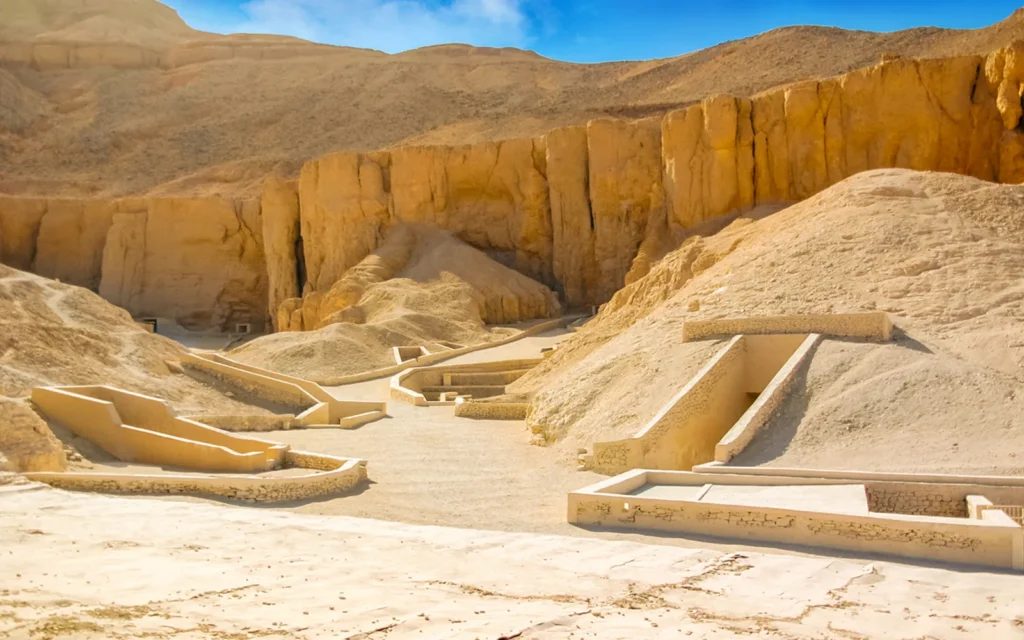
- Terrain: temples have high thresholds, steep ramps and uneven paving, and tombs in the Valley of the Kings involve stairs and sloping corridors. Climbing inside the Great Pyramid involves a low, steep passage and is not suitable for anyone with heart, knee or claustrophobia issues.
- Mobility: newer venues like the Grand Egyptian Museum are accessible, but many sites are not. Tell us about mobility needs so we can plan routes, golf-cart options at some sites, and hotels with lifts.
- Medical care: private hospitals in Cairo are of a good standard; facilities in smaller towns are more limited. Carry enough prescription medication for the whole trip in original packaging, plus a letter from your doctor.
- Kids: keep children close in crowds and markets, and agree a meeting point. Egyptians are famously warm towards children, which often makes family travel easier, not harder.
Our Egypt family adventure is paced specifically for families, and our Egypt with kids guide has more detail.
What health precautions should I take for Egypt?
See your GP or a travel clinic six to eight weeks before departure, check routine vaccinations are up to date, and pack a small medical kit; heat and stomach upsets are the most common health issues.
- Vaccinations: your doctor will advise based on your history and itinerary. Smartraveller's health section and the Australian Government's travel health resources are good starting points.
- Sun and heat: UV is intense year-round. Use SPF 50+, wear a wide-brimmed hat and drink at least 3 litres of water a day in warm months.
- Medical kit: oral rehydration salts, an anti-diarrhoeal, pain relief, antiseptic, blister plasters, and any prescription medicines.
- Medications: some medications that are legal in Australia, including certain strong painkillers and ADHD medication, are controlled in Egypt. Check before you travel and carry a doctor's letter.
- Nile water: don't swim in the Nile itself or in slow-moving fresh water, due to the risk of parasitic infection. Swimming in a ship's pool or the Red Sea is fine.
- Animals: avoid touching stray cats and dogs; seek medical advice after any bite or scratch.
What practical safety precautions should I take?
- Register and subscribe: subscribe to Smartraveller updates for Egypt.
- Insurance: buy comprehensive travel insurance that covers medical evacuation and the regions you visit.
- Documents: keep copies of your passport and visa, digital and paper.
- Money: carry small Egyptian pound notes for tips and leave larger sums in the hotel safe. Use ATMs inside banks or hotels.
- Photography: don't photograph police, military sites or government buildings, and ask before photographing people.
- Demonstrations: avoid political gatherings and large crowds.
- Emergency numbers: tourist police 126, ambulance 123, police 122.
More on-the-ground advice is in our Egypt travel tips guide.
Frequently asked questions
Is Egypt safe for Australian tourists?
The main tourist areas are visited safely by large numbers of Australians each year. Check the current advice level and areas to avoid on Smartraveller before you book and before you fly.
Is Cairo safe at night?
Central and tourist areas such as Zamalek, downtown and Islamic Cairo are busy and lively at night, especially in Ramadan. Use ride-hailing apps or a driver rather than hailing taxis, and keep valuables discreet.
Is it safe to take a Nile cruise?
Yes. Nile cruises operate between Luxor and Aswan with security at moorings and sites, and are one of the most relaxed ways to travel in Egypt. See our Nile cruises guide.
Is the tap water safe to drink in Egypt?
No, visitors should drink bottled or filtered water and use it to brush teeth.
Is Egypt safe for solo female travellers?
Many women travel solo in Egypt. Expect verbal attention, dress modestly and consider a private guide, which greatly reduces hassle.
Is it safe to take a hot-air balloon in Luxor?
Balloon flights over Luxor's West Bank are regulated and operate daily in suitable weather. Choose an established operator with a good safety record; we only book reputable companies.