Quick answer
Ptah was the chief god of Memphis, Egypt's ancient capital, worshipped as the creator who brought the world into being by thought and speech and as the patron of sculptors, builders and craftsmen. He is shown as a mummy-wrapped man in a close-fitting skullcap holding a composite sceptre. His great temple at Memphis is almost gone, but you can see him at Karnak, Abu Simbel and in Egypt's museums.
Who was Ptah?
Ptah was the god of Memphis, the city at the apex of the Delta that served as Egypt's royal capital for much of the pharaonic era, and he was revered as creator, craftsman and protector of kingship. Memphis, founded around 3000 BC and later called Ineb-hedj ("White Walls"), was where kings were crowned for most of Egyptian history, so its god was bound up with the monarchy.
Ptah's oldest and most practical role was patron of craftsmanship. His high priest held the title "Greatest of the Directors of Craftsmanship", and stonemasons, sculptors and goldsmiths looked to him. In the Late Period the architect Imhotep, builder of Djoser's Step Pyramid at nearby Saqqara, was deified and called Ptah's son; see Djoser and Imhotep.
How do you recognise Ptah?
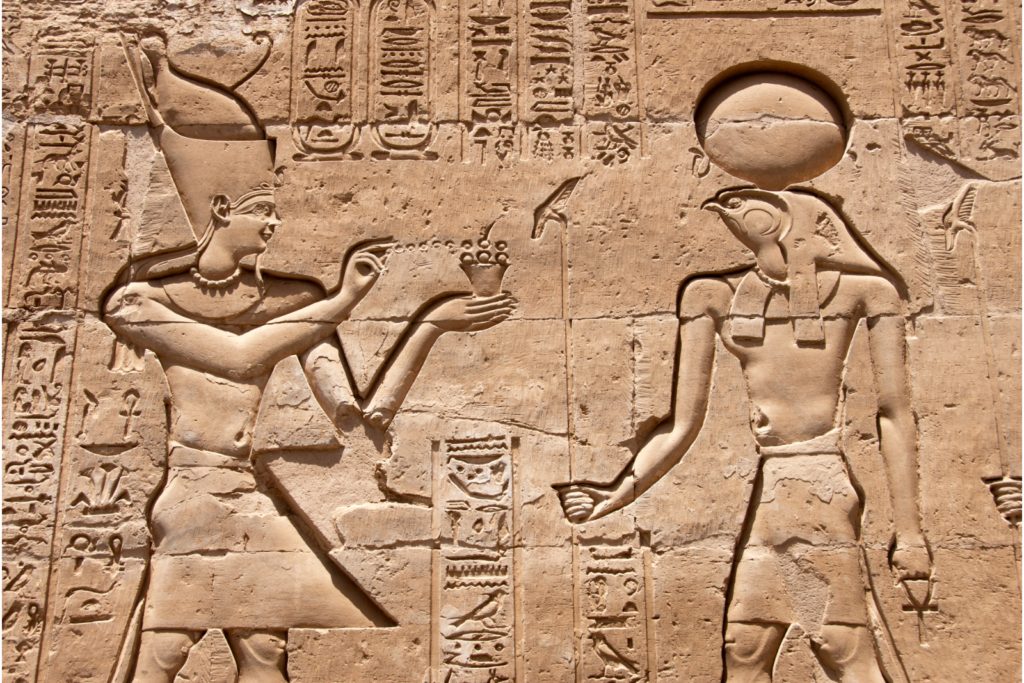
Ptah is one of the easiest gods to spot: he stands tightly wrapped like a mummy, wearing a close-fitting cap and a straight (not curled) beard, gripping a sceptre that combines three symbols. The sceptre joins the was (power), the ankh (life) and the djed pillar (stability). His skin is often painted green, the colour of new growth, and his cap blue. He usually stands on a low plinth shaped like the hieroglyph for maat, "order", and is often inside a shrine.
Ptah combined with other gods in ways that change his look. As Ptah-Tatenen, merged with the god of the primeval mound, he wears ram's horns and tall plumes. As Ptah-Sokar-Osiris, a funerary god, he appears as a wooden figure on a base, a common object in Late Period burials and in most museum collections.
How did Ptah create the world?
According to the text known as the Memphite Theology, Ptah conceived everything in his heart (the seat of thought) and brought it into being by pronouncing its name with his tongue. The other gods, including Atum, the creator in the rival Heliopolitan system, were said to be manifestations of Ptah's thought and speech. Creation by word has drawn comparisons with Genesis and the Gospel of John, though no direct link is proven.
The text survives on one object, the Shabaka Stone in the British Museum, a black granite slab carved for the Kushite king Shabaka around 700 BC; it was later used as a millstone, which wore away part of the inscription. Shabaka's preface claims he copied a worm-eaten ancient book, and early 20th-century scholars dated the composition to the Old Kingdom. Most Egyptologists now think it was composed much later, in the New Kingdom or in Shabaka's own time, in deliberately archaic language to give Memphis's god priority. It is better read as Memphite theology than as Egypt's oldest philosophy.
Who were Ptah's family and the Apis bull?
At Memphis Ptah headed a triad with the lioness goddess Sekhmet as his consort and the young lotus god Nefertem as their son. The pairing is telling: the calm craftsman god partnered with the most dangerous of goddesses, whose healing priests also served as physicians.
Ptah's living image on earth was the Apis bull, a single black bull with specific white markings chosen to live in luxury beside his temple. Texts call Apis Ptah's "herald" or the renewal of his life. When an Apis died, it was embalmed (the alabaster embalming tables survive at Memphis) and from the New Kingdom buried at Saqqara; from the reign of Ramesses II onwards this became the underground galleries of the Serapeum, with huge granite sarcophagi added in the Late Period, which you can visit at Saqqara. The Ptolemies combined Osiris and Apis to create the Graeco-Egyptian god Serapis.
Did Egypt get its name from Ptah?
Very probably: the usual explanation is that the English word "Egypt" comes, via Greek, from Hut-ka-Ptah, "the temple of the ka of Ptah", a name for Memphis. Pronounced something like Hikuptah, it was heard by foreigners as the name of the city and then the whole country, becoming the Greek Aigyptos. The word "Copt", for Egyptian Christians, descends from the same root through Arabic. Egyptians themselves called their land Kemet, "the black land", and today call it Misr.
Why was Ptah called 'the one who hears prayers'?
Ordinary Egyptians approached Ptah directly, setting up small stelae carved with ears so that the god would listen to them. Many come from Memphis and from Deir el-Medina, the village of the royal tomb builders at Luxor, whose craftsmen naturally favoured the craftsman's god. Some texts there are personal confessions in which a worker admits a fault, such as swearing a false oath by Ptah, and thanks the god for sparing him. They are among the most human documents of Egyptian religion; see daily life in ancient Egypt.
Where to see Ptah in Egypt today
Ptah's great temple at Memphis is reduced to scattered stones, so head instead to Karnak and Abu Simbel, and stop at Memphis for context.
- Temple of Ptah, Karnak: a small temple on the north side of the Amun precinct, built by Thutmose III and extended by the Ptolemies. Inside, a dark chamber holds a black granite statue of Sekhmet lit only by a shaft of light from the roof; a headless Ptah stands in the central sanctuary. Many visitors miss it, so ask your guide.
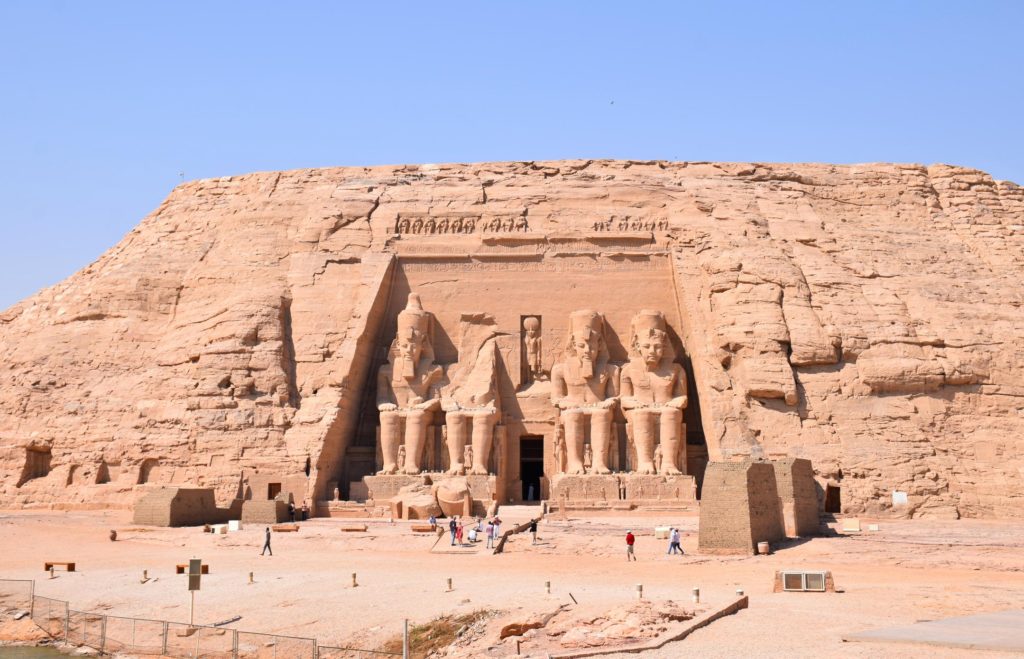
- Abu Simbel: in the sanctuary of the Great Temple sit Ptah, Amun-Ra, the deified Ramesses II and Ra-Horakhty. During the twice-yearly Sun Festival the sun's rays traditionally light the other three and leave Ptah, a god linked to the underworld, in shadow.
- Memphis (Mit Rahina): the open-air museum's colossus of Ramesses II and alabaster sphinx once stood near the Ptah temple; another Ramesses colossus from the site now greets visitors at the Grand Egyptian Museum.
- Saqqara: the Serapeum, burial place of Ptah's Apis bulls.
Frequently asked questions
What is Ptah the god of?
Ptah was the creator god of Memphis and the patron of craftsmen, builders and sculptors. He was also closely linked to kingship, since kings were crowned at Memphis.
Why is Ptah shown as a mummy?
His tightly wrapped form is very ancient and probably reflects an early cult statue rather than a link to death. Later he was also merged with the funerary gods Sokar and Osiris.
Who was Ptah's wife?
At Memphis his consort was the lioness goddess Sekhmet, and their son was the lotus god Nefertem. Together they formed the Memphite triad.
What is the Shabaka Stone?
A black granite slab in the British Museum, carved for the Kushite king Shabaka around 700 BC, which records the Memphite Theology describing Ptah creating the world through heart and tongue. Most scholars now date the text's composition to well after the Old Kingdom.
Where was Ptah worshipped?
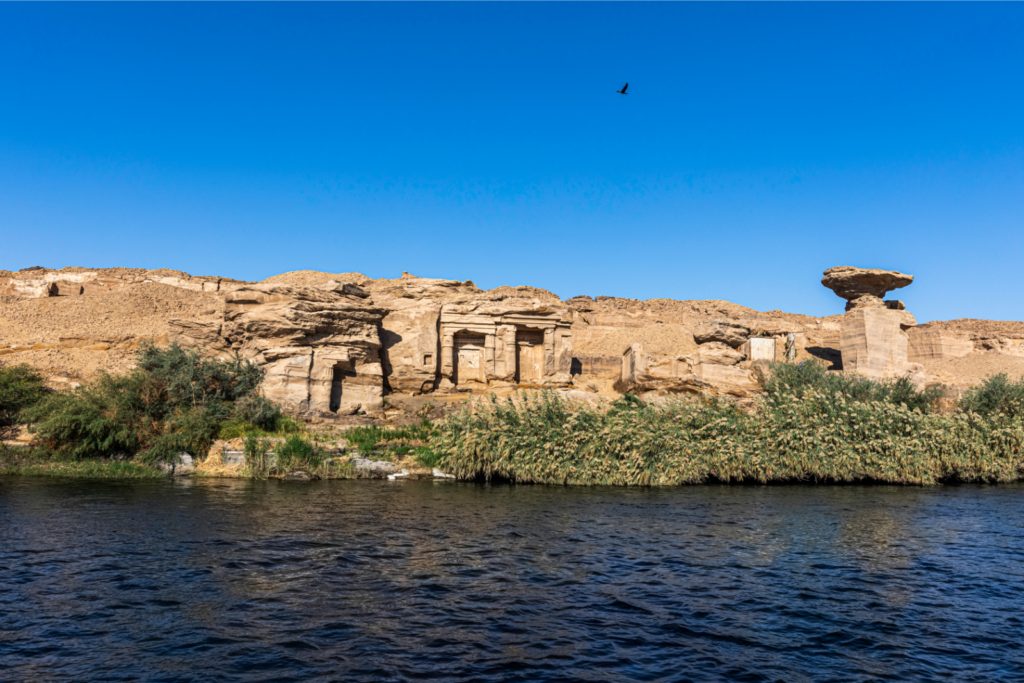
Above all at Memphis, south of modern Cairo, but he also had temples at Karnak, Deir el-Medina and in Nubia, including the rock temple of Gerf Hussein, and appears in the sanctuary of Abu Simbel.