Quick answer
Ancient Egyptians mummified animals for four reasons: as beloved pets, as food for the afterlife, as sacred animals that embodied a god, such as the Apis bull, and, above all, as votive offerings bought by pilgrims. Votive mummies of cats, ibises, dogs, falcons and crocodiles were produced in the millions in the Late and Ptolemaic periods, and many catacombs, such as those at Saqqara and Tuna el-Gebel, can still be visited.
Did the ancient Egyptians worship animals?
Not exactly: they worshipped gods who could show themselves in animal form, and certain animals were treated as sacred because a god could dwell in them. Sobek appeared as a crocodile, Bastet as a cat, Thoth as an ibis or baboon, Horus as a falcon and Anubis as a jackal or dog. Our overview of ancient Egyptian gods explains the system.
Greek and Roman visitors found this baffling and wrote vivid accounts of it, which is partly why it looms so large in our picture of Egypt. Animal cults existed from early times, but they exploded after about 700 BC, when emphasising animal gods became a way of asserting Egyptian identity under Libyan, Nubian, Persian and then Greek rule.
What were the four kinds of animal mummy?
Egyptologists divide animal mummies into four groups by purpose, and they differ hugely in number.
| Type | Purpose | Example | How common |
|---|---|---|---|
| Pets | Buried with or near their owners | A gazelle mummified for a 21st Dynasty royal woman | Rare |
| Food mummies | Provisions for the afterlife | Joints of beef and trussed ducks in Tutankhamun’s tomb | Uncommon |
| Sacred animals | A single animal that embodied a god during its life | The Apis bull of Memphis | A few at a time per cult |
| Votive mummies | Offerings bought by pilgrims and dedicated to a god | Ibises for Thoth, cats for Bastet, dogs for Anubis | Millions |
The techniques were similar to human mummification, though often simplified: drying with natron, coating with resins and careful wrapping. Some votive mummies were wrapped in intricate patterns of dyed linen, with painted faces or ears made of rolled cloth.
Which animals were sacred to which gods?
Most major gods had at least one sacred species, and the link often depended on the town: an animal honoured in one place could be hunted in the next.
- Bull: Ptah at Memphis (Apis), Ra at Heliopolis (Mnevis) and Montu at Armant (Buchis).
- Ram: Khnum at Elephantine and Amun at Thebes; rams of Khnum were buried on Elephantine Island, some with gilded masks.
- Falcon: Horus. At Edfu a living falcon was chosen each year to represent the god and crowned in a temple ceremony.
- Ibis and baboon: Thoth, at Hermopolis and Saqqara.
- Cat and lioness: Bastet at Bubastis, Sekhmet at Memphis.
- Dog or jackal: Anubis and Wepwawet, guardians of cemeteries.
- Fish: at Esna, the Greeks’ Latopolis, the Nile perch was sacred to the goddess Neith, and a cemetery of mummified perch has been found nearby.
What was the Apis bull?
The Apis bull was a living bull kept at Memphis as the earthly form of the god Ptah, chosen for special markings, honoured in life and buried with full royal-style rites. According to Herodotus, the bull had to be black with a white triangle on its forehead, the image of an eagle on its back and other signs. When one died, the country mourned and priests searched for the next calf.
From the New Kingdom, the bulls were buried at Saqqara in a catacomb the Greeks called the Serapeum. Its galleries hold 24 enormous granite and basalt sarcophagi, many weighing well over 60 tonnes, cut in the 26th Dynasty and later. Auguste Mariette found it in 1850–51, but the sarcophagi had been robbed in antiquity. Other bulls had their own cults: the Mnevis bull at Heliopolis and the Buchis bull at Armant, south of Luxor. Our guide to Ptah covers the god of Memphis.
Why were millions of animals mummified?
Pilgrims bought mummified animals at temples and dedicated them to the god, as a lasting prayer, rather as a visitor to a church today might light a candle. Temples ran this as an industry. Ibises, cats, dogs and crocodiles were bred in large numbers in temple farms, killed young and mummified, then buried in vast underground galleries in annual ceremonies.
- Dogs: the Catacomb of Anubis at Saqqara holds an estimated 8 million animals, mostly puppies, according to a survey by Cardiff University published in 2015.
- Ibises: Saqqara and Tuna el-Gebel each held millions; DNA studies suggest many birds were caught wild as well as farmed.
- Cats: cemeteries at Bubastis and the Bubasteion at Saqqara held vast numbers; X-rays show many were kittens killed by a broken neck. Our Bastet guide explains the paradox of reverence and sacrifice.
- Crocodiles: from hatchlings to adults of four metres or more, for Sobek, especially at Kom Ombo and in the Fayoum.
Scanning programmes, notably a Manchester University study of more than 800 animal mummies released in 2015, found that about a third held a complete animal, a third partial remains, and a third no animal at all, just mud, reeds or feathers. Whether this was fraud or a sincere offering of sacred material is still debated.
Are new animal mummies still being found?
Yes: Saqqara in particular keeps producing them. In 2018 and 2019 Egyptian teams working in the Bubasteion area announced dozens of mummified cats, gilded wooden cat statues, scarabs, mummified crocodiles and cobras, and remains identified as lion cubs, a rare find. Animal mummies are also being studied with CT scanning and 3D imaging, without unwrapping them, revealing how they were made and how the animals were treated.
Where to see sacred animals and animal mummies in Egypt today
You can walk into the actual catacombs at Saqqara and Tuna el-Gebel, and see mummies up close in three museums on a standard itinerary.
- Saqqara: the Serapeum’s bull galleries, when open after long restoration; check before you go.
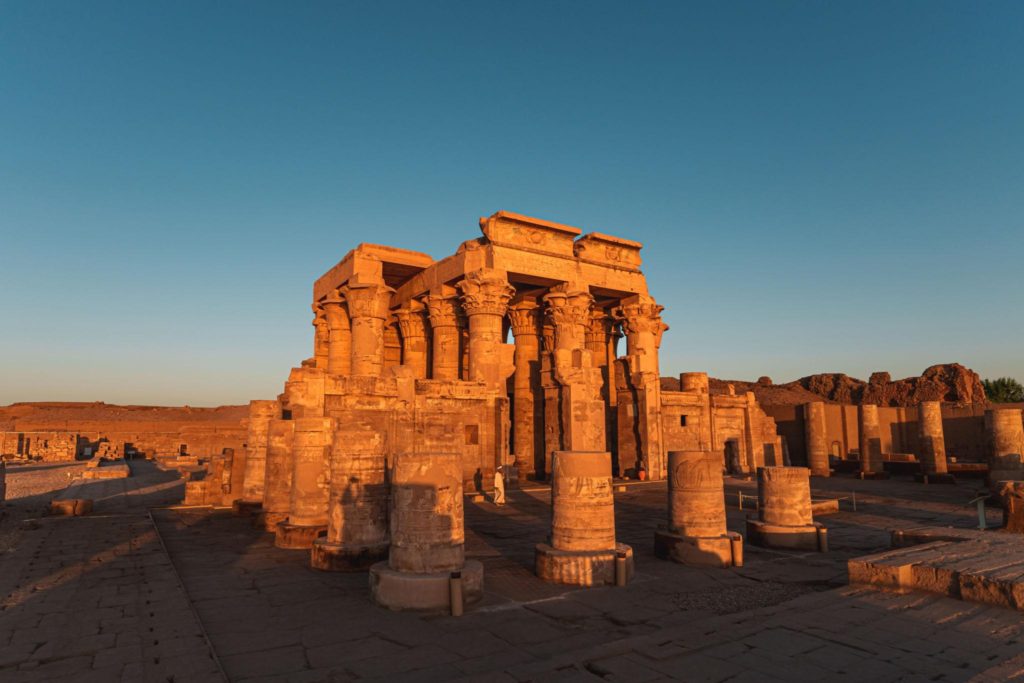
- Kom Ombo Temple: the Crocodile Museum beside the temple shows mummified crocodiles of all sizes, crocodile eggs and coffins.
- Mummification Museum, Luxor: animal mummies alongside the tools of the embalmers.
- Tuna el-Gebel: the ibis and baboon galleries of Thoth, in Middle Egypt, for those willing to go off the main route.
- Egyptian Museum, Tahrir: a gallery of animal mummies including cats, crocodiles, fish and the pet gazelle, on display at the time of writing.
Frequently asked questions
Why did ancient Egyptians mummify cats?
Most cat mummies were offerings to the goddess Bastet, bought by pilgrims at her temples. A few were beloved pets buried with care. Cats were sacred to Bastet, but temples still bred and killed them in large numbers for this purpose.
Can you see the Apis bull tombs?
Yes, the Serapeum at Saqqara is normally open to visitors, with its long galleries of giant granite sarcophagi. It has closed for restoration in the past, so check before you go.
How many animal mummies have been found?
Many millions. The dog catacomb at Saqqara alone is estimated to hold nearly 8 million animals, and the ibis catacombs at Saqqara and Tuna el-Gebel each held millions of birds.
Where is the crocodile museum in Egypt?
Beside Kom Ombo Temple, between Luxor and Aswan. It opened in 2012 and is included in visits to the temple, which is a regular stop on Nile cruises.
Were animal mummies fakes?
Some were: about a third of those scanned in a large study contained no animal remains. Egyptologists debate whether priests were cheating pilgrims or whether any sacred material, such as feathers or nesting matter, was considered a valid offering.