Quick answer
The ancient Egyptians worshipped hundreds of gods over some 3,000 years, from the sun god Ra and the state god Amun to Osiris, ruler of the dead, and his wife Isis. Most began as the patron of one town and were shown as humans, animals or a blend of both. Travellers meet them best at Karnak, Dendera, Abydos, Edfu and Philae.
How many gods did the ancient Egyptians worship?
Egyptologists have recorded well over a thousand divine names, but a few dozen gods dominate the temples you will visit, and most of them began as the protector of a single town or region. Egypt was unified around 3000 BC from a chain of Nile communities, each with its own patron: the falcon Horus at Nekhen (Hierakonpolis), the creator Ptah at Memphis, the ram Khnum at Elephantine, the crocodile Sobek in the Fayoum. Rather than replacing one another, these gods were linked into families and fused together, so the total only grew.
The exact count depends on how you treat a god’s many aspects. Horus alone appears as the falcon of the sky, the child of Isis, the winged sun of Edfu and the morning sun Ra-Horakhty. Egyptians saw no contradiction: a god could be one and many at once, and two could be joined under a single name, Amun-Ra being the most powerful example.
Many cult centres honoured a triad of father, mother and child, such as Amun, Mut and Khonsu at Thebes (modern Luxor) or Ptah, Sekhmet and Nefertum at Memphis.
Why do Egyptian gods have animal heads?
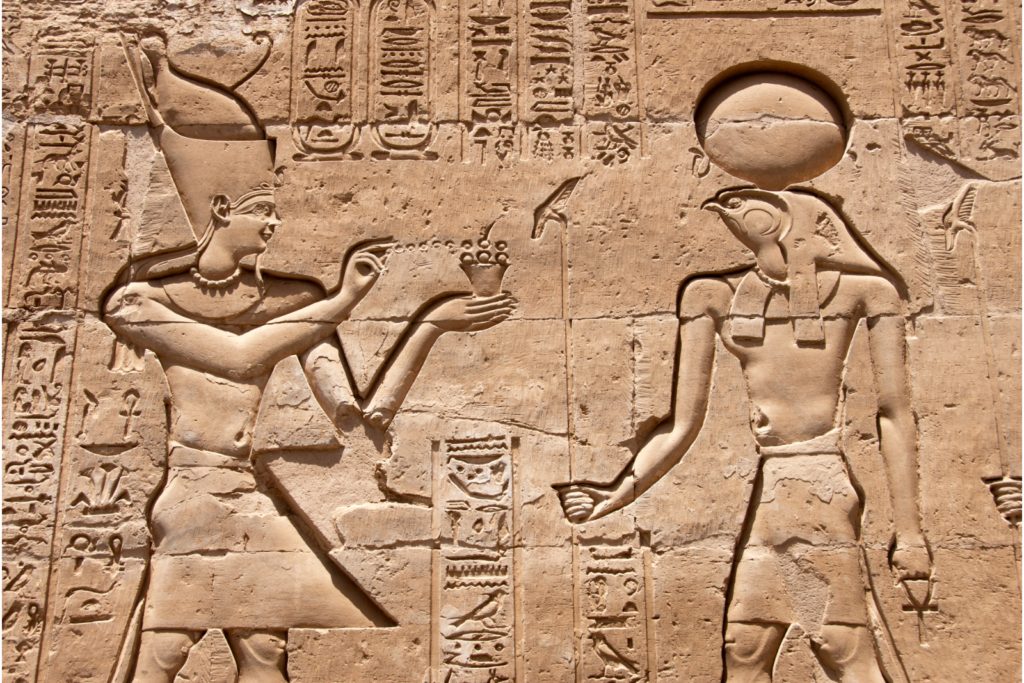
An animal head was a visual code for a god’s character and powers, not a claim that the god literally looked like that. The falcon soars above everything, so the sky and kingship gods Horus and Ra take falcon form; jackals roamed the desert cemeteries, so Anubis guards the dead; the crocodile and hippopotamus stand for raw, dangerous power. The same god could appear fully human, fully animal or as a hybrid depending on the setting.
Egyptian texts describe a god’s true form as hidden. A temple statue, or a living sacred animal, was a vessel the divine presence could inhabit rather than the god itself, which is why scholars avoid the old phrase “animal worship”. Devotion to sacred animals did become enormous in the Late Period (from 664 BC), with millions of mummified ibises, cats, dogs and crocodiles offered at shrines – see our guide to sacred animals and animal mummies.
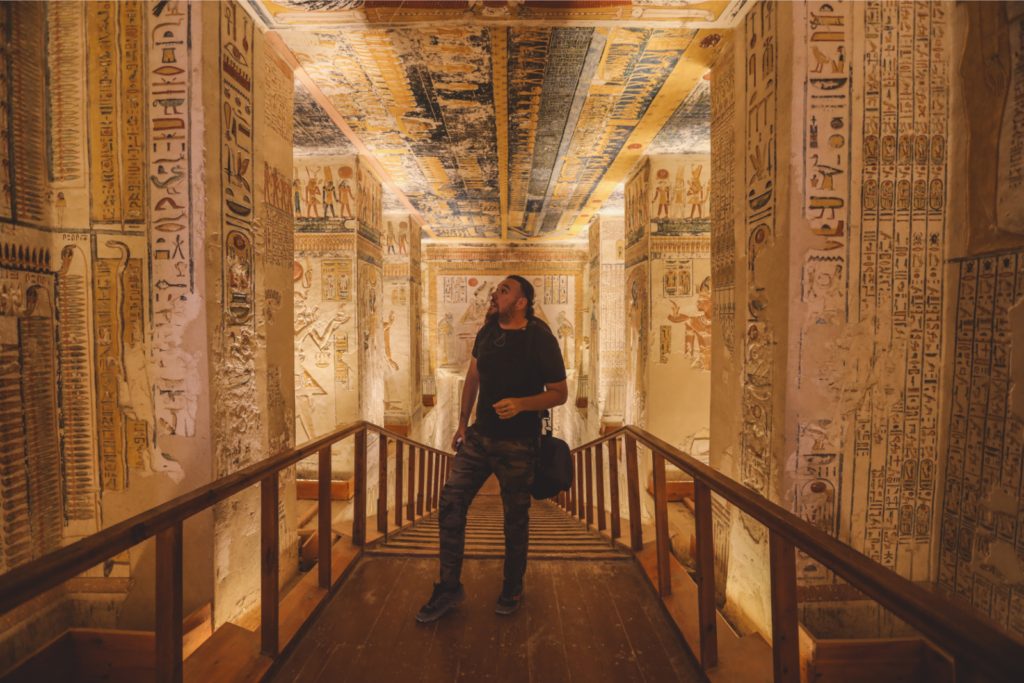
Headdresses are the easiest key for travellers: Isis wears a throne, Nephthys a basket on a house, Ma’at a single ostrich feather, Amun two tall plumes and Osiris the white atef crown flanked by feathers.
How did the Egyptians think the world began?
There was no single creation story: three major temple traditions told it differently, and Egyptians accepted them side by side. All begin with Nun, a dark, limitless ocean, from which the first mound of land emerged – an image that mirrors the fields reappearing as the Nile flood receded each autumn.
- Heliopolis (now north-east Cairo): the creator Atum emerges and produces Shu (air) and Tefnut (moisture), who parent Geb (earth) and Nut (sky). Their children are Osiris, Isis, Seth and Nephthys. These nine are the Ennead, and Atum was closely tied to the sun god Ra.
- Hermopolis in Middle Egypt: eight primeval beings – four frog-headed gods and four snake-headed goddesses, among them Amun and Amaunet – produce the first sunrise. This Ogdoad belonged to the town of Thoth.
- Memphis: Ptah creates everything through thought and speech. The main source, the Shabaka Stone, was carved around 710 BC and claims to copy an ancient worm-eaten text; many scholars now think the composition is much later than it pretends.
Who were the main Egyptian gods?
These are the gods you will meet again and again on temple walls; each name links to a full guide.
| God | What they stood for | How to recognise them | Best place to see |
|---|---|---|---|
| Ra | The sun, creation, kingship | Falcon head with sun disc and cobra | Abu Simbel; royal tombs |
| Osiris | Death, rebirth, ruler of the underworld | Mummified king, green or black skin, crook and flail | Abydos |
| Isis | Magic, motherhood, protection | Throne-shaped headdress, later cow horns and disc | Philae |
| Horus | Kingship, the sky | Falcon, or falcon-headed man in the double crown | Edfu |
| Anubis | Embalming, cemeteries | Black jackal or jackal-headed man | Temple of Hatshepsut |
| Hathor | Love, music, joy, the West | Cow horns and sun disc, or a face with cow’s ears | Dendera |
| Amun | Hidden creator, king of the gods | Man with tall double plumes; ram | Karnak |
| Thoth | Writing, wisdom, the moon | Ibis-headed man or baboon | Tuna el-Gebel |
| Sobek | Crocodile power, fertility | Crocodile-headed man | Kom Ombo |
| Bastet | Protection of home and family | Cat or cat-headed woman | Museums; Bubastis in the Delta |
| Seth | Storms, desert, chaos | Unidentified animal with squared ears | Edfu (as the defeated enemy) |
| Ptah | Craftsmen, creation by word | Mummiform man in a skullcap | Memphis; Abu Simbel sanctuary |
| Ma’at | Truth, justice, cosmic order | Woman with an ostrich feather | Royal tombs |
| Khnum | Shaping people on a potter’s wheel | Ram-headed man | Esna Temple |
| The Aten | Akhenaten’s sole god, the sun disc | Disc with rays ending in hands | Tell el-Amarna |
| Bes and Taweret | Household protectors of birth and sleep | Lion-maned dwarf; pregnant hippo | Dendera birth houses |
How did ordinary Egyptians worship their gods?
Most Egyptians never entered the inner rooms of a great temple; they met the gods at festivals, at small shrines and in their own homes. A temple was the god’s house, and its sanctuary held the cult statue, which only the king – in practice a senior priest acting for him – could serve each morning with food, linen and incense. Ordinary people prayed at the outer gates, and Karnak had an eastern chapel dedicated to Amun “who hears prayers”.
Festivals were the great public moments. In the Opet Festival at Thebes, Amun’s statue travelled in a gilded boat-shaped shrine from Karnak to Luxor Temple; each summer, Hathor sailed upriver from Dendera to visit Horus at Edfu. Crowds lined the route, ate and drank, and could put yes-or-no questions to the god as an oracle.
At home, people relied on approachable protectors such as Bes and Taweret and made offerings to their ancestors. The tomb-builders’ village at Deir el-Medina preserves house shrines and small prayer stelae that show this everyday faith far better than the state temples do.
How did Egyptian religion change over 3,000 years?
The gods were reshuffled whenever political power moved, and the sharpest break came under Akhenaten in the 14th century BC. Old Kingdom pyramid builders tied themselves to Ra of Heliopolis. When Theban rulers reunited Egypt in the Middle and New Kingdoms, their local god Amun merged with Ra and became king of the gods, and Karnak grew into the richest temple in the land.
Akhenaten (reigned about 1353–1336 BC) promoted a single god, the Aten, closed the old cults and had Amun’s name hacked from monuments. Whether this was true monotheism is still debated. Within a few years of his death, Tutankhamun and his successors restored the traditional gods.
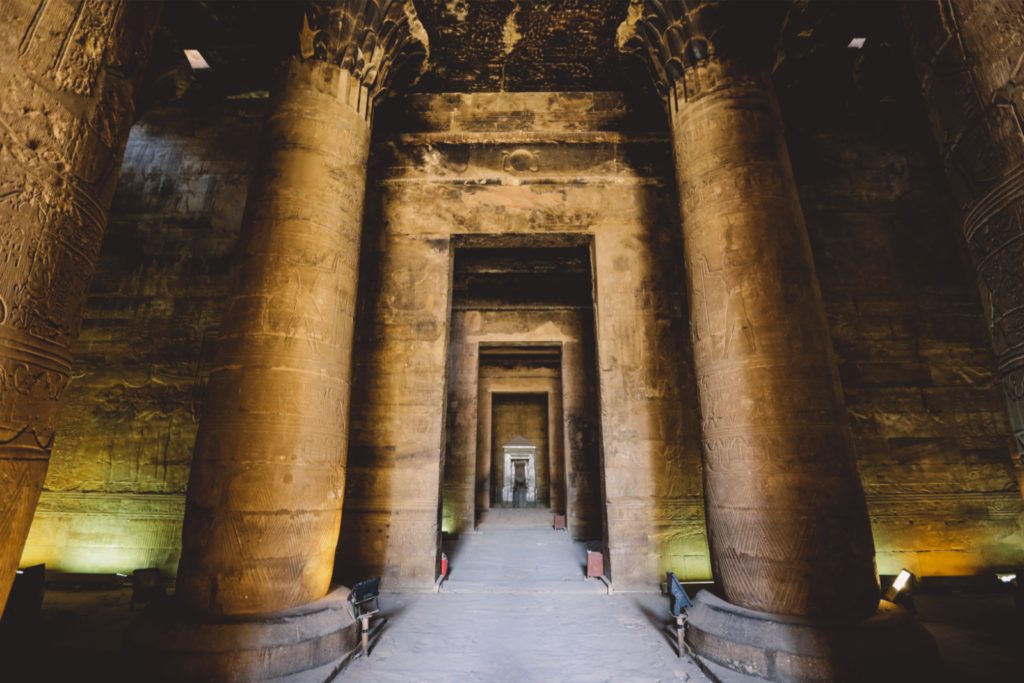
Under the Greek Ptolemies (305–30 BC) and then Rome, the old religion flourished in stone: Edfu, Dendera, Kom Ombo, Esna and Philae all date from this late age. Isis and Serapis, a Graeco-Egyptian god promoted by the early Ptolemies, were worshipped across the Mediterranean. Christianity spread through Egypt from the 3rd and 4th centuries AD, and the last known hieroglyphic inscription was carved at Philae in AD 394.
What is genuine myth and what is modern invention?
Much of what circulates online about Egyptian gods – horoscopes, ancient electricity, secret lost knowledge – has no basis in Egyptian sources. Keep in mind:
- Several famous myths reach us through Greek writers. The full story of Osiris’s dismemberment is best known from Plutarch, writing around AD 100; Egyptian texts allude to it but rarely narrate it.
- There was never one official canon. Myths lived in hymns, spells and temple inscriptions, and versions differed by town and century.
- “Egyptian zodiac” horoscopes are a modern invention. The zodiac ceiling from Dendera dates to the 1st century BC and combines Egyptian star gods with Babylonian and Greek zodiac signs that arrived late.
- The so-called Dendera light bulb is a relief of a lotus flower giving birth to a snake, an image of creation explained by its own hieroglyphic captions.
Where to see the Egyptian gods in Egypt today
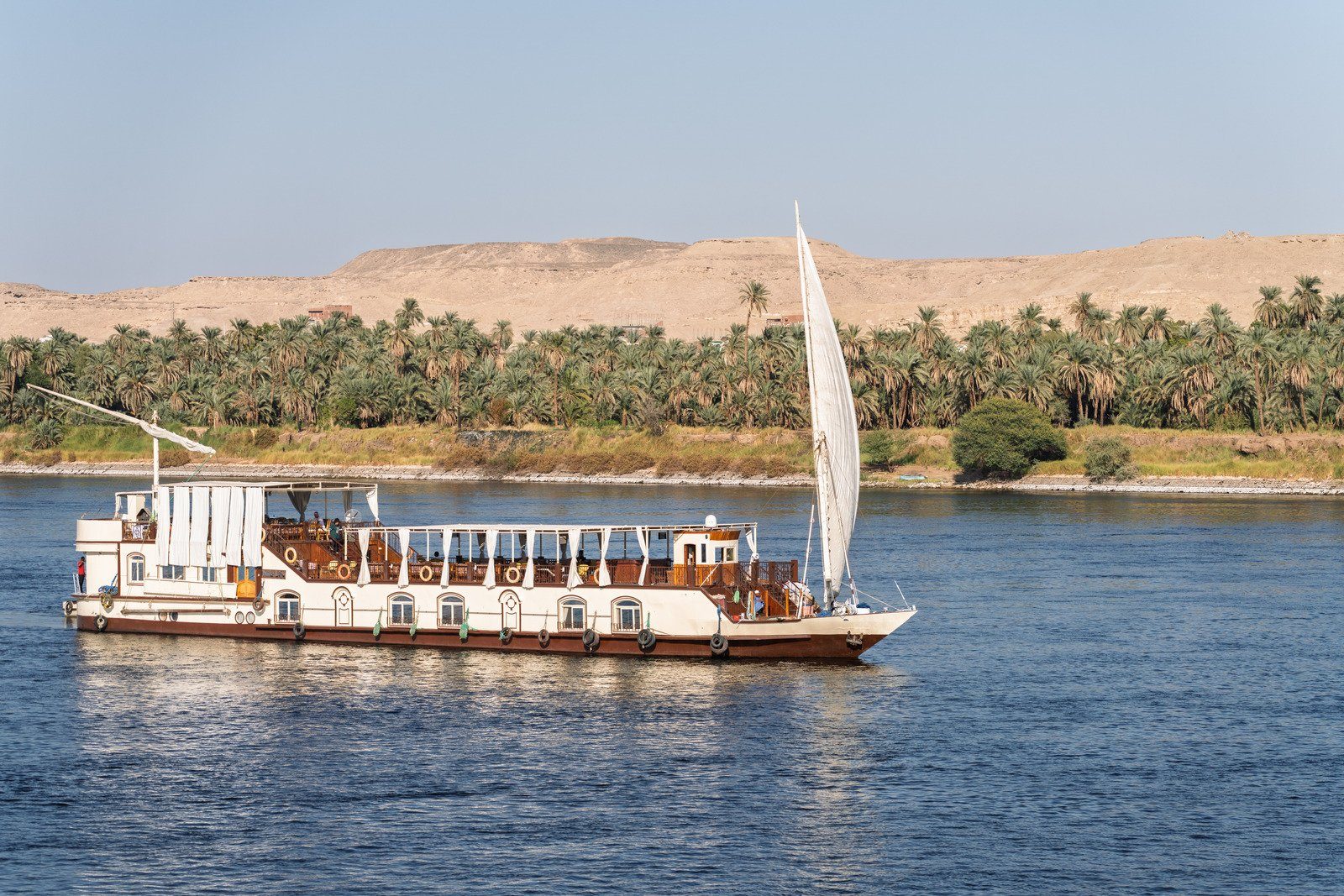
Prioritise five temples: Karnak for Amun, Dendera for Hathor, Abydos for Osiris, Edfu for Horus and Philae for Isis. Karnak is in Luxor itself. Dendera is about an hour’s drive north of Luxor and Abydos roughly three hours, so they pair well as one long day trip. Edfu, Kom Ombo and Philae fall naturally on a Nile cruise between Luxor and Aswan.
In Cairo, the Grand Egyptian Museum shows the gods at smaller scale: gilded deities and shrines from Tutankhamun’s tomb, amulets and cult statues. Learn ten or so gods before you go: recognising Hathor’s horns or Thoth’s ibis beak at a glance turns a wall of carvings into a story.
Frequently asked questions
Who was the most powerful Egyptian god?
It depends on the period. Ra dominated the Old Kingdom, Amun-Ra was called king of the gods in the New Kingdom, and Osiris mattered most to ordinary people because he ruled the afterlife.
Who is the Egyptian god of death?
There was no single god of death. Osiris ruled the dead, Anubis protected and embalmed them, and Ma’at’s feather was the standard they were judged against. None of them was evil; the murderer in Egyptian myth is Seth.
Did the ancient Egyptians worship animals?
Not in the simple sense. Animals were seen as vessels or signs of a god’s presence. In the Late Period, though, sacred animals such as ibises, cats and bulls received huge popular devotion and were mummified in their millions.
Who is the Egyptian goddess of love?
Hathor was the goddess of love, music, dance and joy. Isis, the devoted wife and mother, absorbed many of Hathor’s attributes in later periods.
Which Egyptian gods can you see on a Nile cruise?
A standard Luxor–Aswan cruise visits Karnak (Amun), Esna (Khnum), Edfu (Horus), Kom Ombo (Sobek and Horus the Elder) and Philae (Isis). Dendera and Abydos need a separate day trip from Luxor.