Quick answer
The Grand Egyptian Museum (GEM) is the world's largest museum devoted to a single civilisation, located about 2 km from the Pyramids of Giza. It opened fully on 1 November 2025 and displays Tutankhamun's complete tomb collection, a colossal statue of Ramesses II in the atrium, the Grand Staircase lined with royal sculpture and Khufu's solar boat. Allow at least half a day.
What is the Grand Egyptian Museum?
The Grand Egyptian Museum (GEM) is Egypt's new national museum of ancient Egypt, built on the edge of the Giza plateau about 2 km from the pyramids, and it officially opened in full on 1 November 2025. Planned for more than two decades, it is the largest archaeological museum in the world dedicated to a single civilisation, designed to hold around 100,000 artefacts spanning from prehistory to the Graeco-Roman period.
The building itself is striking: a vast triangular facade of translucent alabaster-effect stone aligned with the pyramids, a soaring atrium and huge windows framing the Giza plateau. It replaces the old Egyptian Museum in Tahrir Square as the home of Egypt's greatest treasures, above all the complete Tutankhamun collection, displayed together for the first time since its discovery in 1922.
What are the must-see exhibits at the GEM?
The four unmissable highlights are the Tutankhamun galleries, the colossal statue of Ramesses II in the Grand Hall, the Grand Staircase, and Khufu's solar boat.
- Statue of Ramesses II: the 3,200-year-old granite colossus, about 11 metres tall and weighing around 83 tonnes, greets you in the atrium. It once stood in Cairo's Ramses Square and was moved to the GEM site in 2006.
- The Grand Staircase: a monumental six-storey staircase lined with around 60 royal statues, sarcophagi and architectural pieces, arranged chronologically as you climb, ending with a panoramic window onto the pyramids.
- Tutankhamun galleries: the boy king's entire burial assemblage, more than 5,000 objects.
- Khufu's solar boat: the 4,500-year-old cedar boat found beside the Great Pyramid in 1954, now displayed in its own dedicated building within the museum.
- Main galleries: a dozen or so galleries arranged by era and by theme, covering kingship, society and beliefs from prehistory to the Graeco-Roman period. Look for Old Kingdom statuary, Middle Kingdom jewellery, coffins and mummy masks, and the tools, games and cosmetics of everyday life that make ancient Egyptians feel surprisingly familiar. Many pieces come from storerooms and regional museums and have never been shown before, so even seasoned visitors to the old Tahrir museum will find plenty that is new.
- Hanging obelisk: outside the entrance, an obelisk of Ramesses II suspended so you can walk beneath it and see the cartouche carved on its base.
What can you see in the Tutankhamun galleries?
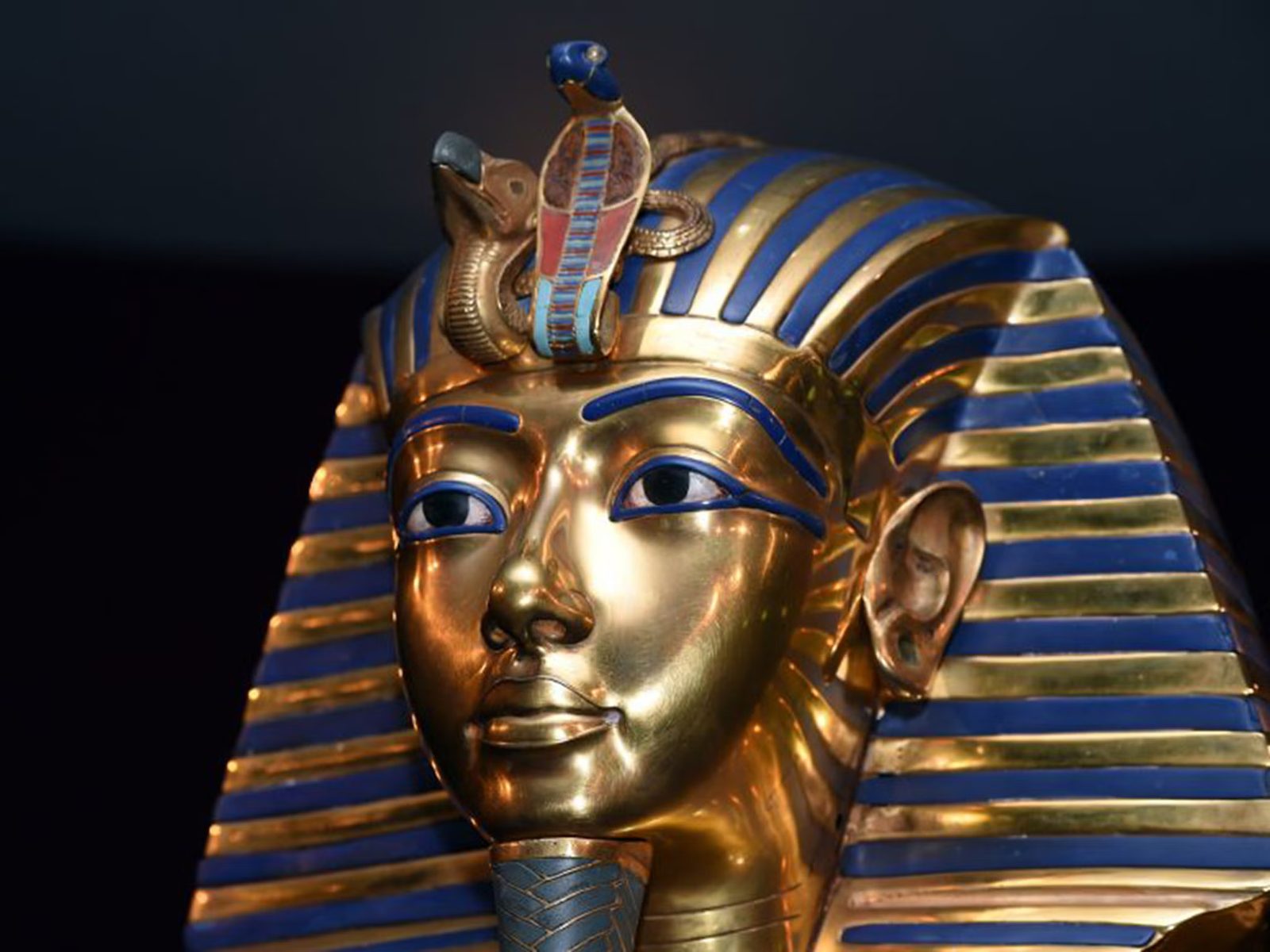
For the first time, all of Tutankhamun's tomb treasures are displayed together, including the gold funerary mask, the gilded shrines, his chariots, thrones, jewellery, weapons and even his sandals and linens. Two vast halls tell the story of the young king's life and burial, and the discovery of the tomb by Howard Carter in 1922.
Highlights include the gold mask and the innermost gold coffin, the golden throne with its tender scene of the king and queen, the ceremonial chariots, the guardian statues that flanked the burial chamber, and the canopic shrine with its four protective goddesses. Many objects that had been in storage for a century are on display for the first time.
Allow at least 1.5–2 hours here alone. The galleries are the most crowded part of the museum, so go there first thing or late in the afternoon. Note that Tutankhamun's mummy remains in his tomb in the Valley of the Kings in Luxor, and the royal mummies of other pharaohs are at the National Museum of Egyptian Civilization in Fustat, Cairo.
How long should you spend at the Grand Egyptian Museum?
Allow at least 4–5 hours for a first visit; Egyptology enthusiasts can easily spend a full day. A sensible half-day plan:
- 30 minutes: the hanging obelisk, the Grand Hall and the statue of Ramesses II.
- 45 minutes: climb the Grand Staircase, pausing at the pyramid viewpoint.
- 1.5–2 hours: Tutankhamun galleries.
- 1 hour: selected main galleries, guided by your Egyptologist to the key pieces.
- 30–45 minutes: Khufu's solar boat.
Add time for a break; the museum has cafés and restaurants, some with pyramid views, plus shops and landscaped gardens.
How much are Grand Egyptian Museum tickets?
Ticket prices for foreign visitors are set in Egyptian pounds and have changed several times since opening, so check the official Grand Egyptian Museum website for current prices and opening hours before you go. Separate or additional tickets may apply to some areas, such as the solar boat museum, and to guided tours.
Book online through the official GEM ticketing channel where possible, as timed entry may apply and peak days can sell out. Avoid unofficial resellers. If you travel with Noble Travel, your GEM tickets and a private Egyptologist are arranged as part of your itinerary.
How do you combine the GEM with the Pyramids of Giza?
The GEM and the pyramids are about 2 km apart, roughly 10 minutes by car, so you can see both in one long day, though most travellers enjoy them more on two consecutive days.
- One-day plan: pyramids and Sphinx at opening time (usually 7–8am) before the heat and crowds, lunch, then the GEM in the afternoon.
- Two-day plan (recommended): a relaxed morning at Giza with a panoramic viewpoint and perhaps a camel ride, then a full, unhurried morning at the GEM the next day.
- Stay nearby: a hotel in Giza, such as the Marriott Mena House, puts both within minutes, avoiding Cairo traffic.
Read our Pyramids of Giza guide and the Cairo and Giza destination guide.
What are the best tips for visiting the GEM?
- Go with an Egyptologist: the museum is enormous. A private guide brings the objects to life and steers you to the best pieces efficiently.
- Arrive at opening: mornings are quietest; tour groups build from mid-morning.
- Tutankhamun first or last: to avoid the peak crowd in those galleries.
- Wear comfortable shoes: you'll walk several kilometres across polished floors and the Grand Staircase.
- Read up first: even an hour with a book or documentary on Tutankhamun and the Old Kingdom before you go makes the galleries far more rewarding.
- Photography: phone photography is generally permitted without flash in most areas, but rules can change and some spaces may differ; check on arrival.
- Bags: travel light; security screening is at the entrance.
- Accessibility: the museum is modern with lifts and ramps alongside the Grand Staircase.
- Kids: there is a dedicated children's museum; see Egypt with kids.
How do you get to the Grand Egyptian Museum?
The GEM is on the Cairo–Alexandria Desert Road at the edge of Giza, about 2 km from the pyramids; most visitors arrive by private car or ride-hailing app.
- From Giza hotels: about 5–15 minutes by car.
- From downtown Cairo or Zamalek: about 30–60 minutes, depending heavily on traffic.
- From Cairo International Airport: about 45–90 minutes.
- From Sphinx International Airport: roughly 30–40 minutes.
- Ride-hailing: Uber and Careem both operate in Cairo and give fixed fares.
With a private driver, you'll be dropped at the entrance and collected when you're ready, which is especially useful when combining the museum with the pyramids or Saqqara on the same day.
What else is there at the GEM complex?
Beyond the main galleries, the GEM complex includes a children's museum, a large conservation centre, landscaped gardens and plazas, restaurants and cafés, and shops.
- Children's museum: interactive, hands-on spaces designed to introduce kids to ancient Egypt, a welcome break for families.
- Conservation centre: one of the largest of its kind in the Middle East, where thousands of objects, including much of the Tutankhamun collection, were restored before display. Visitor access to working areas varies.
- Gardens and plazas: the grounds frame views of the pyramids and are pleasant at the end of the day.
- Restaurants and cafés: from quick coffee to sit-down meals, some with pyramid views. Lunch here neatly splits a full-day visit.
- Shops: museum shops sell good-quality replicas, books and souvenirs at fixed prices, a relaxing alternative to bazaar haggling.
- Events: the museum hosts temporary exhibitions and cultural events; check the official site for what's on during your visit.
Is the old Egyptian Museum in Tahrir Square still worth visiting?
Yes, for enthusiasts with extra time. The Egyptian Museum in Tahrir Square, opened in 1902, still holds a remarkable collection, including Old Kingdom statuary and the treasures of Yuya and Thuya, and its old-world atmosphere is part of the appeal. But with Tutankhamun now at the GEM, first-time visitors with only three days in Cairo should prioritise the GEM, the pyramids, Saqqara and Islamic Cairo.
The GEM is included on all our Cairo itineraries, from the 4-day Cairo stopover to the Classic Egypt and Nile Cruise.
Frequently asked questions
When did the Grand Egyptian Museum open?
The Grand Egyptian Museum officially opened in full on 1 November 2025, following years of partial openings.
Is Tutankhamun's gold mask at the Grand Egyptian Museum?
Yes. The complete Tutankhamun collection, including the gold funerary mask, is displayed in the GEM's dedicated Tutankhamun galleries.
How far is the Grand Egyptian Museum from the pyramids?
About 2 km, or roughly 10 minutes by car from the Giza pyramids.
How long do you need at the Grand Egyptian Museum?
At least 4–5 hours, including 1.5–2 hours in the Tutankhamun galleries. Enthusiasts can spend a full day.
Can you take photos in the Grand Egyptian Museum?
Phone photography without flash is generally allowed in most areas, but rules can change. Check the official site or signage on the day.
Where are the royal mummies?
The royal mummies are at the National Museum of Egyptian Civilization (NMEC) in Fustat, Cairo, not at the GEM.
Do I need to book GEM tickets in advance?
It is recommended, especially in peak season. Buy through the official GEM website, or let your tour operator arrange tickets.