In short
Lake Nasser is the vast reservoir created by the Aswan High Dam in the 1960s, stretching south from Aswan into Sudan across the old heartland of Nubia. Its shores hold temples rescued from the rising water, including Kalabsha, Wadi el-Sebua, Amada and Abu Simbel, best seen on a 3–4 night Lake Nasser cruise.
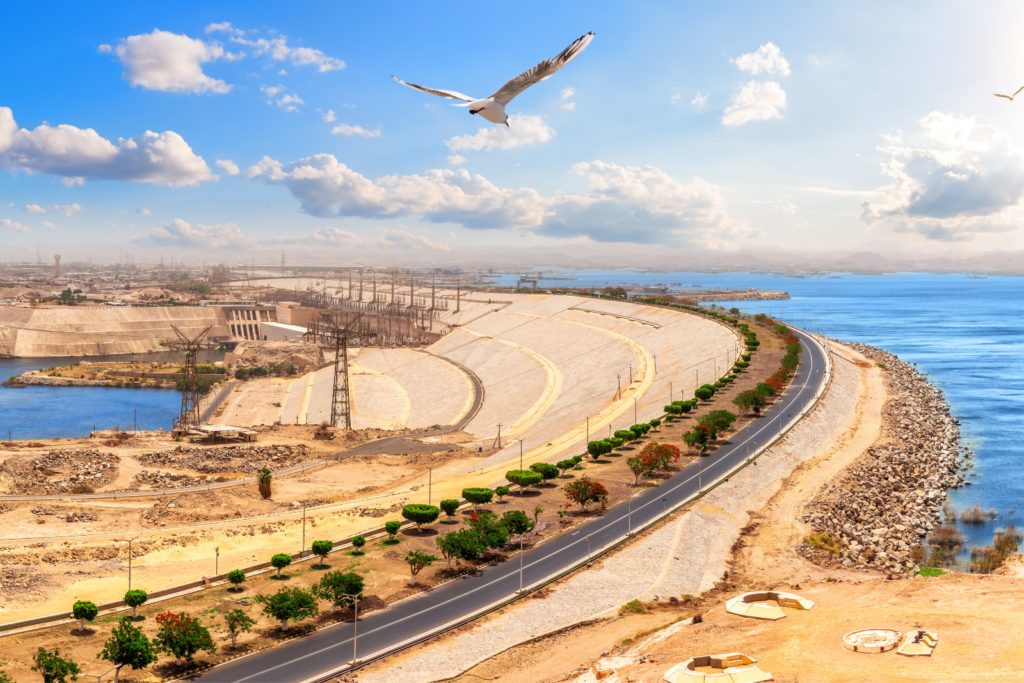
When the Aswan High Dam was built between 1960 and 1970, about 15 km south of Aswan, the Nile backed up into one of the largest artificial lakes in the world, roughly 500 km long, with its southern part in Sudan. The water drowned Lower Nubia, a land of villages, farms and ancient monuments that had connected Egypt with Africa for thousands of years, and tens of thousands of Nubians in Egypt and Sudan were moved to new settlements.
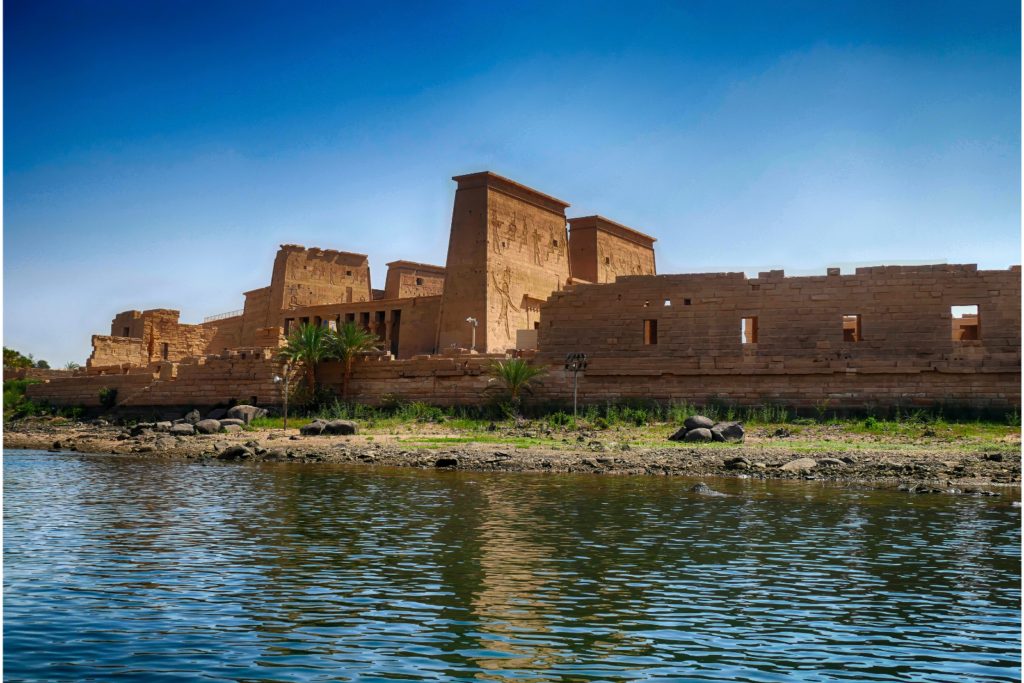
The monuments got a second chance. In 1960 UNESCO launched an international campaign that dismantled and moved more than 20 temples to higher ground, most famously Abu Simbel. Some were regrouped on the lake shore at New Kalabsha, New Sebua and New Amada; others were given to the countries that helped, which is why the Temple of Dendur is in New York's Metropolitan Museum and the Temple of Debod stands in a Madrid park.
Today the lake is one of the emptiest, quietest places in Egypt: blue water, sandstone hills and desert to every horizon, with no towns between the High Dam and Abu Simbel. A handful of cruise ships sail it, visiting temples that road travellers rarely see and arriving at Abu Simbel by water, the way the temples were meant to be approached.
Top things to see in Lake Nasser and Nubia
Kalabsha Temple
The largest free-standing temple in Egyptian Nubia, built for the Nubian god Mandulis under the Roman emperor Augustus and moved in the early 1960s to a promontory just south of the High Dam. It is reached by a short boat ride from the dam's west side. The same site holds the rock-cut temple of Beit el-Wali, with vivid Nubian campaign scenes of Ramesses II, and the elegant Roman Kiosk of Kertassi.
Wadi el-Sebua
Named the 'Valley of the Lions' after the sphinxes lining its approach, this temple of Ramesses II is part freestanding and part cut into the rock. Early Christians turned it into a church, and a surviving painting of St Peter means Ramesses now appears to be making an offering to the saint. The relocated temples of Dakka, dedicated to Thoth, and Maharraqa, with Egypt's only spiral temple staircase, stand nearby.
Amada Temple
The oldest temple on the lake, built by Thutmose III and Amenhotep II in the 15th century BC, with some of the best-preserved painted reliefs in Nubia. Rather than being cut into blocks, it was moved 2.5 km on rails in one piece. The rock temple of Derr, built by Ramesses II, and the decorated Tomb of Pennut, a Ramesside official, have been rebuilt beside it.
Qasr Ibrim
Once a clifftop fortress-town occupied for about 3,000 years, from pharaonic times to an Ottoman garrison in the 19th century, Qasr Ibrim is the only major Nubian site still in its original position, now an island. Visitors cannot land, but cruise ships sail slowly past for a close view of its walls and cathedral ruins.
Abu Simbel by water
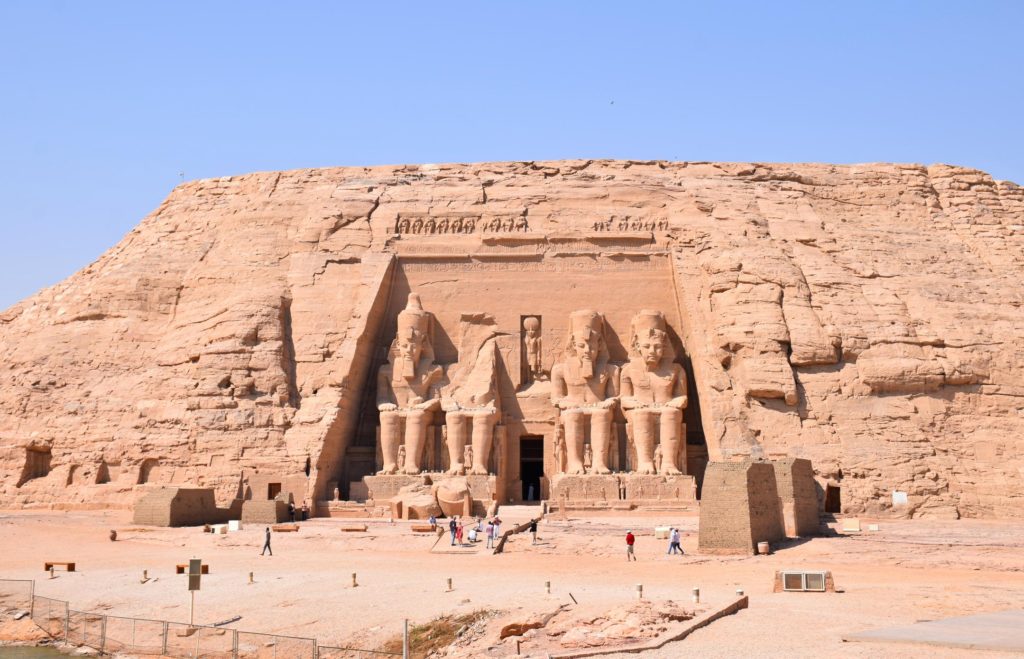
Lake Nasser cruises moor below Ramesses II's great temples, so you can see the four colossi floodlit after dark, watch the evening sound and light show and return at dawn before the day-trippers arrive from Aswan. It is the most memorable way to reach Egypt's most famous Nubian monument.
The Aswan High Dam
The 3.6 km-long dam that created the lake is a short stop on most Aswan itineraries. The view from the crest takes in the lake to the south and the Nile to the north, and the lotus-shaped Soviet–Egyptian Friendship monument commemorates the Soviet engineers who helped build it.
The Nubian Museum, Aswan
The best introduction to Nubia and the rescue campaign, with finds from sites now underwater, a scale model of the Nile valley and a reconstructed Nubian house. Visit before your cruise to understand what the lake covered.
Nubian villages around Aswan
Nubian communities on Aswan's west bank, such as Gharb Soheil, keep the brightly painted domed houses, Nubian languages and hospitality of the old homeland. A visit with a local host, tea and a walk through the lanes is the most direct way to meet the people whose land became the lake.
In-depth sight guides
- Kalabsha Temple: Kalabsha Temple is a Roman-era temple to the Nubian god Mandulis, moved in the 1960s to an island-like headland beside the Aswan…
- Wadi el-Sebua: Wadi el-Sebua, the Valley of the Lions, is a temple of Ramesses II approached by an avenue of sphinxes, rebuilt on the shore of…
- Amada and Derr Temples: Amada is the oldest temple on Lake Nasser, built by Thutmose III and Amenhotep II in the 15th century BC and famous for reliefs…
- Qasr Ibrim: Qasr Ibrim is a fortress-town that stood on a cliff above the Nile for about 3,000 years and is now an island in Lake Nasser. It…
Unforgettable experiences
- Sailing into Abu Simbel and watching the temples lit up from the deck of your ship
- Exploring Kalabsha, Wadi el-Sebua and Amada with barely another visitor in sight
- Drifting past the island fortress of Qasr Ibrim in the late-afternoon light
- Spotting Nile crocodiles basking on the shoreline from the sundeck
- Stargazing on deck far from any town lights
- Tea and conversation in a Nubian home in Aswan
When to visit Lake Nasser and Nubia
October to April is the best time for Lake Nasser, with sunny days of about 23–32°C and cool, clear nights. The lake region is among the hottest places in Egypt, and from May to September temperatures regularly pass 40°C, when some cruise ships reduce departures or pause, so check schedules. Cruises timed for the Abu Simbel sun festival, around 22 February and 22 October, are in demand and book out early.
How long to spend in Lake Nasser and Nubia
A Lake Nasser cruise runs 3 or 4 nights, typically 3 nights sailing south from Aswan to Abu Simbel and 4 nights sailing north. Add 2–3 nights in Aswan for Philae, the Nubian Museum and a Nubian village, and the whole Lake Nasser and Nubia experience fits neatly into a week, or follows a Luxor–Aswan Nile cruise as part of a two-week trip.
Getting there
Lake Nasser cruises start and finish at the High Dam near Aswan and at Abu Simbel. Aswan is about 1 hour 20 minutes by air from Cairo, and Australians reach Cairo via Dubai, Doha or Abu Dhabi. From Abu Simbel you can fly back to Aswan (about 45 minutes, schedules permitting) or drive about 280 km, roughly 3.5 hours. Kalabsha is the one lake temple easily visited without a cruise, by boat from the High Dam.
Specialist tips
- Book Lake Nasser cruises well ahead; only a few ships sail the lake and cabins are limited
- Visit the Nubian Museum in Aswan before you sail; it brings the lake temples to life
- Pack binoculars for crocodiles, birds and the walls of Qasr Ibrim
- Choose the southbound direction if you want to finish with Abu Simbel, or northbound to start with it
- Bring a warm layer for evenings on deck, which can be cool in December and January
- Phone and internet coverage on the lake is patchy; download what you need in Aswan
Lake Nasser and Nubia: frequently asked questions
What is a Lake Nasser cruise like?
A small number of ships sail between Aswan and Abu Simbel over 3 or 4 nights, visiting rescued Nubian temples such as Kalabsha, Wadi el-Sebua and Amada, and mooring at Abu Simbel. Our Lake Nasser cruise guide covers ships, routes and what is included.
Is a Lake Nasser cruise better than a Nile cruise?
They are different. A Luxor–Aswan Nile cruise covers Egypt's most famous temples and busy river life; Lake Nasser offers remote desert scenery, empty temples and arrival at Abu Simbel by water. Many travellers do both. See Lake Nasser cruise vs Nile cruise.
Can you visit the Lake Nasser temples without a cruise?
Kalabsha, Beit el-Wali and Kertassi can be visited by boat from the High Dam on a half-day from Aswan. The temples further south, and Qasr Ibrim, are realistically seen only from a cruise ship.
What happened to the Nubians when Lake Nasser was created?
Tens of thousands of Nubians in Egypt and Sudan lost their villages and were resettled, in Egypt mostly on new land near Kom Ombo. Their culture remains strong around Aswan; our Nubian culture guide and the Nubian Museum are the best places to start.
Which tour includes a Lake Nasser cruise?
Our Lake Nasser cruise and Abu Simbel tour combines Cairo, Aswan and a lake cruise, and a cruise can be added to most itineraries that reach Aswan. If you are timing it for the Abu Simbel Sun Festival, book early.