Quick answer
Khufu, known to the Greeks as Cheops, was the second king of Egypt’s 4th Dynasty, ruling for about 23 to 27 years around 2589–2566 BC. He built the Great Pyramid of Giza, yet we know surprisingly little about him as a person: his only certain statue is an ivory figurine 7.5 cm tall, and his reputation was shaped by stories written down centuries later.
Who was Khufu?
Khufu was the son and successor of Sneferu, the greatest pyramid-builder in history by volume of stone, and he took his father’s ambitions to their peak at Giza. His full name, Khnum-Khufu, places him under the protection of the ram-headed creator god Khnum. He came to the throne around 2589 BC, at the height of the Old Kingdom, when the king was the absolute centre of the state and the whole economy could be directed towards his tomb.
The length of his reign is uncertain. The Turin king list, a papyrus compiled more than 1,200 years later, gives him 23 years; the Greek historian Herodotus gave 50, which no one accepts. The highest dates on contemporary documents suggest he reigned at least 26 or 27 years. All dates for the Old Kingdom carry a margin of error of several decades.
His father Sneferu had built three large pyramids, at Meidum and Dahshur, learning by trial and error how to make a true, smooth-sided pyramid. Khufu inherited that experience and the workforce that came with it.
How do we know about Khufu’s reign?
Mostly from his pyramid, the tombs of his family and officials, and a remarkable cache of papyri found in 2013 on the Red Sea coast. Almost no royal inscriptions describing events of his reign survive. Rock inscriptions at Wadi Maghara in Sinai show expeditions sent for turquoise and copper, and his name appears at quarries in the Eastern Desert and the Western Desert.
The great breakthrough came at Wadi al-Jarf, an ancient harbour on the Gulf of Suez, where a French-Egyptian team led by Pierre Tallet found the oldest inscribed papyri yet known. The best preserved is the logbook of an inspector named Merer, often called the Diary of Merer. It records his team of around 40 men ferrying limestone blocks from the Tura quarries across the Nile to “Akhet-Khufu”, the Horizon of Khufu, the ancient name of the Great Pyramid, late in the reign, probably around year 26 or 27. It names Khufu’s half-brother Ankhhaf as the official in charge.
The diary confirms what archaeologists had argued for decades: the pyramid was built by organised, paid and fed crews, not slaves. For the engineering itself, see how were the pyramids built?
What was the Great Pyramid for?
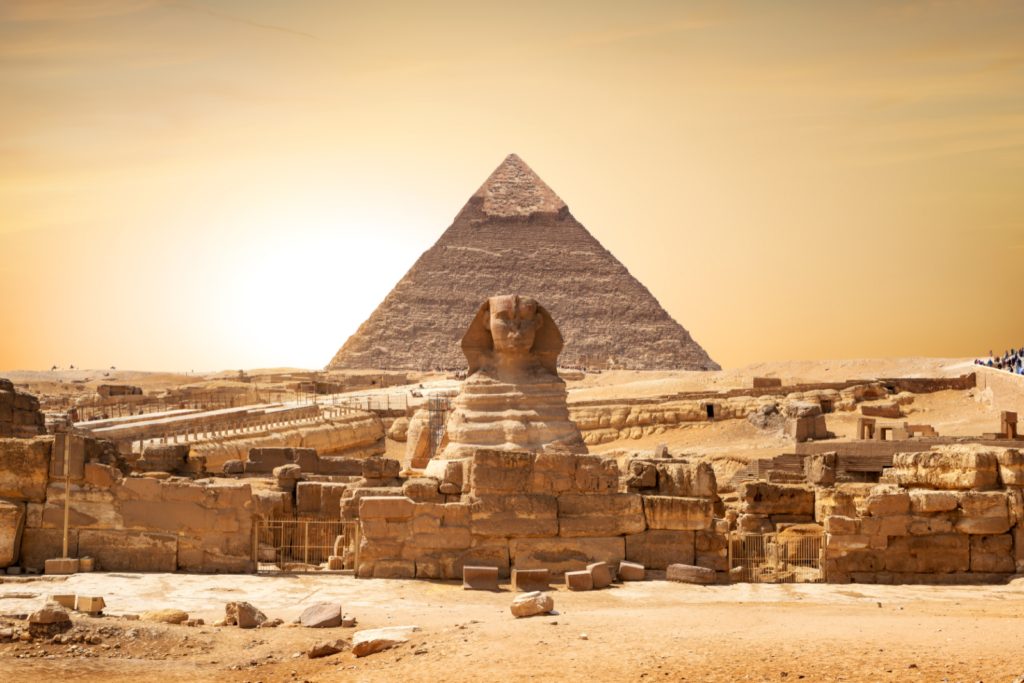
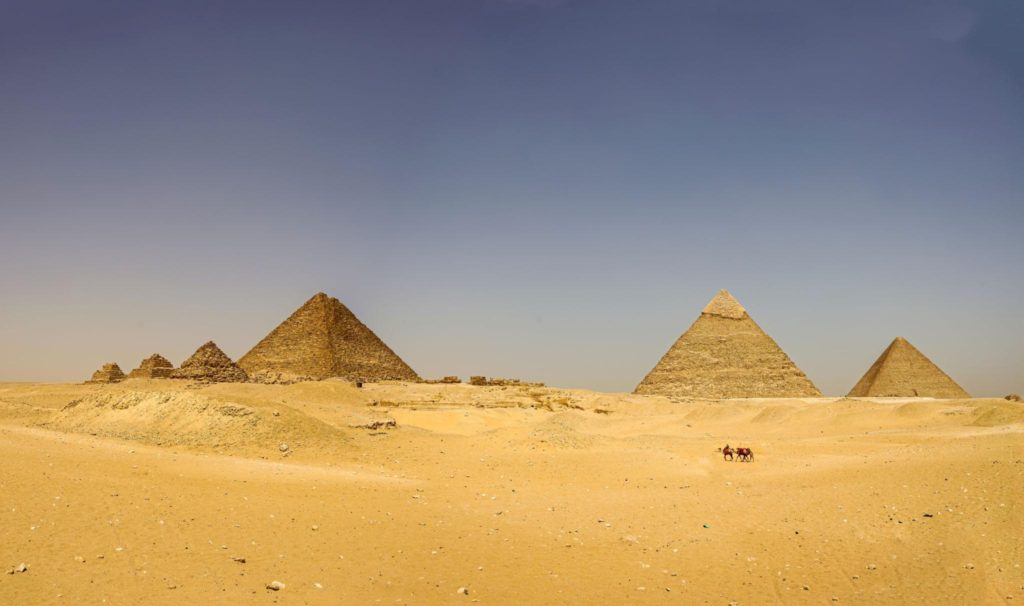
It was Khufu’s tomb and the machine for his eternal life, the centre of a complex of temples, boat pits and cemeteries for his family and court. It stood about 146 metres tall, the tallest structure on earth for nearly 4,000 years, and its sides are aligned to true north with remarkable precision. The interior, with its Grand Gallery and granite King’s Chamber, is covered in our guide to the Great Pyramid of Khufu.
Around it Khufu laid out a whole funerary city: three small queens’ pyramids on the east side, rows of stone mastaba tombs for princes and officials, a causeway to a valley temple near the river and at least five pits for full-sized boats. Ancient Egyptians believed the king joined the sun god on his daily journey, and the boats may have been meant for that voyage, or may simply have been used in the funeral.
No body has ever been found in the King’s Chamber, only an empty, lidless granite sarcophagus. The pyramid was almost certainly robbed in antiquity, perhaps during the turmoil at the end of the Old Kingdom.
Who was in Khufu’s family?
Khufu sat in the middle of a family that produced four pyramid-building kings in three generations.
- Mother: Queen Hetepheres I. In 1925 an American team led by George Reisner found her burial shaft east of the Great Pyramid, with gilded furniture, a carrying chair and an alabaster sarcophagus that turned out to be empty. Why her body was missing is still argued about.
- Wives: Meritites I and Henutsen are the best attested; one of the queens’ pyramids is traditionally linked to Henutsen.
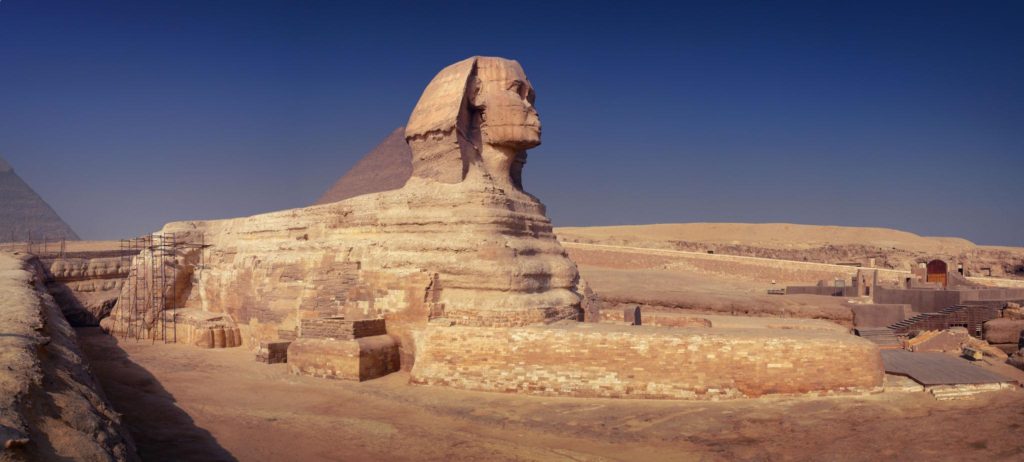
- Sons: Kawab, the eldest, died before his father. Djedefre succeeded him and built a pyramid at Abu Rawash, north of Giza; then Khafre built the second pyramid at Giza and, most scholars think, the Great Sphinx. Prince Djedefhor was remembered as a wise man in later literature.
- Officials: the vizier Hemiunu, usually credited with overseeing the Great Pyramid, was probably Khufu’s nephew.
Khafre’s son Menkaure built the third pyramid. Our guide to the pyramids of Khafre and Menkaure continues the family story on the plateau.
Was Khufu a cruel tyrant?
That reputation comes from Greek writers 2,000 years after his death, and there is no contemporary evidence for it. Herodotus, visiting Egypt in the 5th century BC, was told that Khufu closed the temples, forced all Egyptians to labour on his pyramid and even put his daughter to work as a prostitute to raise funds. These are tales from Herodotus’s guides rather than history.
Egyptian tradition was more mixed. The Westcar Papyrus, a collection of stories written down roughly a thousand years after his reign, shows Khufu at court being entertained by magicians; he comes across as curious but also willing to have a prisoner beheaded to test a magic trick, which the magician refuses. Meanwhile his funerary cult was still active at Giza in the Late Period, and he was honoured there with priests for centuries. The truth is that we have almost nothing to judge his character by.
Where to see Khufu in Egypt today
Giza gives you his tomb and the GEM his ship, and together they make the best half day of Khufu-hunting in Egypt.
- The Great Pyramid: walk around it, see the queens’ pyramids and his mortuary temple’s basalt floor, and climb inside to the King’s Chamber on a separate ticket. Our Pyramids of Giza guide covers the plateau.
- Grand Egyptian Museum: Khufu’s cedar boat, about 43 metres long, found dismantled in a pit beside the pyramid in 1954 and moved to the GEM in 2021. Restoration of a second boat from another pit has been under way there.
- Egyptian Museum, Tahrir: at the time of writing the place to look for his tiny ivory statuette, found by Flinders Petrie at Abydos, and the reconstructed furniture of his mother Hetepheres. Objects have been moving to the GEM, so check before you go.
Our Cairo and Pyramids stopover covers Giza, the GEM and Dahshur, where you can see his father’s pyramids too.
Frequently asked questions
Is Khufu the same as Cheops?
Yes. Cheops is the Greek form of his name, used by Herodotus and still common in older books.
Was Khufu buried in the Great Pyramid?
That was the intention, and the King’s Chamber holds his granite sarcophagus, but no body or burial goods were ever found. The pyramid was robbed in antiquity.
Why is there only one small statue of Khufu?
Statues from his temples were almost all destroyed or lost. The 7.5 cm ivory figurine found at Abydos is the only complete statue securely identified as him; fragments of larger ones survive.
Did slaves build Khufu’s pyramid?
No. The workers’ town at Giza and the Wadi al-Jarf papyri show organised, rotating crews who were housed, fed and paid in rations.
Where is Khufu’s solar boat now?
At the Grand Egyptian Museum near Giza, where it was moved in 2021 from its old museum beside the pyramid.