Quick answer
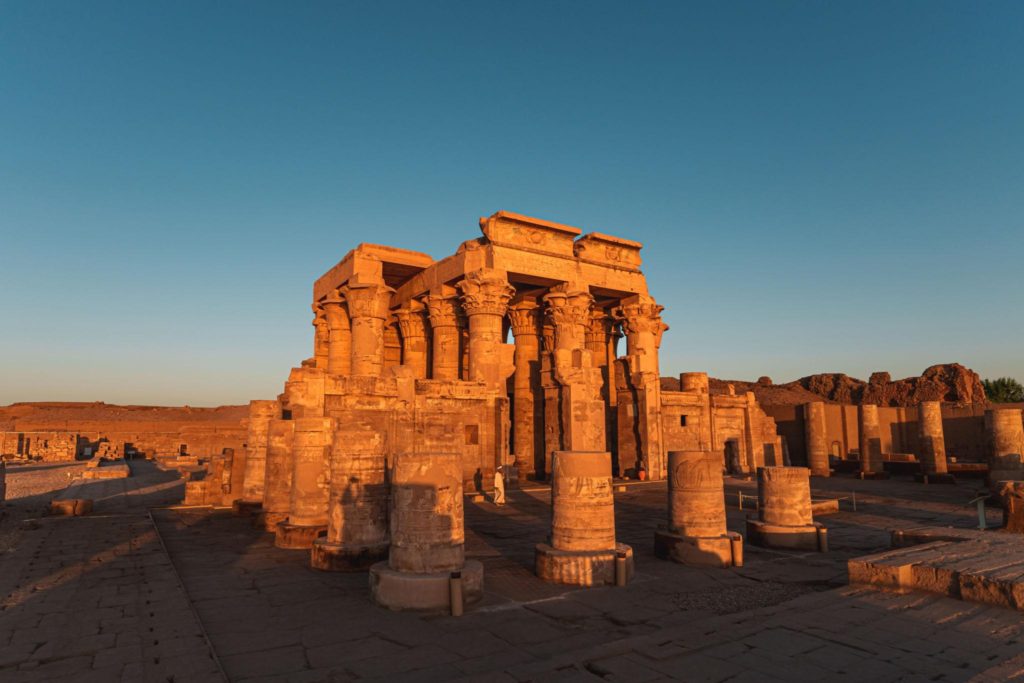
Kom Ombo is a rare double temple on a bend of the Nile about 45 km north of Aswan, dedicated to two gods at once: Sobek the crocodile god and Haroeris, Horus the Elder. Its riverside setting, its unusual twin plan and the small Crocodile Museum of mummified crocodiles next door make it one of the most enjoyable short visits on a Nile cruise, especially when floodlit in the evening.
Why does Kom Ombo have two temples in one?
Kom Ombo was built as a perfectly symmetrical double temple, with the southern half dedicated to Sobek and the northern half to Haroeris (Horus the Elder), each with its own entrance, halls and sanctuary. Most of what stands today dates from the reign of Ptolemy VI Philometor in the 2nd century BC, with decoration added by later Ptolemies and Roman emperors.
Each god had his own family triad: Sobek with Hathor and Khonsu, and Haroeris with the goddess Tasenetnofret and their son Panebtawy. Two parallel processional routes run through the whole building, so as you walk in you will notice twin doorways in every wall. Crocodiles once basked on the sandbanks here, which is likely why Sobek was worshipped on this spot. The front of the temple was lost over the centuries to Nile floods and stone robbing, so what you see is mostly the inner halls rather than a complete building like Edfu.
What should you see at Kom Ombo Temple?
Look for the twin sanctuaries, the so-called surgical instruments relief, the temple calendar, the Nilometer and the colourful ceiling reliefs in the hypostyle hall. The site is compact, so you can see everything on a single guided loop.
- The hypostyle halls: column capitals and ceilings here keep some of their original paint, including flying vultures on the ceiling.
- The twin sanctuaries: only the granite bases of the shrines remain, but you can still see the two separate cult rooms side by side. A narrow hidden passage between them is often explained as a place for priests to speak as the voice of the god.
- The medical relief: on the inner face of the outer enclosure wall at the back, a relief shows what are often described as surgical instruments, with a seated goddess on a birthing chair nearby. Scholars debate whether they are really medical tools, so treat bold claims with caution.
- The calendar: a long carved list of festivals and offerings for each day of the temple year.
- The Nilometer: a deep circular well with a staircase, used to measure the height of the river and so predict the harvest and set taxes.
What is in the Kom Ombo Crocodile Museum?
The Crocodile Museum is a small, well-lit gallery beside the temple displaying mummified crocodiles, crocodile coffins and statues of Sobek found in the nearby animal cemetery. It opened in 2012 and replaced the few mummies that used to sit in the small Chapel of Hathor at the temple's edge.
The crocodiles range from hatchlings to adults several metres long, and the displays explain how sacred animals were raised, mummified and buried as offerings to the god. It takes 20–30 minutes and is a highlight for children, who tend to remember the crocodiles long after they have forgotten the reliefs. At the time of writing it is normally visited on the same ticket as the temple, but check the current arrangement on egymonuments.gov.eg. For more ideas on keeping younger travellers engaged, see our Egypt with kids guide.
How long do you need at Kom Ombo?
Allow about 1 to 1.5 hours to see the temple and the Crocodile Museum. Cruise excursions usually last about an hour and a half including the short walk from the boat. If you are driving between Aswan and Luxor, Kom Ombo is a natural stop of about an hour, and it pairs easily with Edfu further north.
The nearby town of Daraw, a few kilometres south, holds one of Egypt's largest camel markets on set days of the week, where herds driven up from Sudan are traded. It is a raw, fascinating and very local experience, best in the early morning; ask your guide which day the market is held during your trip.
When is the best time to visit Kom Ombo?
Late afternoon and early evening are best: the sandstone glows at sunset and after dark the temple is floodlit against the river. Many cruise ships schedule their Kom Ombo stop for the late afternoon or evening for exactly this reason, so the site can be busy then. If your ship arrives in the evening, try to be off the boat promptly to get ahead of the other groups.
Visits in the middle of the day are hot and the light is flat, especially from April to October. In winter, take a light layer for an evening visit, as it cools quickly once the sun goes down.
How does Kom Ombo fit into a Nile cruise or Aswan trip?
Kom Ombo is a standard stop on every Luxor–Aswan cruise, and ships moor right below the temple so you simply walk up. On a southbound cruise it usually comes on the afternoon or evening after Edfu, with Aswan reached overnight or the next morning. On the northbound route from Aswan it is often the first stop.
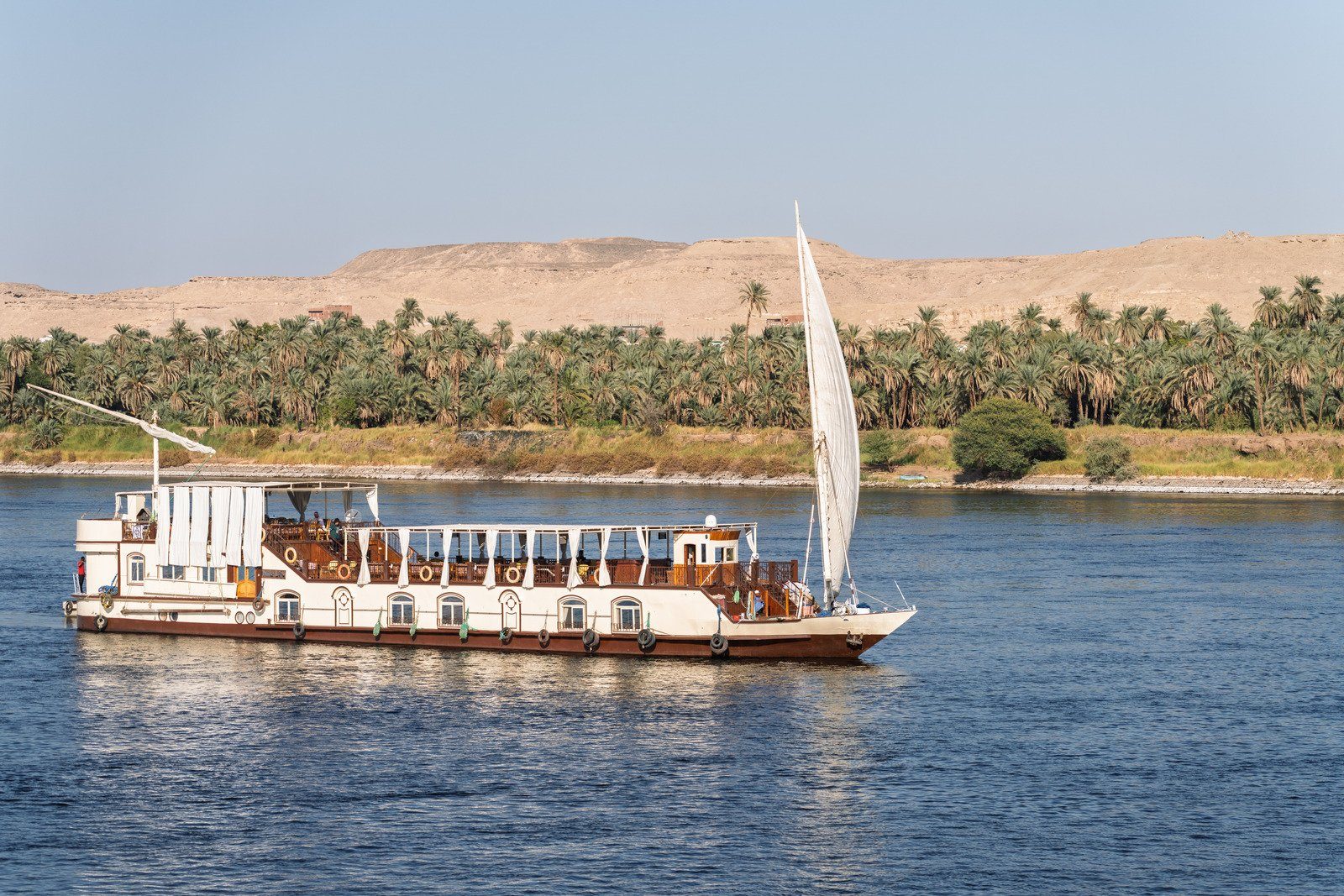
From Aswan by road, it is 45–60 minutes each way, so it can also be a half-day trip if you are staying in Aswan rather than cruising. Dahabiyas often combine it with a stop at Daraw. See our Aswan destination guide and the dahabiya sailing trip, which visits both the temple and the Crocodile Museum.
Kom Ombo Temple and Crocodile Museum: FAQs
What god was Kom Ombo Temple dedicated to?
Two gods: Sobek, the crocodile god of the Nile and fertility, in the southern half, and Haroeris (Horus the Elder), the falcon god, in the northern half.
Is the Crocodile Museum at Kom Ombo worth it?
Yes. It is small and quick to visit, but the mummified crocodiles are memorable, and it helps explain why Sobek was worshipped here. Children in particular love it.
Can you visit Kom Ombo at night?
Yes. At the time of writing the site stays open into the evening and is floodlit after dark, which is why many cruise ships time their visit for sunset. Check current opening hours before you go.
How far is Kom Ombo from Aswan?
About 45 km north of Aswan, which is 45–60 minutes by road. By cruise ship the sail from Kom Ombo to Aswan takes several hours.
Is the surgical instruments relief at Kom Ombo real?
The relief is real, but its meaning is debated. Some Egyptologists see medical or surgical tools; others think they are ritual implements. Enjoy it, but take confident claims with a grain of salt.