Quick answer
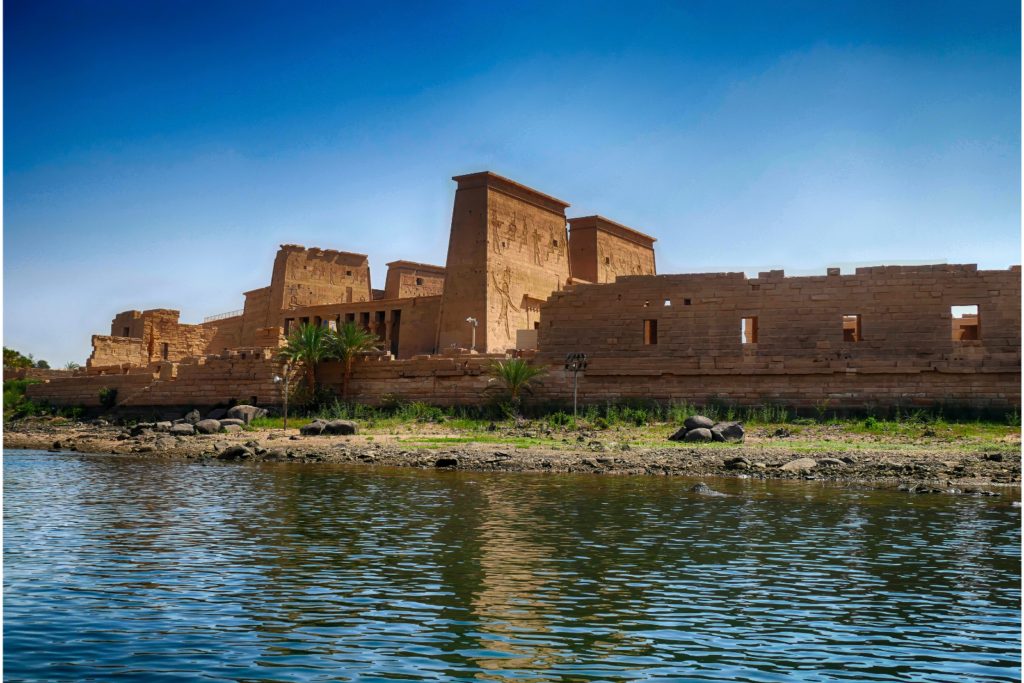
Philae is the Temple of Isis, a Ptolemaic and Roman sanctuary on Agilkia Island just south of Aswan, reached by a short motorboat ride. Rescued from the rising Nile and rebuilt stone by stone between 1972 and 1980, it was one of the last places the ancient Egyptian religion was practised and is the most beautiful setting of any temple on the river.
What is Philae Temple and why is it on an island?
Philae is the great temple of the goddess Isis, moved to Agilkia Island in the 1970s because the Aswan dams would otherwise have drowned it. Its original home, Philae Island, sat just upstream. After the first Aswan Dam was completed in 1902, the temple spent much of each year partly under water, and early travellers famously rowed between its columns. Construction of the High Dam in the 1960s threatened to submerge it permanently.
As part of the UNESCO campaign to save the monuments of Nubia, engineers built a coffer dam around the old island, pumped it dry, cut the temples into roughly 40,000 blocks and reassembled them on higher ground on Agilkia, which was landscaped to match the original island. The complex reopened in 1980. Standing in the forecourt today it is hard to tell it was ever moved.
Most of what you see was built by the Ptolemaic kings from the 3rd century BC and finished under the Romans, though the oldest structure, the kiosk of Nectanebo I, dates to the 4th century BC. Philae was a pilgrimage centre for Egyptians and Nubians alike, and worship of Isis continued here long after Christianity spread through Egypt. The last known hieroglyphic inscription, dated to AD 394, is carved here, and the temple was not closed until the reign of the Byzantine emperor Justinian in the 530s.
What should you see at Philae Temple?
Do not miss the first pylon, the birth house, Hadrian's Gate and the Kiosk of Trajan, the elegant open pavilion on the water's edge. Boats land near the southern tip of the island, so you walk the complex roughly in the order the ancient pilgrims did.
- The outer colonnades and the kiosk of Nectanebo I: two long colonnades frame the approach, each column capital carved differently.
- The first pylon: about 18 metres high, decorated with Ptolemy XII smiting his enemies before Isis, Horus and Hathor. Look in the central doorway for an inscription left by Napoleon's expedition in 1799.
- The mammisi (birth house): on the west side of the forecourt, celebrating the birth of Horus, with Hathor-headed columns.
- The hypostyle hall and sanctuary: the painted column capitals still hold traces of colour, while crosses and Greek inscriptions carved into the walls show where early Christians converted the hall into a church.
- Hadrian's Gate: on the western side, a relief shows the Nile god Hapi in a cave beneath the rocks of Biga Island, the ancient Egyptians' image of the source of the Nile.
- The Kiosk of Trajan: fourteen columns with floral capitals, sometimes nicknamed Pharaoh's Bed. It is the classic photograph from the boat.
The small Temple of Hathor, with its reliefs of musicians and the dwarf god Bes playing a harp, is easy to miss just east of the main temple.
How long do you need at Philae?
Allow about two hours from the marina and back: 10 minutes each way by boat and an hour to an hour and a half on the island. That is enough time to walk every part of the complex with a guide and still sit for a few minutes by the Kiosk of Trajan. Enthusiasts who want to read the Christian graffiti and the Meroitic and demotic inscriptions could easily spend longer.
Philae is usually combined with the Aswan High Dam and the Unfinished Obelisk in a single morning, with a felucca sail around Elephantine Island in the late afternoon. If you are on a cruise this is normally the first full day in Aswan. See our Aswan guide for everything else to fit around it.
When is the best time to visit Philae Temple?
Go at opening time or in the mid to late afternoon; late morning is when the cruise-ship groups and the heat both peak. From October to March Aswan's winter days are sunny and dry at around 23–27°C, which makes any time of day pleasant. From May to September afternoon temperatures regularly pass 40°C, and an early start is essential, as there is little shade on the island.
The light is at its best in the afternoon, when the sandstone turns warm gold and the reflections on the water are calmer. Cruise ships tend to send their passengers in a wave in the morning after the High Dam, so a private visit timed against that pattern makes a noticeable difference.
How do you get to Philae and how do tickets work?
Drive to the Shellal (Philae) marina south of Aswan, buy your entry ticket, then take a motorboat across to the island. The drive from central Aswan takes about 20 minutes. The boat crossing takes around 10 minutes and the boats wait for you while you visit.
The temple entry ticket and the boat fare are separate. Boats are run by local boatmen and are paid per boat rather than per person, so agree the fare and the waiting time before you board, or let your guide handle it; on an organised tour both are normally included. Entry prices change, sometimes more than once a year, so check the current fee on the official Egyptian ticketing site, egymonuments.gov.eg. At the time of writing, card payment is widely accepted at major sites, but carry some Egyptian pounds for the boat and tips.
Is the Philae sound and light show worth it?
Yes, if you have a free evening in Aswan: it is one of the better sound and light shows in Egypt because you see the temple by night from the water and then walk through it. The show runs most evenings, with sessions in different languages on different nights, so check the English schedule before you book. It requires a separate ticket and boat transfer.
The narration is theatrical and dated, but the setting carries it. Bring a light jacket in December and January, when Aswan evenings can drop to around 10–12°C. Many travellers prefer to spend that evening on a Nile cruise sun deck or at dinner on the terrace of a hotel overlooking the First Cataract; it is a nice extra rather than a must.
How does Philae fit into a Nile cruise or Aswan stay?
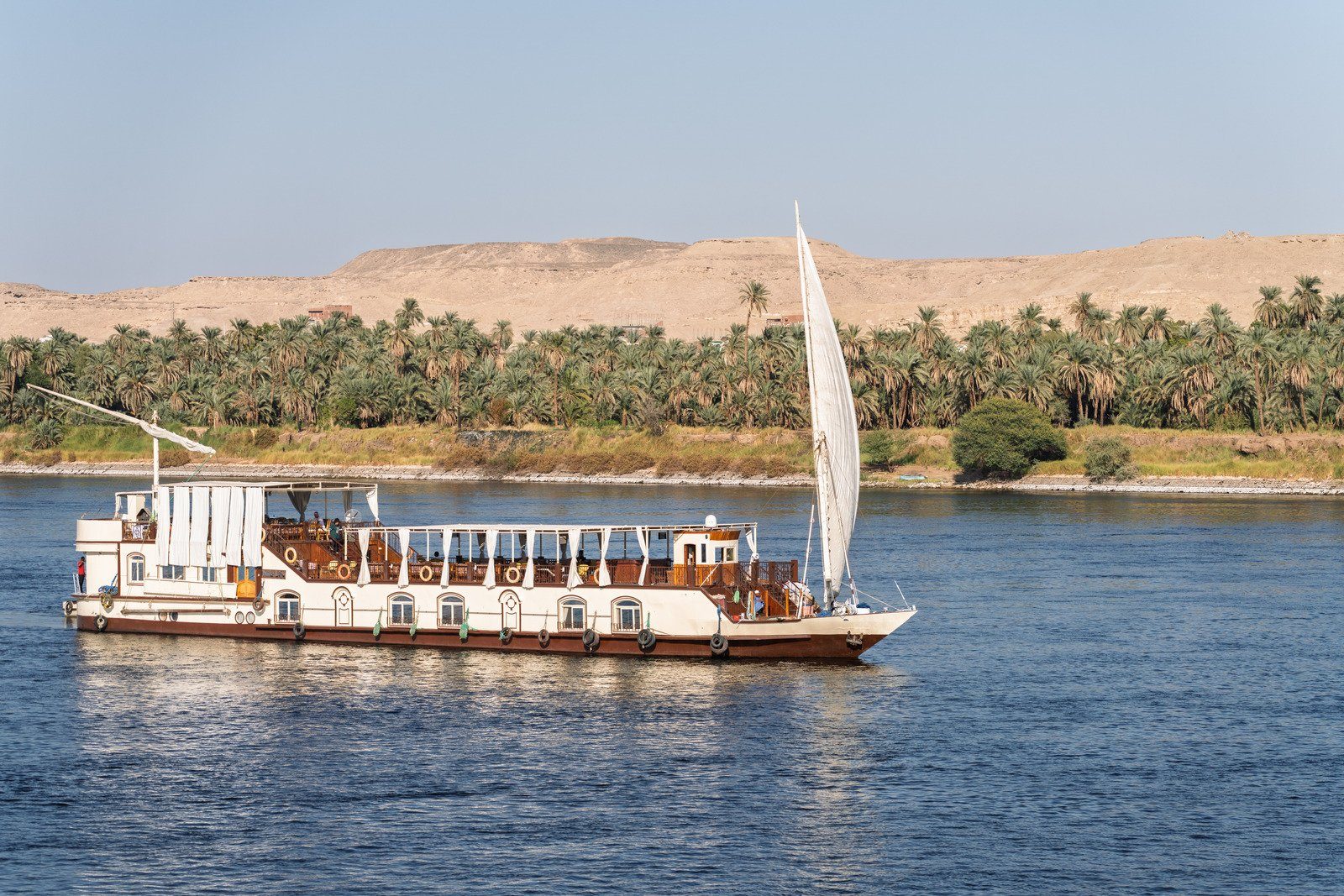
Almost every Luxor–Aswan cruise and dahabiya itinerary includes Philae on the Aswan day, so you rarely need to arrange it separately. On a southbound cruise you visit it near the end; on a northbound cruise from Aswan it is usually on the afternoon of embarkation or the first morning.
If you stay on land in Aswan, which we recommend for at least one or two nights, you can choose the quietest time yourself. Our Classic Egypt and Nile Cruise visits Philae with the High Dam and the Unfinished Obelisk before a sunset felucca sail. Philae is also a natural pairing with the drive or flight to Abu Simbel, which is 280 km further south.
Philae Temple (Temple of Isis): FAQs
Can you walk to Philae Temple?
No. The temple stands on Agilkia Island, so the only way to reach it is by boat from the Shellal marina, a crossing of about 10 minutes.
Is Philae Temple the original building?
Yes. The stones are original; the temple was dismantled and reassembled on nearby Agilkia Island between 1972 and 1980 to save it from the waters of the Aswan dams.
Which goddess was worshipped at Philae?
Isis, wife of Osiris and mother of Horus. Her cult drew pilgrims from Egypt, Nubia and across the Roman world, and continued at Philae until the 6th century AD.
Is Philae worth visiting if I have already seen Edfu and Karnak?
Yes. Philae is smaller, but its island setting, the Kiosk of Trajan and its late history make it feel completely different from the mainland temples. Many travellers rank it as their favourite.
How far is Philae from Abu Simbel?
Abu Simbel is about 280 km south of Aswan, roughly three hours by road or about 45 minutes by air. Most people visit them on different days. See our Abu Simbel guide.