Quick answer
Luxor Temple is the great temple in the centre of Luxor, built mainly by Amenhotep III and Ramesses II and linked to Karnak by the 2.7 km Avenue of Sphinxes. Compact, easy to reach and beautifully floodlit after dark, it is best seen in the evening and takes about an hour to an hour and a half.
What is Luxor Temple?
Luxor Temple was dedicated to the Theban triad of Amun, Mut and Khonsu and was the focus of the annual Opet Festival, when the god's statue was carried here from Karnak. Unlike the mortuary temples on the West Bank, it was a temple for the renewal of divine kingship, and it sits right in the middle of the modern town.
The core of the temple was built by Amenhotep III in the 14th century BC. Tutankhamun completed the decoration of the great colonnade, and Ramesses II added the First Pylon, the front courtyard, the colossal statues and a pair of obelisks. Later rulers left their mark too: Alexander the Great rebuilt the barque shrine, the Romans turned part of the temple into a military shrine, and the Abu Haggag Mosque, still in use, was built on top of the buried courtyard in the Middle Ages.
That layering of Pharaonic, Roman, Christian and Islamic history in one compact site is what makes Luxor Temple so memorable. Read more about the town in our Luxor travel guide.
What should you see at Luxor Temple?
The highlights are the First Pylon with its obelisk and Ramesses II colossi, the Colonnade of Amenhotep III, the Sun Court and the Roman frescoes. The temple runs in a straight line from north to south, so it is easy to follow.
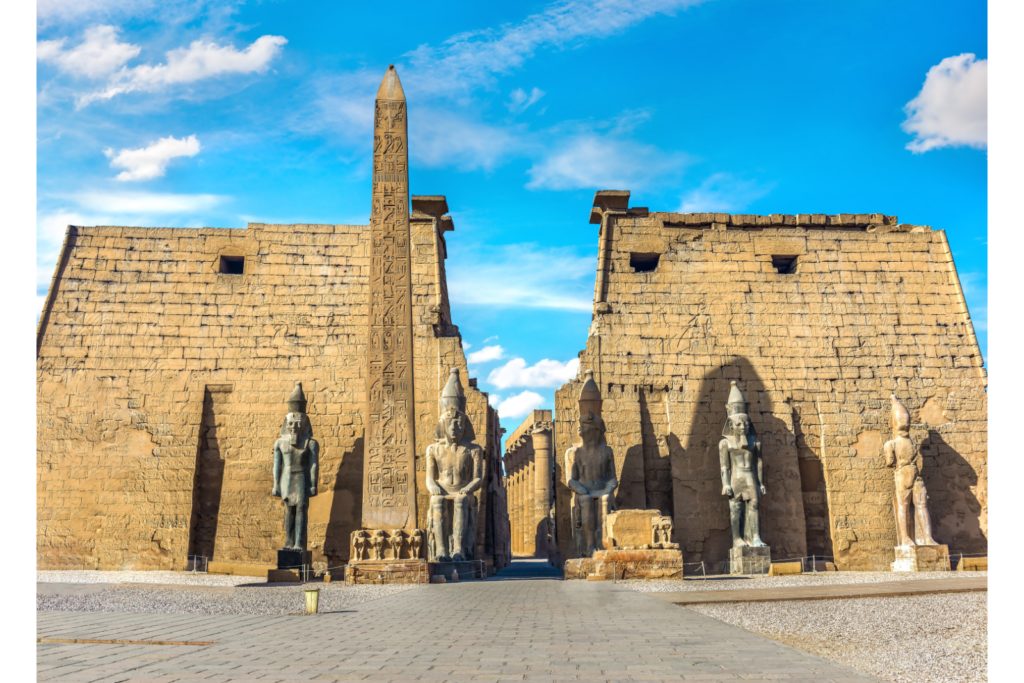
- The First Pylon: built by Ramesses II and carved with scenes of his battle of Kadesh. Only one of the two obelisks remains; its twin has stood in the Place de la Concorde in Paris since 1836.
- Court of Ramesses II and the Abu Haggag Mosque: look up to see the mosque's door hanging high on the wall, showing the level of the ground when it was built over the sand-filled courtyard.
- Colonnade of Amenhotep III: 14 towering papyrus columns. The side walls carry reliefs of the Opet Festival procession, completed under Tutankhamun.
- Sun Court of Amenhotep III: a large peristyle court with elegant clustered papyrus columns. A cache of statues was found buried here in 1989; many are now displayed in the Luxor Museum nearby.
- Roman imperial chamber: a former sanctuary that the Romans plastered and painted with frescoes of the emperors around AD 300, restored in the early 2000s. It is one of the best-preserved Roman wall paintings in Egypt.
- Barque shrine of Alexander the Great: showing Alexander dressed as a pharaoh making offerings to Amun.
Is it better to visit Luxor Temple at night?
Yes. For most travellers the best time to visit Luxor Temple is from just before sunset into the evening, when the floodlights pick out the reliefs and the heat has gone. The temple stays open into the evening, unlike most sites in Luxor, though closing times vary by season and should be checked locally.
Arriving about half an hour before sunset lets you see the reliefs in natural light, then watch the colossi and colonnade come alive under lights. Shadows cast by the floodlights make carved detail easier to read than in flat midday sun. Early morning is the quietest time if you prefer to avoid evening crowds, which build after cruise passengers finish dinner.
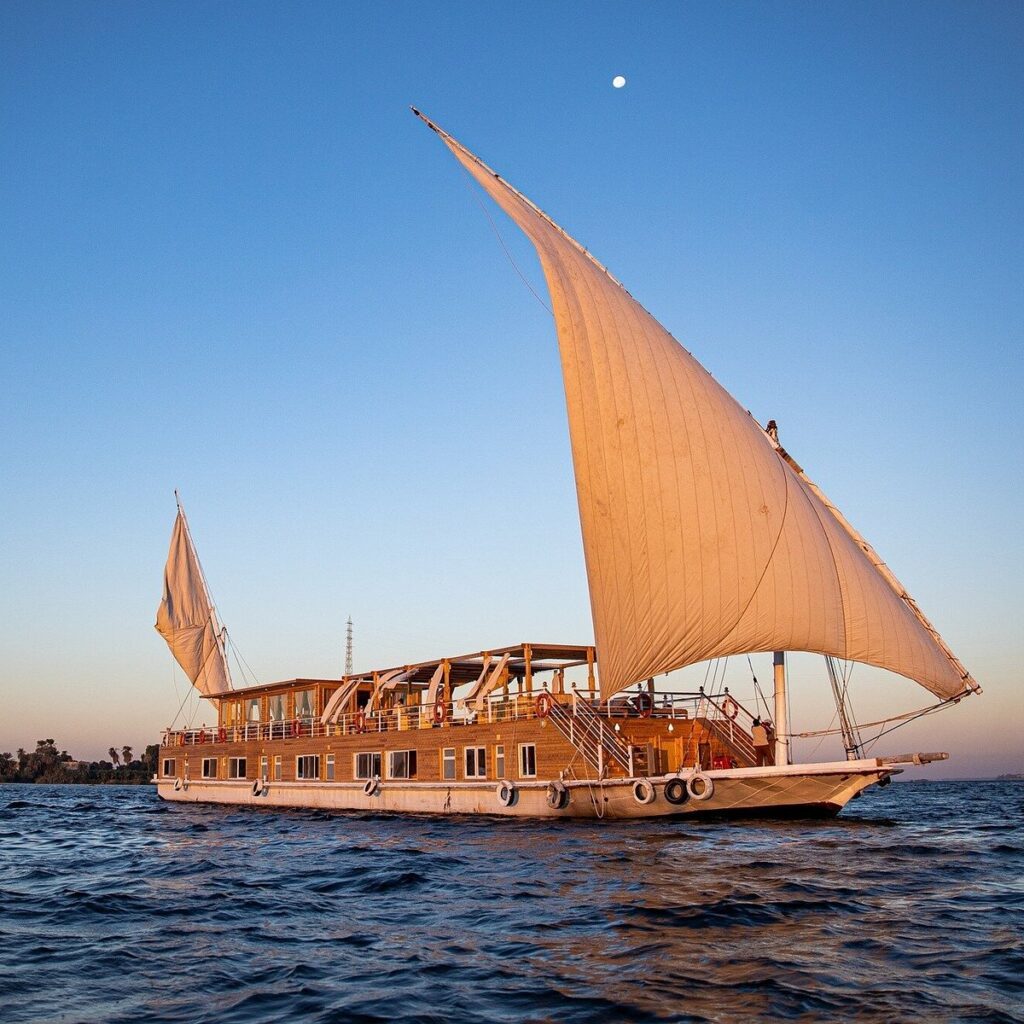
A typical first day in Luxor combines Karnak in the afternoon with Luxor Temple at dusk. That is how our Classic Egypt and Nile Cruise handles it.
What is the Avenue of Sphinxes?
The Avenue of Sphinxes is the 2.7 km ceremonial road linking Luxor Temple to Karnak, once lined on both sides by sphinxes, and it officially reopened in November 2021 after decades of excavation. Most of the surviving sphinxes date from the reign of Nectanebo I in the 4th century BC, though the processional route itself is far older.
During the Opet Festival, statues of Amun, Mut and Khonsu were carried along this road in sacred boats. Excavations that began in the mid-20th century uncovered many hundreds of sphinxes, some with human heads and some, near Karnak, with rams' heads. The reopening was marked by a lavish televised ceremony.
The section beside Luxor Temple, with its line of human-headed sphinxes, is easy to see as you enter the temple. Walking the full length takes 40–60 minutes and is best done early in the morning or in the evening. Access arrangements along the avenue have varied, so ask your guide what is open at the time you visit.
How long do you need at Luxor Temple and how do tickets work?
Allow one to one and a half hours, and buy tickets at the site or online; prices change, so check the official Egypt ticketing site before you go. The official site is egymonuments.gov.eg.
At the time of writing, ticket offices at major sites increasingly accept card payment, so carry a card as well as some small cash for tips. Photography with a phone for personal use is generally allowed; check before using a tripod or professional equipment.
The temple is flat and compact, which makes it one of the easiest major sites for older travellers and families with children. Paths are mostly level, though there are some steps and uneven paving.
What are the best tips for visiting Luxor Temple?
- Pair it with the Luxor Museum: it is a short walk north along the Corniche, open in the evening at the time of writing, and displays the statues found in the temple's Sun Court.
- Do not miss the Roman frescoes: they are in a chamber towards the back of the temple and many visitors walk straight past.
- Use a calèche or walk: if you take a horse-drawn calèche from your hotel, agree the price before you get in.
- Dress for the evening: from December to February, evenings can be cool, so bring a light layer. See what to wear in Egypt.
Luxor Temple: FAQs
What is the difference between Luxor Temple and Karnak?
Karnak is a huge complex built over 2,000 years as the main home of Amun-Ra; Luxor Temple is smaller and more unified, built mainly by Amenhotep III and Ramesses II for the Opet Festival. Most visitors see both on the same day.
Where is the other Luxor Temple obelisk?
It stands in the Place de la Concorde in Paris. It was given to France by Muhammad Ali Pasha and erected there in 1836.
Can you visit Luxor Temple at night?
Yes. The temple is open into the evening and is floodlit after dark, which many travellers consider the best time to visit. Confirm closing times locally, as they vary by season.
How long is the Avenue of Sphinxes?
About 2.7 km, running between Luxor Temple and Karnak. It reopened in November 2021 after a long excavation and restoration project.
Is Luxor Temple suitable for children and people with limited mobility?
It is one of the more accessible major sites, being compact and mostly flat, though there are some steps and uneven surfaces. See our Egypt with kids guide for family tips.