Quick answer
El Kab is ancient Nekheb, city of the vulture goddess Nekhbet, on the east bank of the Nile about 80 km south of Luxor and 20 km north of Edfu. Its rock-cut tombs of 18th Dynasty officials, above all Ahmose son of Ebana and Paheri, are among the most rewarding small sites in Egypt and usually almost deserted.
What is El Kab?
El Kab was Nekheb, one of the oldest towns in Egypt and the cult centre of Nekhbet, the white vulture goddess who protected Upper Egypt and appears on the king's crown alongside the cobra of Lower Egypt. Across the river stood its twin, Nekhen (Hierakonpolis), a seat of the earliest kings. Together they formed a royal heartland at the dawn of Egyptian history.
El Kab was occupied from prehistory, and its governors played a key role in the wars that founded the New Kingdom around 1550 BC. Today you see three things: the enormous mud-brick walls of the ancient town, roughly square and more than 500 metres on each side; the ruined temple area inside them; and, the main attraction, a line of rock-cut tombs in a low sandstone hill a short drive inland.
Which tombs should you see?
The essential tombs are those of Ahmose son of Ebana and Paheri, usually with Renni and Setau; which ones are open varies, so expect three or four. They belonged to local governors and officers of the early 18th Dynasty, and their scenes are intimate and well preserved.
- Ahmose son of Ebana: a naval officer whose autobiography, carved on the tomb wall, is the main eyewitness account of King Ahmose I's war to expel the Hyksos, including the siege of their capital Avaris. He lists the gold and captives he was rewarded with. The text matters more than the decoration here, so a guide who can read it to you is a real bonus.
- Paheri: mayor of Nekheb and Esna, tutor to the royal prince Wadjmose, and a grandson of Ahmose son of Ebana. His tomb has the finest scenes: ploughing, harvesting and threshing grain, herding, fishing and wine-making, with lively captions of workers' chatter, plus a family banquet.
- Renni: another mayor, with farming scenes and a remarkable tally of his herds, including pigs, rarely shown in tombs.
- Setau: a later high priest of Nekhbet, from the Ramesside period, whose tomb is damaged but still carries scenes of offerings and family members.
Why visit El Kab when you have seen Luxor?
Because it is quiet, personal and shows daily life and real history in a way the royal tombs do not. Where the Valley of the Kings is about the king's journey through the underworld, El Kab's tombs show the farms, boats and careers of real people. On most days you will share them with only your guide and the guardian.
If you liked Deir el-Medina or the Tombs of the Nobles in Luxor, El Kab is the next step. The tombs are also a rare chance to see family relationships across generations: Paheri was Ahmose's grandson, and both commemorate relatives on their walls. It also fits neatly into a Nile journey that already includes Edfu and Gebel el-Silsila.
How do you get to El Kab?
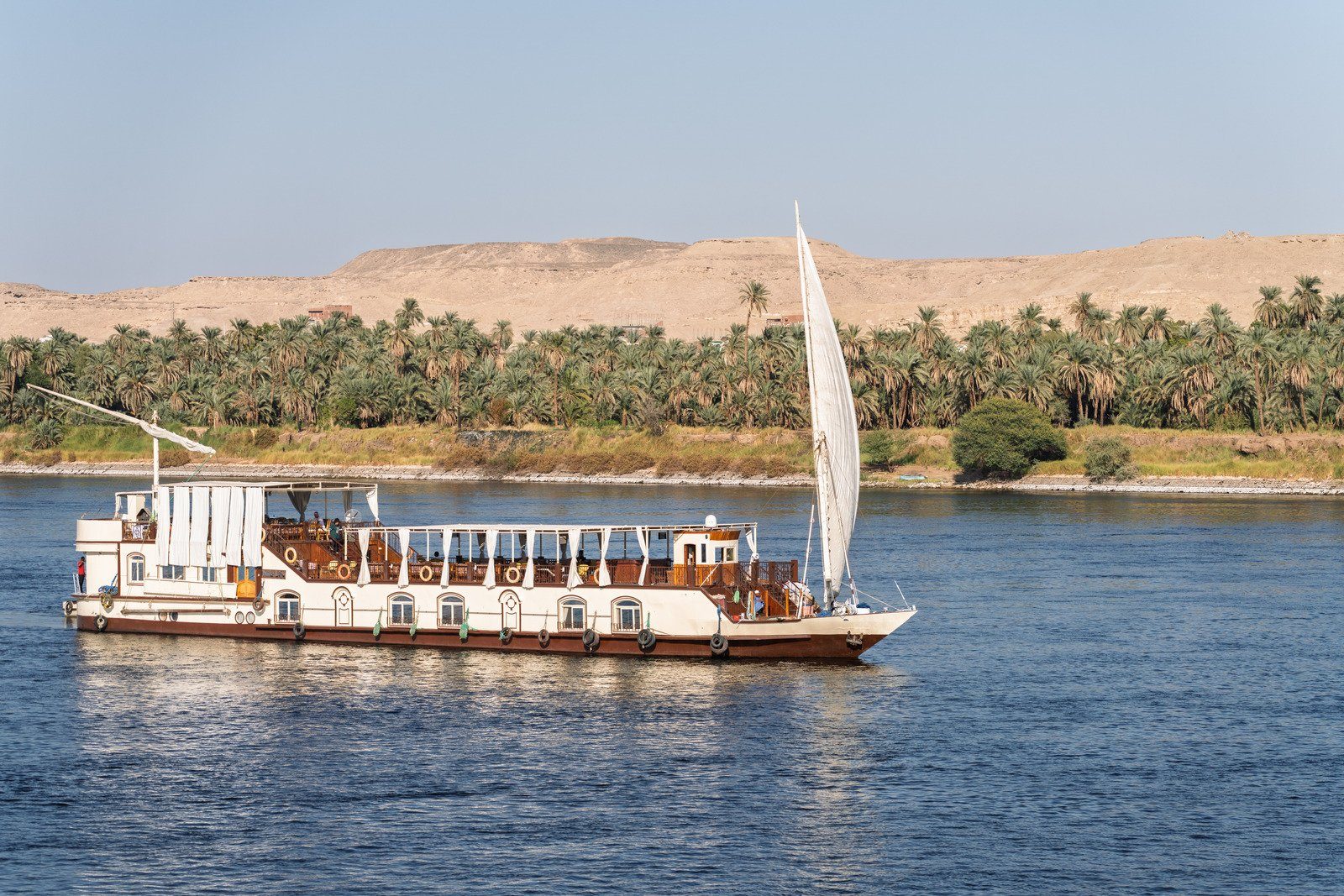
The easiest way is on a dahabiya, which moors on the riverbank nearby; otherwise it is about 1.5 hours by road from Luxor or 20–30 minutes from Edfu. Large cruise ships do not stop here, which is a big part of its appeal.
Most dahabiya itineraries visit El Kab on the first or second morning after leaving Esna, as on our Dahabiya Nile Sailing journey and Noble Travel's original Dahabeya program. By road, it works as a stop on a private transfer between Luxor and Aswan, combined with Esna and Edfu. At the time of writing foreigners travel this road freely with a private driver, but check current Smartraveller advice before you go.
What else is there, and practical tips
Beyond the tombs and town walls, a few small desert monuments lie further up the wadi, but they are not always open and need a vehicle and extra time. They include a small chapel of Amenhotep III dedicated to Nekhbet and a Ptolemaic rock-cut temple; ask your guide in advance if you want to include them.
- Time: allow 1–1.5 hours for the tombs and a look at the walls.
- Timing: go early; there is no shade on the walk up to the tombs and the hillside faces the sun.
- Tickets: sold on site; facilities are minimal, so bring water and small cash. Check egymonuments.gov.eg for prices.
- Light: the tombs are small and dim; a phone torch helps you see detail, but never use flash.
- Guide: bring an Egyptologist guide, as there is little on-site signage and the inscriptions are the point of the visit.
El Kab: FAQs
Where is El Kab?
On the east bank of the Nile between Esna and Edfu, about 80 km south of Luxor and 20 km north of Edfu.
Who was Ahmose son of Ebana?
An Egyptian naval officer who served under Ahmose I and his successors. His tomb autobiography is the key eyewitness account of the war that drove the Hyksos out of Egypt around 1550 BC.
Do Nile cruise ships stop at El Kab?
Large cruise ships do not. It is a regular stop for dahabiyas sailing between Esna and Aswan. See Nile cruise vs dahabiya to compare the two.
Is El Kab worth visiting?
Yes, for anyone who enjoys tombs showing daily life, or wants a site almost to themselves. First-time visitors with limited time should prioritise Luxor's West Bank first.