Quick answer
The Temple of Hatshepsut at Deir el-Bahari is the terraced mortuary temple of Egypt's most powerful female pharaoh, set dramatically against the cliffs of Luxor's West Bank. Its clean colonnades, painted chapels and reliefs of a trading expedition to the land of Punt make it one of Egypt's most distinctive monuments, and it takes about an hour to an hour and a half.
Who was Hatshepsut and why is her temple special?
Hatshepsut ruled Egypt as pharaoh for around 20 years in the 15th century BC, and her mortuary temple is unlike any other in Egypt. The daughter of Thutmose I, she first acted as regent for her young stepson Thutmose III, then took the full titles of a king and was often depicted with the traditional false beard.
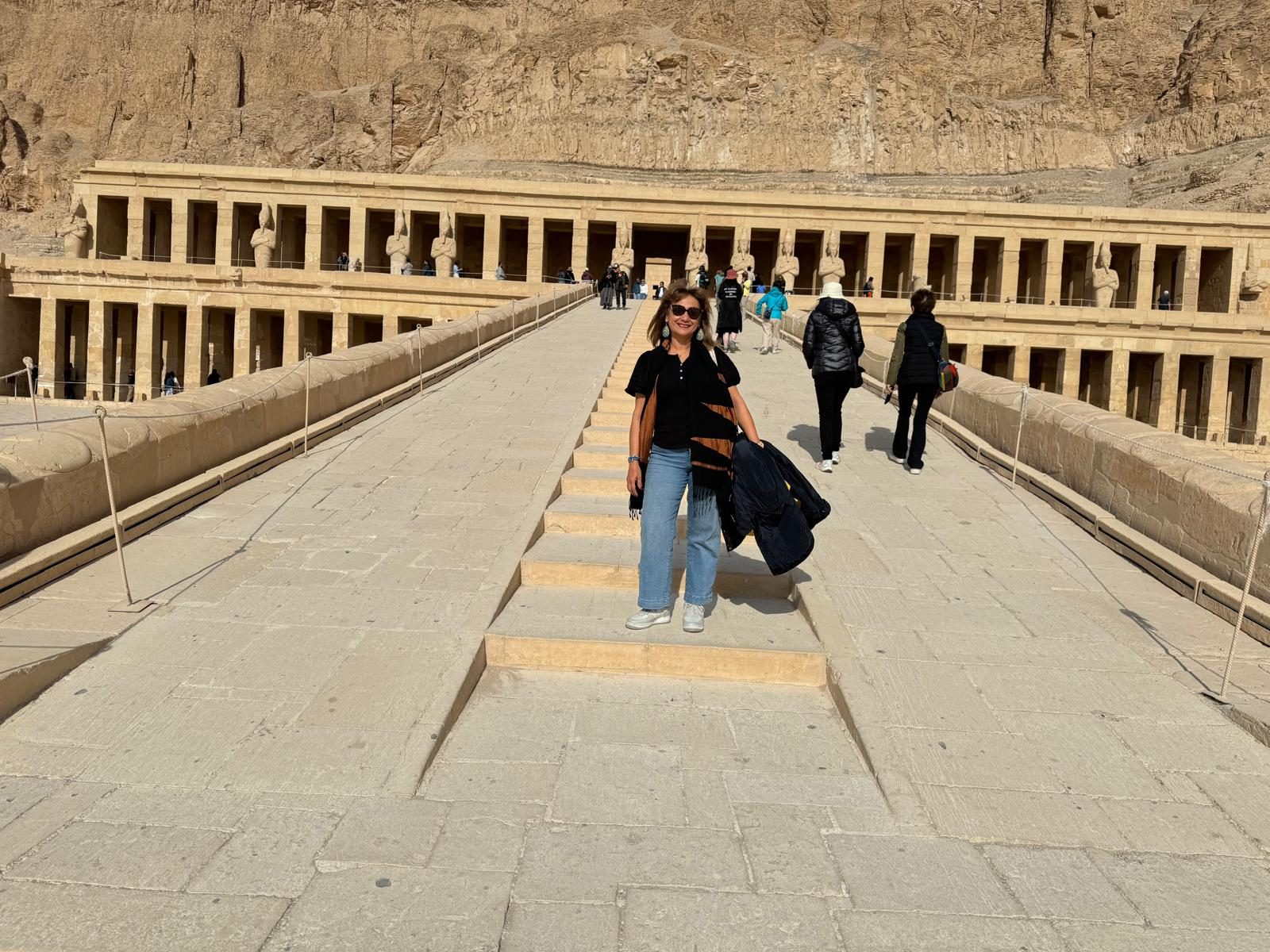
Her temple, called Djeser-Djeseru (Holy of Holies) by the Egyptians, was designed by her steward Senenmut. It rises in three broad terraces linked by ramps, cut partly into the cliff face, with long colonnades that look strikingly modern. It was built to honour Amun and to maintain Hatshepsut's cult after her death, and it is aligned across the Nile towards Karnak.
After her death, many of her images and names were chiselled out, a campaign associated with the later years of Thutmose III. Much of what you see today was restored by a Polish–Egyptian archaeological mission working here since the 1960s.
What should you see at the Temple of Hatshepsut?
The highlights are the Punt reliefs, the Birth Colonnade, the Hathor and Anubis chapels and the Osiride statues on the upper terrace. Most of the best detail is on the middle terrace, so do not rush straight to the top.
- Punt Colonnade (middle terrace, left side): reliefs of a trading expedition to the land of Punt, probably in the region of the southern Red Sea, showing ships, incense trees, exotic animals and the famously stout Queen of Punt.
- Birth Colonnade (middle terrace, right side): scenes presenting Hatshepsut as the daughter of the god Amun, a claim that helped legitimise her rule.
- Chapel of Hathor: at the southern end of the middle terrace, with columns topped by the face of the cow-eared goddess Hathor.
- Chapel of Anubis: at the northern end, with some of the best-preserved colour in the temple, including vivid blue ceilings with stars.
- Upper terrace: a row of colossal Osiride statues of Hatshepsut, the festival courtyard and the rock-cut sanctuary of Amun.
Next door are the ruined remains of the much older temple of Mentuhotep II, which inspired Hatshepsut's terraced design.
How long do you need at Hatshepsut's temple?
One hour is enough for the main terraces; allow an hour and a half if you want to study the reliefs closely. From the ticket office, a small electric train runs to the foot of the temple for a small charge, or you can walk for about 10 minutes.
The temple is usually visited on the same morning as the Valley of the Kings, which is about 10 minutes away by road, along with the Colossi of Memnon on the way back. On our Egypt honeymoon itinerary, the day begins with a balloon flight over the temple before visiting it on foot.
The ramps are long and wide but have no shade, and the climb to the upper terrace is gradual rather than steep, so most visitors manage it easily if they take their time.
When is the best time to visit the Temple of Hatshepsut?
Visit as early as possible in the morning: the temple faces east, so it catches the soft early light and is at its coolest before about 9am. By midday the white limestone reflects the sun and the amphitheatre of cliffs traps the heat, which can be punishing from May to September.
Early morning is also when the light is best for photographs of the facade against the honey-coloured cliffs. If you take a sunrise balloon flight, you will see the temple from above in the first light. Many tour groups go to the Valley of the Kings first and reach Hatshepsut mid-morning, so going in the reverse order can sometimes mean fewer people.
For seasonal temperatures and crowd levels, see our best time to visit Egypt guide.
How do you buy tickets for Hatshepsut's temple?
Tickets are bought at the site ticket office or online, and prices change, so check the official Egypt ticketing site before you go. The official site is egymonuments.gov.eg.
The temple is also covered by the Luxor Pass, at the time of writing, for travellers planning several days of West Bank sightseeing. Ticket offices increasingly accept card payment, but carry small cash for the electric train, toilets and tips. Phone photography is generally permitted throughout the temple.
What are the best tips for visiting Hatshepsut's temple?
- Look for the defaced figures: your guide can point out where Hatshepsut's image has been carefully chiselled away while the scenes around her remain untouched.
- Bring sunglasses: the glare from the pale stone is intense, even in winter.
- Expect vendors: the walk from the car park passes souvenir stalls. A polite but firm "no, thank you" works best. See our Egypt travel tips.
- Do not miss the colour: many visitors walk past the Anubis Chapel, which has some of the brightest paintwork on the site.
Temple of Hatshepsut (Deir el-Bahari): FAQs
Where is the Temple of Hatshepsut?
It is at Deir el-Bahari on Luxor's West Bank, about 30 minutes' drive from central Luxor and around 10 minutes by road from the Valley of the Kings, which lies just behind the cliffs.
Why was Hatshepsut's name erased?
Late in the reign of Thutmose III, Hatshepsut's images and names were removed from many monuments. Scholars debate the reasons, but most link it to securing the succession for Thutmose III's line rather than personal hatred.
What is the land of Punt?
Punt was a trading partner of ancient Egypt that supplied incense, ebony and exotic animals. Its exact location is debated, but it is usually placed somewhere along the southern Red Sea coast or in the Horn of Africa.
Is the Temple of Hatshepsut worth visiting?
Yes. Its setting and architecture are unique in Egypt and it combines easily with the Valley of the Kings on the same morning.
Is there shade at the Temple of Hatshepsut?
Very little. The colonnades offer some shelter, but the approach is fully exposed, so bring a hat and water and visit early.