Quick answer
Gebel el-Silsila is a narrow gorge on the Nile between Edfu and Kom Ombo where sandstone cliffs were quarried for more than 1,500 years to build temples such as Karnak and Luxor. It has rock-cut shrines, royal stelae and the Speos of Horemheb, and is visited mainly from dahabiyas, as large cruise ships pass without stopping.
What is Gebel el-Silsila?
It is the place where the Nile squeezes between two sandstone ridges, and where the ancient Egyptians cut much of the stone for their temples. North of Aswan the bedrock changes from granite to sandstone, and at Silsila the stone came down to the water, so blocks could be cut and loaded straight onto barges. The great temples of Thebes, including parts of Karnak, Luxor Temple and the Ramesseum, were built from it, as was much of Kom Ombo.
The Arabic name means "mountain of the chain". One local story tells of a chain stretched across the river here to control boat traffic; another explanation links it to the line of rocks in the water. The narrow channel made the gorge sacred to the Nile and its flood, and kings marked it with stelae and shrines.
What are the highlights on the west bank?
The west bank holds the monuments: the Speos of Horemheb, a row of small rock-cut shrines along the river and stelae of the Ramesside kings. This is where dahabiyas moor and where most visits concentrate.
- The Speos of Horemheb: a rock-cut chapel begun by Horemheb, the general who became the last king of the 18th dynasty, with reliefs including the king's triumph over Nubia. Later officials and kings added their own stelae and reliefs around the doorway.
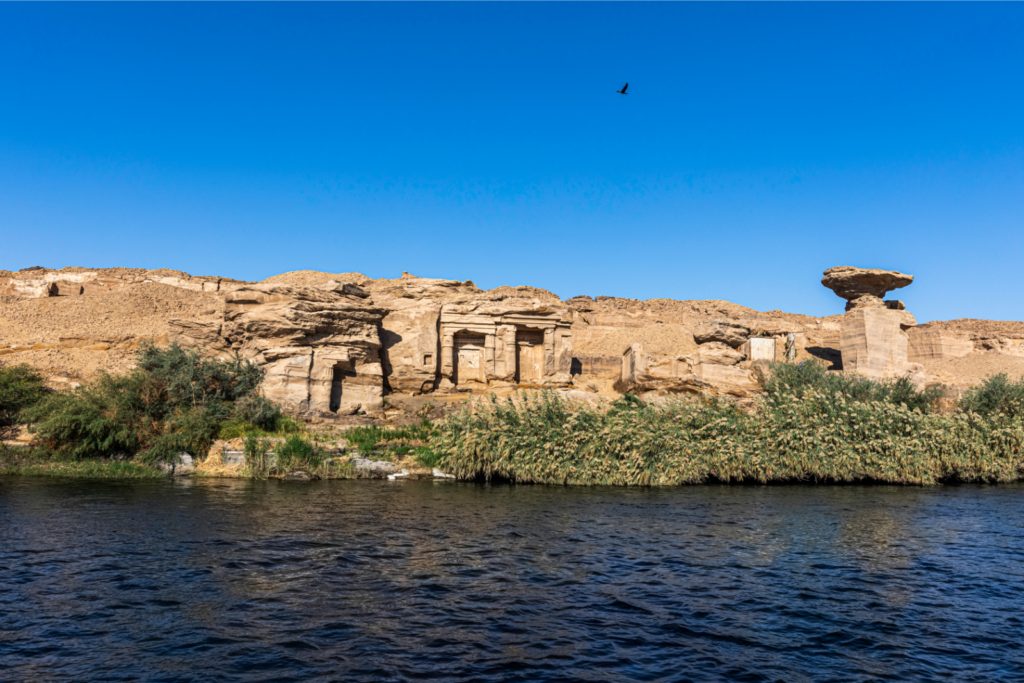
- The riverside shrines: a line of small chapels cut into the cliff by officials of the 18th dynasty, with carved doorways, niches and remains of seated statues. They are the shrines in the photograph at the top of this page.
- Royal stelae of Seti I, Ramesses II and Merenptah: three large rock-cut shrines close together at the southern end, recording offerings to the Nile god Hapi at the start of the flood season.
- The "mushroom" rock: a capped pillar of sandstone left standing by quarrymen, the site's best-known landmark.
What can you see in the quarries?
The quarries themselves are the most striking part: vast stepped faces covered in parallel chisel marks, with the outlines of blocks that were never removed. The largest quarries are on the east bank, where entire hillsides were cut away; on both banks you can see masons' marks, measuring lines and graffiti left by work gangs, some with names and dates.
A Swedish-led team has been surveying Silsila for more than a decade, recording thousands of inscriptions and identifying the remains of a small temple, so new discoveries continue to be announced. The scale of the quarrying helps you understand what it took to build Karnak, and is a perfect counterpart to the granite quarry of the Unfinished Obelisk in Aswan.
How do you visit Gebel el-Silsila?
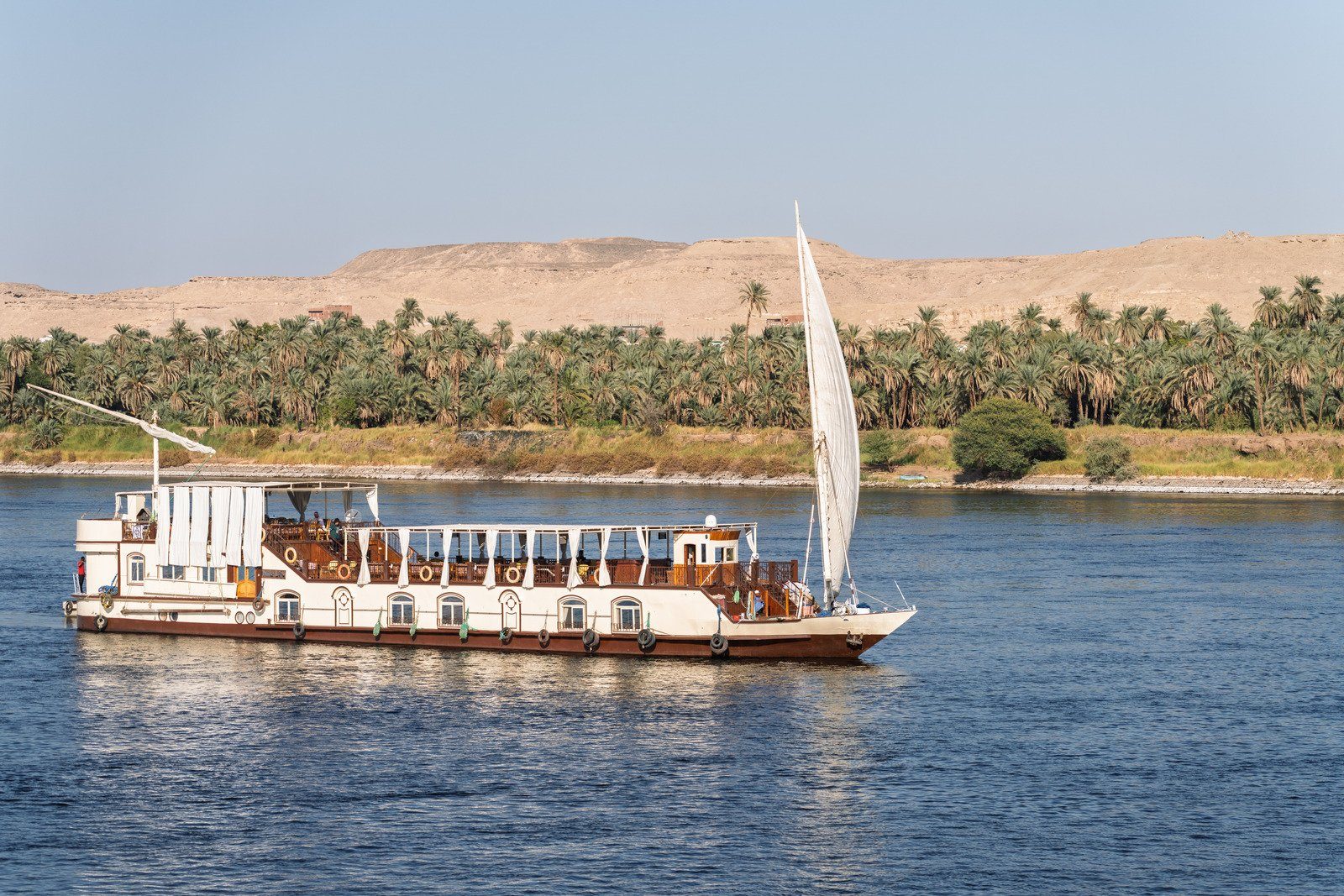
Almost all visitors arrive by dahabiya, which can moor at the west bank; large cruise ships sail through the gorge without stopping. On a typical Esna to Aswan dahabiya, Silsila falls on the day between Edfu and Kom Ombo, often with a riverside dinner under lanterns. Our dahabiya sailing trip includes a morning here; see Dahabiya: what to expect on board for how these boats work.
Reaching Silsila by road from Aswan or Edfu is possible with a car and driver, followed by a local boat across, but it is rarely done and should be arranged through a local agent. Large ship passengers still get the view: the gorge is one of the most scenic stretches of the Nile, so be on deck as you pass. Ask your guide about current ticketing on site, and check egymonuments.gov.eg for general information.
How long do you need and when is the light best?
Allow 1.5 to 2 hours for the west-bank monuments and a short walk into the quarries; a full morning if you also cross to the east bank. Early morning, when dahabiyas usually stop, gives soft light and cool air; the east-facing shrines on the west bank catch the low sun beautifully. The ground is uneven sandstone with some climbing, so wear proper shoes, and bring water: there are no facilities beyond a guardian's hut.
Is Gebel el-Silsila worth it?
For anyone choosing between a big cruise ship and a dahabiya, Silsila is one of the best arguments for the dahabiya. It is quiet, atmospheric and adds a dimension that the standard temple circuit misses: how the stone got from the cliff to the temple. Compare the two ways of sailing in our Nile cruise vs dahabiya guide.
It also suits travellers who have already seen the headline temples on an earlier trip and want something new. Even a large-ship passenger can enjoy it from the sundeck: the cliffs close in, the shrines appear at water level on the west bank, and the river feels far from any town. Ask your cruise manager roughly when the ship will pass, and be ready with binoculars.
Gebel el-Silsila: FAQs
Do Nile cruise ships stop at Gebel el-Silsila?
Most large ships sail through without stopping. It is a regular stop for dahabiyas and some small boats, which can moor at the west bank.
What does Gebel el-Silsila mean?
"Mountain of the chain" in Arabic, traditionally explained by a chain once stretched across the narrow river here, though the origin of the name is uncertain.
Which temples were built with stone from Gebel el-Silsila?
Many of the great New Kingdom temples, including parts of Karnak, Luxor Temple and the Ramesseum, as well as later temples such as Kom Ombo.
Where is Gebel el-Silsila?
On the Nile between Edfu and Kom Ombo, roughly 65 km north of Aswan, at one of the narrowest points of the river in Egypt.