Quick answer
The Giza plateau, on the western edge of Cairo, holds the three great pyramids of Khufu, Khafre and Menkaure plus the Great Sphinx. Allow three to four hours, arrive at opening (around 8am) to beat heat and crowds, enter through the new visitor centre and use the electric shuttle buses, and pair the visit with the Grand Egyptian Museum, about 2 km away.
What are the Pyramids of Giza?
The Pyramids of Giza are three royal tombs built for the Fourth Dynasty pharaohs Khufu, Khafre and Menkaure between roughly 2600 and 2500 BC, guarded by the Great Sphinx. Together with smaller queens' pyramids, mastaba tombs, boat pits and temples, they form a funerary complex on a limestone plateau above the Nile valley. The Great Pyramid is the only survivor of the Seven Wonders of the Ancient World, and the whole Memphite necropolis (Giza, Saqqara, Dahshur and Abusir) is UNESCO World Heritage listed.
The plateau sits right on the edge of greater Cairo – the suburbs of Giza stop almost at the foot of the pyramids, which surprises many first-time visitors. Look south-west and the desert opens up; look east and you see apartment blocks. Both views are part of the experience.
Khufu, Khafre and Menkaure: what's the difference?
Khufu's Great Pyramid is the largest, Khafre's looks tallest because it stands on higher ground and keeps some casing stones at its peak, and Menkaure's is the smallest at roughly a tenth of Khufu's volume.
| Pyramid | Pharaoh | Height (original / today) | Look for |
|---|---|---|---|
| Great Pyramid | Khufu (Cheops) | About 146 m / about 138 m | Around 2.3 million blocks; the Grand Gallery and King's Chamber inside |
| Second Pyramid | Khafre (Chephren) | About 143 m / about 136 m | Smooth limestone casing still visible near the summit |
| Third Pyramid | Menkaure (Mykerinos) | About 65 m / about 61 m | Red granite casing on the lower courses; the gash left by a 12th-century attempt to dismantle it |
In front of the Great Pyramid are three small queens' pyramids and rows of mastaba tombs for officials – some, such as the tomb of Queen Meresankh III, open on a rotating basis and have beautifully preserved colour. On the southern side of Khufu's pyramid, the boat pit that held Khufu's solar boat is now empty: the reassembled boat has moved to the Grand Egyptian Museum.
How do you see the Great Sphinx?
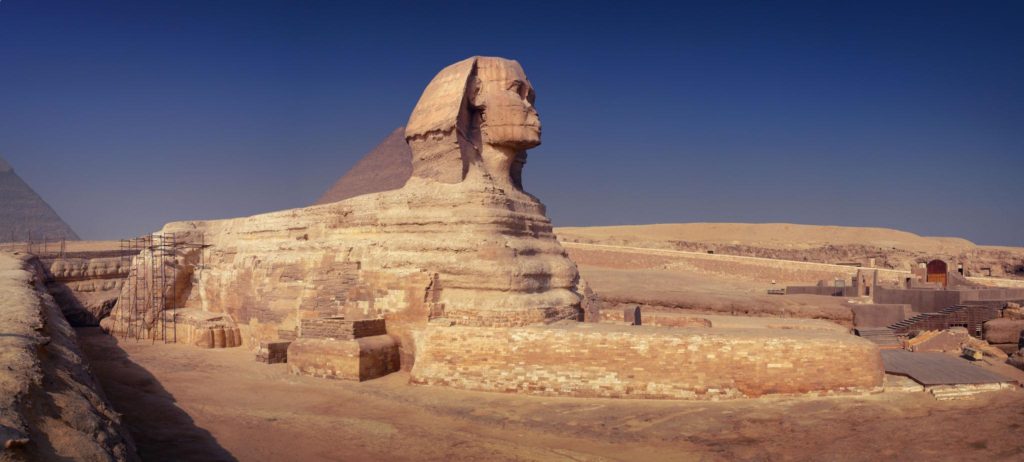
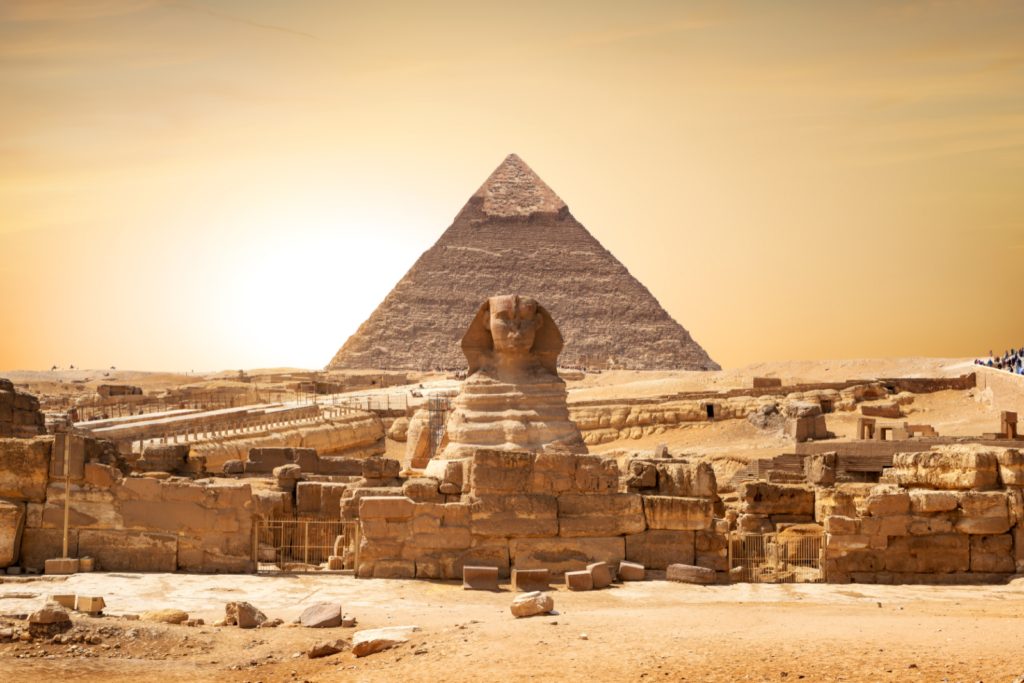
You see the Sphinx from a viewing terrace beside Khafre's Valley Temple, at the bottom (eastern edge) of the plateau; you can't walk around its base. Carved from a single outcrop of bedrock, the Sphinx is about 73 m long and 20 m high and is generally attributed to Khafre, whose causeway runs right past it.
Walk through the Valley Temple first. Its massive red granite pillars and alabaster floor are among the finest Old Kingdom architecture anywhere, and most people rush straight past them. The classic "kissing the Sphinx" photo is taken from the terrace to the south-east – mid-morning light is best. Crowds at the Sphinx peak between 10am and 1pm when the coach groups arrive from Cairo hotels.
Where is the best view of the pyramids?
The best view of all nine pyramids lined up is from the Panoramic Point on the desert ridge south-west of Menkaure's pyramid. Shuttle buses stop here, and it's where you get the postcard shot with the desert in the foreground and no city behind you.
Other great angles:
- The Sphinx terrace – the Sphinx in the foreground with Khafre's pyramid behind it.
- The rooftop terraces of hotels and restaurants in Nazlet el-Samman, the village at the foot of the Sphinx – superb at sunset and during the evening show.
- The Grand Egyptian Museum – the atrium windows and the terraces of the Grand Staircase look straight out to the plateau.
- Marriott Mena House – many rooms and the pool look directly at the Great Pyramid, about 500 m away.
Can you go inside the pyramids, and is it worth it?
Yes – you can enter the Great Pyramid and usually one of the other two on a separate ticket, but it's a hot, cramped climb to bare chambers, so it suits the curious rather than the claustrophobic.
Inside Khufu's pyramid you walk up a narrow, low passage, then through the soaring Grand Gallery (about 8.6 m high and 47 m long) to the King's Chamber, lined in red granite and containing an empty lidless sarcophagus. Expect handrails, wooden boards with slats, stooping, humidity and 20–30 minutes in total. Photography rules inside change – follow the guards' instructions.
Khafre's and Menkaure's interiors are simpler and less crowded; authorities rotate which are open for conservation. If you want painted walls rather than raw engineering, put your money toward the tombs at Saqqara instead (see below). Tickets for interiors are sold separately from the plateau ticket and prices change regularly, so check the current fee at the ticket office or on the official Egyptian antiquities ticketing website before you go.
How does the new visitor centre and electric bus system work?
Visitors now enter the plateau through a new visitor centre on the desert side, off the Cairo–Fayoum road, and move between sights on electric shuttle buses rather than tour coaches or private cars. The aim is to cut traffic, fumes and touting around the monuments.
- Buy or show your tickets at the visitor centre, which has toilets, cafés and shops.
- The shuttles run a loop linking the Great Pyramid, the Panoramic Point and the Sphinx area. Many travellers walk between the Great Pyramid and the Sphinx (about 1 km downhill) and ride the rest.
- Tour coaches and private cars generally drop off at the visitor centre. Your guide and driver will know the current arrangements, which have been evolving.
- The old entrance by the Sphinx in Nazlet el-Samman may also be used for some visitors, particularly for the evening show.
Shuttle tickets, routes and opening details have changed several times as the project rolled out, so treat this as a guide and check on arrival.
Should you ride a camel or horse at the pyramids?
A short camel ride from the Panoramic Point is a genuinely fun experience, but agree the full price, duration and route before you climb on – and choose an operator whose animals look healthy.
- Agree everything up front: total price for the whole group (not per person, not "per camel"), duration (20–30 minutes is plenty) and that photos are included.
- Getting down costs nothing: the classic scam is a cheap ride up and a large "fee" to make the camel kneel. Settle this before you mount.
- Pay at the end, in exact cash, and only the agreed amount.
- Animal welfare: walk away from thin animals, open wounds or handlers who whip. Horses and carriages on the plateau have attracted particular criticism; we generally suggest a camel for a short ride.
- Book through your guide: on a private tour your guide can arrange a ride with a known handler at a fair price, which removes almost all the hassle.
Can you see the pyramids at sunrise, or at night?
The plateau usually opens around 8am, so true sunrise inside the site isn't possible on a standard ticket; the best alternatives are a sunrise view from a hotel or rooftop, being first through the gate, or the evening Sound and Light Show.
Sunrise from Marriott Mena House or a rooftop in Nazlet el-Samman is spectacular in winter, when the sun rises behind you and lights the pyramids gold. Special early-access arrangements are occasionally offered for an additional fee – ask us about current options.
The Sound and Light Show runs most evenings in front of the Sphinx, with performances in several languages (English nightly). It's around an hour long, theatrical and a bit dated, but sitting under the floodlit pyramids is memorable. In winter, bring a warm layer – desert evenings drop to around 10°C.
How do you avoid touts and scams at Giza?
Touts are far less intrusive than they were thanks to the new visitor centre and shuttles, but you'll still meet them; the simplest defence is a polite "la, shukran" (no, thank you), no eye contact, and not accepting anything handed to you.
- "Free" gifts: headscarves, postcards or trinkets pressed into your hand become a demand for money. Hand them back.
- "The site is closed": anyone on the approach road saying the entrance is shut and offering a "back way" is running a stables scam.
- Photo helpers: men in uniform-like clothes offering to take your photo or show you a "secret" spot expect a tip. Fine if you want it – just agree it first.
- Unofficial guides: book a licensed Egyptologist guide in advance. They deal with tickets, shuttles and hawkers, and they make the stones talk.
See our Egypt travel tips and tipping guide for more on handling baksheesh calmly.
How do you combine the pyramids with the GEM and Saqqara?
The ideal plan is two days: one day for the Grand Egyptian Museum, and one day for the pyramids in the morning plus Saqqara (about 25 km south) in the afternoon.
- Grand Egyptian Museum: fully open since 1 November 2025, with the complete Tutankhamun collection and Khufu's Solar Boat. It's about 2 km from the plateau, and it deserves at least four to five hours. Read our Grand Egyptian Museum guide.
- Saqqara: the Step Pyramid of Djoser (the world's oldest large stone monument), painted Old Kingdom tombs, and the Serapeum's colossal bull sarcophagi. Many travellers find Saqqara the highlight of Cairo.
- Dahshur: add the Bent and Red Pyramids (you can enter the Red Pyramid) for a quieter, near-empty pyramid experience.
Our Cairo and Pyramids stopover covers all of this, and every longer itinerary, including the Classic Egypt and Nile Cruise, builds in Giza, the GEM and Saqqara. See also our Cairo and Giza destination guide.
Frequently asked questions
How much time do you need at the Pyramids of Giza?
Allow three to four hours for the pyramids, the Panoramic Point and the Sphinx. Add an hour or so if you go inside the Great Pyramid, and keep a separate day for the Grand Egyptian Museum.
Is it worth going inside the Great Pyramid?
It's worth it if you're curious about the engineering and comfortable with steep, narrow, humid passages. The chambers are undecorated, so if you want colour and carvings, spend the money on Saqqara's tombs instead.
How much are tickets to the Pyramids of Giza?
There is a plateau entry ticket plus separate tickets for the pyramid interiors and some tombs. Prices are revised regularly, so check the current fees at the official ticketing website or with your tour operator before you travel.
What is the best time of day to visit the pyramids?
Arrive at opening time (around 8am) for cooler temperatures and lighter crowds, or come in the late afternoon. Coach groups peak between about 10am and 1pm.
How far are the pyramids from the Grand Egyptian Museum?
About 2 km – a few minutes' drive. They're close enough to see the pyramids from the museum, but you'll want a full day for each rather than squeezing both into one.
Can you climb the pyramids?
No. Climbing the pyramids is prohibited and can result in arrest. You can walk around the base and up to the entrance of the Great Pyramid.
Is the Sound and Light Show at Giza worth seeing?
The narration is old-fashioned, but seeing the floodlit Sphinx and pyramids at night is memorable. It's best on a mild evening with a jacket; many people enjoy it just as much from a nearby rooftop restaurant.