Quick answer
The best temples in Egypt are Karnak for sheer scale, Abu Simbel for drama, Edfu as the best preserved, Dendera for colour and Abydos for the finest relief carving. Luxor Temple, the Temple of Hatshepsut, Philae, Medinet Habu and Kom Ombo round out the top ten. Most sit on the Nile between Luxor and Aswan, so a cruise and a few extra days cover nearly all of them.
Which are the best temples in Egypt?
Our top ten, in order: Karnak, Abu Simbel, Edfu, Dendera, Abydos, Luxor Temple, the Temple of Hatshepsut, Philae, Medinet Habu and Kom Ombo. We ranked them on the experience of being there, not just historical importance: scale, preservation, colour, setting and how crowded they feel.
Two things surprise first-timers. First, many of the best-preserved temples are late: Edfu, Dendera, Kom Ombo, Philae and Esna were built or rebuilt under the Ptolemies and Romans, when Greek-speaking rulers presented themselves as pharaohs. Second, the quietest temples are often the most beautiful, because Abydos and Medinet Habu sit just off the cruise-boat timetable. For how a temple worked, from pylon to sanctuary, read Egyptian temples explained.
The great temples compared
This table compares the temples worth planning around, with the era, the main god and the easiest way to fit each in.
| Temple | Era | Main god | What makes it special | How to visit |
|---|---|---|---|---|
| Karnak | Middle Kingdom to Ptolemaic | Amun-Ra | Great Hypostyle Hall, 134 columns | Luxor East Bank, 2–3 hours |
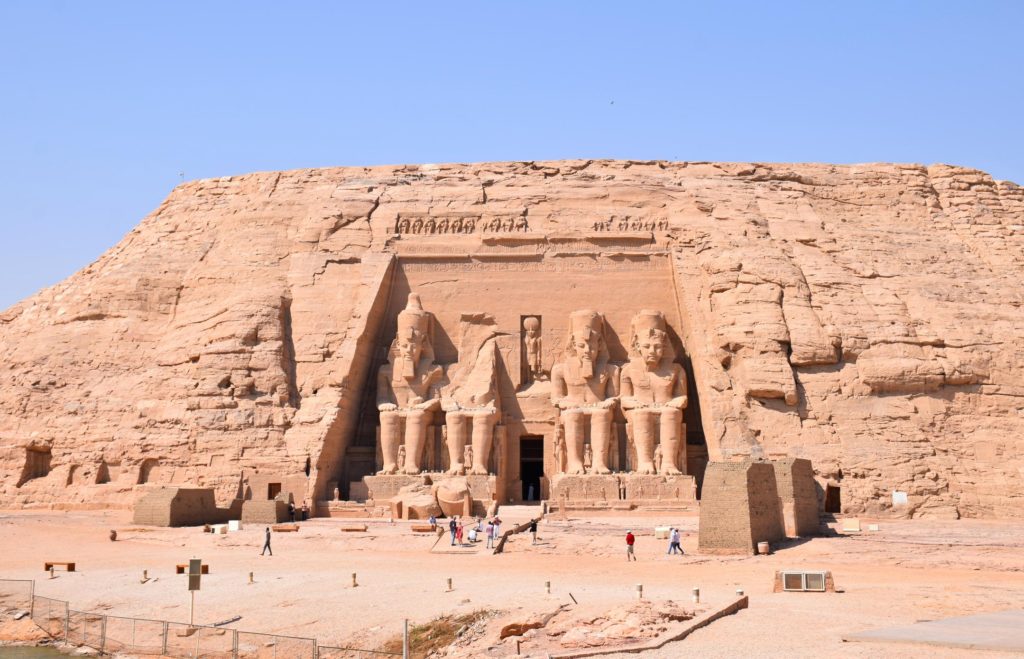
| Abu Simbel | Ramesses II, 13th century BC | Ra-Horakhty, Amun, Ptah, deified Ramesses | Four colossi; the sun festival | Road or air from Aswan |
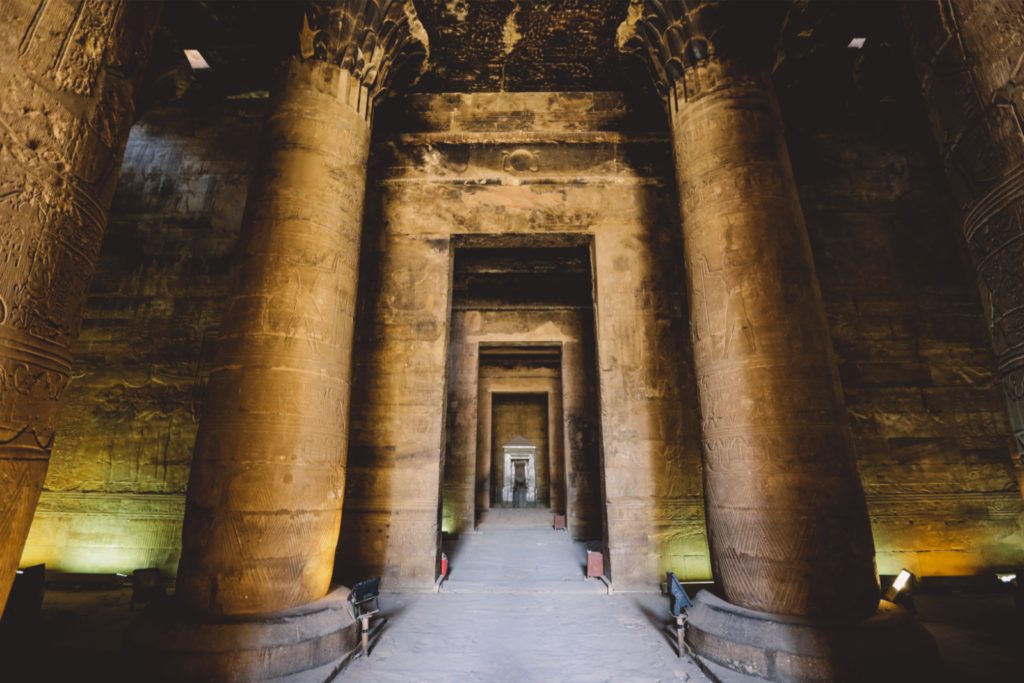
| Edfu | Ptolemaic, 237–57 BC | Horus | Roof, walls and sanctuary intact | Cruise stop or road from Luxor |
| Dendera | Ptolemaic and Roman | Hathor | Blue astronomical ceilings, rooftop chapels | Day trip north of Luxor |
| Abydos | Seti I, 19th Dynasty | Osiris | Finest painted relief; the King List | Long day trip north of Luxor |
| Luxor Temple | Amenhotep III and Ramesses II | Amun | Lit at night; Avenue of Sphinxes | Central Luxor, 1–1.5 hours |
| Hatshepsut | 18th Dynasty | Amun | Terraces against the cliffs; Punt reliefs | Luxor West Bank |
| Philae | Ptolemaic and Roman | Isis | Island setting, reached by boat | Aswan, half a day |
| Medinet Habu | Ramesses III, 20th Dynasty | Amun | Deep-cut, still-coloured reliefs | Luxor West Bank |
| Kom Ombo | Ptolemaic | Sobek and Horus the Elder | Double temple; crocodile mummies | Cruise stop, often at dusk |
The big three: Karnak, Abu Simbel and Luxor Temple
These are the temples that justify the trip on their own: Karnak for its overwhelming size, Abu Simbel for its setting and Luxor Temple for its atmosphere after dark.
Karnak grew over about 2,000 years as pharaoh after pharaoh added pylons, obelisks and halls; even with a guide you will only see part of it in three hours. Go at opening. Abu Simbel was carved for Ramesses II and moved in the 1960s; the Temple of Nefertari beside it is a highlight in its own right. Luxor Temple is smaller and central, and best seen in the evening when it is floodlit. If you can only fit one of Karnak and Luxor Temple into a short stay, choose Karnak by day.
At Abu Simbel, the inner sanctuary is aligned so that around 22 February and 22 October the rising sun lights the statues at the back of the temple; our Sun Festival guide explains how to plan for it, and why the rest of the year is far calmer.
The Temple of Hatshepsut almost joins this group: from a distance its three colonnaded terraces look startlingly modern against the cliffs of Deir el-Bahari. It is also one of the hottest places in Luxor by late morning, so make it your first stop on the West Bank.
Best preserved and most colourful: Edfu and Dendera
Edfu is the most complete temple in Egypt, and Dendera has the most vivid colour, thanks to restorers who have cleaned centuries of soot from its ceilings.
Edfu, the Temple of Horus, still has its roof, enclosure wall and dark sanctuary with a granite shrine, so it shows how a temple felt inside better than anywhere else. It is a standard cruise stop, usually reached by horse carriage from the boat. Dendera, the Temple of Hathor, is about 60 km north of Luxor. Its hypostyle ceiling glows blue and gold, and you can climb to rooftop chapels where a cast of the famous zodiac sits (the original is in the Louvre). Most cruises don't stop here, so plan a day trip.
For lovers of ancient art: Abydos and Medinet Habu
If you care about carving and colour more than size, Abydos and Medinet Habu are the two temples specialists rave about and most visitors miss.
The Temple of Seti I at Abydos has raised relief of extraordinary delicacy, the King List naming Seti's predecessors, and the mysterious Osireion behind it. It is about 160 km north of Luxor, so it pairs with Dendera in one long day. Medinet Habu, Ramesses III's mortuary temple on the West Bank, has deep-cut reliefs of the Sea Peoples battles with original paint in the inner halls, and is often almost empty in the late afternoon.
Most romantic settings: Philae and Kom Ombo
Philae and Kom Ombo are less about scale and more about where they stand: one on an island, the other on a bend of the Nile.
Philae, the Temple of Isis, was moved to Agilkia Island when the dams flooded its original island; you reach it by a short motorboat ride, and it was one of the last places the old religion was practised. Kom Ombo is a rare double temple with two parallel sanctuaries, for the crocodile god Sobek and the falcon god Horus the Elder, and a small museum of crocodile mummies. Cruise boats often arrive at sunset, which is when it looks its best.
Which underrated temples are worth a detour?
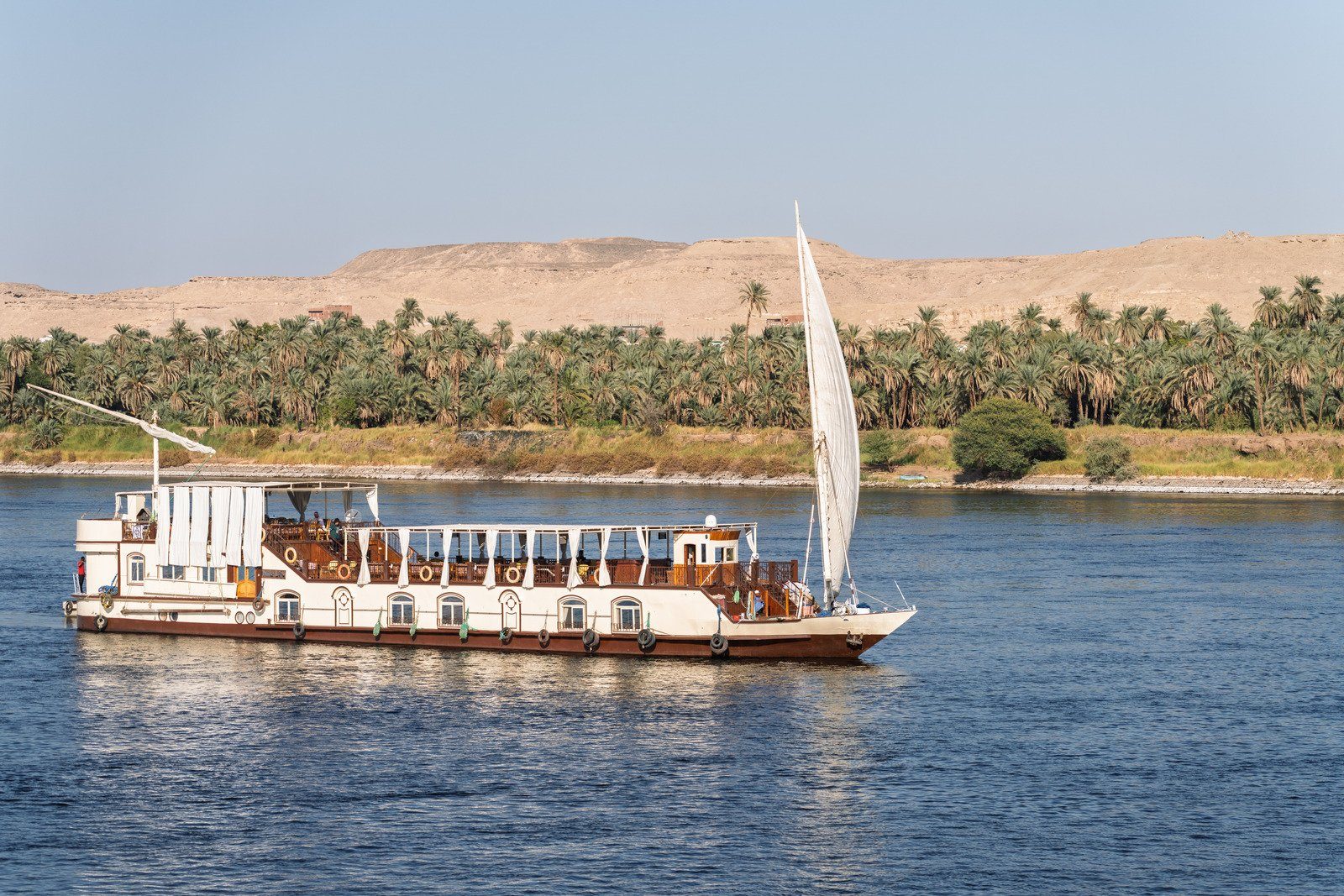
If you have seen the top ten, or are travelling slowly by dahabiya, these four reward the effort.
- Esna: a Roman-era hypostyle hall of the god Khnum, whose ceiling colours have been dramatically revealed by recent cleaning. Many cruises pass through the lock here.
- Temple of Hatshepsut: not underrated, but often rushed; take time over the Punt expedition reliefs on the middle terrace.
- The Ramesseum: the broken colossus that inspired Shelley's "Ozymandias", and few other visitors.
- Kalabsha: a large Roman-period temple to the Nubian god Mandulis, rebuilt beside the High Dam.
Which temples should you choose?
On a first trip, see the cruise temples plus Karnak, Luxor Temple, Hatshepsut and Abu Simbel; add Dendera and Abydos only if you love ancient art.
- First-timers with 8–10 days: Karnak, Luxor Temple, Hatshepsut, Edfu, Kom Ombo, Philae and Abu Simbel.
- History lovers: add Dendera and Abydos (one long day) and Medinet Habu; consider the Egypt for history lovers journey.
- Families: keep it to four or five temples, with Kom Ombo's crocodiles and Philae's boat ride high on the list.
- Slow travellers: a dahabiya adds Esna, El Kab and Gebel el-Silsila, which big ships rarely visit.
Temple fatigue is real: two major temples a day is plenty in warm weather.
Crowds follow the cruise timetable. Big boats tend to reach Edfu and Kom Ombo at similar times, and coach groups from the Red Sea arrive at Karnak and the Valley of the Kings mid-morning. With a private guide you can reverse the order, visiting Karnak at opening and Luxor Temple late, or seeing Philae in the afternoon after the morning rush. Our day trips from Luxor guide covers how to reach Dendera, Abydos and Esna by road.
Frequently asked questions
What is the most beautiful temple in Egypt?
Many Egyptologists would say Abydos for its carving, or Dendera for its colour. For most visitors the most breathtaking moment is the first sight of Abu Simbel.
Which temple in Egypt is best preserved?
Edfu, the Temple of Horus, built under the Ptolemies between 237 and 57 BC. It still has its roof, walls and sanctuary.
Is Karnak or Luxor Temple better?
Karnak is bigger and more impressive by day; Luxor Temple is smaller and at its best lit up at night. Ideally see both, Karnak in the morning and Luxor Temple after dark.
Which temples do you see on a Nile cruise?
A Luxor–Aswan cruise usually includes Karnak, Luxor Temple, the West Bank, Edfu, Kom Ombo and Philae, with Abu Simbel as an optional extra from Aswan.
How many temples can you see in a day?
Two major temples is comfortable; three is possible in cool months with an early start. In summer, plan one before 11am and one late in the afternoon.