Quick answer
Esna Temple is the Temple of Khnum in the town of Esna, about 55 km south of Luxor: a single Roman-era hypostyle hall sitting some nine metres below the modern street. A restoration since 2018 has removed centuries of soot to reveal brilliantly coloured ceilings and columns, and it takes 45 minutes to an hour.
What is Esna Temple?
It is the surviving front hall (pronaos) of a temple to Khnum, the ram-headed god who was believed to shape people on a potter's wheel, with his consorts Menhit and Neith. The rest of the temple, including the sanctuary, still lies beneath the houses of Esna. What you see was built and decorated under Roman emperors from Claudius in the 1st century AD onwards, attached to an older Ptolemaic rear wall.
The hall carries some of the latest hieroglyphic inscriptions in Egypt. The cartouche of the emperor Decius, from about AD 250, is among the last royal names ever carved in a temple, which makes Esna a fascinating coda to 3,000 years of pharaonic religion.
What has the restoration revealed?
Since 2018 an Egyptian-German team has been cleaning the hall, removing a black layer of soot, bird droppings and grime to expose original paint that most Egyptologists did not know survived. The ceiling now shows vivid blues, reds, greens and yellows, with astronomical scenes including zodiac figures and decans, star groups used to tell the time at night.
The work also uncovered painted inscriptions that had been invisible, adding to our understanding of the festivals celebrated here. Cleaning has continued in stages, so parts of the hall may be under scaffolding when you visit, but even a partial view of the colours is striking. It now rivals Dendera for painted ceilings.
What should you look for inside?
Focus on the 24 columns, the ceiling, and the exterior walls with their scenes of the emperors as pharaohs. The hall is compact enough to take in at once from the viewing level before you descend.
- The columns: 18 freestanding and six engaged in the front screen wall, each crowned with a different floral capital of palms, papyrus and lotus.
- The ceiling: crocodiles, scarabs and the sky goddess Nut among the stars, now in strong colour.
- Festival texts: columns carry hymns and a calendar of Esna's religious festivals, including a creation account centred on Khnum and Neith.
- Exterior reliefs: Roman emperors, among them Trajan, shown in pharaonic dress smiting enemies before the gods.
Who was Khnum, and why was Esna important?
Khnum was the ram-headed god of creation and of the Nile's source, believed to model each child and its spirit on his potter's wheel before birth, and Esna, ancient Iunyt (Greek Latopolis), was one of his main cult centres. His other great temple stood on Elephantine Island at Aswan, by the cataract where the flood was thought to rise.
The Greek name Latopolis means city of the Lates fish, the Nile perch that was sacred here; mummified perch have been found in a cemetery west of the town. Esna sat on caravan routes to the Western Desert oases and remained a busy market town into the Ottoman period, which is why so much of it was built over the temple. In the early 19th century the hall was reportedly used as a storehouse, and the clearance you see today dates mainly from the mid-1800s onwards.
How do you get to Esna, and how does it fit a Nile cruise?
Esna is about an hour's drive south of Luxor, and most travellers see the temple either as a cruise or dahabiya stop or on the drive between Luxor and Edfu. The temple is a short walk from the river landing through the town's covered market street.
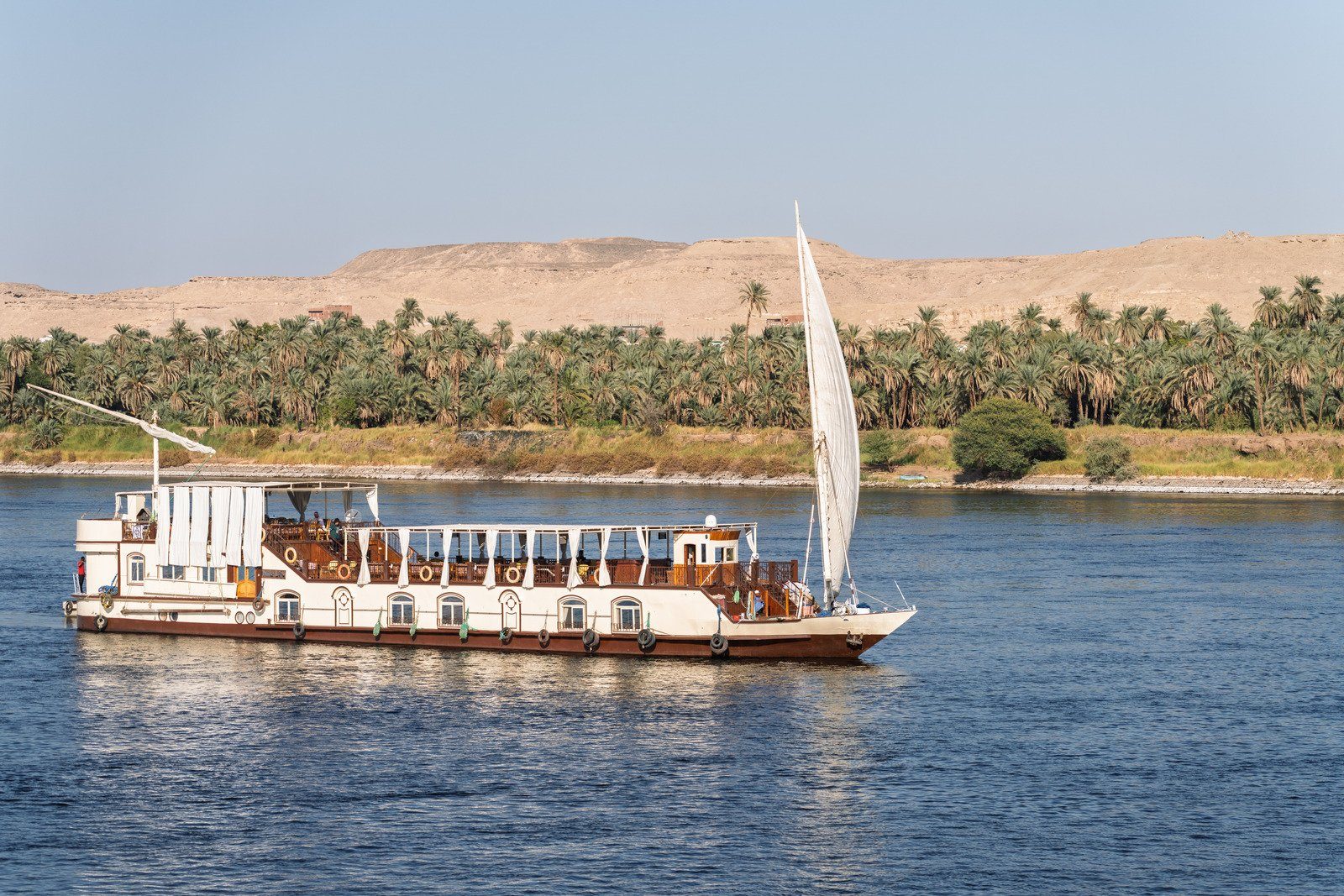
Large Nile cruise ships pass through the Esna lock on the barrage just upstream of the town, and some now moor for a temple visit; see our guide to the Esna lock for what happens there. Most dahabiyas start or finish at Esna, so it is the natural first or last visit of a sailing trip such as our Dahabiya Nile Sailing journey.
When to go and ticket tips
Visit in the morning or late afternoon; because the hall is sunken and roofed it stays relatively cool, but the walk through town can be hot. Allow 45 minutes to an hour, longer if you want to study the ceiling.
Tickets are sold at the site and prices change, so check egymonuments.gov.eg. Steps lead down into the hall from street level. Nearby, the restored Ottoman-era caravanserai, Wikalat el-Gedawi, is worth a look if it is open, and the surrounding market sells fabrics, spices and household goods to locals rather than tourists.
By road from Luxor, a good private day combines Esna in the morning with El Kab and Edfu further south, returning in the evening or continuing to Aswan.
Esna Temple (Temple of Khnum): FAQs
How far is Esna from Luxor?
About 55 km south, roughly an hour by road. It is an easy half-day trip or a stop on the way to Edfu.
Why is Esna Temple below street level?
The town has been built up on its own debris for nearly 2,000 years, so the ground is now about nine metres above the temple floor. Only the front hall was ever excavated.
Do Nile cruises stop at Esna Temple?
Some do, especially smaller and luxury ships, while others only pass through the Esna lock. Dahabiyas almost always visit, as many start or end their sailing at Esna. Check your ship's itinerary.
Is Esna Temple worth visiting?
Yes, especially since the restoration. The colours on the ceiling are among the most vivid in any Egyptian temple, and it is rarely crowded.