Quick answer
Egypt has seven UNESCO World Heritage sites: Memphis and its Necropolis (the pyramid fields from Giza to Dahshur), Ancient Thebes (Luxor), the Nubian Monuments from Abu Simbel to Philae, Historic Cairo, Abu Mena near Alexandria, the Saint Catherine Area in Sinai and Wadi Al-Hitan, the Whale Valley in the Fayoum. The first four sit on the classic Cairo–Luxor–Aswan route, so a standard 12-day trip covers them.
How many UNESCO World Heritage sites does Egypt have?
Egypt has seven World Heritage sites: five inscribed in 1979, the Saint Catherine Area in 2002 and Wadi Al-Hitan in 2005. Six are cultural; Wadi Al-Hitan is listed for its natural, fossil value. Several are not single monuments but large zones containing dozens of sites, which is why "Memphis and its Necropolis" takes in every pyramid from Giza to Dahshur. The official list is on UNESCO's Egypt page.
| Site | Inscribed | Base | How to visit |
|---|---|---|---|
| Memphis and its Necropolis | 1979 | Cairo/Giza | Half-day to full-day trips from Giza |
| Ancient Thebes with its Necropolis | 1979 | Luxor | 2–3 days, or a cruise start/finish |
| Nubian Monuments from Abu Simbel to Philae | 1979 | Aswan | Philae on a cruise; Abu Simbel by road, air or Lake Nasser cruise |
| Historic Cairo | 1979 | Cairo | A full day with a guide |
| Abu Mena | 1979 | Alexandria | A detour of about an hour from Alexandria |
| Saint Catherine Area | 2002 | Sharm el-Sheikh or Dahab | Overnight with a Mount Sinai climb |
| Wadi Al-Hitan (Whale Valley) | 2005 | Cairo or the Fayoum | Long day trip by 4WD |
Memphis and its Necropolis: the pyramid fields
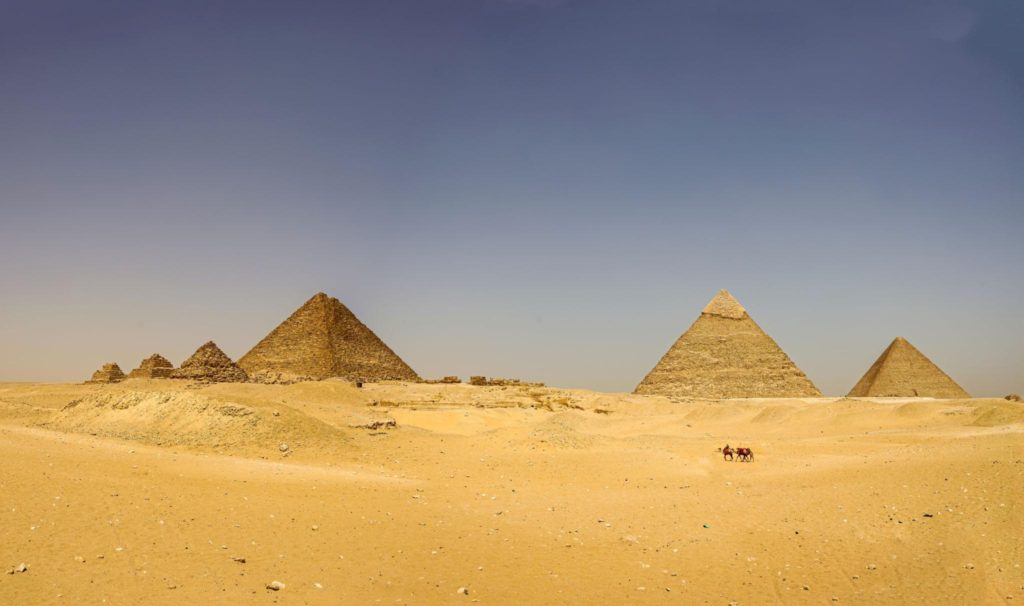
This site covers about 30 km of desert edge west of the Nile, from Abu Rawash in the north through Giza, Abusir and Saqqara to Dahshur, plus the ruins of Memphis, Egypt's first capital. It is the richest concentration of pyramids on earth, built mostly between about 2650 and 1800 BC.
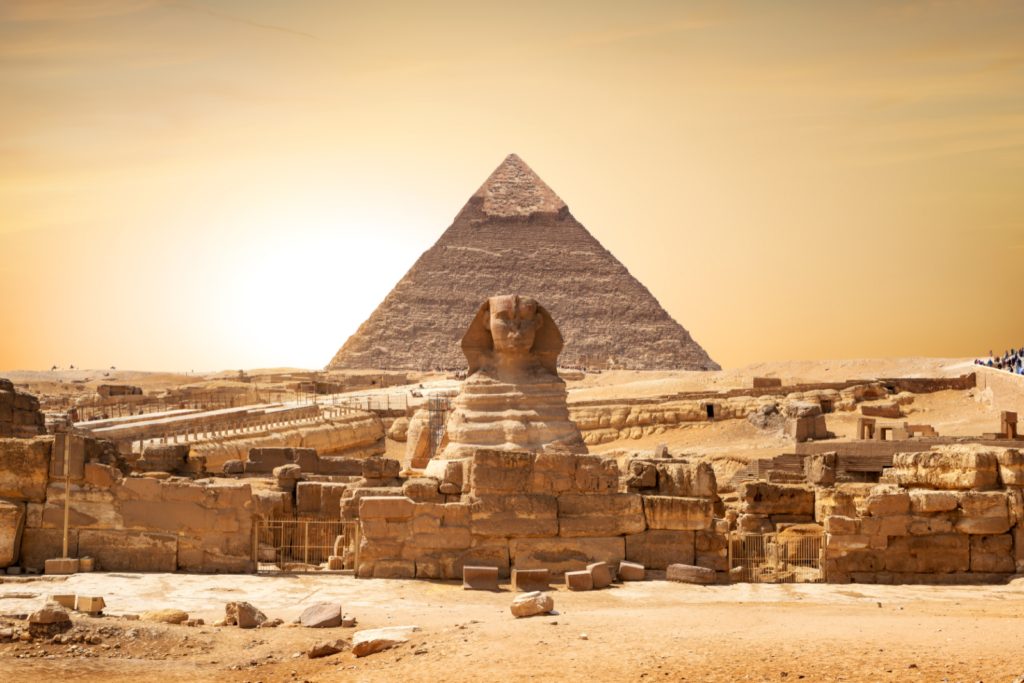
- Giza: the Great Pyramid, Khafre and Menkaure's pyramids and the Sphinx.
- Saqqara: Djoser's Step Pyramid, the Pyramid of Unas and painted Old Kingdom tombs.
- Dahshur: Sneferu's Bent and Red Pyramids, with far fewer visitors; see Dahshur.
- Memphis (Mit Rahina): the fallen colossus of Ramesses II in an open-air museum.
Abusir, with the Fifth Dynasty sun temples and pyramids, and Abu Rawash, with the unfinished pyramid of Djedefre, are in the listing too but rarely visited; ask for Abusir if you want an empty pyramid field to yourself. Giza takes a morning; Saqqara, Memphis and Dahshur fill a second day with a private driver. Our Giza vs Saqqara vs Dahshur comparison helps if you only have time for one extra.
Ancient Thebes with its Necropolis: Luxor
Modern Luxor stands on Thebes, the religious capital of the New Kingdom, and the World Heritage site covers both banks: the temples of the living on the east and the tombs and mortuary temples on the west.
On the East Bank are Karnak and Luxor Temple, linked by the Avenue of Sphinxes. On the West Bank are the Valley of the Kings, the Valley of the Queens, the Temple of Hatshepsut, Medinet Habu, the Ramesseum, Deir el-Medina and the Tombs of the Nobles. You need at least two full days to see the essentials, and three if you want the quieter sites. The West Bank sites lie across a strip roughly 7 km long, so a car and driver make the day far easier than taxis, and a dawn start beats both heat and coach groups. Most travellers see Thebes at the start or end of a Nile cruise; our Luxor in two days plan shows a realistic order.
Nubian Monuments from Abu Simbel to Philae
This site groups the temples of Nubia that were dismantled and moved to higher ground when the Aswan High Dam created Lake Nasser, in a UNESCO-led international campaign from 1960 that helped inspire the World Heritage Convention itself.
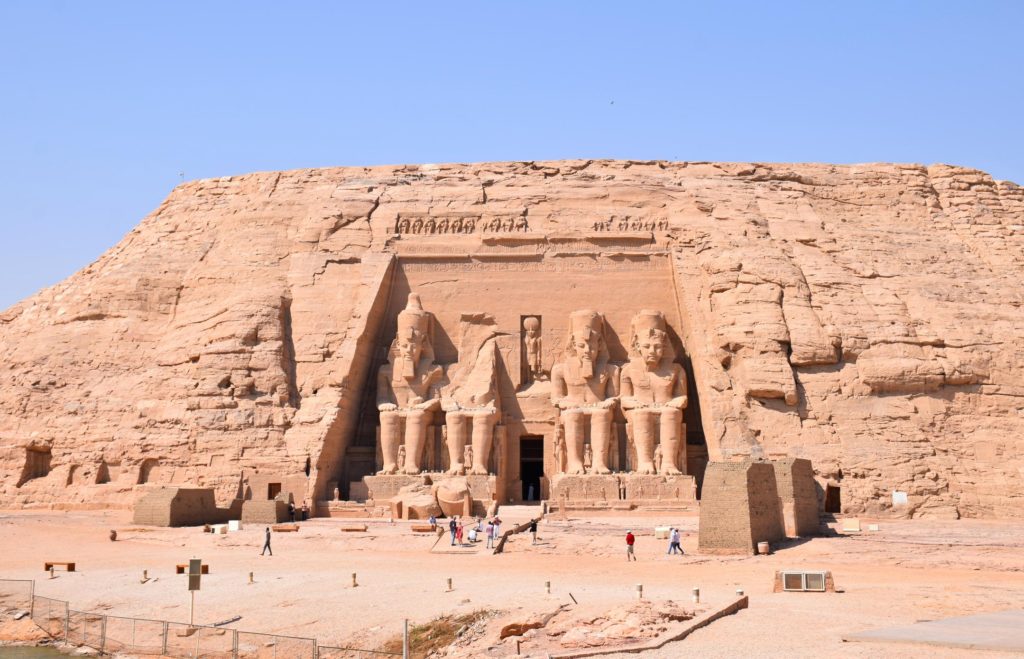
- Abu Simbel: Ramesses II's Great Temple and the Temple of Nefertari, cut into blocks and lifted about 65 metres up the cliff between 1964 and 1968. See the Abu Simbel guide.
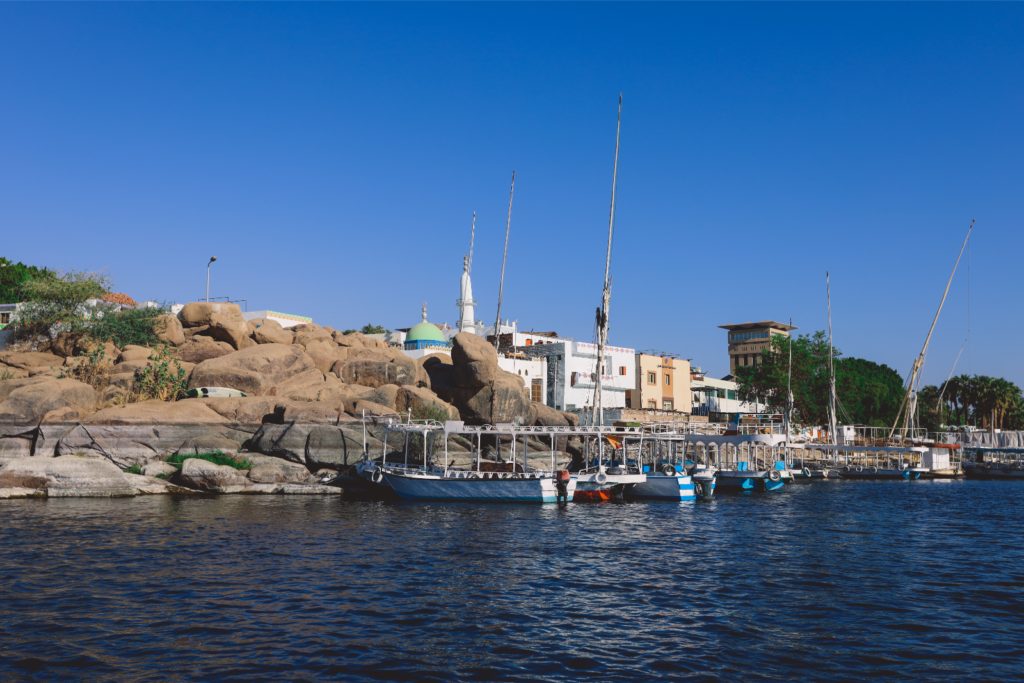
- Philae: the Temple of Isis, moved to Agilkia Island near Aswan; see Philae Temple.
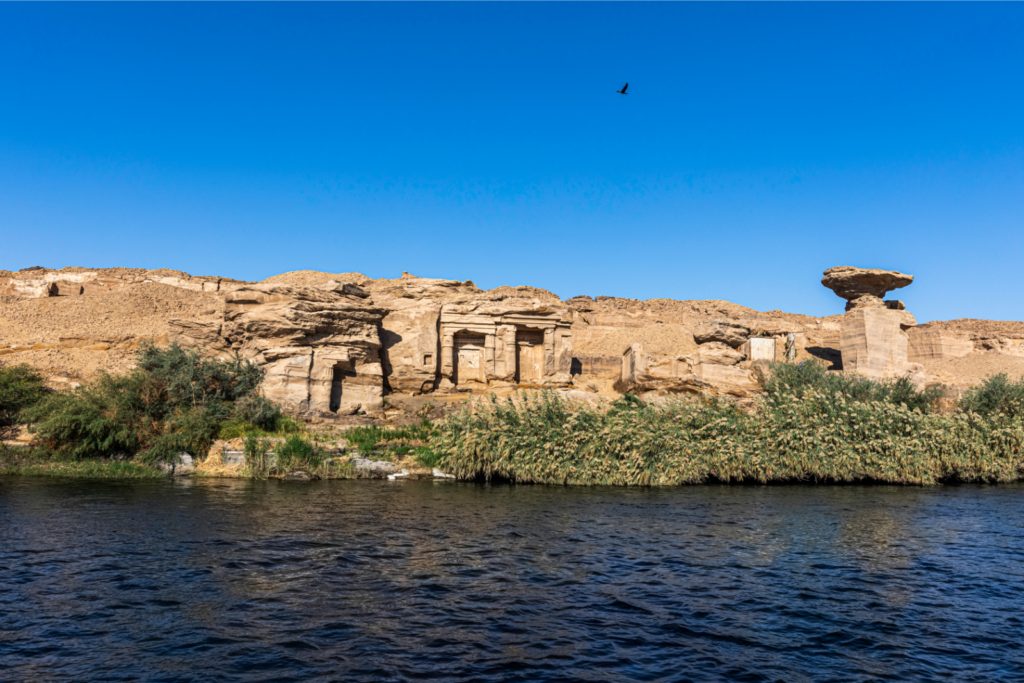
- Lake Nasser temples: Kalabsha, Wadi el-Sebua, Amada and others, reached mainly by Lake Nasser cruise.
The full story of the rescue is in our guide to saving Abu Simbel.
Historic Cairo: the medieval city
Historic Cairo protects one of the oldest Islamic cities in the world, a dense core of mosques, madrassas, gates, bazaars and houses built mainly between the 9th and 19th centuries. The UNESCO listing was originally named "Islamic Cairo".
Highlights include the 9th-century Mosque of Ibn Tulun, Al-Azhar Mosque, the Mamluk monuments of Al-Muizz Street, the Fatimid gate of Bab Zuweila, the Mosque-Madrassa of Sultan Hassan and the Citadel of Saladin. Fustat, the first Islamic capital founded in 641, lies within the wider area too. Plan a full day with a guide who can open locked buildings and steer you through the lanes, and dress for mosque visits. Our history of Islamic Cairo puts the buildings in order.
Abu Mena, Saint Catherine and Wadi Al-Hitan: the three off the main route
The other three sites need a detour, but each shows a side of Egypt the pharaonic sites don't.
Abu Mena
The ruins of an early Christian pilgrimage city built around the tomb of Saint Menas, about 45 km southwest of Alexandria, which flourished from the 5th to 7th centuries. A rising water table from surrounding irrigation damaged the site, and UNESCO placed it on its List of World Heritage in Danger in 2001. After work to lower the groundwater, our understanding is that the World Heritage Committee removed it from the danger list in 2025; check UNESCO's site for its current status. What remains is low walls and column bases, so it suits keen students of early Christianity, ideally combined with Alexandria.
Saint Catherine Area
Covers Mount Sinai and St Catherine's Monastery, built in the 6th century under the emperor Justinian and still home to Greek Orthodox monks. Most visitors climb Mount Sinai overnight for sunrise, then visit the monastery, whose opening hours are short. Check the travel advice for Sinai before you plan this.
Wadi Al-Hitan
The Whale Valley in the Fayoum desert, where skeletons of early whales, around 40 million years old and some still with small hind legs, lie where they were found. The last stretch is by 4WD. See Wadi el-Hitan.
Can you see all seven on one trip?
You can, but it takes about three weeks and some long drives; most travellers see the four on the Nile route and add one or two others.
- 12 days: Memphis, Thebes, Nubia (Philae and Abu Simbel) and Historic Cairo. Our Classic Egypt and Nile Cruise covers all four.
- Add 2 days: Wadi Al-Hitan as a day trip from Cairo, or Abu Mena with an Alexandria overnight.
- Add 3–4 days: Sharm el-Sheikh or Dahab for the Saint Catherine Area, with time on the reef afterwards.
Prioritising? For first-timers, Memphis and Thebes are non-negotiable. Christian heritage travellers should add Saint Catherine and Abu Mena, possibly with our Christian Egypt journey. Families with curious children often rate Wadi Al-Hitan as a highlight, because fossil whales in a desert are easy to grasp at any age. Architecture lovers should give Historic Cairo a full day rather than the usual hurried afternoon at the Citadel and Khan el-Khalili.
Egypt also has a longer "tentative list" of sites put forward for future inscription, so the total may grow. Whatever you choose, ticket rules for monuments are published on egymonuments.gov.eg.
Frequently asked questions
How many UNESCO World Heritage sites are in Egypt?
Seven: Memphis and its Necropolis, Ancient Thebes, the Nubian Monuments from Abu Simbel to Philae, Historic Cairo, Abu Mena, the Saint Catherine Area and Wadi Al-Hitan.
Are the pyramids of Giza a UNESCO site?
Yes, as part of Memphis and its Necropolis, which also includes Saqqara, Abusir, Dahshur and Memphis itself.
Is Abu Mena still on the List of World Heritage in Danger?
It was placed on the danger list in 2001 because of rising groundwater. As we understand it, it was removed in 2025 after drainage work, but check the official UNESCO page for Abu Mena for its current status.
Which is Egypt's only natural World Heritage site?
Wadi Al-Hitan, the Whale Valley in the Fayoum desert, listed in 2005 for its fossils of early whales.
Is Luxor a UNESCO World Heritage site?
Yes. Ancient Thebes with its Necropolis covers Karnak, Luxor Temple and the West Bank tombs and temples, including the Valley of the Kings.