Quick answer
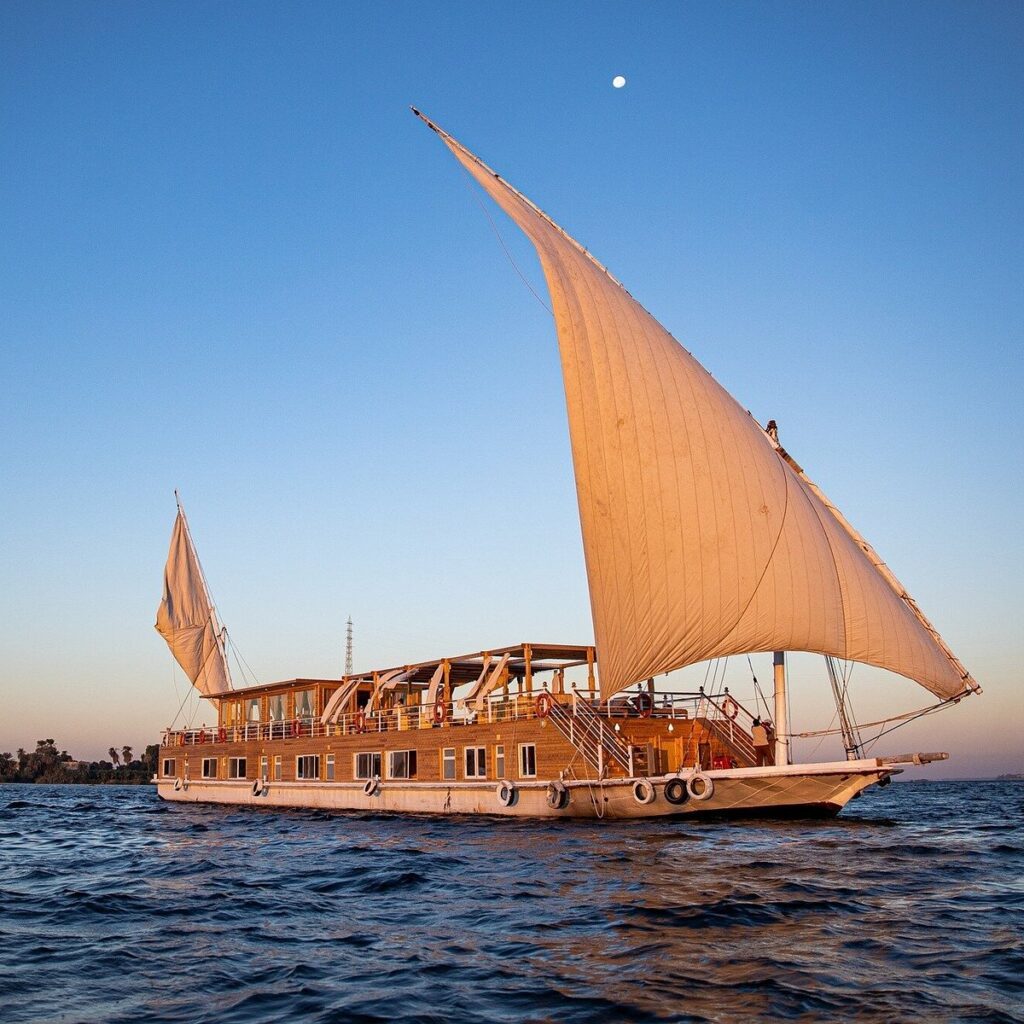
A Nile cruise ship is a multi-deck floating hotel carrying roughly 60–150 guests on a 3- or 4-night Luxor to Aswan route, with a pool, entertainment and set-time excursions. A dahabiya is a traditional two-masted sailing boat with around 4–12 cabins, taking 4–5 nights between Esna and Aswan, mooring at quiet islands and small temples the big ships skip. Choose a cruise ship for value and facilities, a dahabiya for intimacy and a slower, more authentic Nile.
What is the difference between a Nile cruise and a dahabiya?
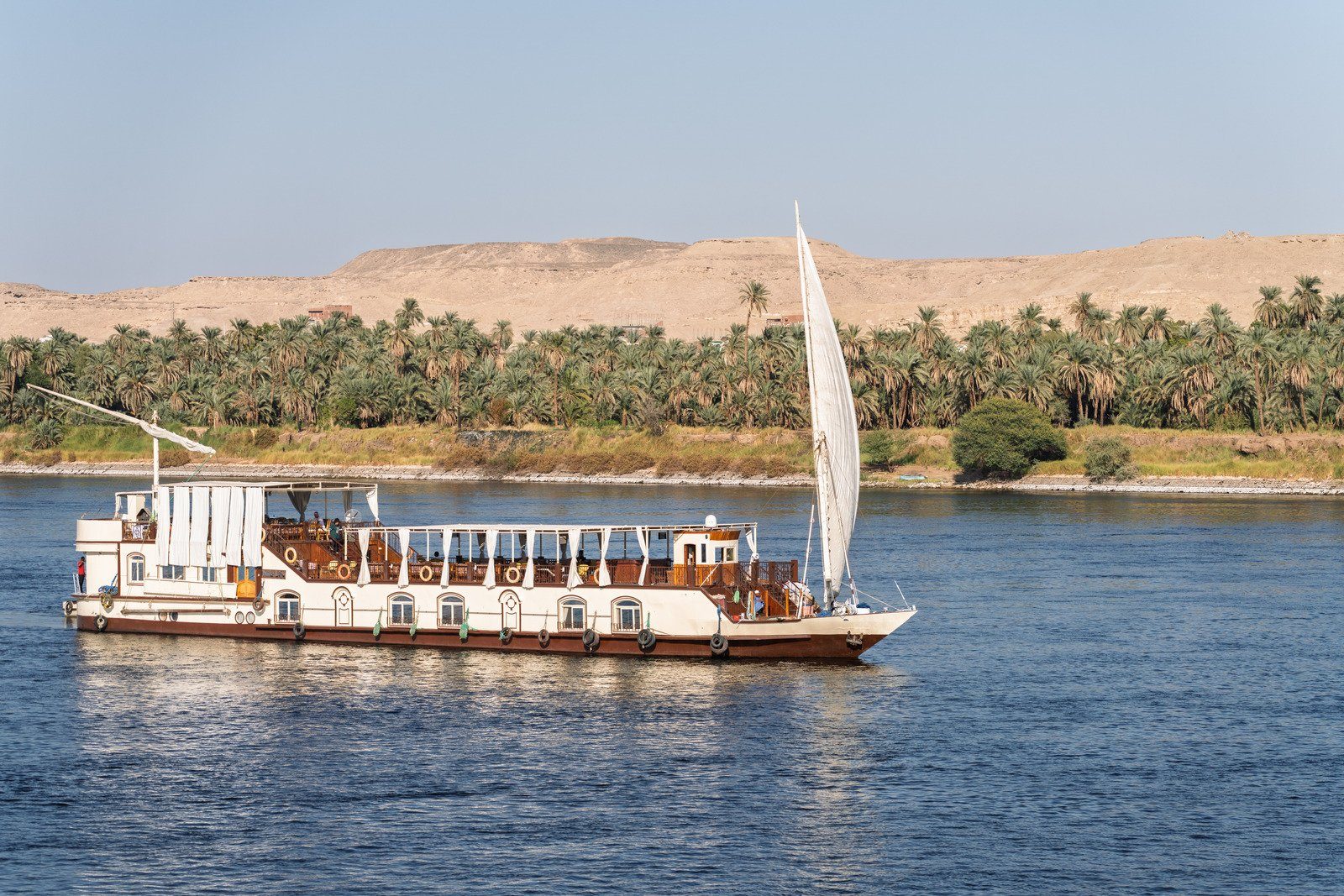
The main differences are size, propulsion and pace: a Nile cruise ship is a large motorised vessel with up to about 75 cabins, while a dahabiya is a small, wooden-style sailing boat with a handful of cabins that moves under sail (with a tug for when the wind drops) and stops wherever the captain chooses.
Both sail the same stretch of river between Luxor and Aswan, the 200-odd kilometres that hold the temples of Edfu and Kom Ombo and the most beautiful scenery in Egypt. Both include meals, guided excursions with an Egyptologist and a cabin with private bathroom. But the experience feels very different. On a cruise ship you're one of 100-plus guests on a set timetable, moored several boats deep at busy town quays. On a dahabiya you might be one of ten guests, tied up for the night at a sandbank or an island village, with the crew lighting a campfire on the bank.
The dahabiya (from the Arabic for "golden") is the boat of 19th-century travellers such as Amelia Edwards. Modern dahabiyas are purpose-built replicas with air-conditioning, en-suites and sun decks.
Nile cruise vs dahabiya: how do they compare side by side?
| Feature | Nile cruise ship | Dahabiya |
|---|---|---|
| Guests | Around 60–150 | Around 8–24 |
| Propulsion | Engines | Sail, with a tug or motor when there's no wind |
| Typical route | Luxor to Aswan, 3–4 nights | Esna to Aswan, 4–5 nights |
| Moorings | Town quays, often rafted alongside other ships | Islands, sandbanks and small villages |
| Sites | Luxor, Edfu, Kom Ombo, Aswan | As cruise, plus El Kab, Gebel el-Silsila and other small sites |
| Facilities | Pool, bar, lounge, gym or spa on larger ships, evening entertainment | Sun deck, lounge, sometimes a small plunge pool; no formal entertainment |
| Dining | Buffet plus some set menus | Set menus cooked for the group, often on deck |
| Atmosphere | Social, hotel-like | Private, relaxed, like a house party |
| Wi-Fi | Usually available, variable quality | Limited or none on many boats |
| Indicative cost | Lower to mid per night; luxury ships are on par with dahabiyas | Mid to high per night; whole-boat charter possible |
What do you see on a dahabiya that you miss on a cruise ship?
Dahabiyas reach small sites the big ships can't stop at, notably El Kab and Gebel el-Silsila, and they usually visit the major temples of Edfu and Kom Ombo at quieter times.
- El Kab: rock-cut tombs of New Kingdom nobles with lively painted scenes of farming and family life, often visited with no other tourists in sight.
- Gebel el-Silsila: the sandstone quarries that supplied many Upper Egyptian temples, with shrines carved into the cliffs at the river's edge.
- Island moorings: walks through fields and villages, swims from the boat where it's safe, and evening meals on the sandbank.
- Sailing itself: long, quiet hours on deck watching the riverbank pass – palm groves, children waving from the banks.
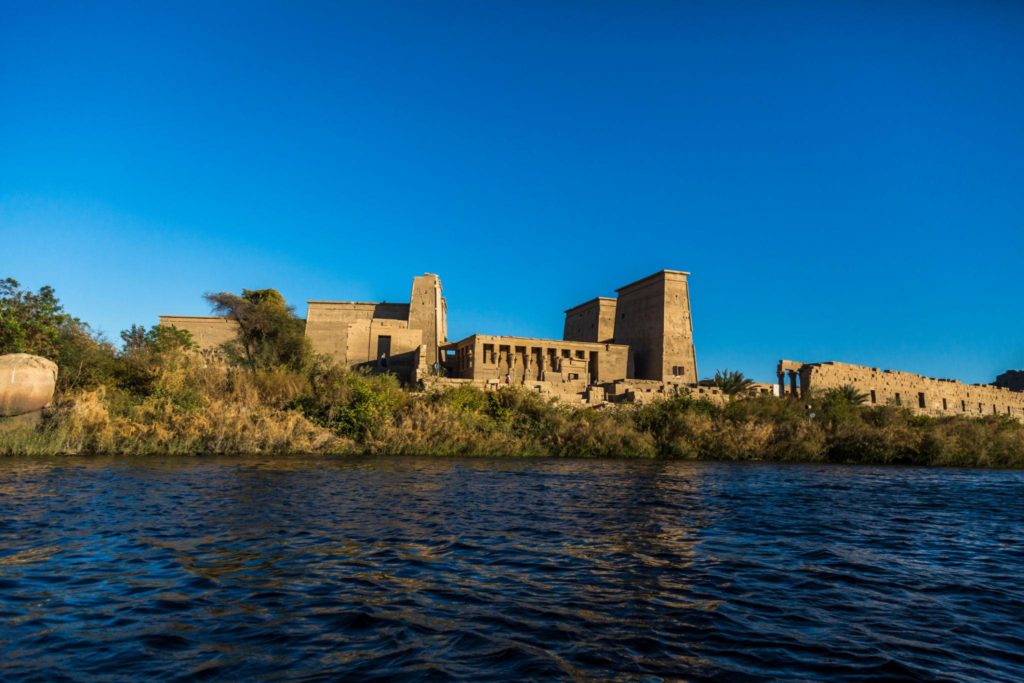
Cruise ships don't miss the essentials: Karnak and Luxor temples, the Valley of the Kings, Edfu, Kom Ombo, the Aswan High Dam and Philae are on virtually every Luxor to Aswan itinerary, and dahabiya trips cover Luxor's sights either before boarding at Esna or as part of a longer tour. See our Luxor and Aswan destination guides.
Who should choose a Nile cruise ship?
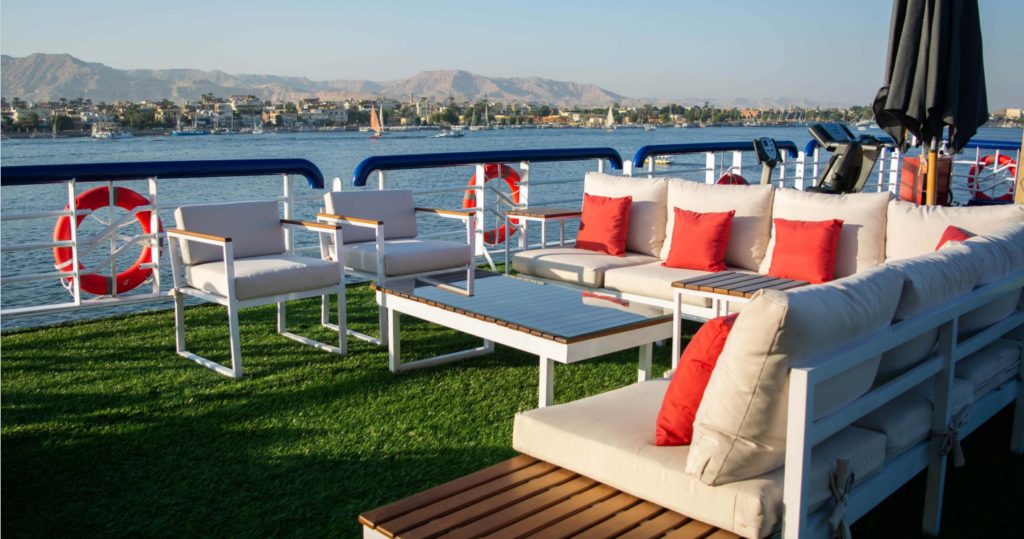
A cruise ship suits first-time visitors on a tighter schedule or budget, families who want a pool and space for kids to roam, travellers who like a social atmosphere, and anyone who wants reliable Wi-Fi and a full range of facilities.
Cruise ships range from simple three-star boats to genuinely luxurious vessels with suites, butler service and fine dining. A deluxe or luxury ship gives you the classic Nile experience comfortably and efficiently: you see the big temples, sail past the same scenery, and are back in Aswan in time for Abu Simbel. Three nights is enough to cover the sights; four nights adds breathing space.
Our Classic Egypt and Nile Cruise uses a carefully chosen 4-night Luxor to Aswan cruise, and the Luxury Egypt tour steps up to one of the river's finest ships.
Who should choose a dahabiya?
A dahabiya suits repeat visitors, couples, small groups of friends or extended families, photographers, and anyone who values peace, flexibility and a sense of the old Nile over facilities and entertainment.
Because most dahabiyas carry fewer than 20 guests, the service is personal: the chef will cook to your preferences, and the guide can adjust timings so you visit Edfu before the cruise-ship crowds arrive. Families or groups of 8–16 can often charter a whole boat, which can work out surprisingly well per person. Honeymooners love the privacy – see our Egypt honeymoon itinerary.
Dahabiyas are less suited to those who need lifts (there are none), very young children who need entertaining, or travellers who must stay connected. Our Dahabiya Nile Sailing tour combines Cairo with five nights sailing from Esna to Aswan.
How much does a dahabiya cost compared with a Nile cruise?
Indicatively, a dahabiya costs more per night than a standard or deluxe cruise ship but is broadly comparable with the top luxury ships, while offering a far more exclusive experience.
Prices depend on season, cabin category and whether excursions and drinks are included, so treat the following as indicative market ranges at the time of writing, per person twin share, per night, including meals and guided excursions:
- Standard and deluxe cruise ships: roughly AUD 150–350
- Luxury cruise ships: roughly AUD 400–900+
- Dahabiyas: roughly AUD 350–900+, with the most exclusive boats higher
Peak season (Christmas, New Year and Easter) is the most expensive; summer departures, when they run, are cheaper but very hot. Read more in our cost of an Egypt trip from Australia guide.
Where do Nile cruises and dahabiyas start and finish?
Most Nile cruise ships sail between Luxor and Aswan in either direction, while most dahabiyas board at Esna, about 55 km south of Luxor, and finish in Aswan; a few longer itineraries run all the way from Luxor or continue to Lake Nasser.
Dahabiyas start at Esna because the river between Luxor and Esna is busy with large ships and the Esna lock, and starting upstream of it gives the most peaceful sailing. Esna itself is worth a stop: its Temple of Khnum, sunk well below the modern street level, has had its ceilings and columns cleaned in recent years to reveal vivid original colours. Southbound cruises (Luxor to Aswan) are the most popular because they finish in Aswan, the natural base for Abu Simbel; northbound cruises suit itineraries that end in Luxor with a balloon flight over the West Bank.
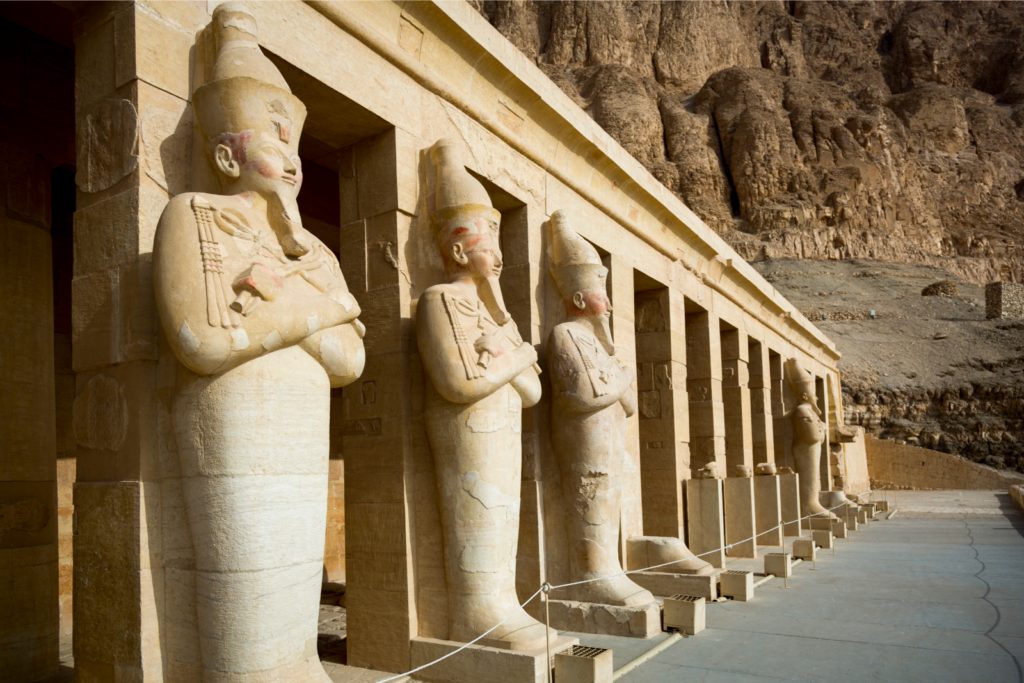
Whichever you choose, most travellers spend one or two nights in Luxor before or after the boat to see Karnak, Luxor Temple, the Valley of the Kings and the temple of Hatshepsut properly, plus a night or two in Aswan for Philae and a felucca at sunset.
Can you combine a cruise or dahabiya with Lake Nasser and Abu Simbel?
Yes – a small number of ships cruise Lake Nasser between Aswan and Abu Simbel over three or four nights, and this pairs beautifully with either a Nile cruise or a dahabiya for travellers with two weeks or more.
Lake Nasser cruises visit rescued Nubian temples such as Kalabsha, Wadi el-Sebua and Amada, which few visitors ever see, and arrive at Abu Simbel to view the temples by night and again at dawn. Otherwise, Abu Simbel is a day trip from Aswan: about three and a half hours each way by road, or a short flight. See our Abu Simbel guide and the Ultimate Egypt itinerary.
Is a dahabiya comfortable?
Yes – modern dahabiyas have air-conditioned cabins with proper beds and private bathrooms, and the best rival boutique hotels; what they lack is space and facilities, not comfort.
Cabins are typically smaller than on a big ship, though many boats have one or two suites at the stern with river views on three sides. The sun deck is the heart of the boat, with day beds, shade awnings and a dining table. Because dahabiyas are flat-bottomed and sail gently, seasickness is very rare. Storage is limited, so a soft bag packs better than a large hard case.
When is the best time to sail the Nile?
The best time for either option is October to April, when days are warm rather than scorching; December to February is peak season, and dahabiyas often don't sail in high summer.
From June to August, Luxor and Aswan regularly exceed 40°C, which makes temple visits gruelling and sailing on an open deck uncomfortable. Many dahabiyas pause operations from around May or June to September. Cruise ships run year-round, with lower prices and fewer guests in summer. Winter mornings and nights on the river are cool, so pack a warm layer. See our best time to visit Egypt guide and our complete Nile cruise guide.
Frequently asked questions
Is a dahabiya better than a Nile cruise?
Neither is better for everyone. A dahabiya is more intimate, quieter and reaches small sites; a cruise ship has more facilities and lower prices at the standard and deluxe level. Repeat visitors and couples tend to prefer dahabiyas; families and first-timers often prefer ships.
How long is a dahabiya cruise?
Most dahabiya trips run four or five nights between Esna and Aswan. Some longer itineraries start in Luxor or continue further.
Do dahabiyas actually sail?
Yes, they sail when the wind allows. Because the Nile's wind is unreliable, most dahabiyas are accompanied by a tug or have a motor to keep to schedule.
How many people are on a dahabiya?
Typically between 8 and 24 guests in 4 to 12 cabins, looked after by a crew of around 10 to 15.
Can kids go on a dahabiya?
Yes, and older children often love it, especially when the boat moors at islands. For toddlers, a cruise ship with a pool and more space may be easier. Chartering a whole dahabiya works well for multi-generational families.
Does a dahabiya visit Abu Simbel?
No. Abu Simbel is on Lake Nasser, about 280 km south of Aswan. You visit it by road or air from Aswan, before or after your sailing.