Quick answer
Two days in Luxor lets you give each bank of the Nile its own day. Spend day one on the East Bank with Karnak at opening, a sunset felucca, the Luxor Museum and Luxor Temple after dark; spend day two on the West Bank, starting with a sunrise balloon flight, then the Valley of the Kings, Hatshepsut's temple and Medinet Habu in the afternoon light.
Who should spend two days in Luxor?
Two days is the sweet spot for travellers on a land-based Nile trip, and a sensible extension for anyone whose cruise only gives Luxor a rushed morning. It covers the essential monuments without dawn-to-dusk days, adds the two experiences most visitors remember longest, the balloon and the felucca, and leaves the afternoons partly free.
It is also the minimum we suggest if you are flying Cairo to Luxor and then driving three hours to Aswan rather than cruising. Unlike the one-day plan, which crams both banks into a single day, this version splits them: the temples of the living city on the East Bank on day one, and the tombs and mortuary temples of the West Bank on day two, which is how the ancient Egyptians themselves divided Thebes.
Day 1: Karnak at opening, the river at sunset, temples by night
Start at Karnak when the gates open, rest through the middle of the day, then spend the late afternoon and evening on the Corniche. Everything today is within about 3 km of central Luxor.
- 6.00–9.30am: Karnak Temple. The Great Hypostyle Hall's 134 columns in the low morning light, Hatshepsut's standing obelisk and the Sacred Lake. Then the Open-Air Museum, which needs a separate ticket but is almost always empty and holds the reassembled White and Red Chapels.
- 9.30–10.30am: Walk a stretch of the Avenue of Sphinxes south from Karnak before it gets hot; the full 2.7 km to Luxor Temple takes 40 to 60 minutes.
- 11.00am–3.30pm: Lunch and rest.
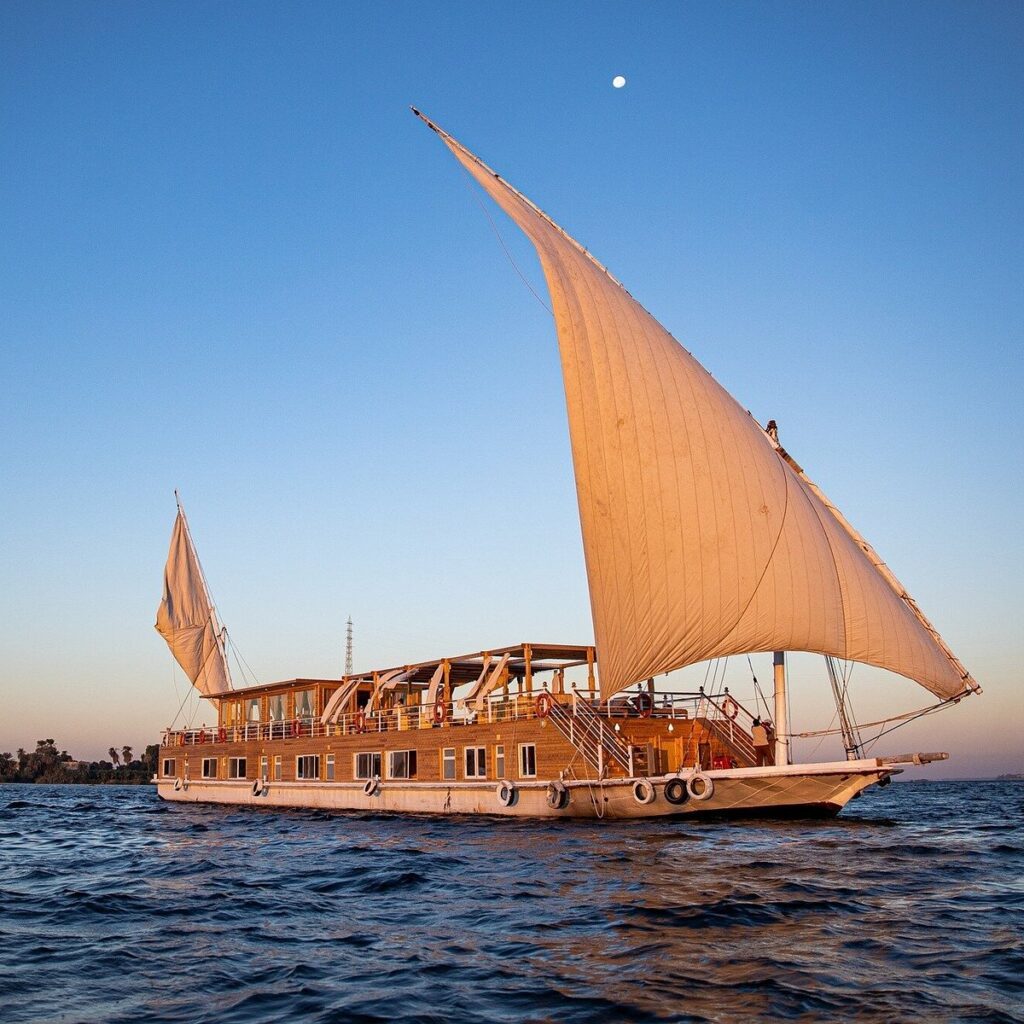
- 4.00–5.45pm: A felucca on the Nile, often to Banana Island and back, timed to catch sunset over the West Bank hills.
- 6.00–7.15pm: Luxor Museum. A small, beautifully lit collection including the Luxor Cache statues found under Luxor Temple in 1989. Evening opening hours vary, so check.
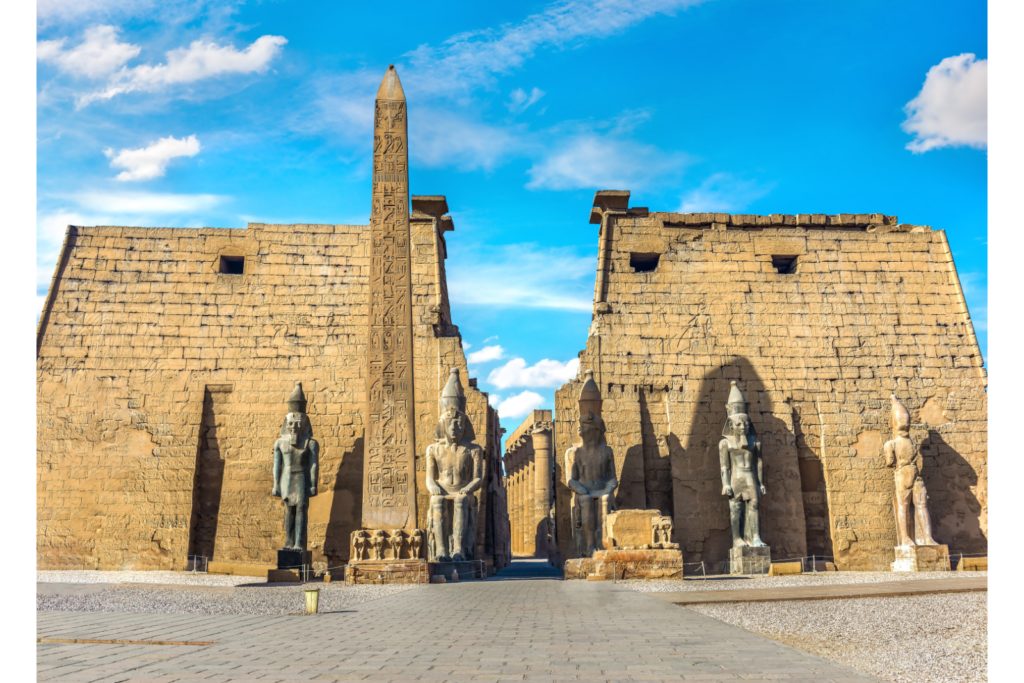
- 7.30–8.45pm: Luxor Temple, 1.5 km south along the Corniche, floodlit after dark.
Day 2: balloon at sunrise, then the West Bank
Fly at dawn, land on the West Bank, and you are already where you need to be for the Valley of the Kings. The afternoon is saved for Medinet Habu, whose reliefs glow in the late sun.
| Time | What you do | Notes |
|---|---|---|
| 5.00am | Hotel pickup for the hot-air balloon | Boat across the Nile, tea, then the launch field |
| 6.00–7.00am | Flight over the West Bank | Usually 45 minutes to an hour in the air; weather can cancel flights |
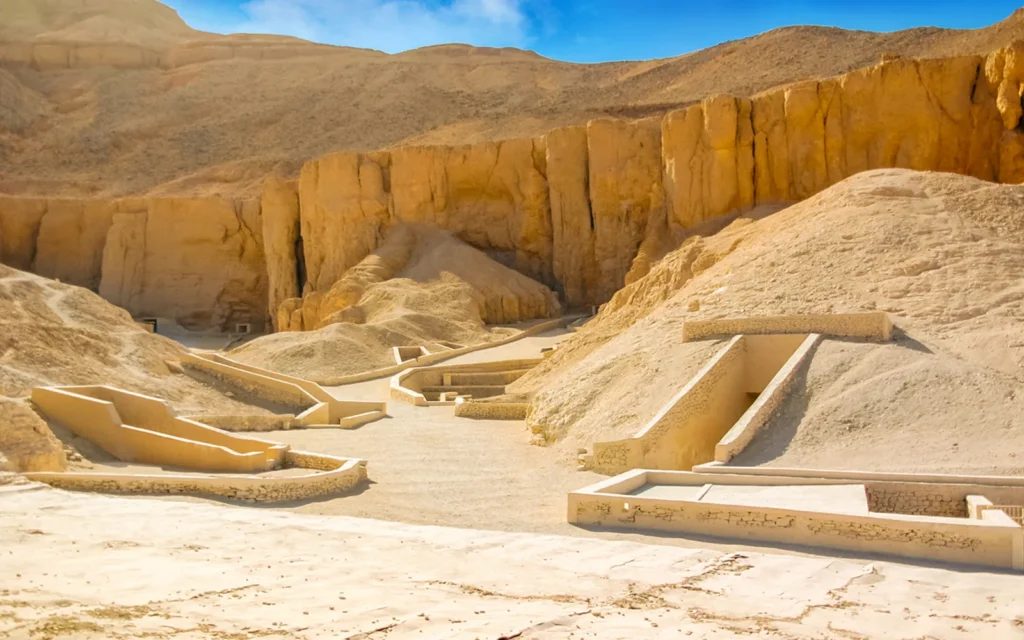
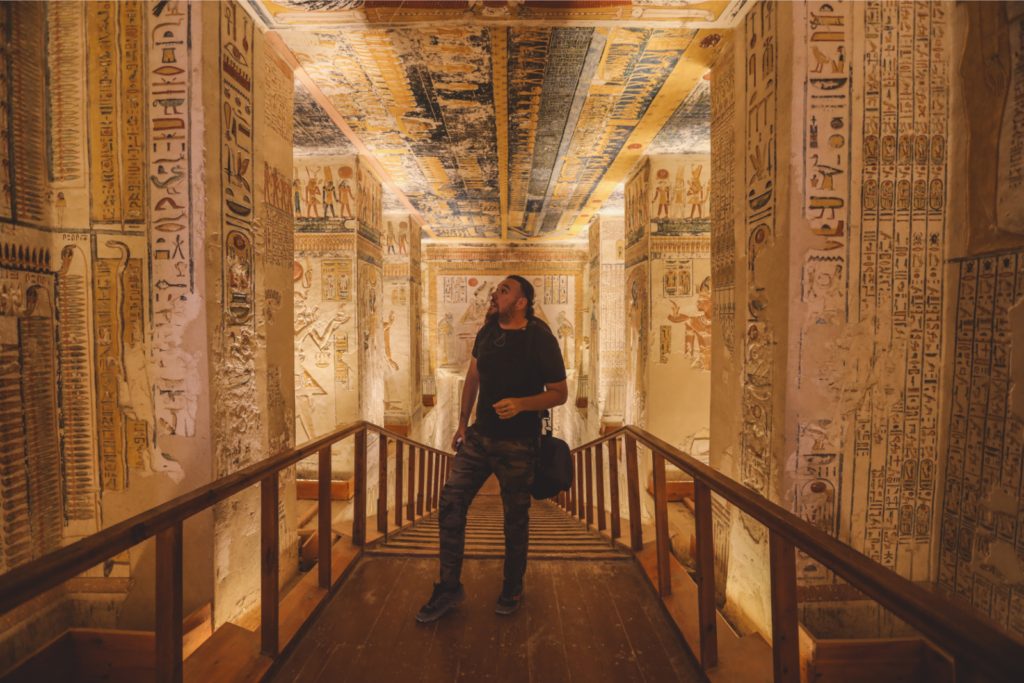
| 7.45–10.00am | Valley of the Kings | Three standard tombs plus Tutankhamun or Seti I |
| 10.15–11.15am | Temple of Hatshepsut | 10 minutes by car; hot by now, so keep it brisk |
| 11.30am–3.00pm | Lunch and rest | On the West Bank, or back at the hotel (30 minutes) |
| 3.15–4.45pm | Medinet Habu | Painted second court and the Sea Peoples reliefs, side-lit in late afternoon |
| 5.00pm | Colossi of Memnon | A five-minute stop on the way back |
If you would rather sleep in, skip the balloon and start at the Valley of the Kings at 6am; you will then have time for Deir el-Medina, the tomb-builders' village, before lunch.
Why split Luxor by bank rather than by highlight?
Because crossing the Nile costs 30 minutes each way by road, and splitting the banks removes two crossings and lets you visit each site at its best time of day.
The road route crosses the Luxor bridge about 7 km south of the town centre, so any back-and-forth adds up. On this plan, day one never leaves the East Bank, and on day two the balloon delivers you to the West Bank, so you cross once in the morning by boat and once in the evening by road. It also matches the light: Karnak is best at opening, Luxor Temple after dark, the Valley of the Kings early, and Medinet Habu and the Ramesseum late in the afternoon. Our where to stay in Luxor guide explains when a West Bank hotel makes more sense.
What does two days still leave out?
Nefertari's tomb, the Tombs of the Nobles, the Ramesseum, and the day trips to Dendera and Abydos. These are what a third day is for.
- The Valley of the Queens holds the tomb of Nefertari, wife of Ramesses II, with the finest surviving paintings in Egypt. Visits are timed and need a premium ticket.
- The Tombs of the Nobles show daily life, banquets and harvests rather than the afterlife journeys of the royal tombs.
- Dendera and Abydos are a full day north of Luxor.
The three-day plan builds around these in a different sequence. If you are cruising, remember that ships usually include Karnak, Luxor Temple and the Valley of the Kings, so two extra days on land can go straight to everything else.
How does a Nile cruise change a two-day Luxor plan?
If you are joining or leaving a cruise in Luxor, build your two days around what the ship already covers, and use them for everything it does not. Most four-night Luxor to Aswan cruises spend their Luxor time on Karnak, Luxor Temple, the Valley of the Kings, Hatshepsut's temple and the Colossi of Memnon, often in a single long day with a large group.
For cruise passengers, two extra days in a Luxor hotel before sailing could look like this. Day one: the balloon at sunrise, then Medinet Habu, Deir el-Medina and the Ramesseum, none of which most ships visit. Day two: the Valley of the Queens and Nefertari's tomb in the morning, then the Luxor Museum and a felucca in the late afternoon before boarding. You then see Karnak and the Valley of the Kings with the ship's guide and lose nothing by having done the quieter sites first.
Cruise departure days are fixed by each ship, usually on set days of the week, so plan your Luxor nights around the sailing date rather than the other way round. Our Nile cruises guide explains how the standard itineraries run, and which direction to cruise affects whether your free Luxor days fall before or after the ship.
Practical tips for two days in Luxor
Book the balloon a day or two ahead with a reputable licensed operator, use one car and guide for both days, and keep cash in small Egyptian pound notes for boats and tips.
- Felucca prices are agreed per boat and per hour, not per person; settle the price, duration and destination before you board.
- Balloon flights are cancelled in high wind, more often in spring. Put the balloon on day two as here, and if it is cancelled, many operators will rebook for the next morning if your schedule allows.
- Time of year. From October to April, the plan works as written. From May to September, cut the Avenue of Sphinxes walk and move Medinet Habu as late as closing allows.
- Getting there and on. Luxor is about 1 hour 5 minutes by air from Cairo, around 3 hours by road to Aswan, and about 4 hours to Hurghada. See domestic flights in Egypt and the Cairo to Luxor sleeper train.
Frequently asked questions
Is two days enough in Luxor?
Two days is enough for the main sights on both banks plus a balloon flight and felucca. Add a third day for Nefertari's tomb, the Tombs of the Nobles or a trip to Dendera and Abydos.
Should I do the balloon on my first or second morning?
Ideally the second, as in this plan: it lands you on the West Bank ready for the tombs, and if wind cancels the flight you may still have a fallback morning on a longer stay.
Can I see the Valley of the Kings and the Valley of the Queens on the same day?
Yes, but with a balloon and Medinet Habu it becomes too much. On a two-day trip, choose; on three days you can give the Valley of the Queens its own morning.
Is it better to stay on the East Bank or West Bank in Luxor?
For two days, the East Bank is more convenient for Karnak, Luxor Temple, the museum and restaurants. The West Bank is quieter and better for longer stays focused on the tombs.
Do I need a guide in Luxor?
A private Egyptologist is strongly recommended. Guides cannot speak inside the tombs, but they brief you before you enter and make sense of the temple reliefs.