Quick answer
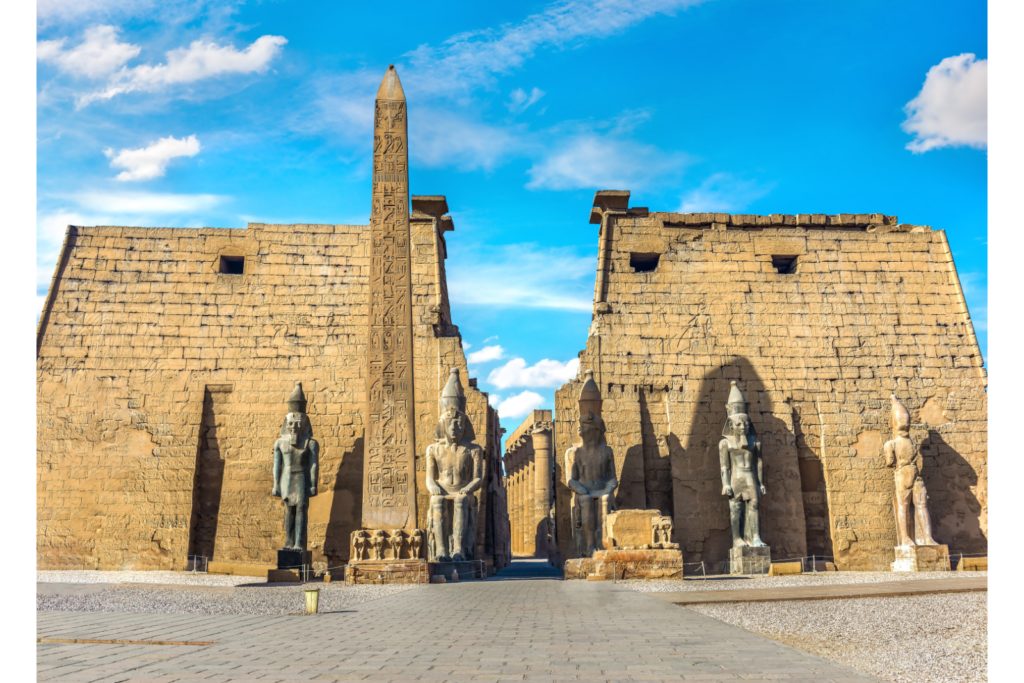
Three days in Luxor lets you go deeper rather than faster. Spend day one on the West Bank with a balloon, the Valley of the Kings, Hatshepsut's temple and the Tombs of the Nobles; day two on a road trip north to the Temple of Seti I at Abydos and the Temple of Hathor at Dendera; and day three on a slow East Bank day at Karnak and Luxor Temple, with the Valley of the Queens as an alternative.
What does a third day in Luxor add?
A third day turns Luxor from a highlights tour into a proper exploration: it adds the Tombs of the Nobles, the day trip to Abydos and Dendera, and a slower pace at Karnak. It suits history lovers, photographers, travellers who are not cruising and so need Luxor to carry more of the trip, and anyone who has visited before.
The sequence here is different from the one-day and two-day plans. It starts on the West Bank, while you are freshest for early starts and steep tomb corridors; puts the long road day in the middle, when you are rested; and ends with an unhurried East Bank day you can shape around your departure. The trade-off is that day two is long, around 11 hours door to door, and Medinet Habu and Nefertari's tomb become optional swaps rather than fixtures.
Day 1: the West Bank, from the balloon to the nobles' tombs
Fly at dawn, take the royal tombs and Hatshepsut in the morning, rest, then spend the late afternoon in the less-visited tombs of officials and at the Ramesseum.
- 5.00–7.00am: Hot-air balloon over the West Bank. If you prefer, skip it and arrive at the valley for 6am.
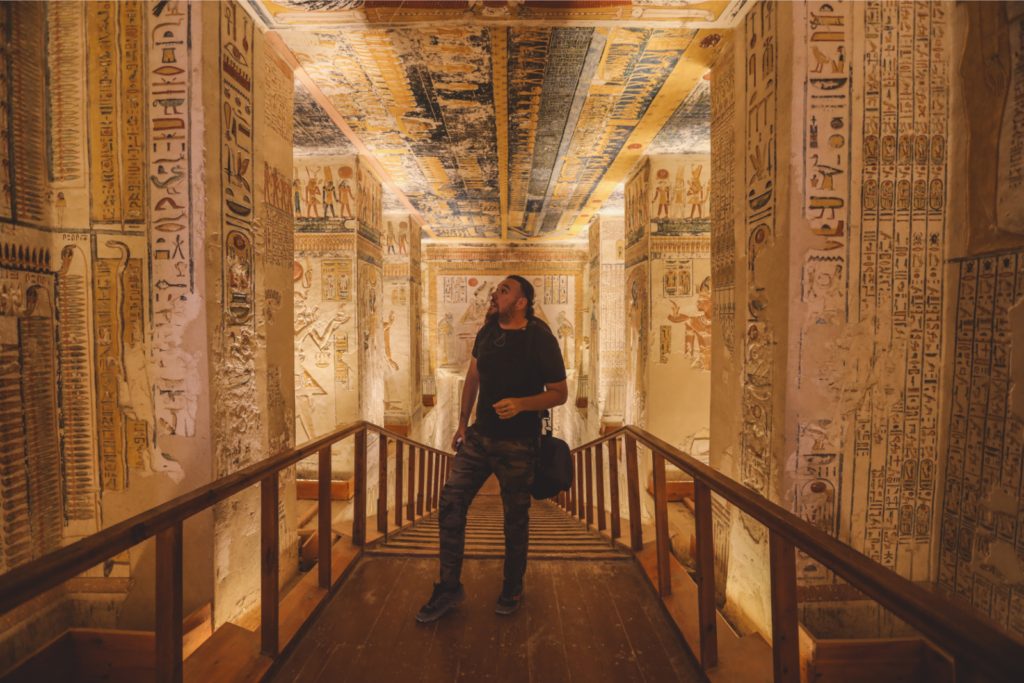
- 7.45–10.15am: Valley of the Kings. Three standard tombs plus Seti I, the longest and most richly decorated in the valley, at about 137 metres. With three days, this is the place to spend on the premium ticket.
- 10.30–11.30am: Temple of Hatshepsut, 10 minutes away. Look for the Punt expedition reliefs on the middle terrace.
- 11.45am–2.45pm: Lunch on the West Bank and a rest.
- 3.00–4.30pm: Tombs of the Nobles. Tickets are sold by small groups of tombs; the tombs of Ramose, Rekhmire, Nakht and Menna show harvests, banquets and craftsmen in colours that look freshly painted.
- 4.30–5.30pm: The Ramesseum, just below the hill, with the fallen colossus of Ramesses II, in the soft late light.
Day 2: Abydos and Dendera
Day two is a road trip north to two of the best-preserved temples in Egypt: Seti I's temple at Abydos, about 170 km away, and the Temple of Hathor at Dendera, about 60 km from Luxor, on the way back.
| Time | What you do | Drive |
|---|---|---|
| 7.00am | Leave Luxor with breakfast boxes | About 2.5–3 hours to Abydos |
| 10.00am–12.00pm | Temple of Seti I, Abydos: the seven chapels, the King List and the Osireion | |
| 12.00–1.00pm | Lunch near the temple | |
| 1.00pm | Drive south-east to Dendera | About 1.5–2 hours |
| 2.45–4.45pm | Temple of Hathor, Dendera: the restored blue ceilings, the roof chapels and the crypts | |
| 4.45pm | Return to Luxor | About 1–1.5 hours; back by about 6.15pm |
Abydos's reliefs are among the finest carved in the New Kingdom, and its King List names 76 of Seti's predecessors. Dendera, built mainly under the late Ptolemies and Romans, is the most complete temple in Egypt, with the cast of the zodiac on a roof chapel ceiling and a relief of Cleopatra VII and her son Caesarion on the rear wall. Road conditions and any security arrangements for this route change from time to time, so check with your operator; our day trips from Luxor guide covers the options.
Day 3: a slow day on the East Bank
After two big days, day three takes Karnak at your own pace, walks the processional way to Luxor Temple, and finishes at the museums along the Corniche.
- 7.00–10.30am: Karnak, including the precinct of Amun, the Sacred Lake and the Open-Air Museum with its 4,000-year-old White Chapel. With three and a half hours you can also walk to the less-visited southern pylons.
- Rest from about 11am to 4pm, or use the middle of the day for a cooking class or a long lunch.
- 4.30pm: Walk the Avenue of Sphinxes, or the southern half of it, towards Luxor Temple as the heat goes out of the day.
- 5.30–6.30pm: Luxor Temple at dusk, when the floodlights come on.
- 7.00pm: Mummification Museum, a few minutes' walk north on the Corniche, or the larger Luxor Museum 1.5 km further on.
If you are flying out, this day is easy to cut short: everything is within 20 minutes of Luxor airport.
Which swaps make sense for a three-day Luxor stay?
The two most popular swaps are the Valley of the Queens and Medinet Habu instead of the nobles' tombs on day one, or Esna and Edfu to the south instead of Abydos and Dendera on day two.
- Nefertari first. Replace the afternoon of day one with the Valley of the Queens and Nefertari's tomb, where visits are limited to about 10 minutes on a premium ticket, followed by Medinet Habu at about 4pm. The Valley of the Queens is usually best visited earlier in the day, so you may want to move Hatshepsut to the afternoon.
- South instead of north. Esna, about an hour away, has a recently cleaned Roman hall with painted astronomical ceilings; Edfu is another hour or so beyond. This is a shorter day (about 8 hours) but skip it if you are cruising, as most ships stop at both.
- A rest day. Families and older travellers may prefer to drop day two altogether and spread the West and East Banks over three easier days.
How do the one, two and three-day Luxor plans compare?
Each plan uses a different sequence, not just more days: one day crosses the river twice, two days gives each bank its own day, and three days adds a road trip north and moves the slow East Bank day to the end.
| Plan | Sequence | Adds | Best for |
|---|---|---|---|
| One day | West Bank at dawn, rest, East Bank at dusk | The four headline sites only | Day trips, a single night between flights |
| Two days | East Bank day, then balloon and West Bank | Balloon, felucca, Luxor Museum, Medinet Habu | Land-based trips, cruise add-ons |
| Three days (this page) | West Bank, Abydos and Dendera, slow East Bank | Seti I, the Tombs of the Nobles, the Ramesseum, Abydos, Dendera | History lovers, repeat visitors, photographers |
If none of these fits exactly, the plans mix well: the two-day plan's East Bank day can replace day three here, for example, if you want the felucca and the Luxor Museum rather than a long morning at Karnak.
Practical notes for three days in Luxor
Consider a West Bank hotel for the first night if you are taking the balloon, keep one guide for all three days, and check the Luxor Pass.
Three days of tickets can add up, especially with Seti I and Nefertari. The Luxor Pass covers most state-run sites over several consecutive days, and the premium version includes Nefertari and Seti I; it is bought in person with your passport and a photo and is priced for foreigners, so check the current price on egymonuments.gov.eg and compare it with what you plan to see. For a quieter base near the tombs, the West Bank has small hotels among the sugar-cane fields; the East Bank has the Corniche, the big hotels and most restaurants. See where to stay in Luxor.
For Australians and New Zealanders arriving after a long-haul flight, schedule this plan after at least a night in Cairo: day one starts at 5am, and day two is a long time in a car. And if you are deciding between Luxor and Aswan for a land-based stay, our Luxor vs Aswan comparison will help.
Frequently asked questions
Is three days in Luxor too much?
No. Luxor has more major monuments than anywhere else in Egypt, and three days still leaves sites unseen. If you are not a keen history traveller, two days plus a rest day is a good alternative.
Is the Abydos and Dendera day trip worth it?
Yes, for anyone interested in temple art: Abydos has some of the finest New Kingdom reliefs and Dendera is Egypt's most complete temple. It is a long day of about 11 hours, mostly in a car.
Can I see Dendera and Abydos on a Nile cruise?
Standard Luxor to Aswan cruises do not go there; some longer cruises between Luxor and Dendera do. From Luxor, a private day trip by road is the usual way.
Should I buy the Luxor Pass for three days?
Possibly, if you plan to see many sites including Seti I and Nefertari. Price it against individual tickets on egymonuments.gov.eg before you go, as prices change.
When is the best time of year for three days in Luxor?
October to April, when daytime temperatures are usually in the 20s. From May to September, keep this plan but finish outdoor sightseeing by about 11am each day.