Quick answer
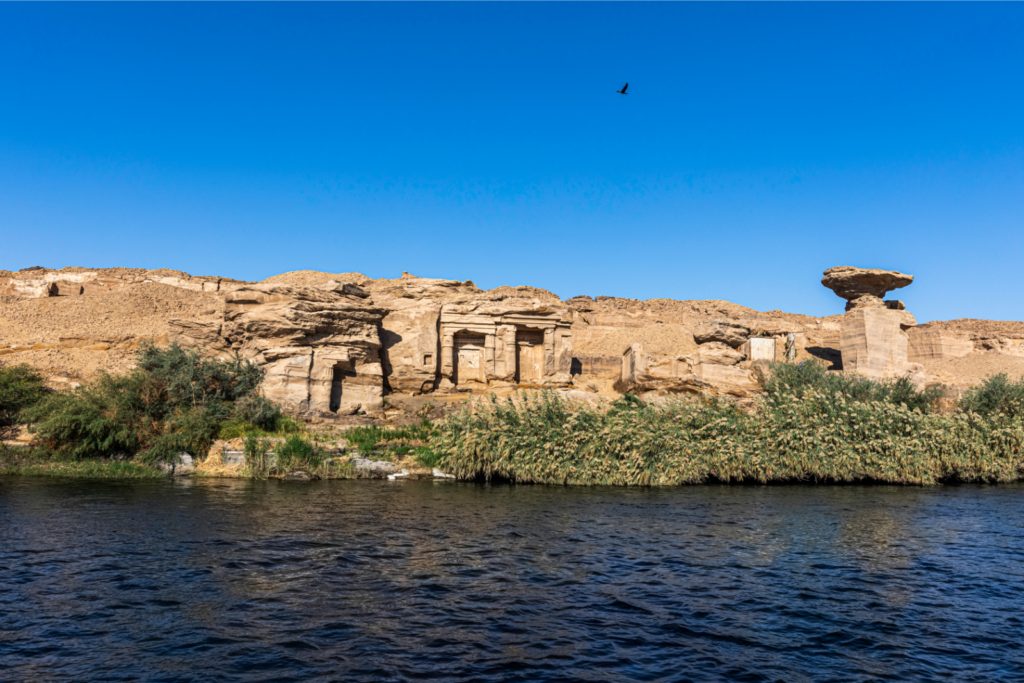
The Temple of the Oracle of Amun is a 6th-century BC temple on the rock of Aghurmi, about 4 km east of Siwa town, where Alexander the Great consulted the god in 331 BC. Its oracle was famous across the Greek world. Allow about an hour for the temple, the ruined mud-brick village around it and the nearby Temple of Umm Ubayda.
What was the Oracle of Amun?
It was a shrine where the god Amun was believed to answer questions, and by the 6th century BC it was one of the most respected oracles in the ancient Mediterranean, on a par with Delphi. The temple you visit was built under Ahmose II, the 26th-Dynasty pharaoh the Greeks called Amasis, on a natural rock outcrop that also held Aghurmi, the old fortified village of the oasis.
Greeks knew the god as Zeus Ammon, a form of the Theban god Amun with a ram's head and curling horns; our guide to Amun explains how his cult spread. Answers were given through the god's sacred image. According to the Roman historian Curtius, it was a stone object studded with emeralds and gems, carried in a gilded boat by priests whose movements revealed the god's reply.
Why did Alexander the Great come here?
Alexander made the hard desert crossing in 331 BC, soon after founding Alexandria, to consult the oracle, and came away being hailed as the son of Zeus Ammon. He followed the coast west to Paraetonium, today's Marsa Matruh, then turned south across roughly 300 km of desert, much the same line as the modern road. Ancient writers say the party ran short of water and were saved by rain, and that they were guided by two snakes (according to Ptolemy) or two ravens (according to Aristobulus).
What Alexander asked is unknown: he reportedly said only that he had heard what he wished, and promised to tell his mother in person. Plutarch adds that the priest, greeting him in Greek, said "O paidion" ("my son") but slipped into "O pai Dios" ("son of Zeus"). Coins struck after his death show him with Ammon's ram horns. For the wider story of his time in Egypt, read Alexander the Great in Egypt.
Who else consulted the oracle?
Herodotus records that King Croesus of Lydia tested the oracle in the 6th century BC, and Greek generals, poets and city-states sent envoys for the next 200 years. The Spartan commander Lysander is said to have visited, and the poet Pindar wrote a hymn to Ammon.
The oracle also features in the desert's most famous mystery. Herodotus says that in about 524 BC the Persian king Cambyses, ruling Egypt, sent an army of 50,000 men from Thebes to destroy it, and that the whole force vanished in a sandstorm. No convincing trace has ever been found. By Roman times the oracle's fame had faded, and the temple slipped into obscurity.
What can you see at Aghurmi today?
You climb a ramp through the ruins of the old village to the temple at the top of the rock, which keeps its courtyard, halls and sanctuary in pale limestone.
- The ruined village: collapsed kershef houses, the remains of the old gate and a small mosque with a mud-brick minaret, a smaller cousin of Shali Fortress in town.
- The sanctuary: the inner room where the oracle was given, with traces of carved decoration. Beside it a narrow corridor runs parallel to the sanctuary wall; some scholars think a priest could stand there to listen to, or speak for, the god.
- The ancient well: a deep shaft cut into the rock that once supplied the village during sieges.
- The view: from the top you see palm gardens, the shine of Lake Aghurmi and the ridge of Gebel Dakrour.
Don't miss the Temple of Umm Ubayda
A short drive or walk south of the rock stands a single carved wall, all that survives of a second temple to Amun built by Nectanebo II, Egypt's last native pharaoh, in the 4th century BC. Early European travellers described it largely intact, but in the late 19th century a local official blew much of it up for building stone. The remaining wall still shows rows of hieroglyphs and figures of the gods, and it is likely Alexander walked between the two temples during his visit. It takes ten minutes and is usually included on the same ticket; check on site.
How do you visit the Oracle Temple?
Aghurmi is 4 km east of Siwa town, 10 minutes by car or about 20 minutes on a hired bicycle along a flat road through the palms. Donkey carts can also be hired in town. The site is open in daylight hours; buy your ticket at the entrance and check current details on egymonuments.gov.eg.
Come in the late afternoon for warm light on the stone and sunset views, or first thing in the morning to have it almost to yourself. Pair it with a swim at nearby Cleopatra's Spring, a few minutes away. The ramp and steps are uneven, so wear proper shoes.
Temple of the Oracle of Amun: FAQs
Did Alexander the Great really visit Siwa?
Yes. His visit in the winter of 332–331 BC is recorded by several ancient historians, including Arrian and Plutarch, drawing on accounts by men who travelled with him.
What did the oracle tell Alexander?
No one knows. Alexander kept his questions and answers private, but he was greeted as the son of Zeus Ammon, an idea he embraced for the rest of his life.
How far is the Oracle Temple from Siwa town?
About 4 km east, around 10 minutes by car or 20 minutes by bicycle.
Do I need a ticket for the Oracle Temple?
Yes, tickets are sold at the entrance. Check current prices and hours on egymonuments.gov.eg before you go.
Is Alexander the Great buried at Siwa?
There is no evidence for it. Ancient sources say he wished to be buried at Siwa, but his body was taken to Memphis and then Alexandria. Claims of an Alexander tomb at Siwa have not been accepted by archaeologists.