Quick answer
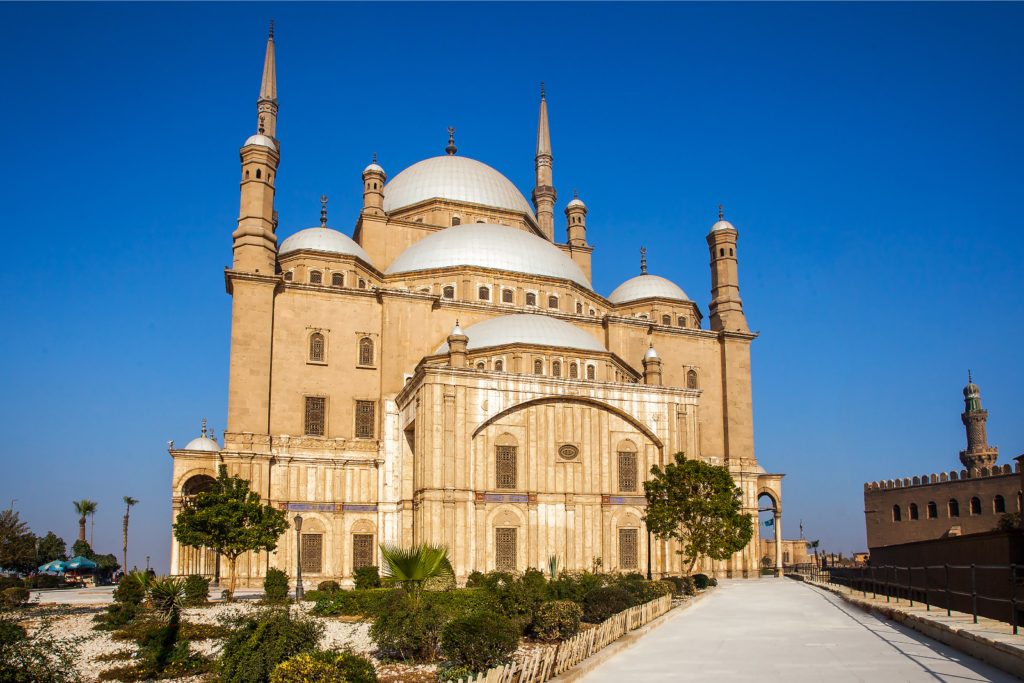
The Citadel of Saladin is a walled fortress on a spur of the Muqattam Hills, begun by Salah al-Din in 1176 and the seat of Egypt's rulers for almost 700 years. Most visitors come for the domed Ottoman-style Mosque of Muhammad Ali and the terrace view over Islamic Cairo; allow two to three hours to add the Mamluk mosque of al-Nasir Muhammad and the museums.
What is the Citadel of Saladin?
It is a medieval hilltop fortress, started by Salah al-Din (Saladin) in 1176 to defend Cairo against the Crusaders, that served as the palace and seat of government of Egypt until the 1870s. Saladin's walls and towers enclose two large compounds: the southern enclosure, where the main mosques and terraces are, and the northern enclosure, which holds the military museum. His nephew al-Kamil was the first ruler to live here, and Mamluk sultans and Ottoman governors added palaces, mosques and barracks over the following centuries.
The Citadel's last great builder was Muhammad Ali Pasha, who ruled Egypt from 1805 to 1848. In 1811 he invited the leading Mamluk emirs to a banquet here and had them killed in the narrow sunken lane below Bab al-Azab, ending Mamluk power. He then rebuilt much of the southern enclosure in an Ottoman style, which is why the fortress's skyline today is Istanbul rather than medieval Cairo. For how the Citadel fits into a thousand years of the city's story, see our history of Islamic Cairo.
What should you see inside the Citadel?
Start with the Mosque of Muhammad Ali and its terrace, then see the older Mosque of al-Nasir Muhammad opposite, and finish at the museums if you have time.
- Mosque of Muhammad Ali: built 1830–1848 by the Greek architect Yusuf Bushnaq and modelled on the imperial mosques of Istanbul. It is often called the Alabaster Mosque for the alabaster cladding on its lower walls. Inside, a huge central dome is ringed by four half-domes and hung with circular lamp frames; Muhammad Ali's marble tomb is on the right as you enter. Its two pencil minarets, each over 80 metres, are the most visible landmark on the Cairo skyline.
- The clock tower: in the courtyard, a gift from King Louis-Philippe of France in the 1840s, given in exchange for the obelisk from Luxor Temple that now stands in Paris's Place de la Concorde. It is famous for having barely worked.
- Mosque of al-Nasir Muhammad: a Mamluk mosque of 1318, rebuilt in 1335, with a courtyard of recycled ancient columns and two minarets topped with green faience tiles. It is quieter and, to many eyes, more beautiful than its famous neighbour.
- Mosque of Suleiman Pasha: in the northern enclosure, built in 1528 and the first mosque in Cairo designed in the Ottoman style, with a painted interior and a small pointed minaret.
- Joseph's Well (Bir Yusuf): a well shaft cut down through the rock in Saladin's time to supply the fortress with water. It is not always open to visitors.
Are the military and police museums worth seeing?
They are worth half an hour if you are interested in modern Egyptian history or have children with you, but most visitors can skip them on a short stay. The National Military Museum occupies the Harem Palace that Muhammad Ali built in the northern enclosure, and its painted ceilings and staircases are as interesting as the uniforms, weapons and dioramas of battles from the pharaohs to the 1973 war.
The small Police Museum, on the terrace near the al-Nasir Muhammad mosque, has displays on notable Egyptian crimes and a historic prison cell. Its best feature is the terrace outside, which looks down on the Mosque-Madrasa of Sultan Hassan. A carriage museum has also displayed royal carriages, though which museums are open changes, so check on the day.
Where is the best view from the Citadel?
The terrace on the western side of the Mosque of Muhammad Ali gives the classic panorama over Islamic Cairo, and on a clear day you can pick out the Giza pyramids about 15 km away. Directly below are the Mosque-Madrasa of Sultan Hassan and the Al-Rifa'i Mosque, and beyond them a forest of minarets running towards Al-Azhar and the Nile.
Clear days are most common in winter, from November to February, after rain or wind has cleared the haze. In late spring the khamsin wind can fill the sky with dust. Photographers should come in the morning, when the light is behind them for the city view; in the late afternoon the sun sits low over the pyramids and the city turns gold but hazy.
How long do you need, and when should you go?
Allow one and a half hours for the Mosque of Muhammad Ali and the terrace, and two to three hours to see the whole Citadel. It opens in the morning and closes in the late afternoon; opening hours change, so check current times on egymonuments.gov.eg, where tickets can also be checked. One ticket covers the enclosure, its mosques and the museums at the time of writing.
Weekday mornings are the quietest. The Citadel is busy with Egyptian school groups and families on Fridays and holidays, and the mosques close to visitors at Friday midday prayers. Dress for a mosque visit: shoulders and knees covered, and women should carry a scarf. Shoes come off at the Muhammad Ali mosque door; our what to wear in Egypt guide has more.
How do you get to the Citadel, and what can you combine it with?
Come by taxi or private car; it is 15–30 minutes from downtown and Zamalek and 45–75 minutes from Giza hotels, and the car park is by the main gate off Salah Salem Road. There is no convenient metro station. The Citadel works well as the first stop of an Islamic Cairo afternoon: walk or drive ten minutes down the hill to Sultan Hassan and Al-Rifa'i, then go on to Al-Muizz Street and Khan el-Khalili for the evening.
Many private tours, including our Cairo and Pyramids stopover, combine the Citadel with Saqqara or Dahshur in the morning. If you would rather end the day with the same view at sunset, Al-Azhar Park looks back at the Citadel from across Salah Salem Road.
Citadel of Saladin: FAQs
Why is it called the Alabaster Mosque?
The Mosque of Muhammad Ali is clad in alabaster on its lower walls and in parts of the courtyard, so it is widely known as the Alabaster Mosque.
Can you go inside the Mosque of Muhammad Ali?
Yes, outside prayer times. Remove your shoes at the entrance, cover shoulders and knees, and women should cover their hair. It closes to visitors during Friday midday prayers.
Can you see the pyramids from the Citadel?
On a clear day, yes. The pyramids are about 15 km to the south-west and are most often visible on winter mornings after wind or rain has cleared the haze.
Is the Citadel of Saladin worth visiting?
Yes. It combines Cairo's most famous mosque, a Mamluk mosque many visitors miss and the best fortress view of the medieval city, and it sits next to Sultan Hassan, so it fits easily into an Islamic Cairo day.
How long should I spend at the Citadel?
About 1.5 hours for the Mosque of Muhammad Ali and the terrace, or 2–3 hours if you add the al-Nasir Muhammad mosque and the museums.