Quick answer
Egypt and Jordan combine easily: a direct flight from Cairo to Amman takes about 1.5 hours. Allow two weeks, about 8–9 days in Egypt for Cairo, a Nile cruise and Abu Simbel, and 5–6 days in Jordan for Petra, Wadi Rum and the Dead Sea. The best time for both is March–April or October–November, and travellers from Australia and New Zealand need a visa for each country.
Is it worth combining Egypt and Jordan?
Yes. For travellers flying from Australia or New Zealand, adding Jordan to Egypt turns one long-haul trip into the great journey of the ancient Middle East, with the pyramids and the Nile temples in Egypt, then Petra, Wadi Rum and the Dead Sea in Jordan, only a short flight apart.
The two countries feel quite different. Egypt is the Nile valley, vast pharaonic temples and the energy of Cairo; Jordan is highlands, desert and Nabataean, Roman and biblical sites, with smaller distances and a quieter pace. Most travellers find each makes the other more memorable.
How do you get from Egypt to Jordan?
Fly. A direct flight from Cairo to Amman takes about 1.5 hours and, at the time of writing, is operated by Royal Jordanian and EgyptAir several times a day. It's the quickest and most reliable option and lets you start Jordan in Amman, close to Jerash, Madaba and the King's Highway.
- Flying to Aqaba: there are fewer flights, but Aqaba is only about an hour from Wadi Rum, so it suits itineraries that start Jordan in the south.
- Ferry from Nuweiba to Aqaba: crosses the Gulf of Aqaba from Sinai, but schedules are irregular and delays are common. We only recommend it if you're already in Sinai and have flexible time.
Many Gulf carriers fly to both Cairo and Amman, so you can also fly into one and home from the other on an open-jaw ticket, which saves backtracking. See our flights from Australia to Egypt guide.
How many days do you need for Egypt and Jordan?
Two weeks is the sweet spot: about 8–9 days in Egypt and 5–6 days in Jordan.
| Trip length | Egypt | Jordan |
|---|---|---|
| 10–11 days | Cairo and Giza, fly to Luxor and Aswan, no cruise (6 days) | Petra, Wadi Rum, Dead Sea (4–5 days) |
| 14 days | Cairo, GEM, 4-night Nile cruise, Abu Simbel (8 days) | Jerash, Mount Nebo, Petra, Wadi Rum, Dead Sea (6 days) |
| 16–18 days | Add Alexandria or the Red Sea (10–11 days) | Add Amman, Dana or Aqaba (6–7 days) |
Less than ten days in total tends to feel rushed, because each country has at least one full day of travel. Our 14-day Egypt and Jordan tour follows the two-week plan above.
What does a two-week Egypt and Jordan itinerary look like?
A balanced 14-day itinerary spends three nights in Cairo, four on a Nile cruise, then six in Jordan.
- Days 1–3, Cairo: the Pyramids of Giza, the Sphinx, Saqqara and the Grand Egyptian Museum.
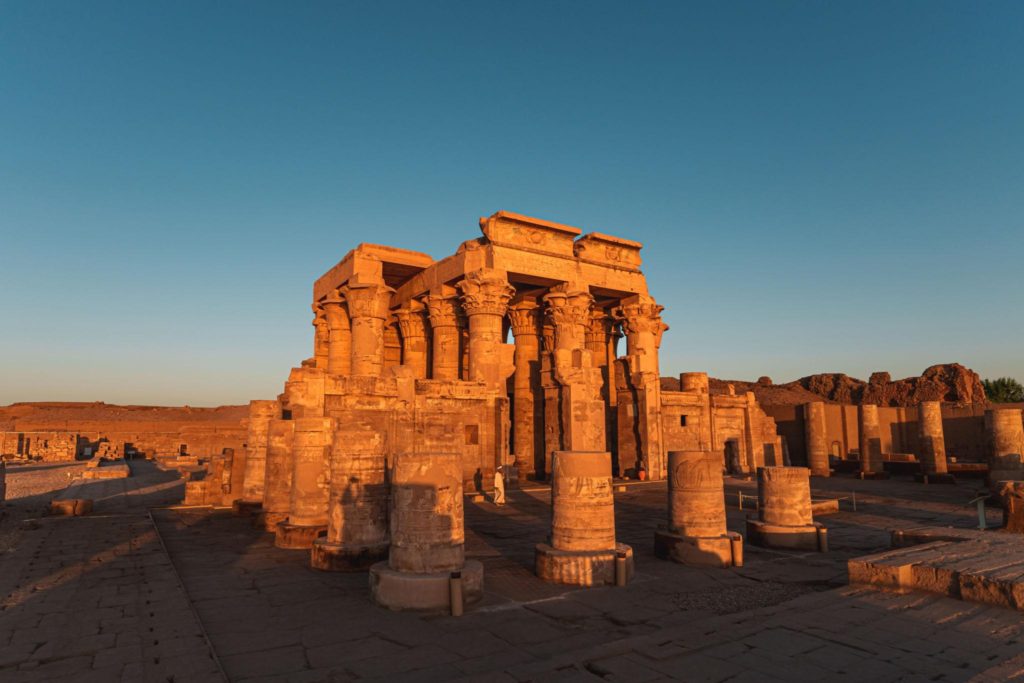
- Days 4–7, Nile cruise: fly to Luxor for Karnak and the Valley of the Kings, then cruise to Aswan via Edfu and Kom Ombo.
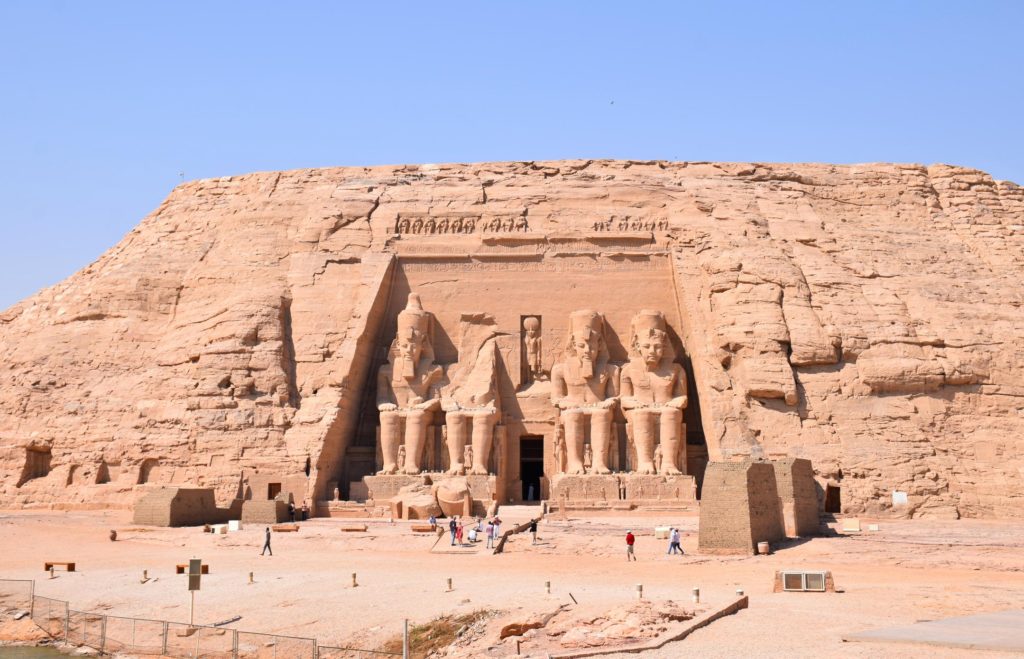
- Day 8, Abu Simbel: an early drive or flight to Abu Simbel, then fly to Cairo.
- Day 9, Amman and Jerash: fly to Amman and visit the Roman city of Jerash, about 50 minutes north.
- Day 10, King's Highway: Madaba's mosaic map, Mount Nebo and Kerak Castle on the way to Petra.
- Days 11–12, Petra and Wadi Rum: a full day in Petra, then Little Petra and a night in a Wadi Rum desert camp.
- Days 13–14, Dead Sea: float in the Dead Sea, then fly home from Amman, about an hour away.
For a full day-by-day plan, see Egypt and Jordan in 14 days.
Should you visit Egypt or Jordan first?
It usually doesn't matter, so let flight times decide; we often plan Egypt first because it has more to see and you have the most energy at the start. Finishing in Jordan also means ending with the Dead Sea, a relaxing last day before the long flight home. Going the other way makes sense if your best flights land in Amman, or if you want to finish with a Nile cruise or Red Sea beach time in Egypt.
What visas do you need for Egypt and Jordan?
Australians and New Zealanders need a visa for both countries; at the time of writing both are available online or on arrival.
- Egypt: an e-Visa from the official portal or a visa on arrival. If you will leave Egypt and come back, for example Egypt, then Jordan, then Egypt again, consider a multiple-entry visa. See Egypt visa for Australians.
- Jordan: a visa on arrival, or buy the Jordan Pass online before you go. The Jordan Pass covers the visa fee if you stay at least three nights, and includes entry to Petra and dozens of other sites; it usually costs less than the visa fee plus a single Petra ticket. Check current rules at jordanpass.jo.
Your passport should be valid for at least six months, with blank pages for both countries' stamps.
When is the best time to visit Egypt and Jordan?
March–April and October–November are the best months for a combined trip, when both countries are warm and dry but not hot. Egypt's best season runs from October to April, but Jordan's highlands are cooler: Amman and Petra sit roughly 800–1,100 metres above sea level, so winter nights are cold and it occasionally snows. In summer, Luxor, Aswan and the Dead Sea are very hot.
December to February still works if you pack warm layers for Jordan, and it is Egypt's peak season. Ramadan affects opening hours in both countries; see travelling during Ramadan and the best time to visit Egypt.
What are the highlights of Jordan?
Petra is the reason most people go, but Jordan rewards a few more days.
- Petra: the Nabataean city carved into rose-red rock, entered through the Siq gorge to the Treasury. Allow a full day, two if you like hiking; the climb to the Monastery is about 800 steps. Petra by Night runs on selected evenings each week.
- Wadi Rum: a protected desert of red sand and sandstone mountains, explored by 4x4 with Bedouin guides, with a night in a desert camp.
- The Dead Sea: the lowest point on land, roughly 430 metres below sea level, where the salty water lets you float effortlessly.
- Jerash: one of the best-preserved Roman cities in the region, about 50 minutes from Amman.
- Madaba and Mount Nebo: a 6th-century mosaic map of the Holy Land and the view Moses is said to have seen of the Promised Land.
- The Baptism Site: Bethany beyond the Jordan, traditionally where Jesus was baptised. See our guide to Christian sites in Egypt for the Egyptian side of the story.
- Aqaba: Jordan's short Red Sea coast, with good diving and snorkelling, about an hour from Wadi Rum.
How do costs compare between Egypt and Jordan?
Jordan is generally more expensive than Egypt day for day, especially for hotels, meals and entry fees, while Egypt's biggest single costs are usually the Nile cruise and internal flights. The Jordanian dinar is a strong currency, so budget more per day in Jordan, and use the Jordan Pass to save on the visa and site entries. Cards are widely accepted in hotels in both countries, but carry some local cash for tips and small purchases. For Egypt, see our Egypt trip cost guide and tipping in Egypt.
Is it safe to travel to Egypt and Jordan?
Both countries receive large numbers of tourists, and their main sites are well organised and policed, but travel advice for the region can change quickly with events in neighbouring countries. Check the current advice for each country on Smartraveller (or SafeTravel for New Zealanders) when you plan and again before you go, and make sure your travel insurance covers both countries. Travelling privately, with guides and drivers who know the local situation, adds flexibility if plans need to change. Read is Egypt safe?
Frequently asked questions
How long is the flight from Cairo to Amman?
About 1.5 hours. At the time of writing, Royal Jordanian and EgyptAir fly the route several times a day.
How many days do I need for Egypt and Jordan?
Around two weeks: 8–9 days in Egypt and 5–6 days in Jordan. Ten or eleven days is possible but rushed.
Can you travel overland from Egypt to Jordan?
There is a ferry from Nuweiba in Sinai to Aqaba, but schedules are irregular. Flying from Cairo to Amman is quicker and more reliable.
Is the Jordan Pass worth it?
Usually, yes. It covers the Jordan visa fee if you stay at least three nights and includes Petra and many other sites, typically costing less than the visa plus one Petra ticket. Check jordanpass.jo for current rules.
How long should I spend in Petra?
One full day covers the main sights including the Monastery; two days allows extra hikes and a slower pace.
When is the best time to visit Egypt and Jordan?
March–April and October–November, when both countries are warm but not hot. Jordan's highlands are cold in winter.