Quick answer
You can travel to Egypt during Ramadan, and many travellers love it. Ramadan 2027 is expected to begin around 8 February 2027 and last about 30 days, with Eid al-Fitr expected around 9–10 March 2027. Sites, hotels and cruises operate normally, though opening hours may shorten and some services slow in the afternoon; evenings come alive with iftar feasts, lanterns and street life.
When is Ramadan in Egypt?
Ramadan follows the Islamic lunar calendar, so it moves about 11 days earlier each year; Ramadan 2027 is expected to begin around 8 February 2027 and end with Eid al-Fitr around 9–10 March 2027.
Exact dates are confirmed only shortly beforehand, when religious authorities announce the sighting of the new crescent moon, so the start can shift by a day. Looking further ahead, Ramadan is expected to fall from around late January in 2028, and in mid-January in 2029 – moving firmly into Egypt's peak winter season for the next several years.
| Year | Ramadan expected to begin | Eid al-Fitr expected |
|---|---|---|
| 2027 | Around 8 February | Around 9–10 March |
| 2028 | Around 28 January | Around late February |
All dates are approximate and depend on the moon sighting. Check closer to travel.
What changes in Egypt during Ramadan?
During Ramadan, most Egyptians fast from dawn to sunset, so daytime is quieter and slower, working hours shorten, and the country comes alive after sunset with iftar meals, family gatherings and late-night street life.
- Sites and museums: remain open. Hours at some sites may be shortened, often closing an hour or so earlier in the afternoon. The pyramids, the Grand Egyptian Museum and the major temples all operate.
- Restaurants and cafés: many local places close during the day and reopen for iftar. Hotel restaurants, cruise ships and tourist-area cafés keep serving.
- Alcohol: sales to Egyptians are restricted, and some bars close. Hotels and cruises generally still serve alcohol to foreign guests, sometimes with limitations.
- Traffic: Cairo's traffic peaks in the hour before sunset as everyone rushes home for iftar, then the streets fall eerily silent while families eat.
- Night life: from iftar until suhoor (the pre-dawn meal), Cairo buzzes. Cafés fill, families stroll, and Islamic Cairo and Khan el-Khalili glow with fanous lanterns.
What are the pros and cons of visiting Egypt during Ramadan?
Pros
- Atmosphere: streets hung with lanterns, generous public iftar tables (mawa'id al-rahman), and lively evenings you won't experience at any other time of year.
- Quieter sites: fewer domestic visitors during the day, and sometimes fewer international tourists.
- Cultural insight: sharing an iftar is one of the most memorable things you can do in Egypt.
- Weather: in 2027 and the following years, Ramadan falls in Egypt's mild winter season.
Cons
- Shorter hours: fewer hours at some sites, offices and shops.
- Slower service: fasting staff, especially in the late afternoon, can understandably be tired.
- Limited daytime dining outside hotels and tourist areas.
- Eid crowds and prices: the days of Eid al-Fitr are a national holiday, when Egyptians travel and resorts, trains and flights fill up.
How should tourists behave during Ramadan in Egypt?
Tourists aren't expected to fast, but you should avoid eating, drinking or smoking openly in the street during daylight, dress a little more modestly than usual, and be patient and considerate with people who are fasting.
- Eat and drink in hotels, restaurants, on your tour vehicle or discreetly away from crowds. Sipping water at a temple is fine; walking through a market with a sandwich is not.
- Dress conservatively, especially in Islamic Cairo and traditional neighbourhoods – see our what to wear in Egypt guide.
- Avoid public displays of affection and loud music.
- Greet people with "Ramadan Kareem" (generous Ramadan); the reply is "Allahu akram".
- If invited to an iftar, accept – and arrive on time, because everyone eats the moment the call to prayer sounds at sunset.
- Be generous with tips: Ramadan is a season of giving. See our tipping guide.
- Expect drivers and guides to stop briefly at sunset to break their fast with dates and water. Plan your itinerary around iftar.
What is iftar, and how can travellers experience it?
Iftar is the meal that breaks the fast at sunset, traditionally begun with dates and water or juice, followed by soup and a feast of family dishes; travellers can enjoy it at hotel Ramadan tents, local restaurants or, best of all, as a guest in an Egyptian home.
Typical iftar dishes include lentil soup, stuffed vine leaves, molokhia, roast meats and rice, with qamar al-din (apricot) and karkade (hibiscus) to drink. Desserts are a Ramadan highlight: kunafa, qatayef (stuffed pancakes) and basbousa. Many hotels set up Ramadan tents where guests and Egyptians enjoy iftar and late-evening sheesha. Later at night, suhoor is a lighter meal eaten before dawn, and in Cairo it's a social occasion in itself, with cafés open well past midnight. Your guide can arrange a home-hosted iftar on request.
What is Eid al-Fitr like in Egypt, and does it affect travel?
Eid al-Fitr is a three-day celebration marking the end of Ramadan; expect public holidays, closed government offices and banks, busy parks and Nile corniches, and high demand for Red Sea resorts, trains and domestic flights.
The morning starts with Eid prayers, followed by new clothes, family visits and kahk (sugar-dusted Eid biscuits). Most tourist sites remain open and are lively with Egyptian families – a wonderful time for people-watching, but crowded. If you plan to be on the Red Sea or at Alexandria over Eid, book early. Note that Egypt also has a second major holiday, Eid al-Adha, about 70 days after Eid al-Fitr; in 2027 it's expected around mid-May.
Does Ramadan affect Nile cruises and Red Sea holidays?
Very little – Nile cruise ships, dahabiyas and Red Sea resorts run normally during Ramadan, serving meals and drinks to guests as usual, and many add a special iftar dinner or Ramadan tent to their programme.
On a cruise, excursion times may be adjusted so the crew and guides can break their fast at sunset, and sightseeing usually starts early in the morning anyway. Resorts in Hurghada, El Gouna and Sharm el-Sheikh cater largely to international guests and feel much as they do the rest of the year, though entertainment may be toned down. The real change comes at Eid al-Fitr, when Egyptian families head to the coast and resort prices and occupancy rise sharply for several days. If your Red Sea stay overlaps Eid, book well ahead. See our Nile cruise guide and Red Sea guide.
How should you plan your days during Ramadan?
Sightsee from early morning to early afternoon, rest in the late afternoon, be somewhere comfortable for sunset, and save the evening for exploring when the streets are at their liveliest.
- Early morning: the best time for the pyramids, temples and tombs. Guides and drivers are freshest, and sites are cool and quiet.
- Midday to mid-afternoon: museums such as the Grand Egyptian Museum work well, as they're indoors and air-conditioned. Check closing times, which may be earlier than usual.
- Late afternoon: avoid long road transfers in the hour or two before sunset, when traffic is at its heaviest and drivers are tired and hungry. Schedule flights and train journeys for the morning where possible.
- Sunset: enjoy iftar at your hotel, a Ramadan tent or a restaurant. Book ahead – popular places fill up.
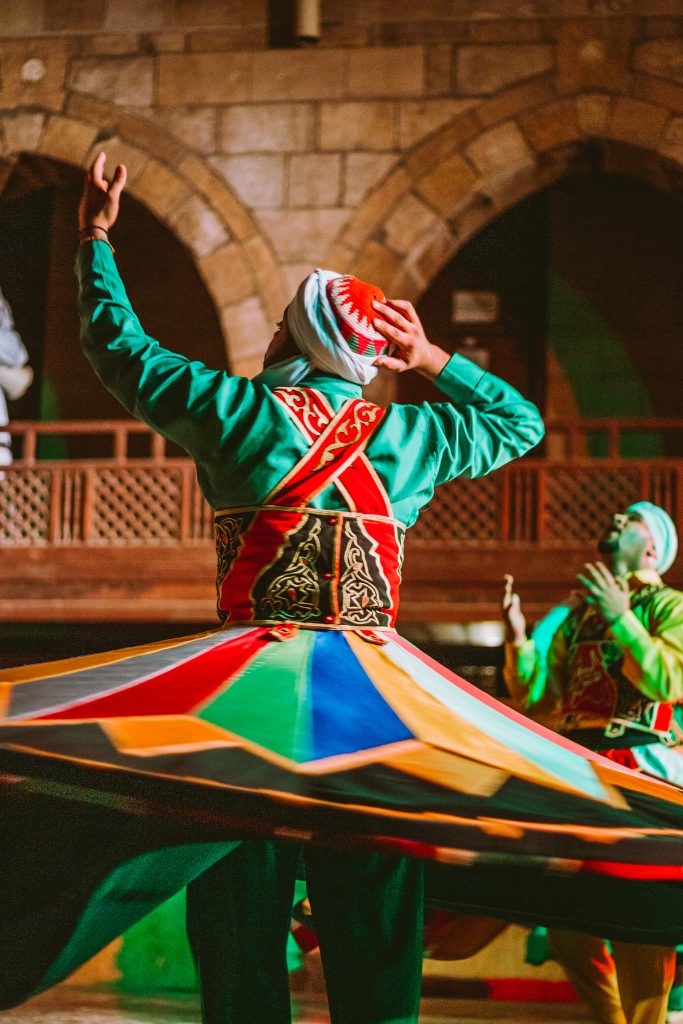
- Evening: stroll Al-Muizz Street and Khan el-Khalili in Islamic Cairo, where cafés stay open late, lanterns glow and Sufi music and tanoura (whirling) performances are often held. In Luxor and Aswan, the corniches fill with families after dark.
Shops and bazaars often close in the afternoon and reopen after iftar until late, so evening is the best time for shopping. Banks and government offices keep reduced hours, which matters only if you need to change money or handle paperwork – ATMs work as normal.
What are the sights and sounds of Ramadan in Egypt?
Ramadan in Egypt is famous for its colourful fanous lanterns, the sunset cannon and call to prayer, street-side charity tables, late-night cafés and special television drama series that families watch together after iftar.
The fanous – a lantern of coloured glass and tin, now often plastic and musical – has been a symbol of Ramadan in Egypt for centuries, and the lantern-makers' workshops near Bab Zuweila in Islamic Cairo are worth a visit in the weeks before the month begins. Streets, balconies and shops are strung with lights and bunting. In some neighbourhoods a mesaharati still walks the streets before dawn, beating a drum to wake people for suhoor. Volunteers hand out dates and water to drivers stuck in traffic at sunset – a gesture travellers often find deeply touching.
Is Ramadan a good time to visit Egypt?
For most travellers, yes – especially those interested in culture, as long as you plan around shorter afternoon hours and book Eid travel in advance.
Because Ramadan 2027 falls in February, you'll also enjoy ideal sightseeing temperatures of around 20–26°C in Luxor and Aswan. A private itinerary is the easiest way to travel during Ramadan, as your guide can adjust timings day by day, schedule sites for the morning and leave evenings free for the lantern-lit streets. Our Classic Egypt and Nile Cruise and Cairo stopover work beautifully in Ramadan. For month-by-month conditions, see our best time to visit Egypt guide, or tell us your dates.
Frequently asked questions
When is Ramadan 2027 in Egypt?
Ramadan 2027 is expected to begin around 8 February 2027 and last about 30 days, with Eid al-Fitr expected around 9–10 March 2027. Exact dates depend on the moon sighting.
Are tourist sites open in Egypt during Ramadan?
Yes. The pyramids, museums and temples stay open, although some may close earlier in the afternoon than usual.
Do tourists have to fast during Ramadan in Egypt?
No. Non-Muslim visitors aren't expected to fast, but you should avoid eating, drinking or smoking in public in daylight hours out of respect.
Can you drink alcohol in Egypt during Ramadan?
Alcohol is restricted during Ramadan, but many tourist hotels and Nile cruise ships still serve it to foreign guests. Some bars and liquor shops close for the month.
Is Egypt cheaper during Ramadan?
Sometimes slightly, as demand can dip, but Ramadan now falls in peak winter season, so don't count on big savings. Prices rise over Eid al-Fitr.
What should I say to people during Ramadan?
"Ramadan Kareem" or "Ramadan Mubarak" are warm greetings. At the end of Ramadan, say "Eid Mubarak".