Quick answer
Responsible travel in Egypt means spending where it reaches local people, choosing operators that treat animals and staff well, protecting monuments and reefs, and respecting a conservative culture. In practice: hire licensed local guides, eat and shop at family businesses, avoid rides on visibly mistreated animals, never touch tomb paintings or buy antiquities, and cut plastic and water use in one of the world's most water-stressed countries.
What does responsible travel mean in Egypt?
In Egypt, responsible travel is less about giving things up and more about choosing well: who you hire, where you eat and shop, which animals you ride, how you behave at monuments and reefs, and how you treat the people you meet. Tourism is one of the country's most important sources of jobs and foreign income, and in towns such as Luxor and Aswan whole families depend on it. That makes visitors' choices unusually powerful. The same money spent with a licensed local guide, a family-run restaurant and a well-kept stable does far more good than money spent on a commission-driven shopping stop or a mistreated carriage horse.
Egypt also carries pressures that travellers add to: water scarcity, plastic waste, crowding at a handful of famous sites and fragile tombs and reefs. None of this should put you off going. It should shape how you go. Every choice in this guide is easy to build into a private itinerary.
How do you make sure your money reaches local people?
Hire licensed Egyptian guides, eat in local restaurants, buy crafts directly from the people who make them and tip fairly; these four habits put most of your spending into local hands. Egypt's Egyptologist guides are university-trained and licensed, and a good one is the single best investment of any trip. Beyond the guide:
- Eat out at family-run restaurants and street-food stalls as well as hotel buffets; a plate of koshari or a fish lunch in a local place spreads money widely.
- Buy from makers: pottery in Tunis village in Fayoum, appliqué from the tentmakers of Cairo's Street of the Tentmakers, embroidery and dates in Siwa, baskets and beadwork from Nubian women around Aswan.
- Stay local where you can: Nubian guesthouses on Aswan's west bank and family eco-lodges in the oases keep income in the community.
- Decline commission stops you don't want; papyrus, perfume and alabaster "factories" pay drivers and guides to bring you. Our guide to factory stops explains how they work.
- Tip as part of wages: in Egypt, tips make up a real share of income for guides, drivers, boat crews and hotel staff. Our tipping guide gives fair amounts.
Haggle with good humour, but remember that the last few pounds matter far more to a stallholder than to you.
Should you ride camels, horses and carriages?
Riding a well-kept camel or horse is fine and supports families who have worked with animals for generations; the problem is the minority of overworked, underfed animals, so check before you climb on. At Giza, Luxor and Aswan, look for animals with good body weight, clear eyes, no sores under the saddle or harness, and access to shade and water. Walk away from any operator who whips hard or loads two adults onto a small horse, and tell your guide why. Avoid rides in the hottest hours of summer, when animals suffer most.
The British charity Brooke has run clinics for working horses, donkeys and camels in Egypt since the 1930s, and the best stables at Giza take visible pride in their animals. In Luxor, horse-drawn carriages (calèches) are a traditional way to get around; choose one with a healthy horse and agree the fare first. Beyond working animals, skip captive dolphin shows and paid photos with falcons or baby crocodiles. Our camel riding guide and our guide to wildlife in Egypt go further.
How can you help protect Egypt's monuments?
Don't touch carved or painted walls, never use flash in tombs, never climb monuments and never buy antiquities; together these do more to protect ancient Egypt than any rule sign. Oils from millions of hands polish reliefs away, and in the Valley of the Kings the humidity carried in by visitors' breath has damaged painted plaster over decades, which is why tombs open and close in rotation and why a precise facsimile of Tutankhamun's burial chamber was installed near Howard Carter's house. Photography rules vary by site and by tomb, so follow the signs and the guards.
- Climbing the pyramids is prohibited, and so is adding graffiti anywhere.
- Antiquities may not be exported from Egypt; anything offered as genuine is either illegal or fake, and often both.
- Drones are banned without a permit, so leave yours at home.
- Spread the load: lesser-visited sites such as Abydos, Dendera and Medinet Habu are stunning and quieter.
Water, plastic and energy: what can travellers do?
Egypt gets nearly all its fresh water from the Nile and has far less water per person than the UN's scarcity threshold, so short showers, reused towels and a refillable bottle genuinely help. Bottled water is the norm for visitors because tap water is not recommended for drinking, which produces a mountain of plastic. Many hotels, cruise ships and dahabiyas now offer filtered water to refill your own bottle; ask, and carry a bottle with a filter or a large refillable one on day trips. Refuse plastic bags in shops and straws in drinks.
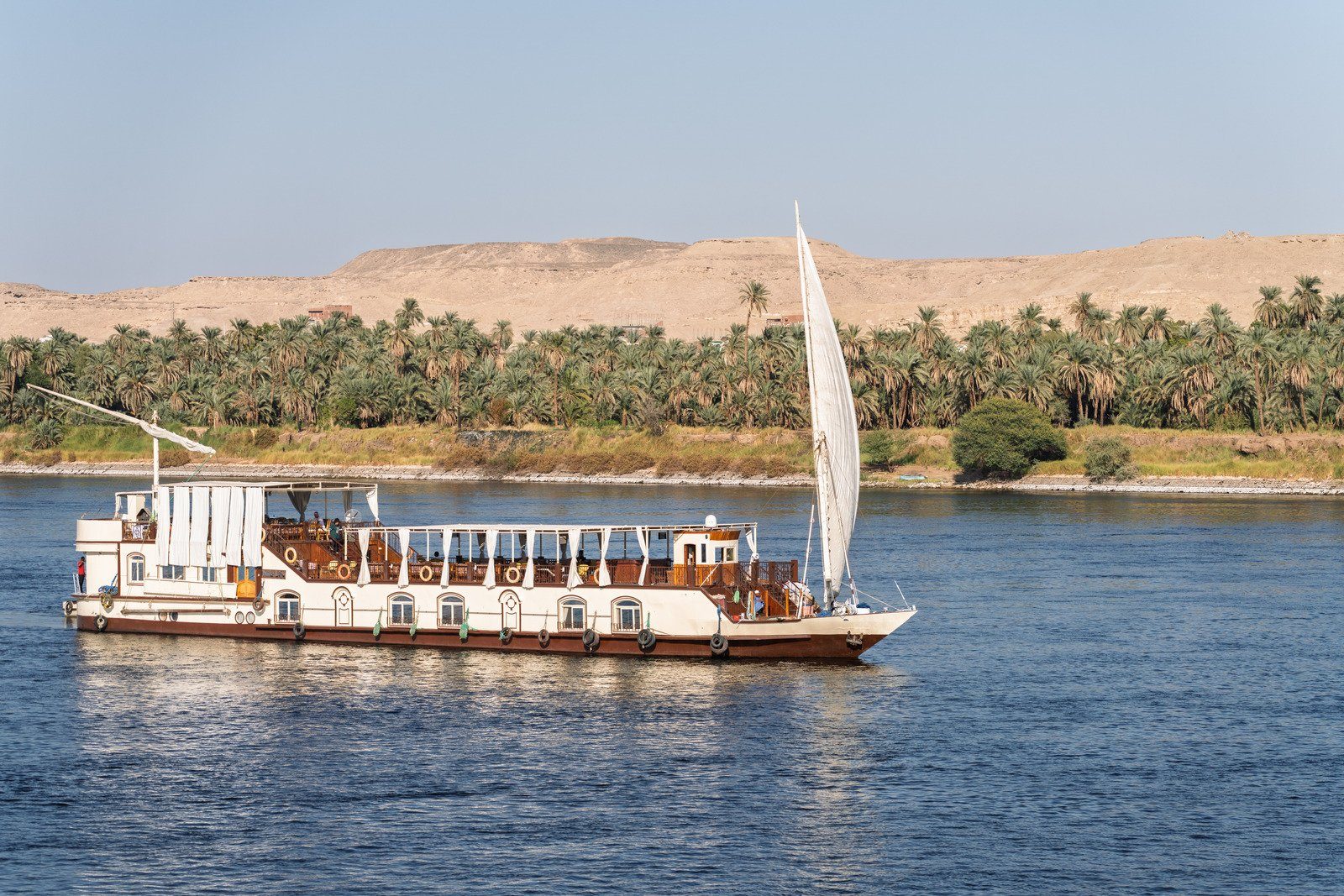
On the river, your choice of boat matters. A dahabiya carries a handful of cabins and sails when the wind allows, using a tug only when it does not, while large cruise ships run engines and generators around the clock. Both are legitimate ways to see the Nile; if you choose a big ship, a smaller, well-run one is better than the cheapest. Egypt is investing heavily in renewable energy, including the vast Benban solar park near Aswan, but most hotels and boats still run on fossil fuels, so switching off air conditioning when you leave your room helps.
How do you respect local people and customs?
Dress modestly away from the beach, ask before photographing people, learn a few words of Arabic and be discreet during Ramadan. Egypt is a conservative, largely Muslim country with a substantial Christian minority. Covered shoulders and knees are respectful in towns, villages, mosques and churches for everyone. Public displays of affection are frowned upon whatever your relationship.
- Photographs: ask first, accept a no with a smile, and take particular care with women and children. Some people ask for a small tip for a portrait, which is fair.
- Children: don't give money, sweets or pens to children who ask, as it encourages them to skip school to work the tourist trail. Give to an established local charity or school instead.
- Orphanage visits: the Australian Government advises against orphanage tourism, which can harm children; don't include one in your trip.
- Ramadan: avoid eating, drinking and smoking in public in daylight away from tourist venues.
- Language: a few phrases, such as shukran (thank you) and salaam aleikum (peace be upon you), open doors everywhere.
Flights, carbon and the shape of your trip
For Australians and New Zealanders, the return flight to Egypt is by far the largest part of a trip's carbon footprint, so the most effective step is to travel less often and stay longer. There are no direct flights; a return economy trip from Sydney or Melbourne via a Gulf hub adds up to several tonnes of carbon dioxide per passenger on most calculators. Flying economy, choosing a one-stop routing and making one long trip rather than several short ones all reduce it. If you buy carbon offsets, choose certified projects and treat them as a supplement, not a licence.
Within Egypt, the sleeper train between Cairo and Luxor or Aswan, or a Nile cruise between Luxor and Aswan, can replace a domestic flight, and a private car with a full itinerary is more efficient than several separate excursions. Travelling in the shoulder months of October, November, March and April also spreads visitor numbers away from the crowded midwinter peak, which eases pressure on the most popular tombs and temples.
A responsible Egypt checklist
Ten habits cover almost everything in this guide.
- Hire licensed local guides and tip fairly.
- Eat, shop and stay with local, family-run businesses when you can.
- Check an animal's condition before you ride, and skip captive wildlife shows.
- Touch no reliefs, use no flash in tombs and climb no monuments.
- Buy no antiquities, coral, shells or wildlife products.
- Carry a refillable bottle and refuse single-use plastic.
- Take short showers and reuse towels.
- Dress modestly and ask before photographing people.
- Give to charities, not to children in the street.
- Follow reef etiquette in the Red Sea; our reef-safe travel guide has the details.
Frequently asked questions
Is it ethical to ride a camel at the pyramids?
It can be. Many camel and horse owners at Giza care well for their animals, and riding supports their families. Check that the animal is a healthy weight, has no sores and has shade and water, and walk away from any operator who mistreats it.
Should I give money to children who ask?
It is better not to. Giving money, sweets or pens encourages children to work the tourist trail instead of going to school. If you want to help, give to an established local charity or school, or ask your guide to suggest one.
Can I buy antiquities in Egypt?
No. Exporting antiquities from Egypt is illegal, and anything sold as a genuine ancient object is either illegal or fake. Buy good-quality replicas, ideally from museum shops such as the one at the Grand Egyptian Museum.
Is a Nile cruise bad for the environment?
Large cruise ships run engines and generators continuously, so they have a bigger footprint than a sailing dahabiya with a handful of cabins. Choosing a smaller, well-run boat, refilling water bottles and limiting air conditioning all help, and a cruise can replace domestic flights.
How can I make sure my money helps local people?
Use licensed local guides, eat in family-run restaurants, buy crafts from the people who make them, stay in locally owned guesthouses and eco-lodges where possible, tip fairly and avoid commission-driven shopping stops you didn't ask for.