Quick answer
Tipping (baksheesh) is expected for almost every service in Egypt. As an indicative guide, tip a private Egyptologist guide around US$10–20 (AUD 15–30) per person per day, a driver US$5–10 (AUD 8–15) per day, Nile cruise crew around US$5–10 per guest per night into the shared box, 10% at restaurants on top of any service charge, and 10–20 EGP for toilet attendants.
Do you have to tip in Egypt?
Yes – tipping is part of everyday life in Egypt and is expected for almost every service, from carrying bags to guiding a full-day tour. Wages in tourism are low, and many workers, including cruise crew and drivers, rely on tips for a large share of their income.
The Arabic word is baksheesh, and it covers more than tipping: it's also the small payment for someone opening a gate, pointing out a carving, watching your shoes at a mosque or guarding a car park. Australians, who rarely tip at home, often find this the most tiring part of a first trip. The trick is to treat it as a budgeted cost of travel – set aside a tipping fund at the start and carry the right small notes – rather than a series of negotiations.
How much should you tip in Egypt?
As an indicative guide, the amounts below are what experienced travellers and local operators consider fair at the time of writing. They are not fixed rules, and because the Egyptian pound has been devalued several times in recent years, EGP amounts in particular drift upward – check a live exchange rate before you go.
| Service | Indicative tip | Notes |
|---|---|---|
| Private Egyptologist guide | US$10–20 (about AUD 15–30) per person per day | Towards the top end for a small private group or an exceptional guide |
| Group tour guide | US$5–10 (about AUD 8–15) per person per day | Usually collected at the end of the tour |
| Private driver | US$5–10 (about AUD 8–15) per day for the group | More for long transfers such as Cairo to Alexandria |
| Nile cruise crew (shared box) | US$5–10 (about AUD 8–15) per guest per night | Covers cabin, restaurant and deck staff; tip the onboard guide separately |
| Dahabiya crew | US$10–15 (about AUD 15–23) per guest per night | Smaller crews, more personal service |
| Restaurant waiter | About 10% in cash | Even if a 12% service charge is on the bill |
| Hotel porter | 20–50 EGP per bag or delivery | More in luxury hotels |
| Housekeeping | 50–100 EGP per night | Leave daily, as staff rotate |
| Toilet attendant | 10–20 EGP | Often hands you paper – carry small notes |
| Felucca captain | 50–100 EGP per person for an hour's sail | On top of the boat fare |
| Site guardian showing a closed area | 20–50 EGP | Only if you asked or genuinely enjoyed it |
Should you tip in Egyptian pounds, US dollars or Australian dollars?
Use Egyptian pounds (EGP) for small, everyday tips and either EGP or US dollars for guides, drivers and cruise crew; Australian dollars are hard for Egyptians to change and should be avoided.
- EGP small notes: 10, 20 and 50 EGP notes are the tipping workhorses. ATMs dispense 100s and 200s, so break them at hotels, supermarkets and pharmacies whenever you can.
- US dollars: crisp US$1, $5 and $10 notes are widely welcomed for larger tips. Torn or old notes may be refused.
- Coins: Egyptian 1-pound coins are of little use for tipping; foreign coins can't be exchanged at all, so never tip in AUD or US coins.
- Budget per person: as a rough indicative figure, many Australians allow AUD 25–40 per person per day for all tips on a guided trip, depending on travel style.
How do you tip on a Nile cruise?
Most Nile cruise ships use a single tip box at reception for the whole crew, collected at the end of the voyage; your onboard Egyptologist guide is tipped separately and directly.
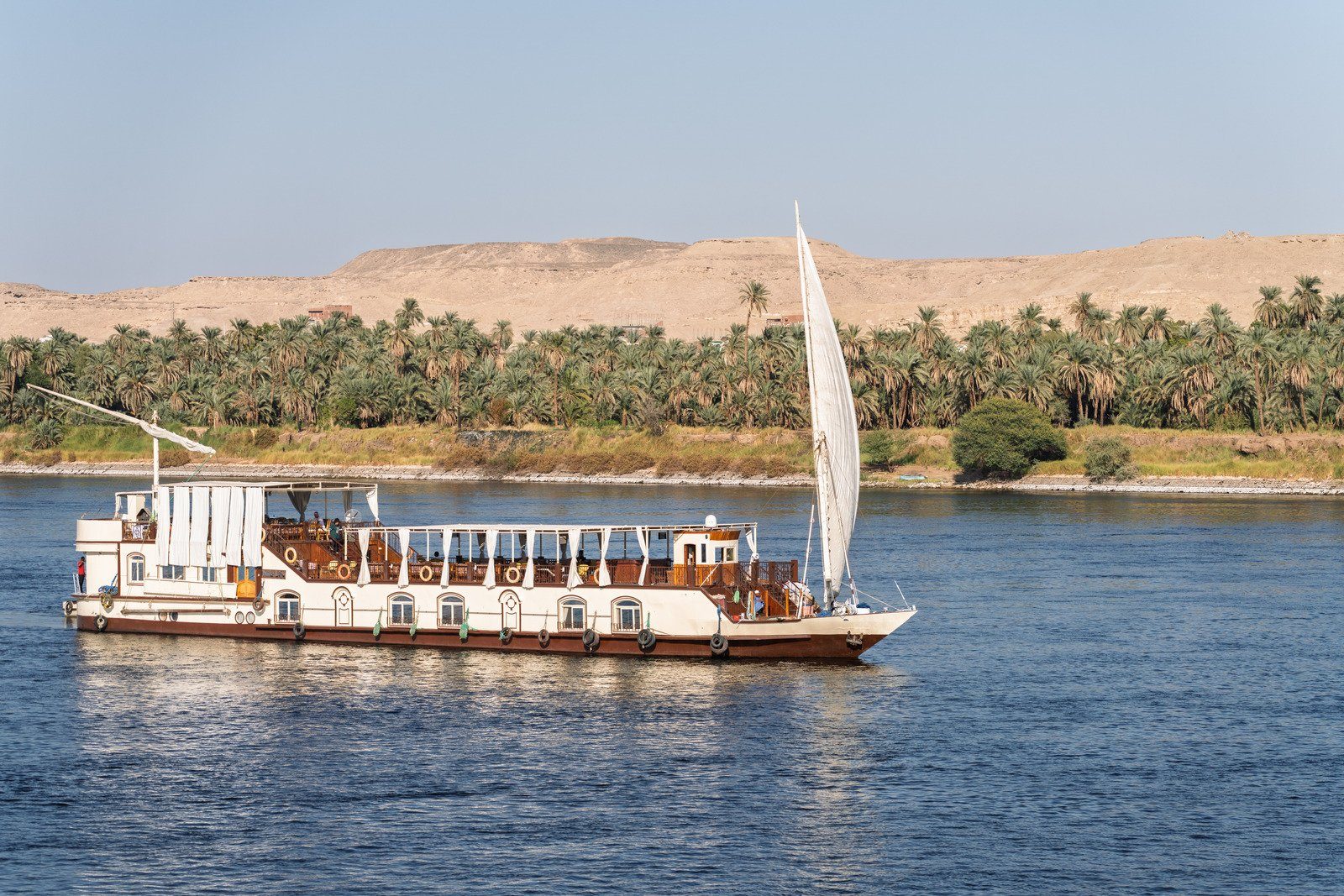
For a typical 4-night Luxor to Aswan cruise, an indicative crew tip is around US$20–40 per guest, plus your guide's tip for each day of excursions. The crew box is shared among cabin stewards, waiters, bar staff, deck crew and engine-room staff you'll never see. Some cruise lines include gratuities in the fare – check your booking documents. On a dahabiya, where a crew of 10–15 looks after perhaps 12–20 guests, tips are usually a little higher per guest and are handed to the captain or manager to distribute.
Read more in our Nile cruise guide and Nile cruise vs dahabiya comparison.
How much should you tip at restaurants and cafés?
Leave about 10% in cash for the waiter at sit-down restaurants, even when the bill includes a service charge, and round up or leave 10–20 EGP at cafés.
Many Egyptian restaurants add a 12% service charge plus 14% VAT to the bill. That service charge often doesn't reach the waiting staff, which is why a small extra cash tip is customary. Cash on the table or handed directly to your waiter is better than adding a tip to a card payment. At street-food stalls (koshari, ful, ta'ameya) and local cafés, rounding up is enough.
What is baksheesh, and how do you handle unwanted requests?
Baksheesh is the broad Egyptian custom of giving small sums for services or favours; you only owe it when you've asked for or accepted a service, and a polite "la, shukran" is enough to decline anything you didn't want.
- Guards at temples and tombs may wave you into a "special" corner or offer to take a photo, then ask for baksheesh. If you didn't want it, smile, say no thanks and walk on.
- Taking photos of people – a camel driver, a man in a galabeya with a donkey – will usually involve a tip. Agree before you shoot.
- Don't feel guilty declining requests you didn't initiate. Do be generous with people who've genuinely helped.
- Keep your tip money separate from your main wallet so you never flash a stack of notes.
Travelling with a private guide makes this much easier: they know who to tip, how much, and will often handle site guardians and toilet attendants on your behalf so you can settle up with them at the end. All Noble Travel tours are private, and we brief you on tipping before you go – start planning your trip.
Do you tip hotel staff, toilet attendants and taxi drivers?
Yes for hotel porters and housekeeping, yes for toilet attendants, and usually not for metered taxis or Uber beyond rounding up.
- Hotels: tip porters per bag, housekeeping daily, and concierges who make special bookings. In luxury hotels such as Marriott Mena House or the Sofitel Legend Old Cataract, tips toward the higher end are normal.
- Toilets: most toilets at sites, cafés and service stations have an attendant. Carry 10 and 20 EGP notes – change for a 200 is unlikely.
- Uber and Careem: tipping is optional and can be added in the app; rounding up a cash fare is appreciated.
- Balloon pilots, snorkel guides and felucca captains: a modest tip is customary when service is good.
What tipping mistakes should you avoid in Egypt?
The most common mistakes are running out of small notes, tipping in coins or foreign currency, tipping everyone the same regardless of service, and over-tipping people who simply attached themselves to you.
- Running out of change: the single biggest frustration. Each morning, check you have six to ten notes of 10, 20 and 50 EGP. Ask your hotel reception to break a 200 or 500 EGP note.
- Tipping too little to the people who matter most: your guide and driver spend all day with you and shape your whole trip. Be generous here and modest elsewhere.
- Tipping too much to the wrong people: giving 200 EGP to a guard for pointing at a cartouche resets expectations for every traveller after you.
- Tipping before the service: tip at the end – after the camel ride, after the felucca sail, at the end of the cruise.
- Making it awkward: hand tips over discreetly, folded, with a "shukran" (thank you). An envelope for guides and crews is a nice touch.
Remember that the amounts in this guide are indicative and the Egyptian pound's exchange rate moves. If the pound weakens further, a tip in EGP that felt generous a year ago may now be modest, so think in terms of value rather than a fixed number.
Is tipping included in Egypt tour prices?
Usually not – most Egypt tour prices, including private and luxury tours, exclude tips for guides, drivers and cruise crews, although some packages include a set amount for hotel and cruise staff.
Always check the "included" and "excluded" lists. If you're comparing quotes, factor in an indicative AUD 250–500 per person for a 10–14 day guided trip. Our tour pages, such as the Classic Egypt and Nile Cruise, spell out exactly what is and isn't included, and our guide to the cost of an Egypt trip from Australia shows where tipping fits into the overall budget.
Frequently asked questions
How much should I tip my tour guide in Egypt?
Indicatively, US$10–20 (about AUD 15–30) per person per day for a private Egyptologist guide and US$5–10 per person per day on a group tour. Tip more for exceptional service.
Is tipping mandatory in Egypt?
It isn't legally mandatory, but it's strongly expected and forms a significant part of many workers' income. Budget for it from the start.
Can I tip in US dollars in Egypt?
Yes. Clean US dollar notes are welcome for larger tips such as guides, drivers and cruise crew. Use Egyptian pounds for small tips like toilets and porters, and avoid tipping in coins or Australian dollars.
How much do you tip on a Nile cruise?
An indicative figure is US$5–10 per guest per night for the crew box, so around US$20–40 per guest for a 4-night cruise, plus a separate tip for your onboard guide.
Do I tip if a restaurant adds a service charge in Egypt?
Yes. The 12% service charge often doesn't go to waiters, so leave around 10% extra in cash.
How much should I budget for tips in Egypt?
Many Australian travellers budget an indicative AUD 25–40 per person per day on a guided trip, or roughly AUD 250–500 per person for 10–14 days. Exchange rates move, so check before you go.