Quick answer
A White Desert overnight trip from Cairo takes two days and one night: about 4–5 hours by road to Bahariya Oasis, then 4WD south past the Black Desert and Crystal Mountain to camp among the chalk formations for sunset, the stars and sunrise, before driving back the next afternoon. Expect around 10–12 hours of driving across the two days.
Can you do the White Desert in one night from Cairo?
Yes: two days and one night is enough to see the Black Desert, Crystal Mountain and the White Desert at sunset and sunrise, but it is a lot of driving for one night in the sand. Of roughly 48 hours away, you spend 10–12 in vehicles. In return you get the single most memorable night in Egypt for many travellers, and the trip fits into a Cairo stay without restructuring the rest of your itinerary.
The formations themselves, the Mushroom and the Chicken, the Old and New White Desert, and the park's camping rules, are described in our White Desert National Park guide; this page is the practical plan. If you can spare a third day, add a night in Bahariya Oasis or a second night deeper in the desert, and the whole trip slows down.
Day one, hour by hour
Leave Cairo early, switch to a 4WD in Bawiti at lunchtime, and use the afternoon for the stops on the way south so you reach camp in time for the low sun. Times below assume a December or January trip, when sunset is a little after 5pm; in October and March, shift the afternoon an hour later.
- 6am: pick-up from your Cairo or Giza hotel. Giza is the better base, as the desert road starts on the western edge of the city.
- 8.15am: coffee and toilet stop at the rest house roughly halfway. Several police checkpoints along the road note passport details.
- 10.30–11am: arrive in Bawiti, Bahariya's main town. Meet your desert crew and transfer to the 4WD.
- 11am–12.30pm: lunch at a local lodge, then, if there is time, the Golden Mummies on display in Bawiti or a quick soak in a spring.
- 1pm: head south on the Bahariya–Farafra road.
- 1.30pm–2.15pm: the Black Desert. Climb English Mountain, about 15–20 minutes up loose stones, for the view over the dark-capped hills.
- 3pm–3.45pm: Crystal Mountain and the Agabat valley, where the 4WDs leave the tarmac and dip through dunes between limestone outcrops.
- 4.15pm: enter the White Desert and drive between the formations to the Mushroom and the Chicken.
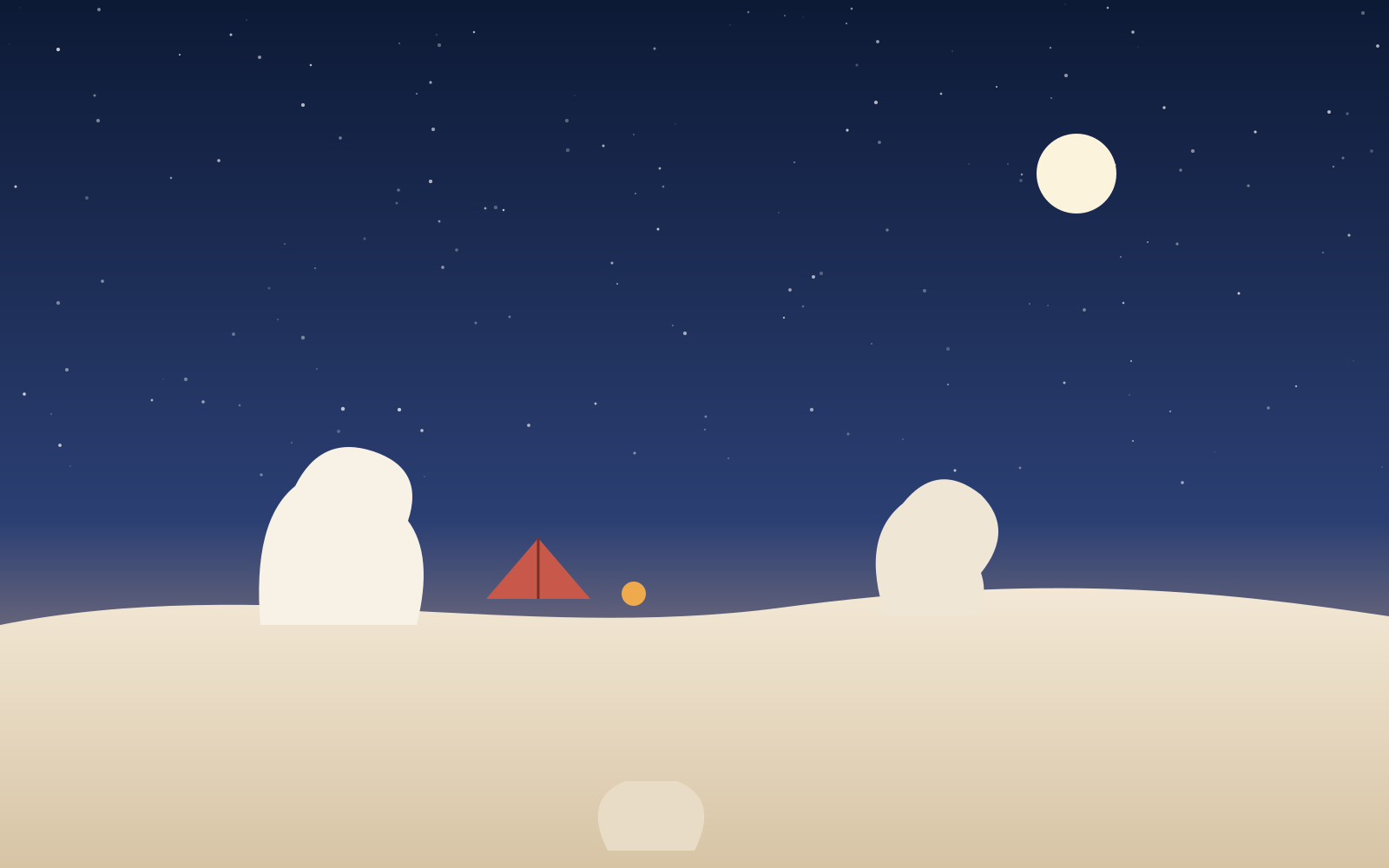
- 4.30pm–5.30pm: sunset among the chalk, which turns cream, pink and then orange.
- 5.45pm: the crew sets up camp in a designated area, usually against a sheltering outcrop, and lights a fire.
- 7pm: dinner cooked on the fire: typically grilled chicken, rice, vegetable stew and salads, with tea afterwards.
- 8.30pm onwards: stars. On a moonless night the Milky Way is vivid; around full moon the chalk glows bright enough to walk without a torch.
Day two, hour by hour
Wake before dawn for the second best light of the trip, then head back north with a choice of stops in Bahariya before the long drive to Cairo.
- 6.15am: up for sunrise, which falls around 6.45am in midwinter and earlier in spring and autumn. Wrap up: this is the coldest hour.
- 6.30am–7.30am: walk among the formations near camp as the light turns from pink to white. Look for fossil shells and iron nodules, but leave them where they lie.
- 7.30am: breakfast by the fire: bread, cheese, eggs, jam, tea and coffee.
- 8.30am: break camp and drive north, sometimes by a different route through the dunes.
- 10.15am–11.30am: back in Bawiti. A hot spring soak or the painted tombs, whichever you missed on day one, and an early lunch.
- 11.30am: switch back to the car for Cairo.
- 4–4.30pm: arrive at your Cairo or Giza hotel, dusty and happy.
The return to Cairo is the part people underestimate. Plan nothing more than dinner for the evening, and do not book an international flight the same night.
Permits, checkpoints and travel advice
You need a licensed operator: the trip requires a desert permit and police registration, both arranged in advance, and you will pass several checkpoints where officers check passports. Bring your original passport, not a copy, and give your operator your passport details a few days beforehand. Depending on current arrangements, a police escort may be attached to the vehicle for part of the route, and the park entry fee is either collected at the entrance or included in your trip.
Government advice for the Western Desert can differ from the advice for Cairo and the Nile Valley, and it can change. Read the latest from Smartraveller or SafeTravel before you book, and confirm with your insurer that you are covered for the area. Our is Egypt safe? guide has the broader picture.
What is the night in camp actually like?
Comfortable enough for most adults, provided you are ready for cold, dark and no bathroom. Camps are simple: thick mattresses on rugs, blankets or sleeping bags, and a low windbreak or open-fronted Bedouin tent; some operators offer small dome tents if you prefer walls. There are no toilets or showers. A shovel and a walk behind a rock is the system.
Night temperatures from December to February can fall close to freezing, while in October, November, March and April they are mild. Little desert foxes, fennecs, often visit camp after dark looking for scraps. Our desert camping guide covers the camp experience in depth, and stargazing in Egypt explains how to time the moon.
Who it suits: most travellers aged about eight to seventy-five who are reasonably mobile. The 4WD sections are bumpy, there is soft sand to walk on, and the climb at the Black Desert is optional. Travellers with back problems, very young children or anyone who needs a bathroom at night should consider a lodge night in Bahariya instead, with a sunset-and-sunrise visit to the desert.
What to pack for the White Desert
Pack for a hot afternoon and a cold night in one small soft bag; the 4WD has little space.
- A warm jacket, beanie and thermal layer for the night and sunrise, even in spring.
- Sunglasses, hat and high-factor sunscreen: the glare off the chalk is intense.
- A head torch, wet wipes, hand sanitiser and toilet paper (carried out afterwards).
- Closed shoes for the Black Desert climb, and sandals for camp.
- Your own sleeping bag if you feel the cold; ask what your operator provides.
- A power bank: there is no electricity in camp.
- Any medicines, and motion-sickness tablets if you are prone to it on rough tracks.
Our full Egypt packing list covers the rest of the trip.
Should you choose two days or three?
Two days suits travellers with limited time who want the highlight; three days suits anyone who would rather not spend half the trip in a vehicle.
| 2 days, 1 night | 3 days, 2 nights | |
|---|---|---|
| Driving | 10–12 hours in total | The same, spread over three days |
| Nights | One in camp | One in Bahariya and one in camp, or two in camp |
| Bahariya | Lunch and a quick stop | Golden Mummies, tombs and a sunset spring |
| Desert | New White Desert | Adds the Old White Desert and perhaps Ain el-Khadra |
| Best for | Short stays in Cairo | Photographers, families, anyone who dislikes rushing |
For a longer desert journey, the White Desert and Siwa tour adds Siwa Oasis, and our Siwa vs the White Desert comparison helps if you can only do one.
Frequently asked questions
How far is the White Desert from Cairo?
The camping area in the White Desert is roughly 500 km from Cairo: about 370 km to Bawiti in Bahariya (4–5 hours), then about 1.5–2 hours further south by 4WD with stops.
Can you visit the White Desert as a day trip from Cairo?
Not sensibly. The round trip would be 12 hours or more in a vehicle and you would miss sunset and sunrise, which are the point of going. One night is the minimum.
Is the White Desert cold at night?
From December to February, nights can fall close to freezing, and sunrise is the coldest time. In October, November, March and April nights are cool to mild. Bring a warm jacket in any season.
When is the best time for a White Desert trip?
October to April. Summer days are very hot and camping is uncomfortable. November and March offer warm days and mild nights; December and January give the clearest, coldest nights.
Are there toilets in White Desert camps?
No. Camps have no toilets or showers. Carry wet wipes, sanitiser and a bag to carry used paper out. If that is a deal-breaker, stay in a Bahariya lodge and visit the desert at sunset and sunrise.