Quick answer
You can combine the Nile and the Red Sea in one week by flying from Cairo to Aswan, sailing a 3-night cruise north to Luxor, then driving about four hours to the coast for two nights before flying home via Cairo. It leaves out Cairo's sights; adding Giza costs you a beach day, and 9–10 days is more comfortable.
Can you see the Nile and the Red Sea in a week?
Yes, if you fly straight from Cairo to Aswan, take the three-night cruise downstream to Luxor and finish with two nights on the coast; what you give up is Cairo itself. The plan works because Luxor is the closest Nile city to the Red Sea, about four hours by road, so the cruise delivers you to the right place.
It suits travellers who have seen the pyramids before, or who are pairing Egypt with somewhere else on a long-haul trip, and anyone who wants the temples and a real rest without a second week of leave. If you have never been to Egypt and won't be back, read the Cairo option further down first, or consider stretching to the 9–10 days that our Egypt itinerary guide recommends as a minimum for both.
The 7-day plan, day by day
One night in Aswan, three on the Nile and two by the sea, with flights at both ends. Cruises leave on fixed days of the week, so in practice your arrival date is set by the ship's departure day.
- Day 1, arrive and fly south: land in Cairo and connect to Aswan, about 1 hour 20 minutes. A sunset drink overlooking the First Cataract, and an early night. If you land late at night, sleep near Cairo airport and fly to Aswan on day 2's first flight.
- Day 2, Aswan and embarkation: Philae Temple by motorboat in the morning, board your ship around midday, then the Unfinished Obelisk and a felucca around Elephantine Island at sunset. Abu Simbel is possible this morning instead, leaving around 4am, but it makes for a very long day.
- Day 3, Kom Ombo and Edfu: the double temple of Sobek and Haroeris at Kom Ombo, then the Temple of Horus at Edfu, the best preserved in Egypt. Afternoon on deck as the ship sails north through the Esna lock.
- Day 4, Luxor: the West Bank in the morning (the Valley of the Kings, Hatshepsut's temple, the Colossi of Memnon), a rest, then Karnak in the late afternoon and Luxor Temple after dark.
- Day 5, to the coast: an optional dawn balloon flight, disembark after breakfast and drive about four hours across the Eastern Desert. Swim before sunset.
- Day 6, the Red Sea: a boat day to the Giftun Islands reefs from Hurghada, or snorkelling your resort's house reef and doing nothing much else.
- Day 7, home: a last swim, then fly Hurghada to Cairo, about an hour, to connect with an evening departure. Some Gulf carriers have flown direct from Hurghada at times; routes change, so check when booking.
Why sail from Aswan to Luxor?
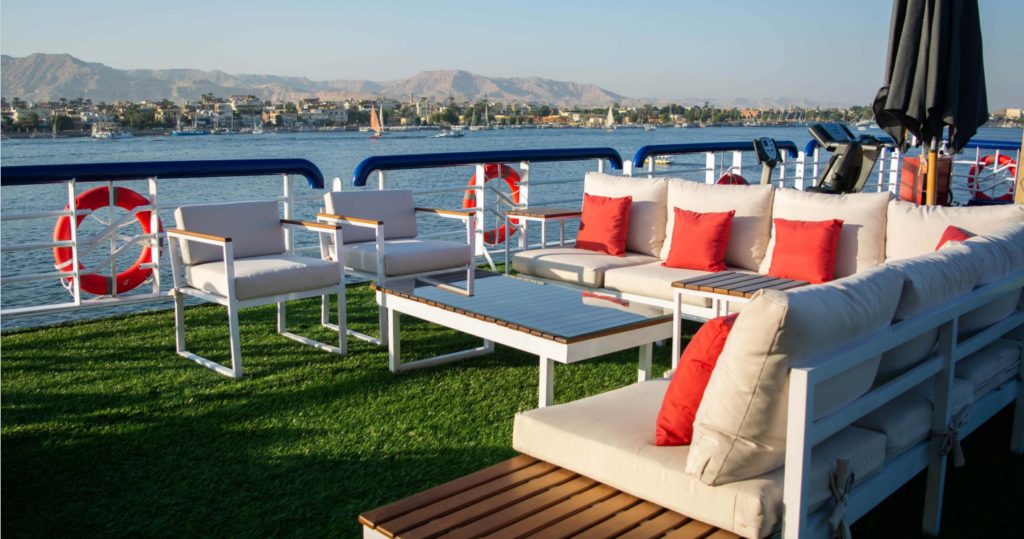
Downstream from Aswan is the three-night direction, and it finishes in Luxor, the natural jumping-off point for the Red Sea. The four-night Luxor to Aswan cruise is gentler, but it ends in the far south, which would mean a flight via Cairo to reach the coast.
A three-night cruise sees the same main temples as the four-night version, just with less time on deck; Esna, Edfu, Kom Ombo, Aswan and Luxor are all covered. The trade-off is pace, and it is a fair one on a seven-day trip. Our Nile cruise direction guide compares the two in detail, and the Nile cruises guide covers choosing a ship.
If your ship's departure day doesn't fit, a hotel version works just as well: two nights in Aswan, a private drive north of about three to four hours with stops at Kom Ombo and Edfu, and two nights in Luxor. A dahabiya needs four or five nights, so it doesn't suit a one-week plan.
Which Red Sea resort is best after Luxor?
Choose the stretch of coast between Soma Bay and El Gouna, all reached in about three and a half to four and a half hours from Luxor; Marsa Alam and Sinai are better saved for a longer trip. The road from Luxor meets the sea at Safaga, so the southern resorts are the closest.
| Resort area | Approximate drive from Luxor | Best for |
|---|---|---|
| Soma Bay | About 3.5 hours | Quiet resorts, house reefs, kitesurfing |
| Sahl Hasheesh and Makadi Bay | About 3.5–4 hours | Upmarket resorts with good house reefs |
| Hurghada | About 4 hours | Value, choice, boat trips to the Giftun Islands |
| El Gouna | About 4–4.5 hours | A walkable lagoon town with restaurants |
| Marsa Alam | About 5 hours or more | The best marine life, but too far for two nights |
All of these are within about an hour of Hurghada airport for your flight out. Our where to stay on the Red Sea guide compares them properly.
When does a Nile-and-sea week work best?
October, November, March and April are the sweet spot, when the Nile Valley is warm rather than hot and the sea is still pleasant for long swims.
- October and November: Luxor cools from the mid-30s to about 30°C and the sea is 24–27°C. The best all-round months for this plan.
- December to February: perfect temple weather, but the sea drops to about 21–23°C and evenings are breezy; snorkellers wear a thin wetsuit.
- March and April: warm days, Luxor 30–35°C by April, and a sea that warms through the spring.
- May to September: the sea is at its best, up to 28–29°C in August, but Luxor and Aswan pass 40°C, so the cruise becomes a dawn-and-dusk affair.
How should you pack and pace a Nile-and-sea week?
Pack for two holidays in one bag: modest, covered clothing and sturdy shoes for the temples, then swimwear, reef shoes and a rash vest for the coast. Nile ships and road transfers have room for luggage, but the domestic flights from Cairo have checked-baggage limits, so check your allowance when you book.
- Sun protection: high-factor, reef-safe sunscreen, a wide-brimmed hat and sunglasses; the Upper Egypt sun is strong even in winter.
- Snorkelling gear: resorts and boats hire masks and fins, but a well-fitting mask of your own makes a real difference.
- Small notes: Egyptian pounds for tips on the ship, the felucca and the boat day.
- Pacing: cruise days start at 6 or 7am, so plan nothing for your first evening on the coast. The drive from Luxor is long, and the sea will still be there tomorrow.
Coral is fragile: don't stand on reefs or touch marine life, and choose boat operators that tie up to mooring buoys rather than dropping anchor on the reef.
What if you also want to see the pyramids?
Add Giza at the start and you lose a beach night; for both without the squeeze, stretch to nine or ten days. The seven-day version with Cairo looks like this: day 1 arrive in Cairo; day 2 the pyramids and the Grand Egyptian Museum, then an evening flight to Aswan; days 3–5 the three-night cruise; day 6 drive to the coast; day 7 fly home. It works, but leaves one night by the sea after four days of early starts.
With nine days you can keep two nights in Cairo and three at the beach, and with ten you can add Abu Simbel. That is the logic behind our Nile cruise holiday and the longer Egypt and Red Sea journey, which gives the beach five nights.
Frequently asked questions
Is one week enough for a Nile cruise and the Red Sea?
Yes, with a three-night Aswan to Luxor cruise and two nights on the coast, flying in and out via Cairo. Cairo's sights don't fit without losing beach time.
How long is the drive from Luxor to Hurghada?
About 290 km and roughly four hours by private car across the Eastern Desert. Soma Bay and Sahl Hasheesh are a little closer, El Gouna a little further.
Can you fly from Luxor or Aswan to Hurghada?
At the time of writing there are no regular direct flights for most of the year, so flying means connecting in Cairo. The four-hour road transfer is usually quicker door to door.
Should you do the Nile or the Red Sea first?
The Nile first. Sightseeing is tiring, and ending on the beach lets you recover before the long flight home to Australia.
Can you snorkel in the Red Sea in winter?
Yes. Visibility is good all year, but the water drops to about 21–23°C from December to February, so a thin wetsuit or rash vest makes long snorkels comfortable.