Quick answer
Egypt sits on one of the world's great bird migration routes: each spring and autumn huge numbers of storks, eagles, buzzards and pelicans funnel along the Red Sea coast and across Sinai between Europe, Asia and Africa. Add resident Nile and desert species, wintering waterbirds at Fayoum and African specialities around Aswan and Lake Nasser, and it is an easy country to combine serious birding with the classic sights.
Why is Egypt good for birdwatching?
Egypt is a bottleneck: birds migrating between Eurasia and Africa avoid long sea crossings, so huge numbers are funnelled along the Red Sea, across the Gulf of Suez and down the Nile. BirdLife International counts the Rift Valley and Red Sea route as one of the world's most important flyways for soaring birds such as storks, eagles, buzzards and pelicans, which need thermals rising over land and cannot flap across open sea for long.
On a good spring day on the Gulf of Suez coast, you can watch kettles of white storks, steppe buzzards, honey buzzards, black kites and steppe eagles spiralling up over the desert. Add Egypt's resident species, the African birds that reach their northern limit around Aswan, the desert specialists of Sinai and the Red Sea's seabirds, and a two-week trip can produce a long and varied list.
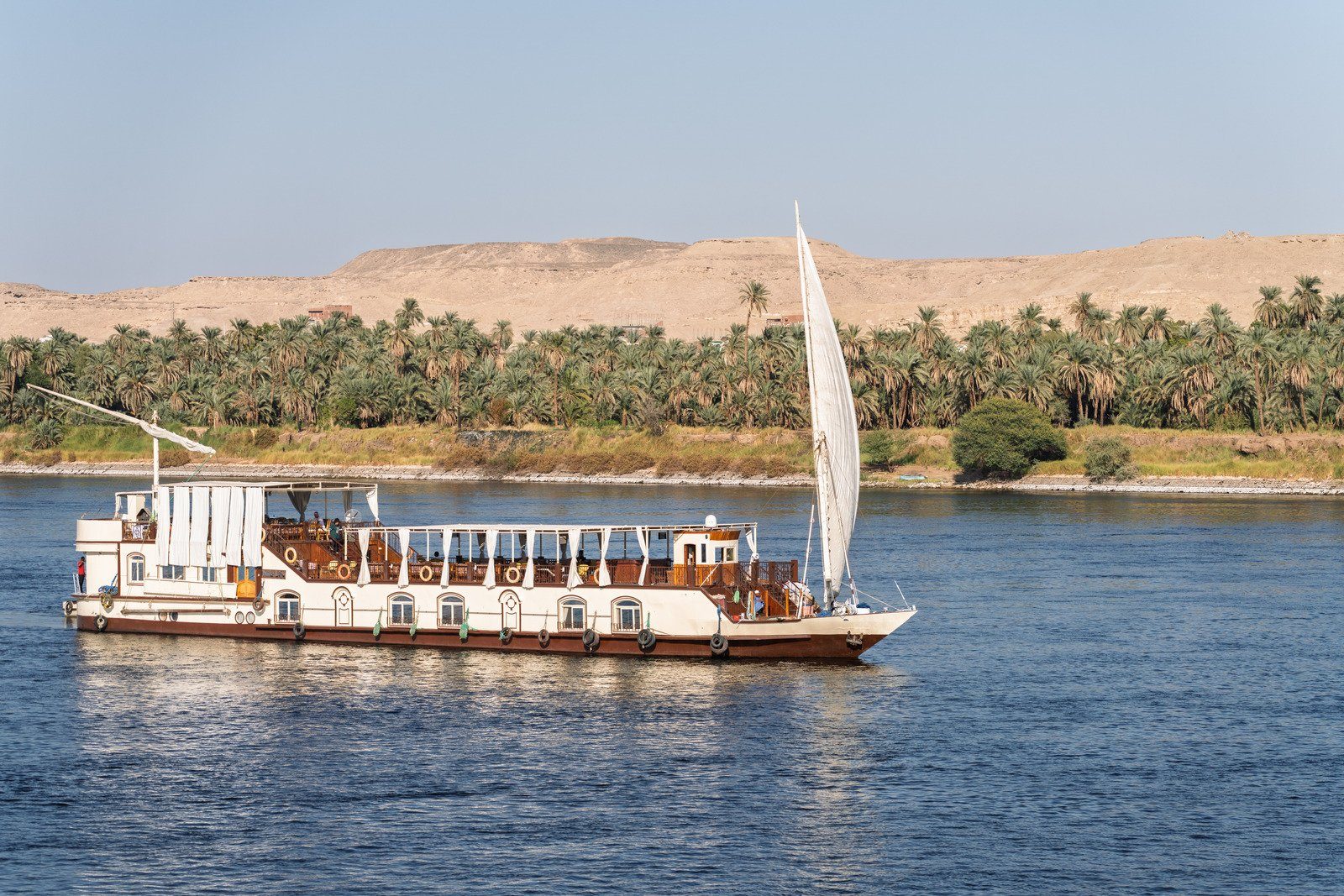
The other great advantage is that birding fits easily around sightseeing. A Nile cruise or dahabiya is essentially a slow-moving hide, and many of the best spots are temple grounds, hotel gardens and the islands of Aswan.
When is the best time for birdwatching?
March and April are the best months overall, for spring migration of soaring birds plus resident and lingering winter species; September and October are the next best.
| Season | What you see | Best places |
|---|---|---|
| March to May | Storks, raptors, pelicans and passerine migrants heading north | Gulf of Suez coast, Sinai, Nile valley |
| June to August | Breeding residents, Red Sea seabirds; very hot | Red Sea coast and islands, early mornings only |
| September to October | Return migration of raptors and passerines | Gulf of Suez coast, Sinai, oases |
| November to February | Wintering ducks, grebes, flamingos, waders and gulls | Fayoum lakes, Nile, Aswan, Lake Nasser |
Because Egypt's best birding months are its pleasant, mild months, you can combine birding with comfortable sightseeing. For Australians, March and April also fall in the gap between school holidays at home, when fares can be easier.
Aswan and the Nile
Aswan is the most rewarding birding town in Egypt: the islands, reeds and rocks of the First Cataract hold African and Nile species within a short felucca ride. Hire a felucca or a small motorboat for a morning around Elephantine, Kitchener's Island and the granite islets north of Sehel, and you can expect pied kingfishers hovering over the water, little green bee-eaters, Nile valley sunbirds, squacco and purple herons, purple swamphens in the reeds, Senegal thick-knees on the rocks, and Egyptian geese everywhere.
The botanical garden on Kitchener's Island is excellent in the early morning, and the gardens of the older hotels hold sunbirds and bulbuls. A local boatman who knows the birds is worth seeking out; we can arrange one. Further north, morning and evening sails on a dahabiya pass reed beds and sandbanks with herons, egrets, spur-winged lapwings and kingfishers; our felucca guide explains how to arrange an unhurried sail.
Lake Nasser and Abu Simbel
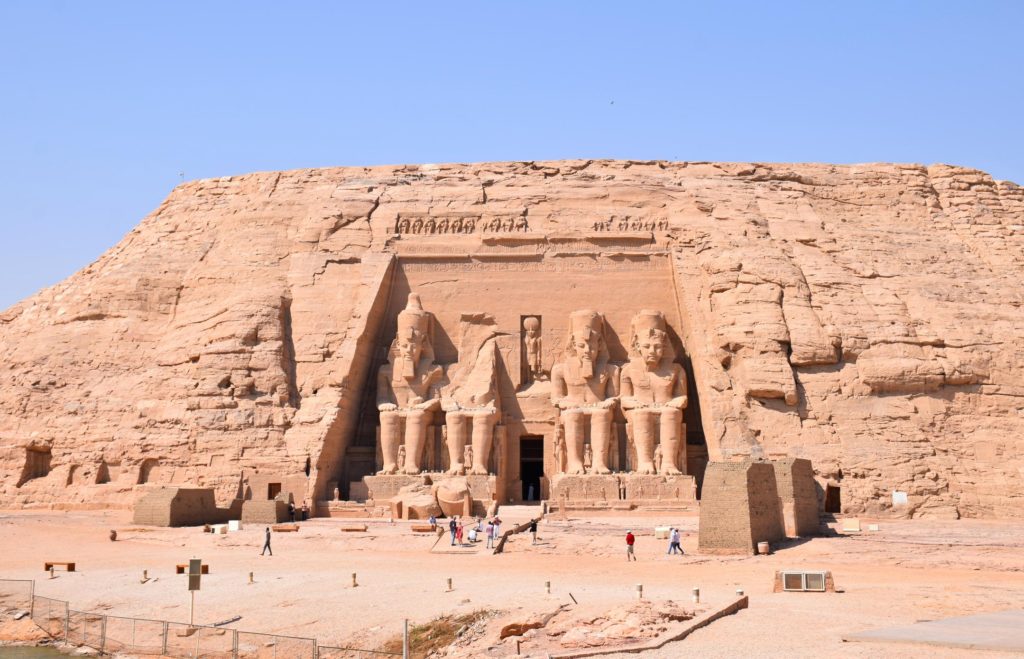
Lake Nasser, south of the High Dam, is the place in Egypt to look for sub-Saharan species at the very edge of their range. Around Abu Simbel and along the lake shore, birders search for yellow-billed storks, pink-backed pelicans and African skimmers, which appear irregularly, alongside more regular great white pelicans, osprey and waders. The lakeshore at Abu Simbel itself can be good in the early morning before the tour coaches arrive.
A Lake Nasser cruise, three or four nights between Aswan and Abu Simbel, gives the best coverage, with long hours on deck and visits to the rescued Nubian temples. See our Lake Nasser and Nubia guide. Staying a night in Abu Simbel also lets you bird the lake at dawn and dusk.
Fayoum's lakes in winter
From November to February, Fayoum's saltwater Lake Qarun and the lakes of Wadi el-Rayan host thousands of wintering waterbirds, about two hours from Cairo. Lake Qarun is a large saline lake whose shallows attract greater flamingos, great crested and black-necked grebes, ducks, waders and slender-billed gulls. The fields and palm groves around the oasis add hoopoes, bee-eaters and kingfishers.
Wadi el-Rayan's two lakes, in a desert setting, add waterbirds and desert species around the escarpments. Fayoum is the most practical birding day trip from Cairo, and combines easily with the whale fossils of Wadi el-Hitan. An overnight stay at a lodge on the lake lets you catch the first and last hours of light.
Sinai and the Red Sea coast
For migration, head to the Gulf of Suez coast; for desert specialists, to the high mountains around St Catherine; and for seabirds and mangroves, to the far south of the Red Sea coast.
- Gulf of Suez coast: between Ain Sokhna, Zafarana and the hills of Gebel el-Zeit, soaring migrants stream along the coast in spring and autumn. It is a long day from Cairo or Hurghada, and much of the land is near wind farms and restricted zones, so go with a guide who knows where you can stop.
- St Catherine: the mountains hold the Sinai rosefinch, a striking pink finch, along with Tristram's starling, white-crowned wheatear, fan-tailed raven and sand partridge. Early mornings in the Bedouin gardens are best.
- Sharm el-Sheikh: wetlands and green spaces around the resort town have long attracted migrants and visiting birders; access to some sites changes, so ask locally.
- Wadi el-Gemal and Hamata: mangroves and islands south of Marsa Alam hold white-eyed gulls, a Red Sea speciality, along with sooty gulls, ospreys, western reef herons and, in late summer, sooty falcons. See our Wadi el-Gemal guide.
Zaranik, a famous migration site on the Mediterranean coast of North Sinai, is in an area where travel advice is far more restrictive at the time of writing, so it is not one we recommend; check Smartraveller if you are considering it.
Practical tips for birders in Egypt
Bring good binoculars, start at dawn, hire local knowledge, and be discreet with optics near military and security sites.
- Optics: binoculars are fine to bring. A telescope is useful on lakes and the coast. Avoid pointing long lenses or scopes at bridges, dams, police posts or military installations, and pack them away at checkpoints.
- Timing: activity drops sharply in the heat; plan to bird from first light until about 10am and again in the last two hours of the day.
- Field guide: a guide to the birds of Europe, North Africa and the Middle East covers almost everything you will see. Egyptian birding apps and recent trip reports help with sites.
- Ethics: illegal netting and shooting of migrating birds is a long-standing conservation problem, particularly along the Mediterranean coast. Support community-based guides and protected areas, and report what you see to conservation groups.
Australian birders will find some familiar families with unfamiliar faces: kingfishers, bee-eaters and herons are everywhere, but the raptors, wheatears and larks are largely new. Keep a notebook of where and when you saw each species; local birders and conservation groups value records from visitors, especially from the less-watched south.
We can build a private itinerary with a specialist birding guide, cruise timing and lodges chosen for their gardens and lakeshores, alongside the temples and tombs.
Frequently asked questions
When is the best time for birdwatching in Egypt?
March and April are best overall, for spring migration of storks and raptors. September and October bring the autumn migration, and November to February is best for wintering waterbirds at Fayoum and on the Nile.
Where is the best birdwatching in Egypt?
Aswan and Lake Nasser for Nile and African species, Fayoum for wintering waterbirds, the Gulf of Suez coast for migrating raptors and storks, and the St Catherine mountains for desert specialists such as the Sinai rosefinch.
Can I bring binoculars to Egypt?
Yes, binoculars are fine. Be discreet with optics and long lenses near military sites, bridges, dams and checkpoints, and don't point them at police or soldiers.
Is a Nile cruise good for birdwatching?
Yes. Long hours on deck pass reed beds, sandbanks and islands, and a dahabiya, which moves slowly and moors at quiet banks, is even better. Aswan's islands are a highlight.
What birds will I see in Aswan?
Typical species include pied kingfishers, little green bee-eaters, Nile valley sunbirds, squacco herons, purple swamphens, Senegal thick-knees and Egyptian geese.