Quick answer
Egypt's heat is intense and dry: Luxor, Aswan and Abu Simbel often pass 40°C from June to August, and UV levels are high even in winter. Stay safe by sightseeing from opening time until late morning and again in the late afternoon, drinking water steadily with electrolytes, covering up with loose clothing, a wide-brimmed hat and SPF 50+, and treating headache, dizziness or confusion as early warning signs of heat illness.
How hot does Egypt get?
From June to August, daytime temperatures in Luxor, Aswan and Abu Simbel commonly reach 40–45°C, Cairo sits in the mid-30s, and the Red Sea resorts are around 32–35°C with sea breezes; even October and April can bring days in the high 30s in the south.
Australians often assume they know heat, but Upper Egypt's summer is hotter and drier than most Australian capitals, closer to a heatwave in Alice Springs than a Brisbane summer. The low humidity is deceptive: sweat evaporates instantly, so you don't feel wet and don't notice how much fluid you're losing. Stone temples and desert valleys also radiate stored heat back at you well into the evening.
The cooler months (November to February) are the main season for good reason, but the sun is still strong then, with high UV around the middle of the day. For month-by-month conditions see the best time to visit Egypt and our Egypt in July guide.
When is the best time of day to sightsee in the heat?
Start at opening time, finish outdoor sightseeing by late morning, rest through the early afternoon, and go out again from about 4pm; this simple rhythm is the single most effective heat strategy in Egypt.
| Time | What to do in summer |
|---|---|
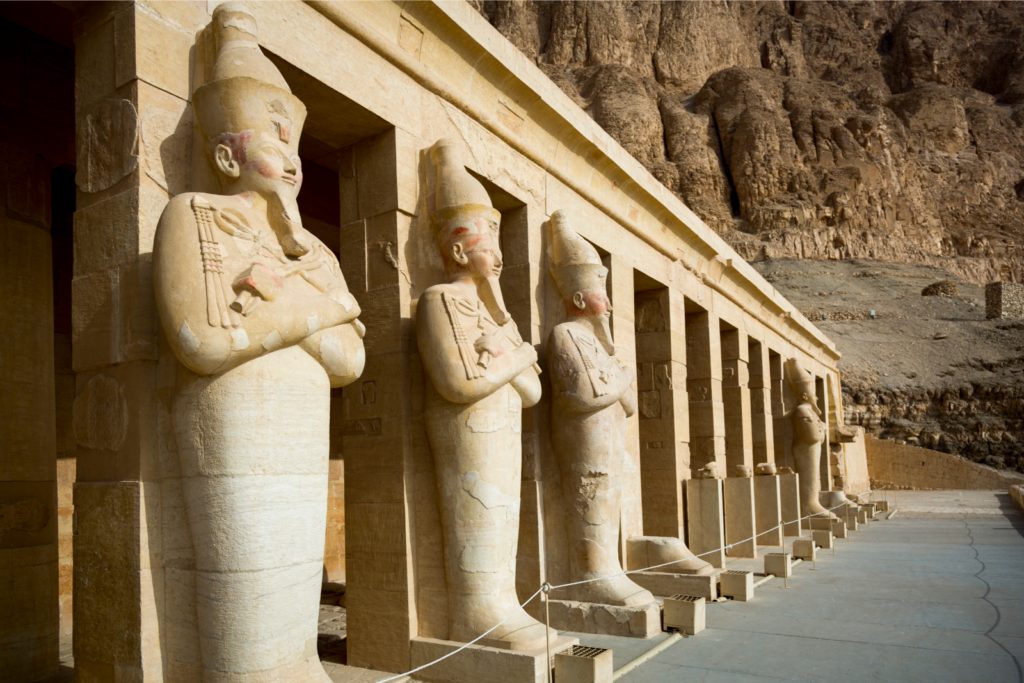
| 6–11am | Exposed sites: the Valley of the Kings, Hatshepsut's temple, Giza plateau, Karnak |
| 11am–4pm | Indoors: the Grand Egyptian Museum, Luxor Museum, lunch, a siesta, the hotel pool or the cruise sundeck in shade |
| 4pm–sunset | Felucca sail, Philae or Luxor Temple, markets as they cool down |
| Evening | Luxor Temple lit up at night, Khan el-Khalili, a dinner cruise in Cairo |
Many major sites open early, often 6 or 7am, and some stay open into the evening, but hours change by season, so check with your guide or on egymonuments.gov.eg. Nile cruise schedules already follow this pattern, with temple visits at dawn and late afternoon. A private tour makes it easy to shape your days around the heat; a group schedule may not.
Which Egyptian sites are hottest, and how do you cope?
The most exposed sites are the West Bank at Luxor, the Giza plateau, Saqqara and Abu Simbel, where there's little shade and the ground reflects heat; temples with roofed halls and the tombs themselves offer relief.
- Valley of the Kings: the walk between tombs is exposed, and tomb interiors can be warm and humid. Use the electric shuttle from the visitor centre, go at opening time and limit yourself to the tombs that matter most. See our Valley of the Kings guide.
- Giza plateau: no shade between the pyramids; stay in the vehicle between viewpoints and save the long walk down to the Sphinx for early morning.
- Abu Simbel: visitors arriving by road from Aswan usually get there soon after opening, which is the coolest part of the day.
- Karnak: the Great Hypostyle Hall gives deep shade; the open courts do not.
- Saqqara and Dahshur: sandy and exposed; combine with an air-conditioned lunch.
A wet scarf or cooling towel around the neck, an umbrella for shade (many Egyptians use one), and a cold drink in the car between stops all help.
How much water should you drink, and what about electrolytes?
Drink steadily before you feel thirsty, and on a hot summer sightseeing day expect to drink far more than at home, often three litres or more, with an electrolyte or oral rehydration sachet added when you're sweating heavily.
Plain water alone isn't always enough on long, hot days, because you also lose salt in sweat. Rehydration sachets, salty snacks and fresh juices help replace it. Pale urine is a good sign you're keeping up; dark urine, headache and tiredness mean you're behind.
Alcohol and lots of strong coffee add to dehydration, so go easy on the sundeck beers in the afternoon. Drink only sealed bottled or filtered water (our drinking water guide explains why). If you take medicines that affect fluid or salt balance or heat tolerance, such as some blood pressure medicines, diuretics or certain antidepressants, or you've been told to limit fluids, ask your GP for personalised advice before a warm-season trip.
How do you protect yourself from the sun in Egypt?
Use the same Slip, Slop, Slap, Seek, Slide approach you know from Australia, but take it more seriously: Egypt's UV is high for much of the year, and there is far less shade at sites than you'd expect.
- Slip on loose clothing: long, light-coloured linen or cotton keeps you cooler than bare skin and respects local dress norms. Our what to wear guide has outfit ideas.
- Slop on SPF 50+: apply 20 minutes before going out and reapply every two hours and after swimming or heavy sweating. Bring enough from home.
- Slap on a hat: wide-brimmed, with a chin strap for windy temple courtyards and felucca sails. Caps leave ears and neck exposed.
- Seek shade: walk on the shaded side of temple colonnades and plan rests under cover.
- Slide on sunglasses: wraparound, UV-blocking lenses also protect against glare and dust.
On the water, sunburn comes fast. A rash vest for snorkelling in the Red Sea and a long-sleeved shirt on a felucca are worth more than extra sunscreen.
What are the signs of heat exhaustion and heat stroke?
Heat exhaustion causes heavy sweating, headache, nausea, dizziness, cramps and weakness, and should be treated immediately; heat stroke, which can cause confusion, collapse and hot skin, is a medical emergency. This is general first-aid information; if in doubt, get medical help.
Heat exhaustion: act straight away
- Move into shade or air-conditioning and lie down with legs slightly raised
- Remove extra layers and cool the skin with water and fanning
- Sip water or rehydration fluid if fully conscious
- Stop sightseeing for the day; see a doctor if you don't improve quickly
Heat stroke: call for help
- Signs include confusion, slurred speech, fainting, seizures, very high body temperature, and sometimes hot, dry skin
- Call an ambulance (123 in Egypt) or get your guide or hotel to do so
- Cool the person aggressively while waiting: shade, cold wet cloths, ice packs on neck, armpits and groin, fanning
- Don't give fluids to anyone who is confused or not fully conscious
Children, older travellers and people with heart conditions are at higher risk. Make sure your travel insurance covers emergency medical care.
Is it safe to visit Egypt in summer?
Yes, for healthy travellers who plan around the heat: summer brings fewer crowds and lower prices, but it needs a slower pace, early starts and air-conditioned breaks.
A sensible summer trip leans on the Red Sea and Cairo, where temperatures are more manageable, and keeps Luxor and Aswan to early mornings and evenings. A Nile cruise works well because you return to an air-conditioned cabin and a pool between excursions. Balloon flights over Luxor run at dawn, the coolest hour of the day.
If you're travelling with young children, are older, or have a heart or lung condition, the cooler months from October to April are a much better fit; see our Egypt for seniors guide and our Egypt with kids guide. Fasting during Ramadan in summer is demanding for locals, but visitors are not expected to fast, and you can drink water discreetly; see our Ramadan guide.
Frequently asked questions
How hot is Luxor in summer?
From June to August, Luxor commonly reaches 40–45°C during the day, with warm nights. Sightsee from opening time to late morning and again from late afternoon.
What time should I visit the Valley of the Kings in summer?
Arrive at opening time, which is often around 6am in summer, and aim to finish by about 10 or 11am. Check current hours before you go.
How much water should I drink in Egypt?
Drink steadily throughout the day. On hot summer sightseeing days many visitors need three litres or more, with electrolytes added. Ask your doctor if you have a condition affecting fluid intake.
Is the sun stronger in Egypt than Australia?
UV levels in Upper Egypt in summer are comparable to an Australian summer, often extreme around midday, and the heat is drier and more intense than most Australian cities. Use full sun protection year-round.
What is the emergency number in Egypt?
Call 123 for an ambulance. The tourist police, who can also help, are on 126, and the general police on 122.
Can you visit Egypt in August?
Yes, with planning. Expect extreme heat in Luxor and Aswan, so build in early starts, midday rests and air-conditioned breaks, or focus more time on Cairo and the Red Sea.