Quick answer
Flying from Aswan to Abu Simbel takes about 45 minutes and saves around five hours of driving, but flights are few, cost more and limit your time at the temples to the aircraft's turnaround. The road trip is about 280 km and 3–3.5 hours each way with a pre-dawn start; it is cheaper and more flexible. For the best experience, stay a night in Abu Simbel or arrive on a Lake Nasser cruise.
Is it better to drive or fly to Abu Simbel?
Fly if you value comfort and have little time in Aswan; drive if you want flexibility, more time at the temples and a lower cost. Neither is wrong, and many travellers who fly say it was worth every dollar, while many who drive say the desert dawn was a highlight.
Abu Simbel sits on the western shore of Lake Nasser, about 280 km south-west of Aswan by road and only around 40 km from the Sudanese border. There is no railway and no settlement of any size between the two, so the choice is the desert road, a short flight, or the lake itself. This page compares those options; for an hour-by-hour plan of the day, see our Abu Simbel day trip from Aswan.
Road vs air vs staying overnight
Flying saves time, the road saves money and gives flexibility, and staying overnight or cruising gives the best experience of the temples themselves.
| By road | By air | Overnight in Abu Simbel | Lake Nasser cruise | |
|---|---|---|---|---|
| Travel time from Aswan | 3–3.5 hours each way | About 45 minutes each way, plus airport time | Road or air one way, then a relaxed return | 3 nights south, 4 north |
| Departure | Usually 4–5am | Depends on the flight; often morning | Arrive in the afternoon | Embark near the High Dam |
| Time at the temples | Flexible; 2–3 hours is typical | Limited to the aircraft's turnaround | Evening, sound and light show, and dawn | Evening and dawn from the mooring |
| Comfort | Long, early, but private car or van | Easiest; little road time | Very relaxed | Most relaxed |
| Cost | Lowest | Higher; flight tickets plus transfers | Moderate; few hotels | Highest overall, but includes several days |
| Reliability | High | Flights are limited and can change | High once booked | Fixed departure dates |
| Crowds | Arrive with the morning wave | Arrive with the flight passengers | Quietest times of day | Quietest times of day |
Costs, schedules and road rules vary by season and change over time, so check them when you book.
What is the drive from Aswan to Abu Simbel like?
It is a long, straight desert road of about 280 km, driven in the dark and at dawn, taking around three to three and a half hours each way.
Most road trips leave Aswan between about 4 and 5am, so that you reach the temples near opening time and leave before the midday heat. The road runs through the Nubian Desert with almost nothing beside it: a few checkpoints, a rest stop with toilets and tea, and long views of sand and black rock. Many travellers sleep for the first hour, then watch the sunrise over the desert, and in the early morning the heat shimmer often produces mirages of lakes on the horizon.
In a private car or van you can stop when you like, carry a breakfast box, and stay at the temples as long as you wish. Road travel rules for foreign visitors have changed over the years, from fixed police convoys to more flexible departure windows and checkpoints; check current arrangements with your operator, as they can change again.
The cost is your time and energy: a road day from Aswan typically takes 9–10 hours in total. If that is your only day in Aswan, it squeezes out Philae and a felucca, so plan an extra night.
What are the pros and cons of flying to Abu Simbel?
Flying is the fastest and least tiring way to reach Abu Simbel, but flights are few, schedules change, and the return flight sets how long you can spend at the temples.
At the time of writing, EgyptAir operates flights to Abu Simbel's small airport, mainly from Aswan and sometimes connecting from Cairo. The flight takes about 45 minutes and offers a spectacular view of Lake Nasser if you sit on the right side. A short transfer links the airport to the temples. Door to door, the outing from Aswan takes around five hours rather than nine or ten.
The trade-offs are practical. There may be only one or two flights a day, timetables vary by season and are sometimes consolidated or cancelled at short notice, and seats sell out on busy dates. Because many flights are timed as a turnaround, you may have roughly two to three hours on the ground, enough to see both temples properly but not to linger. Fares, plus transfers at each end, make it more expensive than a private car for a couple, though the gap shrinks once you value the hours saved.
A good compromise is to fly one way and drive the other, or fly in the morning and spend a night in Abu Simbel.
Can you visit Abu Simbel from a Nile cruise ship?
Yes, most Luxor–Aswan cruise ships sell Abu Simbel as an optional excursion from Aswan, but it fits awkwardly into a cruise and is usually better done on a separate land day.
On a southbound cruise the excursion is usually offered on the last full day in Aswan; on a northbound cruise it is often on the morning of day 2, leaving around 4am and returning just as the ship prepares to sail. You join a larger group, and the timing is set by the ship's schedule rather than by the light or the crowds. A delay on the road or a changed flight can also leave you racing to rejoin the ship.
Planning a night or two in Aswan after the cruise removes that pressure: you choose road or air, leave when it suits, and still have time for Philae and a felucca. Our guide to cruise direction explains how each way fits with Abu Simbel.
Should you stay overnight in Abu Simbel?
Yes, if you can: a night in Abu Simbel lets you see the temples at their two best moments, lit at night and empty at dawn, without a 4am start.
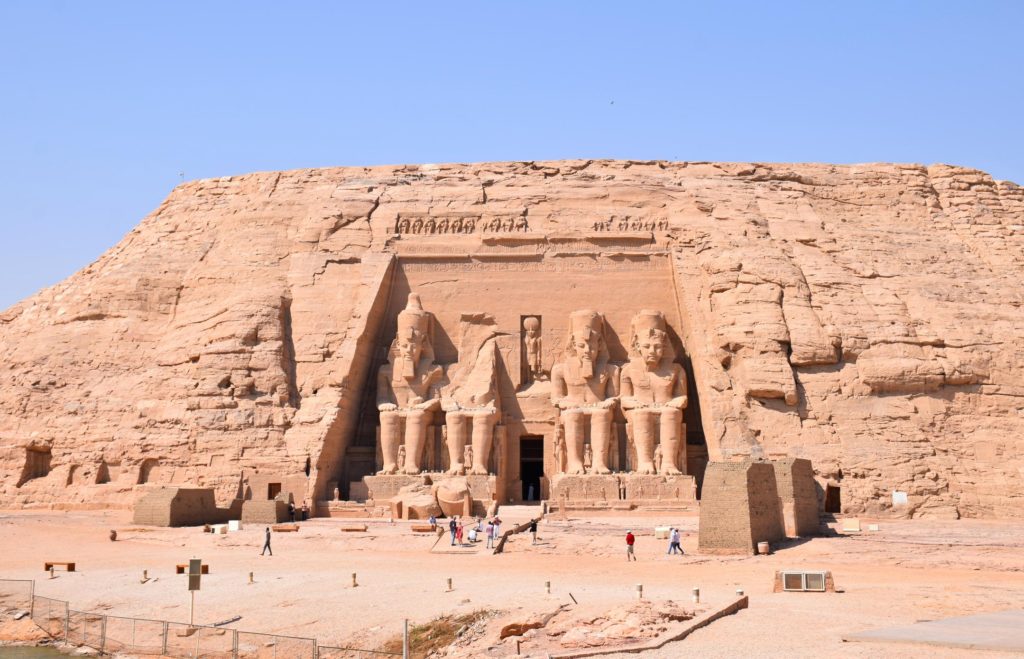
The village has only a handful of hotels, including a Nubian-style lodge, so book early. Arrive in the afternoon, watch the evening sound and light show projected onto the facades, and return at opening time the next morning, before the day-trippers arrive from Aswan. With the Great Temple and the Temple of Nefertari nearly to yourself, the scale of Ramesses II's statues and the story of the 1960s rescue, told in saving Abu Simbel, sink in properly.
The same logic makes a Lake Nasser cruise the most comfortable way of all to arrive: the ship moors below the temples for the night. For the twice-yearly Sun Festival around 22 February and 22 October, staying overnight or on a ship saves a midnight road departure, but rooms and cabins sell out many months ahead.
Which should you choose: road or air?
Match the option to your time, budget and energy.
- Short of time in Aswan: fly, and keep the afternoon for Philae or a felucca.
- On a budget: drive in a private car or van; leave around 4–5am and bring breakfast.
- Seniors and anyone who finds long car journeys hard: fly, or stay overnight in Abu Simbel.
- Families with young children: fly if seats are available; otherwise drive, with children sleeping in the car for the first stretch.
- Photographers: stay overnight for evening and dawn light, or take a Lake Nasser cruise.
- Sun Festival travellers: overnight in Abu Simbel or a lake cruise, booked 6–12 months ahead.
- Travellers who want flexibility: drive, so the day isn't tied to a flight schedule.
Our Classic Egypt and Nile Cruise includes Abu Simbel by road with an upgrade to the flight, and the Luxury Egypt journey flies.
Frequently asked questions
How long is the drive from Aswan to Abu Simbel?
About 3 to 3.5 hours each way for roughly 280 km. Most trips leave Aswan around 4–5am and are back by early afternoon.
How long is the flight from Aswan to Abu Simbel?
About 45 minutes. Flights are limited and schedules change seasonally, so book early and check times before planning the rest of the day.
Is flying to Abu Simbel worth it?
For many travellers, yes: it saves around five hours on the road. The downsides are cost, limited flights and a fixed amount of time at the temples.
Can you visit Abu Simbel without a 4am start?
Yes: fly on a later flight, stay overnight in Abu Simbel, or arrive on a Lake Nasser cruise. Each lets you avoid the pre-dawn road departure.
Is the road to Abu Simbel safe?
The road is used daily by tourist vehicles and passes several checkpoints. Rules for foreign travellers can change, so follow your operator's advice and check Smartraveller before you go.