Quick answer
History lovers should give Egypt 14–21 days and add the sites most tours skip: the decorated mastabas and Pyramid Texts at Saqqara, Akhenaten's city at Amarna, the rock tombs of Beni Hasan, the temples of Abydos and Dendera, Medinet Habu and the workers' village at Deir el-Medina. Travelling roughly in chronological order makes each site build on the last.
How should a history lover plan Egypt differently?
Allow more time per site, follow the story roughly in chronological order, and choose a guide with real depth in the periods you care about. A standard 10-day tour shows you the headline monuments of three or four dynasties; a history-focused journey shows you how Egyptian civilisation changed over 3,000 years and why.
Three principles make the difference:
- Start in the north, travel south: Saqqara and Giza first, Middle Egypt next, then Abydos, Thebes and Nubia. You see the Old Kingdom before the New, so the later monuments make sense.
- Buy the extra tickets: the best-preserved tombs are ticketed separately, and they are where the colour and detail are.
- Leave gaps: half-days without sightseeing let you read, revisit a museum or return to a site in better light.
Our ancient Egyptian timeline is a useful companion before you go.
What should you see at Saqqara, Dahshur and Meidum?
Give Saqqara a full day for the tombs of officials and the Pyramid Texts, and a second half-day for the pyramids of Dahshur and Meidum, which show how the true pyramid was invented. Most visitors see only Djoser's Step Pyramid; the real riches lie in the private tombs around it.
- The mastabas of Ti and Mereruka: Fifth and Sixth Dynasty tombs with lively reliefs of farming, boat building, cattle crossing canals and dwarfs making jewellery. Mereruka's has more than 30 rooms.
- The Pyramid of Unas: the last king of the Fifth Dynasty, whose burial chamber carries the earliest Pyramid Texts, the oldest religious writings on this scale in Egypt. Opening varies, so check before you go.
- The Serapeum: the underground galleries where the sacred Apis bulls were buried in huge granite sarcophagi.
- Dahshur: Sneferu's Bent Pyramid, with its change of angle halfway up, and the Red Pyramid, the first successful true pyramid. The Bent Pyramid's interior opened to visitors in 2019.
- Meidum: the collapsed pyramid about 100 km south of Cairo, where the transition from step to smooth sides went wrong.
See our Saqqara guide for tickets and timing.
Is it worth going to Middle Egypt?
Yes, if you are serious about Egyptian history: Middle Egypt holds Akhenaten's capital at Amarna, the Middle Kingdom rock tombs of Beni Hasan and the remarkable tomb of Petosiris at Tuna el-Gebel, and you will often have them almost to yourself.
- Tell el-Amarna: the city Akhenaten built for the Aten in the 1340s BC and abandoned soon after his death, with the tombs of his officials and the boundary stelae marking the city's limits. Read our Tell el-Amarna guide.
- Beni Hasan: cliff tombs of local governors from the Middle Kingdom, famous for their sequences of wrestlers, hunting and daily life.
- Tuna el-Gebel and Hermopolis: the tomb of Petosiris, a priest of Thoth around 300 BC, blends Egyptian and Greek styles; nearby are catacombs of mummified ibises and baboons.
The usual base is Minya, about three to four hours by road south of Cairo. Travel in the region can involve police escorts, and travel advice for parts of Middle Egypt has differed from the main tourist areas, so check Smartraveller before planning.
Why are Abydos and Dendera essential?
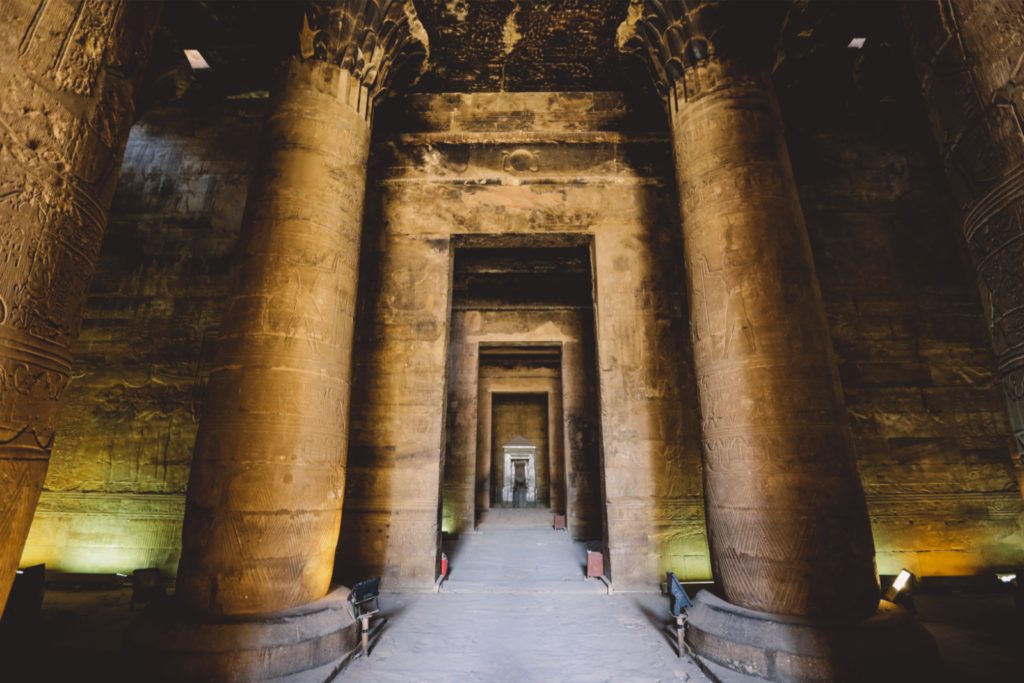
Abydos has the finest painted reliefs of the New Kingdom in Seti I's temple, and Dendera has the most complete temple in Egypt, with its roof chapels and crypts still accessible; together they make a long but outstanding day trip from Luxor.
At Abydos, look for the King List, a corridor relief in which Seti I and the young Ramesses II honour 76 earlier kings, a key source for reconstructing Egyptian chronology. Behind the temple lies the Osireion, a mysterious sunken structure built as a cenotaph for Osiris. At Dendera, the Ptolemaic and Roman temple of Hathor has a cleaned astronomical ceiling in the hypostyle hall; the famous circular zodiac from a roof chapel is a cast, as the original was removed to Paris in the 1820s and is in the Louvre. Abydos is about three hours by road north of Luxor and Dendera about an hour. See our Abydos Temple guide.
What should you see in Luxor beyond the big three?
After Karnak, the Valley of the Kings and Hatshepsut's temple, spend at least a day on the quieter West Bank sites: Medinet Habu, the Ramesseum, Deir el-Medina and the Tombs of the Nobles.
- Medinet Habu: Ramesses III's mortuary temple, with vivid colour and the reliefs of the Sea Peoples invasion. See our Medinet Habu guide.
- Deir el-Medina: the village of the royal tomb builders, with small, brilliantly painted family tombs such as Sennedjem's.
- Tombs of the Nobles: officials such as Ramose, Rekhmire, Nakht and Menna, with scenes of harvests, banquets and law courts.
- The Ramesseum: the fallen colossus that inspired Shelley's Ozymandias, and Battle of Kadesh reliefs.
- Karnak Open-Air Museum: the reassembled Red Chapel of Hatshepsut and White Chapel of Senusret I, missed by most visitors.
The Valley of the Kings rotates which tombs are open, so ask your guide which are accessible on your dates.
Which sites south of Luxor do most tours miss?
Between Luxor and Abu Simbel, the stops that reward history lovers are El Kab, Gebel el-Silsila, Qubbet el-Hawa and the rescued temples of Lake Nasser.
- El Kab: the tomb of Ahmose son of Ebana, whose autobiography describes the war that expelled the Hyksos at the start of the New Kingdom.
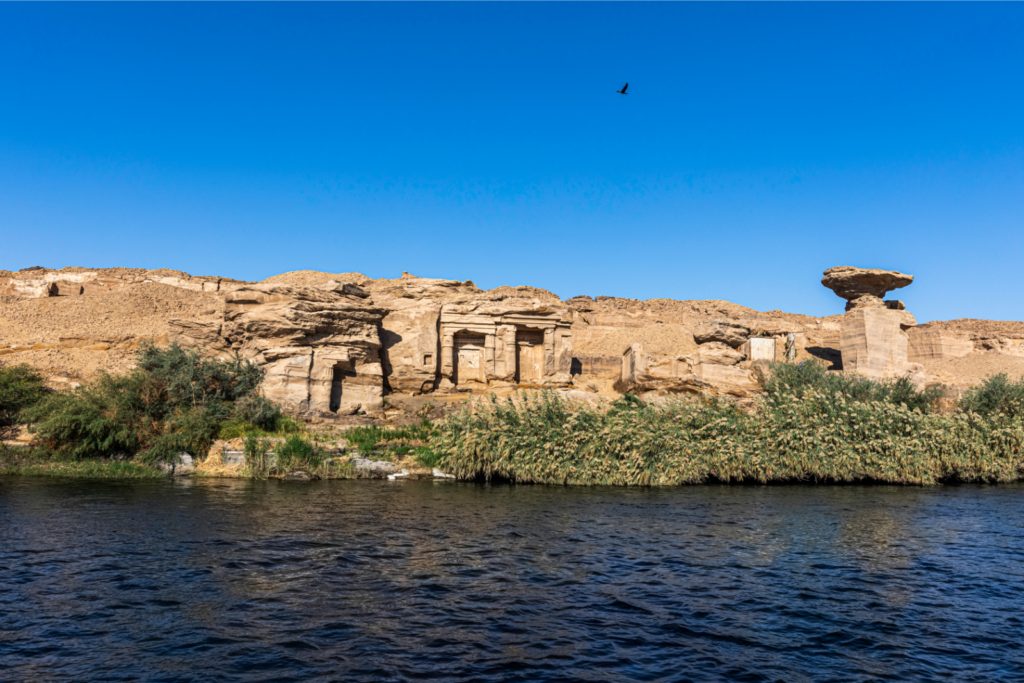
- Gebel el-Silsila: the sandstone quarries that supplied the great temples, with shrines carved into the cliffs; dahabiyas often moor here.
- Qubbet el-Hawa, Aswan: Old Kingdom governors' tombs, including Harkhuf's, whose inscription quotes the boy-king Pepi II's excited letter about a dancing pygmy.
- Elephantine Island: ancient Yebu, with a Nilometer and millennia of layered ruins.
- Kalabsha and the Lake Nasser temples: moved block by block during the 1960s UNESCO rescue campaign; a Lake Nasser cruise reaches Wadi el-Sebua, Amada and Qasr Ibrim.
What about Egypt after the pharaohs?
History does not stop with Cleopatra: Alexandria, Coptic Cairo and Islamic Cairo carry the story through Greek, Roman, Christian and Islamic Egypt, and they deserve as much time as the temples.
- Alexandria: the Catacombs of Kom el-Shoqafa, where Egyptian gods appear in Roman armour, the Roman theatre and lecture halls at Kom el-Dikka, and the Alexandria National Museum.
- Coptic Cairo: churches built within the walls of the Roman Babylon Fortress, and the Coptic Museum's textiles and carved stone that link late antique Egypt to the Christian world.
- Islamic Cairo: a thousand years of mosques, madrasas and gates, from Ibn Tulun in 879 to the Ottoman Citadel.
- The Western Desert oases: Kharga's Temple of Hibis and the Bagawat Christian necropolis, for those with an extra four or five days.
Building one or two of these into the end of your trip shows how each era reused the last, with temples turned into churches and Roman stones built into medieval walls.
Which museums matter most, and how long do you need?
Plan at least a full day at the Grand Egyptian Museum, half a day at the Egyptian Museum in Tahrir, and time for the Luxor Museum and Nubian Museum; then allow 14 days for the core plus Abydos, or 18–21 days to include Middle Egypt and Lake Nasser.
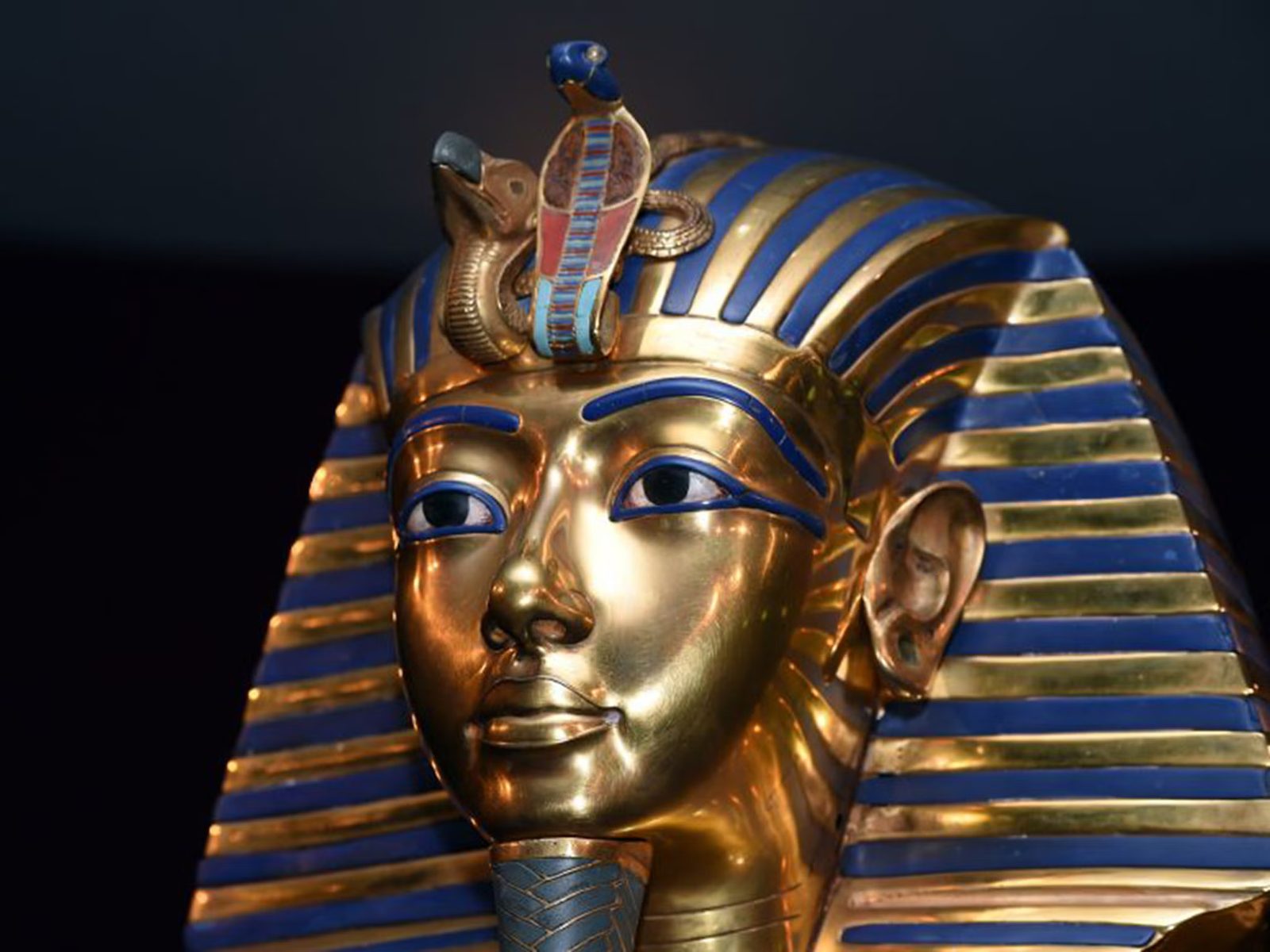
The GEM, fully open since November 2025, holds the complete Tutankhamun collection and Khufu's solar boat. The Tahrir museum still has an enormous collection, including the Amarna galleries and Old Kingdom statuary, and the National Museum of Egyptian Civilization now displays the royal mummies. Read before you go: Toby Wilkinson's The Rise and Fall of Ancient Egypt and Barry Kemp's Ancient Egypt: Anatomy of a Civilization are excellent companions. Our 16-day history lovers' tour puts these sites into one itinerary.
Frequently asked questions
What are the most underrated historical sites in Egypt?
Abydos, Medinet Habu, the mastabas of Saqqara, Deir el-Medina and, for the adventurous, Tell el-Amarna and Beni Hasan in Middle Egypt.
How many days does a history lover need in Egypt?
Fourteen days covers the core sites in depth plus Abydos and Dendera. Allow 18–21 days to add Middle Egypt and a Lake Nasser cruise.
Can you visit Amarna as a tourist?
Yes, usually from a base in Minya. Travel in Middle Egypt can involve police escorts and different travel advice, so check Smartraveller first and plan with a local operator.
Are the extra-ticket tombs worth it?
For history lovers, yes. The tombs of Seti I and Nefertari are the best-preserved in Egypt and much quieter than the standard tombs. Check current prices on egymonuments.gov.eg.
What should I read before visiting Egypt?
Toby Wilkinson's The Rise and Fall of Ancient Egypt for narrative history, and Barry Kemp's Ancient Egypt: Anatomy of a Civilization for how society worked.