Quick answer
Most scams in Egypt are about steering you to a shop or squeezing an extra tip, not about violence or theft. The common ones are touts at the pyramids, guardians offering 'special access' in tombs, friendly strangers claiming a site is closed, rides with a cheap price to get on and a dear one to get off, currency switches, and fake e-visa websites. Agree prices first, say a firm 'la, shukran', and buy tickets and visas only from official sources.
What are the most common scams in Egypt?
The scams visitors actually meet in Egypt are small-scale: unwanted guiding, rides that cost more at the end than the start, steering to commission shops, and confusion over currency or change. Serious crime against tourists is uncommon, and none of these tricks works if you know the pattern. Our general Egypt travel tips touch on a few; here is the full list with responses.
| Scam | Where | Your response |
|---|---|---|
| "You need a guide, a horse or a camel to get in" | Roads approaching the Giza pyramids | Keep walking or driving to the official entrance |
| Cheap to get on, dear to get off | Camel and horse rides, Giza and Luxor | Agree the full price, including dismounting, before mounting |
| "Come, I show you something special" | Inside temples and tombs | "La, shukran" and stay with your group or guide |
| "It's closed today, but my cousin's shop…" | Near museums, mosques, bazaars | Check with your hotel or guide; go and see |
| The free gift | Bazaars, Giza, temple car parks | Don't accept anything placed in your hand or on your head |
| Currency switch | Rides, stalls | Confirm "pounds or dollars?" before agreeing |
| Off-app ride | Uber and Careem | Never cancel and pay cash outside the app |
| Fake e-visa and ticket sites | Online, before you travel | Use only official government sites |
What scams happen at the pyramids?
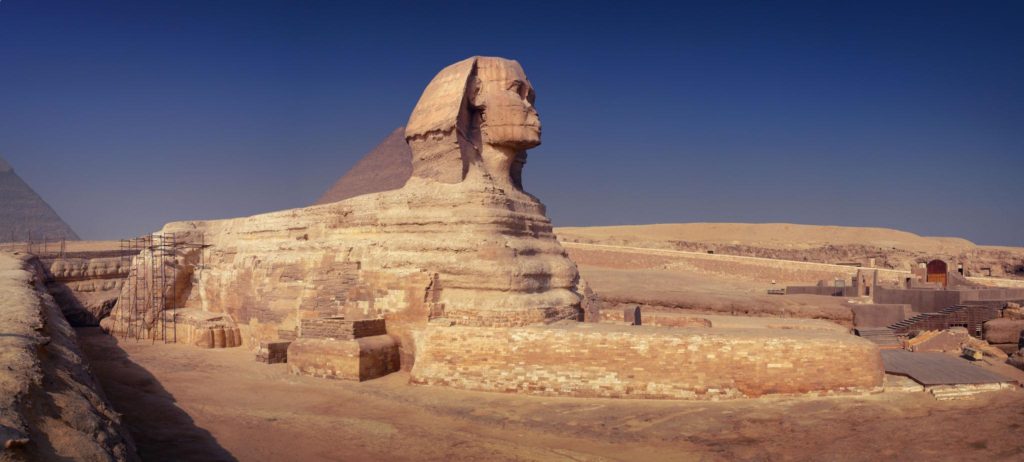
At Giza the tricks start before the gate: men flag down cars or approach walkers to say the entrance is closed or that you must hire a horse, camel or "official" guide to enter, none of which is true. Head straight to the official ticket office and entrance, and ignore anyone who isn't in a ticket booth.
Once inside, the classic routines are:
- The camel photo: "Free photo, my friend" while you sit on a camel, followed by a demand for payment to get down. Never mount an animal before agreeing the full price.
- Headdress and scarf: a keffiyeh is wrapped around your head "as a gift", then a price follows. Keep your hands free and say no clearly.
- Uniform confusion: men in semi-official clothing or with a lanyard who direct you to "the best viewpoint" and then to a stable. Genuine site staff and tourist police don't sell rides.
- Restricted areas: offers to take you up the pyramid or into a closed area for baksheesh. Climbing the pyramids is illegal, and you will be the one in trouble.
The plateau's visitor arrangements have been overhauled in recent years, with a new visitor centre, controlled vehicle access and shuttle buses reducing hawking around the monuments; how much varies by area and day, so check current arrangements before you go. Visiting with a licensed Egyptologist removes almost all of this. See our Pyramids of Giza guide for timing and routes.
What about guardians in temples and tombs?
In tombs and quieter temple corners, a guardian may beckon you to see a hidden relief, offer to let you take a forbidden photo, or hold a torch to a painting, and then expect a tip; politely decline unless you genuinely want the service. These men are low-paid site staff, and most are friendly, but the arrangement is unofficial.
Points to know:
- Photography where it's banned: paying a guardian to photograph in a no-photo tomb can see your camera confiscated by an inspector, and flash damages ancient pigment.
- "Closed" chambers: areas behind ropes are closed for conservation or safety. Accepting an offer to slip behind them is not an insider experience; it's a risk to you and the monument.
- The torch trick: a guardian lights up a detail you were already looking at, then holds out a hand. A simple "shukran" and moving on is fine.
- Fake tickets: buy tickets only at the official ticket office or online at egymonuments.gov.eg; nobody inside a site should be selling one.
If you do want a guardian to show you something, a small tip in Egyptian pounds is appropriate. Our tipping guide has typical amounts.
Which street scams target visitors?
The street scams all start with unprompted friendliness: someone who 'works at your hotel', a student who wants to practise English, or a helpful man who says your destination is closed. Most Egyptians who chat to you are simply curious and kind, so the test is whether the conversation turns towards a shop, a ride or money.
- "I remember you from the hotel": he doesn't. Ask which hotel; the conversation usually ends there.
- "The mosque is closed for prayer, come see my brother's shop": mosques do close to visitors during prayers, which is what makes this plausible. Wait or walk on; don't follow.
- Spice or perfume "family business": an invitation for tea that becomes a long, high-pressure sales session. Our guide to commission shopping stops explains the economics.
- Children and photos: children posing for a photo, or pointing you to a "shortcut", then asking for money. Ask before photographing anyone and agree in advance if payment is expected.
- Henna and bracelets: applied before you've said yes. Keep your hands to yourself and walk on.
In bazaars, persistent selling is not itself a scam; see our haggling guide for how to negotiate fairly.
How do money and change scams work?
Money tricks rely on confusion: a price you thought was in pounds becomes dollars or euros, 'fifteen' becomes 'fifty', or your change comes back short in notes that look similar. Clarity before you agree and counting afterwards prevents nearly all of them.
- Currency switch: agree "100 Egyptian pounds" in full words, not "a hundred", especially for rides.
- Per person or total: a felucca or carriage price quoted per person at the end when you thought it was for the boat.
- Short change: count your change before leaving the counter, and know your notes; some old and new designs of the same value circulate together.
- Big-note problem: "no change" is a classic. Carry plenty of small notes and break big ones at hotels, supermarkets and ticket offices.
- Card skimming: use ATMs inside banks or hotels and choose to be charged in Egyptian pounds, not Australian dollars.
Our money in Egypt guide covers notes, ATMs and cards in detail.
What transport scams should you watch for?
Transport tricks are mostly about fares: unmetered taxis that name a price at the destination, touts in airport arrivals halls, and rideshare drivers who ask you to cancel the trip and pay cash. Using a pre-arranged transfer or an app removes most of them.
- Airport touts: men approaching you inside the arrivals hall offering a "taxi" are not the official service. Use your pre-booked driver, the official airport transport desks or a rideshare app.
- "Meter broken": if a white taxi's meter isn't running, agree the fare before moving or get out.
- Off-app rides: an Uber or Careem driver who asks you to cancel and pay cash is removing your trip record and protections. Decline.
- Detours to shops: drivers and carriage drivers who stop "for a moment" at a perfume or papyrus shop. Say no shopping at the start.
- Felucca renegotiation: a captain who demands more mid-river. Agree the time and price on the bank, and pay at the end.
Our guide to Uber and taxis in Cairo explains how to use each safely.
Which online scams catch people before they leave?
The most expensive scams happen before you land: look-alike e-visa websites that charge large 'service fees', fake tour operators on social media, and resold or fake tickets. Book only through official sites and businesses you can verify.
- E-visas: the only official online portal is visa2egypt.gov.eg. Many third-party sites rank highly in search results and charge well above the government fee. See our Egypt visa guide for Australians.
- Monument tickets: buy online only at egymonuments.gov.eg or at the site itself.
- Too-cheap tours: a full-day private tour advertised far below the market is usually funded by shopping stops, or is not what it claims.
- Payment by transfer to a personal account: a red flag for any travel booking.
What should you do if you've been scammed?
For small amounts, take it as an expensive lesson and move on; for theft, threats or larger losses, report it to the tourist police (hotline 126) and tell your hotel, guide or travel agent. Tourist police in white or black uniforms marked "Tourist Police" are stationed at major sites and take complaints from foreigners seriously.
Keep receipts, note names, vehicle plates and times, and photograph the scene if it is safe. For card fraud, call your bank immediately. For stolen passports or serious incidents, contact the Australian Embassy in Cairo; current contacts and advice are on Smartraveller (New Zealanders: SafeTravel). Your travel insurer will need a police report for any claim. Our Is Egypt safe? guide covers the wider picture.
Frequently asked questions
Are scams in Egypt dangerous?
Rarely. Almost all are about money: inflated prices, unwanted guiding and commission shopping. Violent crime against tourists is uncommon, though you should always check current Smartraveller advice.
How do I avoid scams at the Giza pyramids?
Go straight to the official entrance, ignore anyone who says it is closed or that you need a horse or camel to enter, and agree the full price of any ride before you mount. A licensed guide makes it easy. See our pyramids guide.
Is the Egypt e-visa website a scam?
The official site, visa2egypt.gov.eg, is genuine. Many look-alike sites are not official and charge extra fees, so type the address directly rather than clicking a search ad.
Should I tip tomb guardians who show me things?
Only if you asked for or welcomed their help. A polite no is fine. Never pay to take photos where photography is banned or to enter closed areas.
What is the tourist police number in Egypt?
The tourist police hotline is 126, and officers are stationed at major sites. For general police call 122 and for an ambulance 123.